Department of Colorectal Surgery, First Affiliated Hospital, Zhejiang University School of Medicine, Hangzhou, China.
College of Medicine, Zhejiang University, Hangzhou, China.
J Transl Med. 2023 Jan 13;21(1):25. doi: 10.1186/s12967-023-03879-0.
Circulating soluble programmed death ligand 1 (sPD-L1) can negatively regulate T-cell function and serve as a prognostic or predictive marker in a variety of cancers. However, rare studies have evaluated the potential roles of sPD-L1, and no study has estimated its predictive value for the efficacy of immune treatment in colorectal cancer (CRC).
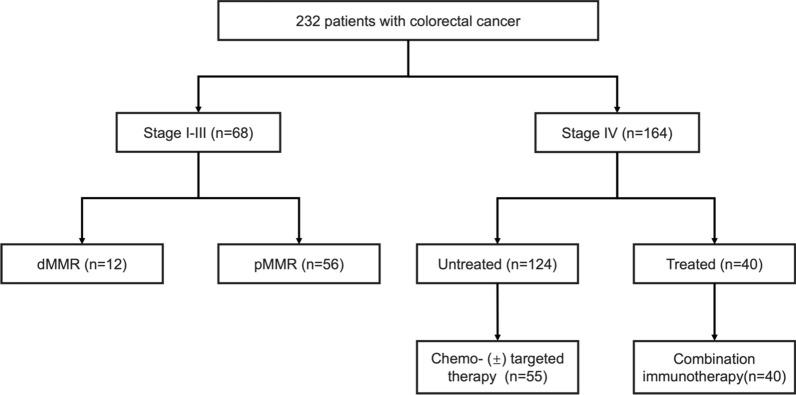
Plasma samples from 192 CRC patients were used to estimate correlations between clinicopathological features and sPD-L1, secreted PD-L1 (secPD-L1) and exosomal PD-L1 (exoPD-L1). Baseline and posttreatment sPD-L1 levels were also investigated in 55 patients with metastatic CRC (mCRC) treated with chemotherapy ± targeted therapy and 40 patients with proficient mismatch repair (pMMR) mCRC treated with combination immunotherapy. Both sPD-L1 and secPD-L1 were quantified by enzyme-linked immunosorbent assay, while exoPD-L1 was analyzed using flow cytometry.
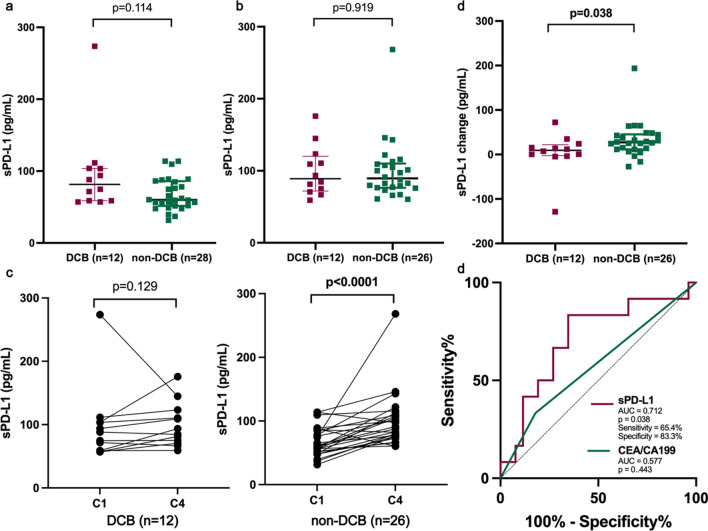
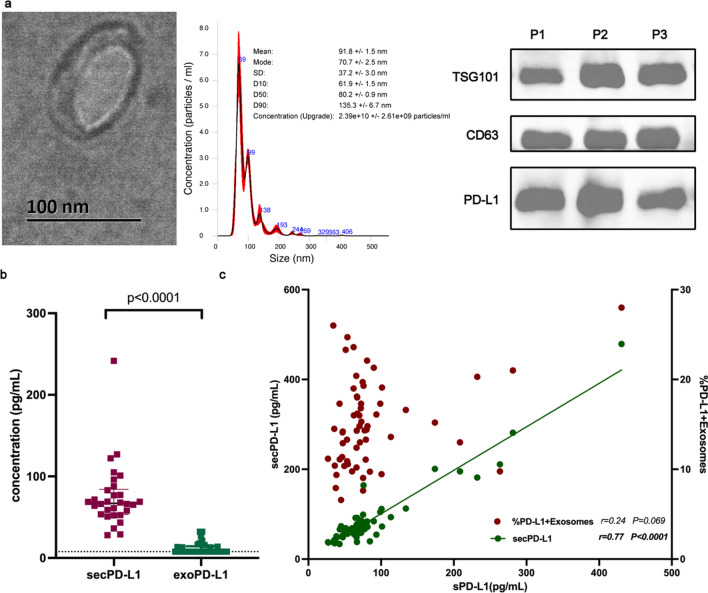
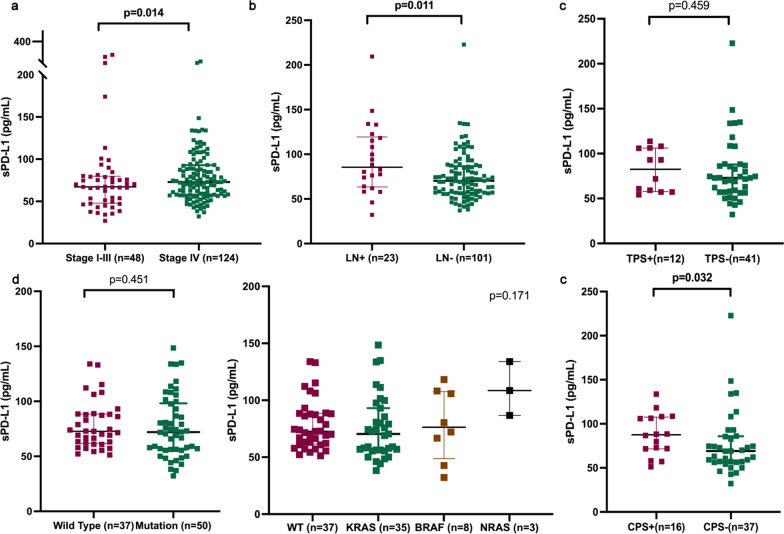
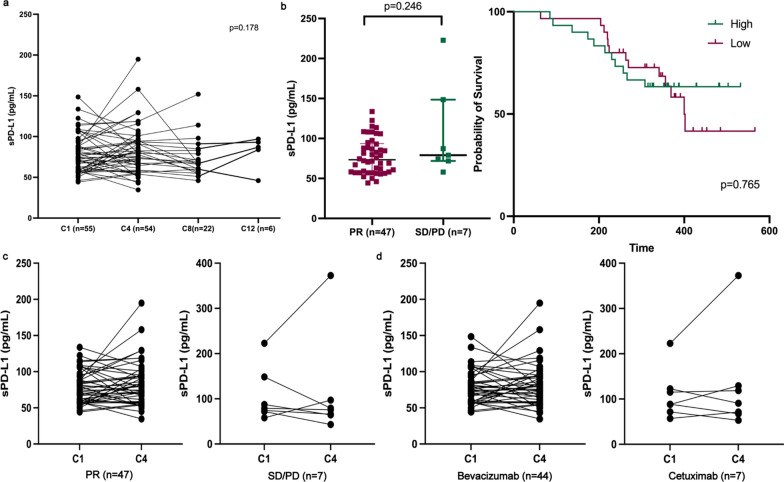
secPD-L1 was the major component and positively correlated with sPD-L1 in CRC, while exoPD-L1 was almost undetectable. Higher levels of sPD-L1 were detected in patients with distant metastasis, especially those with distant lymph node metastasis and tissue combined positive score (CPS) instead of tumor proportion score (TPS). Chemotherapy or targeted therapy did not significantly impact sPD-L1 concentration. Progressive disease on combination immunotherapy was associated with an increase in sPD-L1 level, whereas no significant change was observed in patients with durable clinical benefit.
sPD-L1 mainly consisted of secPD-L1, and its level was higher in patients with distant metastasis, especially distant lymph node metastasis and positive CPS. sPD-L1 is a potential dynamic marker to identify rapid progression on combination immunotherapy and avoid ineffective treatment for pMMR CRC.
循环可溶性程序性死亡配体 1(sPD-L1)可负向调节 T 细胞功能,并可作为多种癌症的预后或预测标志物。然而,很少有研究评估 sPD-L1 的潜在作用,也没有研究估计其对结直肠癌(CRC)免疫治疗疗效的预测价值。
使用 192 例 CRC 患者的血浆样本来评估临床病理特征与 sPD-L1、分泌型 PD-L1(secPD-L1)和外泌体 PD-L1(exoPD-L1)之间的相关性。还对 55 例接受化疗±靶向治疗的转移性 CRC(mCRC)患者和 40 例有功能错配修复(pMMR)mCRC 患者进行基线和治疗后 sPD-L1 水平检测,这 40 例患者接受联合免疫治疗。通过酶联免疫吸附试验定量检测 sPD-L1 和 secPD-L1,通过流式细胞术分析 exoPD-L1。
secPD-L1 是 CRC 中主要的组成部分,并与 sPD-L1 呈正相关,而 exoPD-L1 几乎无法检测到。远处转移患者的 sPD-L1 水平较高,尤其是远处淋巴结转移和组织联合阳性评分(CPS)而非肿瘤比例评分(TPS)的患者。化疗或靶向治疗对 sPD-L1 浓度没有显著影响。联合免疫治疗进展性疾病与 sPD-L1 水平升高相关,而在有持久临床获益的患者中未观察到明显变化。
sPD-L1 主要由 secPD-L1 组成,在远处转移患者,尤其是远处淋巴结转移和阳性 CPS 的患者中水平较高。sPD-L1 是一种潜在的动态标志物,可用于识别联合免疫治疗中的快速进展,避免对 pMMR CRC 进行无效治疗。