Department of Neurosurgery, Qingdao University, Qingdao, 266003, Shandong Province, China.
Department of Anesthesiology, Weifang Medical University, Weifang, 261053, Shandong Province, China.
BMC Neurol. 2023 Jan 13;23(1):17. doi: 10.1186/s12883-023-03058-0.
Tropomyosin 4 (TPM4), a member of the tropomyosin family, is aberrantly expressed and plays an important role in a variety of cancers. However, studies on TPM4 in glioma patients are currently lacking.
Our study aimed to evaluate the diagnostic and prognostic characteristics of TPM4 in glioma and its correlation with immune infiltration.
Bioinformatic analysis was performed to determine whether TPM4 has diagnostic and prognostic value for glioma. The following databases and analytical tools were used to explore the clinical significance of TPM4 in glioma: TCGA, GTEx, GEO, STRING, and TISIDB.
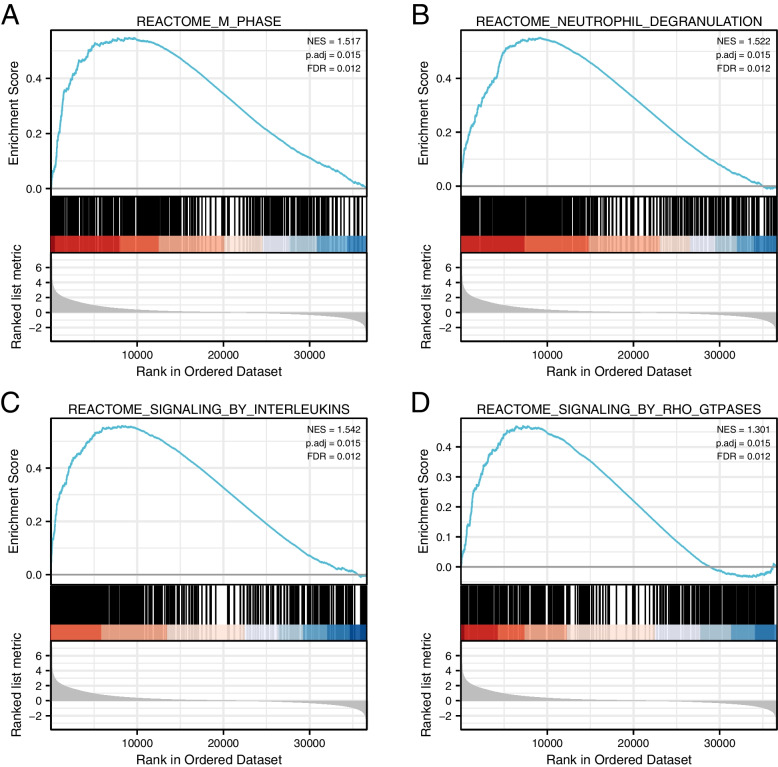
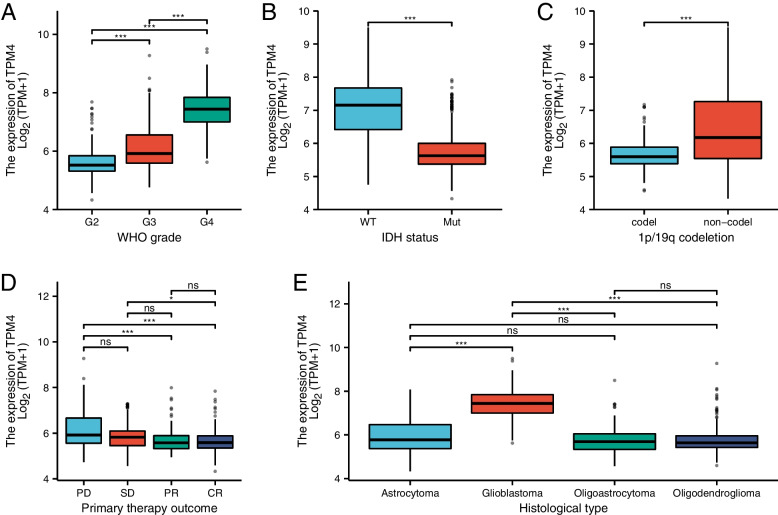
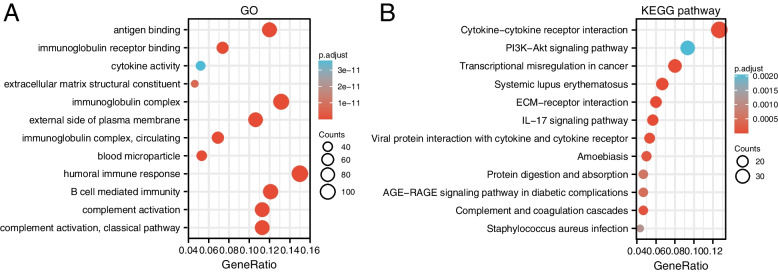
Our study showed that the mRNA and protein expression levels of TPM4 were significantly higher in glioma than in healthy brain tissue. Kaplan-Meier analysis indicated that high expression of TPM4 in glioma correlated with poor prognosis. Univariate Cox analysis indicated that the high expression level of TPM4 in glioma was an independent prognostic characteristic for low overall survival (OS). The areas under the 1-year survival ROC, 2-year survival ROC, and 3-year survival ROC were all greater than 0.8. GO and KEGG enrichment analysis and GSEA showed that humoral immune response and cytokine receptor interaction were significantly enriched in the TPM4 high expression group, where M phase of the cell cycle, neutrophil degranulation, signaling by interleukins, and signaling by rho GTPases were significantly enriched. Furthermore, according to the analysis of immune cell infiltration, TPM4 was associated with tumor infiltration of a variety of immune cells.
In conclusion, our study suggests that TPM4 may be an effective prognostic biomarker for glioma patients, providing new ideas and research directions for glioma research.
原肌球蛋白 4(TPM4)是原肌球蛋白家族的成员,在多种癌症中异常表达并发挥重要作用。然而,目前关于 TPM4 在脑胶质瘤患者中的研究尚缺乏。
本研究旨在评估 TPM4 在脑胶质瘤中的诊断和预后特征及其与免疫浸润的相关性。
通过生物信息学分析来确定 TPM4 是否对脑胶质瘤具有诊断和预后价值。采用 TCGA、GTEx、GEO、STRING 和 TISIDB 等数据库和分析工具来探讨 TPM4 在脑胶质瘤中的临床意义。
我们的研究表明,TPM4 在脑胶质瘤中的 mRNA 和蛋白表达水平明显高于正常脑组织。Kaplan-Meier 分析表明,脑胶质瘤中 TPM4 的高表达与预后不良相关。单因素 Cox 分析表明,脑胶质瘤中 TPM4 的高表达水平是总生存期(OS)低的独立预后特征。1 年生存率 ROC、2 年生存率 ROC 和 3 年生存率 ROC 的 AUC 均大于 0.8。GO 和 KEGG 富集分析和 GSEA 表明,在 TPM4 高表达组中,体液免疫反应和细胞因子受体相互作用显著富集,细胞周期 M 期、嗜中性粒细胞脱颗粒、白细胞介素信号和 Rho GTPases 信号显著富集。此外,根据免疫细胞浸润分析,TPM4 与多种免疫细胞浸润肿瘤有关。
综上所述,本研究表明 TPM4 可能是脑胶质瘤患者的一种有效的预后生物标志物,为脑胶质瘤的研究提供了新的思路和研究方向。