Department of Urology, Affiliated Hospital of Guangdong Medical University, Zhanjiang, Guangdong, China.
Dis Markers. 2022 Jun 13;2022:6936262. doi: 10.1155/2022/6936262. eCollection 2022.
To investigate the correlation between tropomyosin (TM) and clinical characteristics of bladder cancer. In addition, the relationship between TM and immune cell infiltration in bladder cancer was further analyzed.
Based on The Cancer Genome Atlas (TCGA) database, the relationship between TM expression and clinicopathological features in bladder cancer was analyzed. Receiver operating characteristic (ROC) curve was used to evaluate the value of TM as a diagnostic marker for bladder cancer. Univariate and multivariate Cox regression was used to analyze the independent factors affecting the prognosis of patients with bladder cancer. The relationship between TM and immune cell infiltration was analyzed.
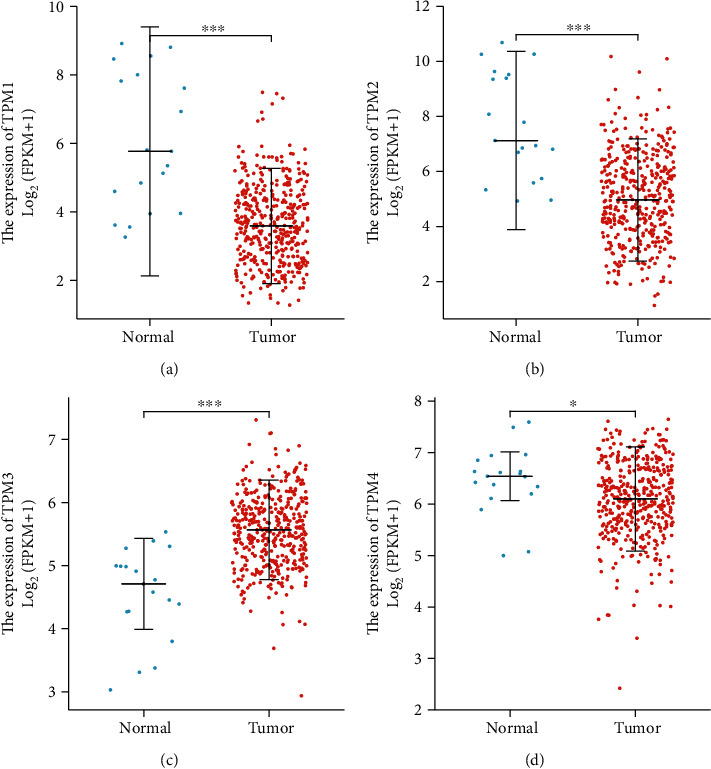
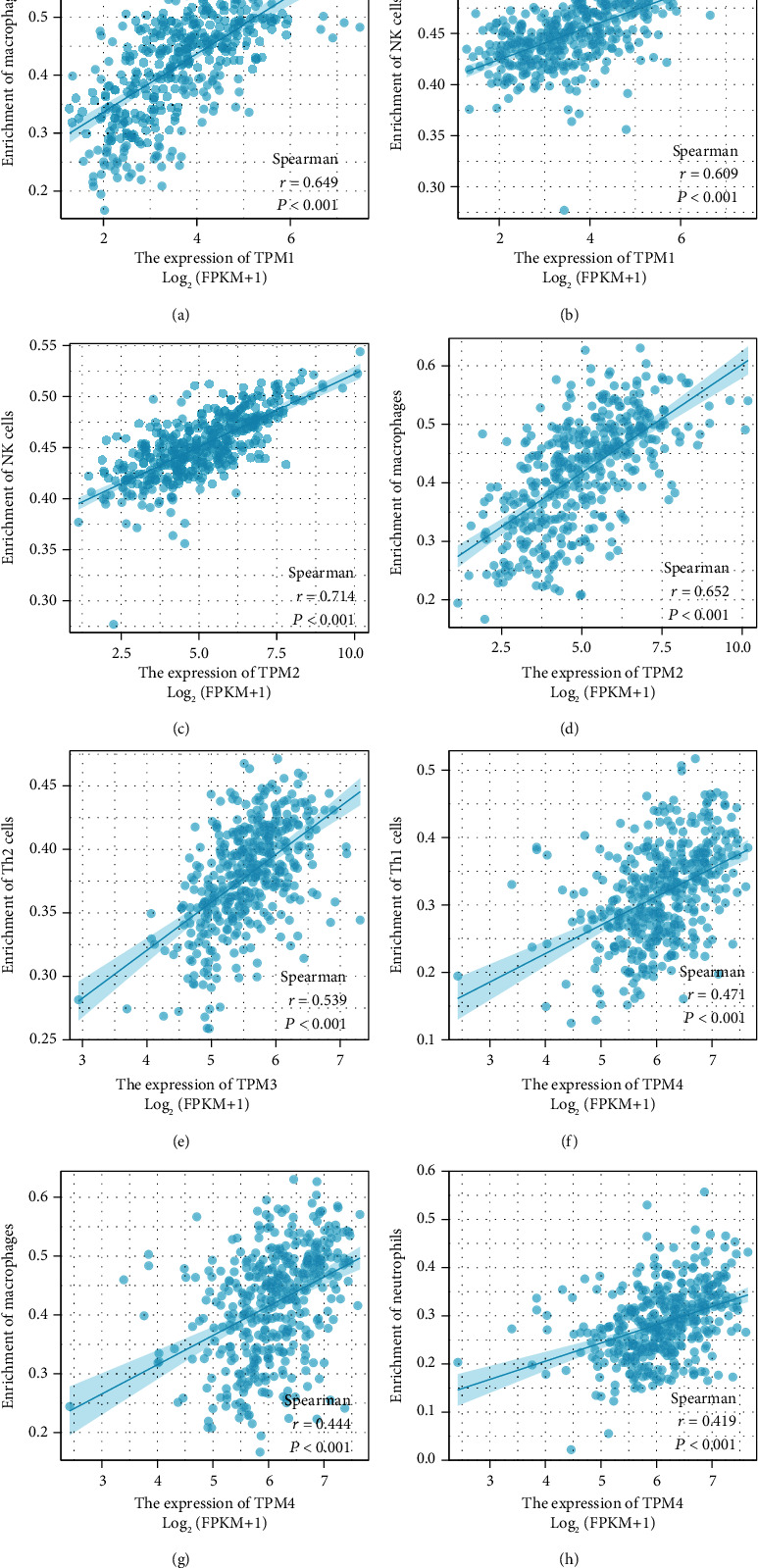
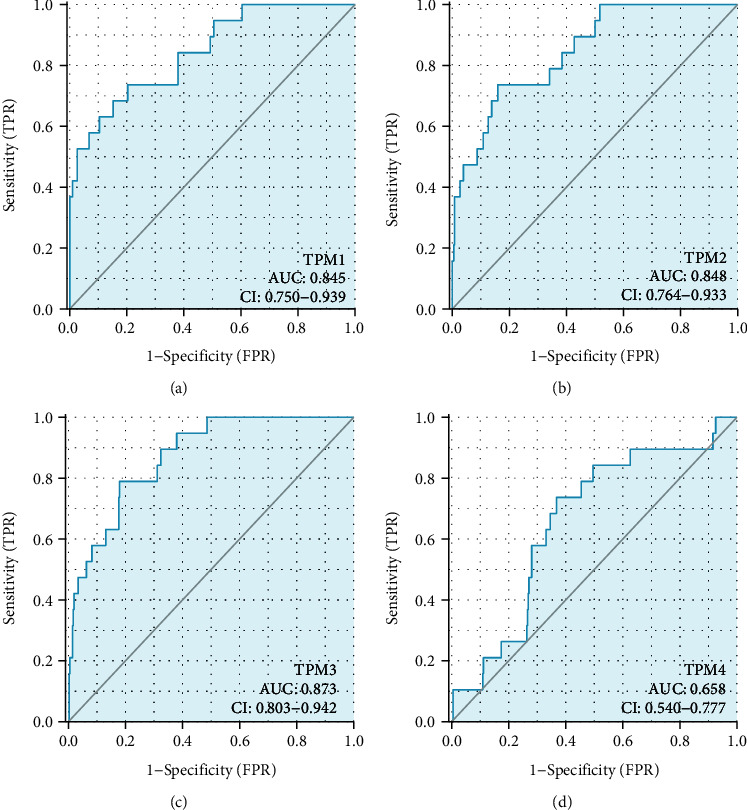
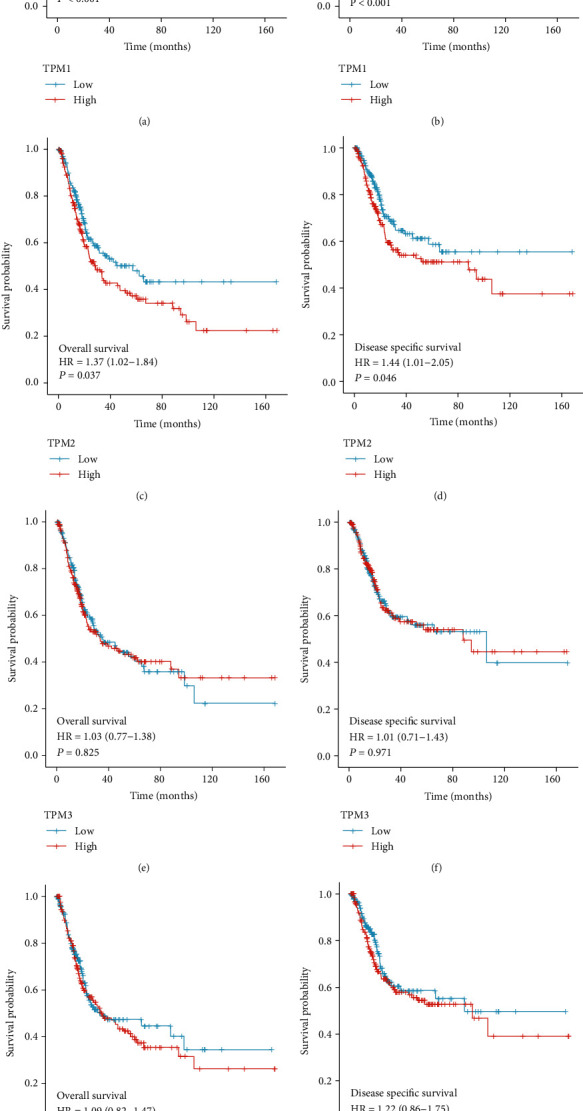
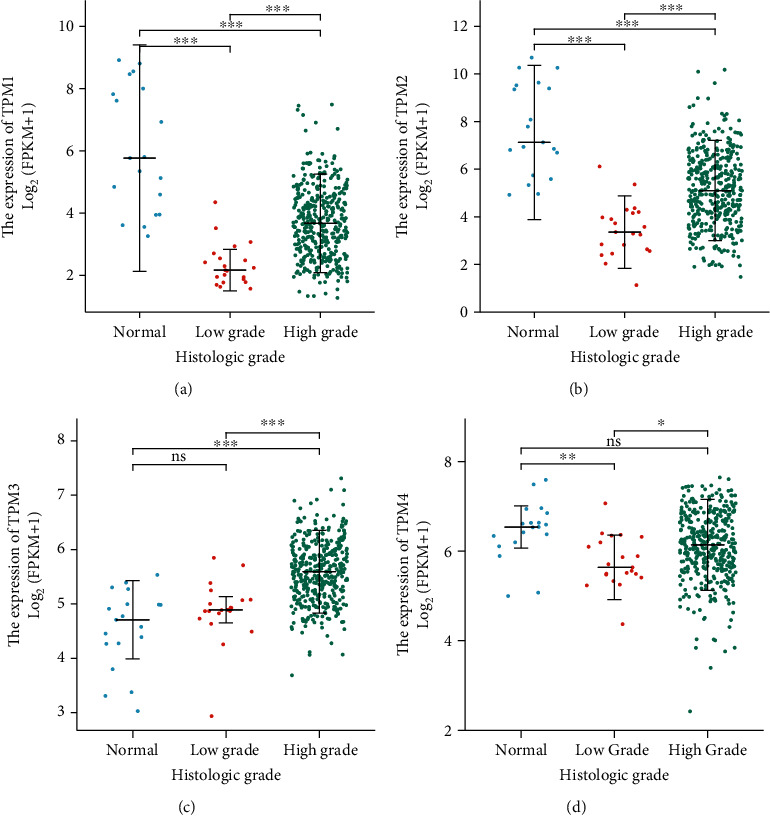
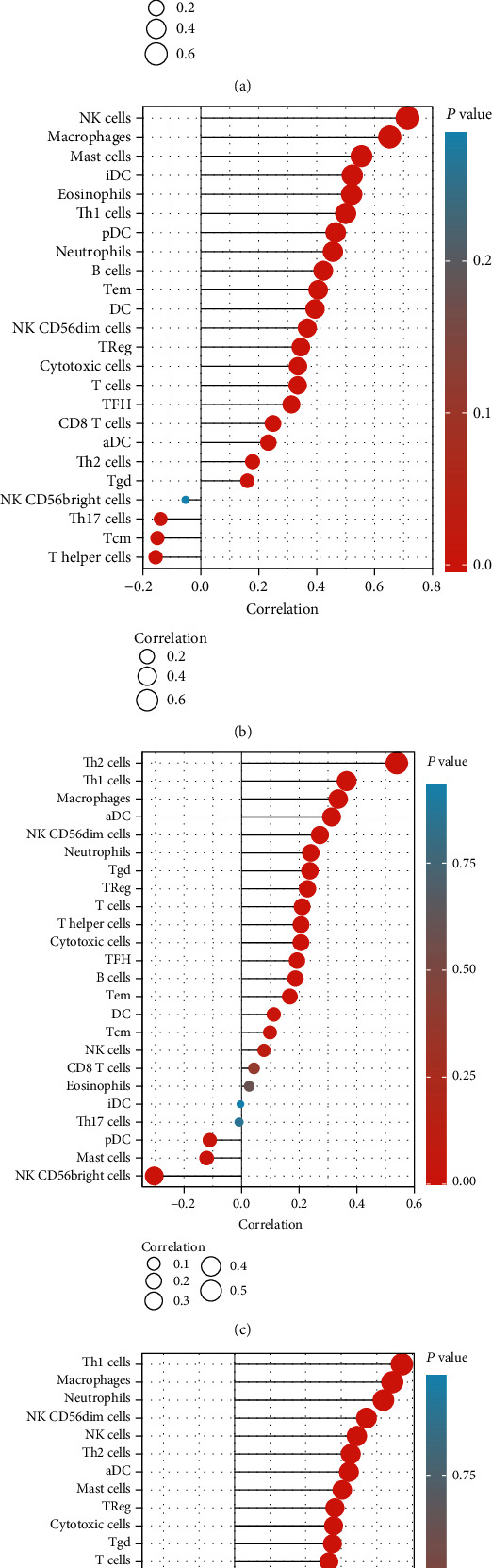
ROC curve showed that TPM1, TPM2, and TPM3 had significant diagnostic ability (AUC was 0.845, 0.848, and 0.873, respectively). The high expression of TPM1 and TPM2 is associated with poor overall and disease-specific survival in patients with bladder cancer ( < 0.05). Multivariate Cox analysis showed that age and TPM1 were independent prognostic factors. The expression levels of TPM1, TPM2, TPM3, and TPM4 in low grade bladder cancer were lower than those in high grade bladder cancer ( < 0.05). TPM1 and TPM2 are positively correlated with the infiltration of macrophages and NK cells in bladder cancer. TPM3 is positively associated with Th2. TPM4 is positively correlated with Th1 cells, macrophages, and neutrophils ( < 0.05).
TPM1 and TPM2 are effective markers for the diagnosis of bladder cancer. TPM1 is an independent prognostic factor for bladder cancer. TM is also associated with the infiltration of various immune cells in bladder cancer. TM may have influenced the development of bladder cancer through immune inhibition.
研究原肌球蛋白(TM)与膀胱癌临床特征的相关性。此外,进一步分析 TM 与膀胱癌免疫细胞浸润的关系。
基于癌症基因组图谱(TCGA)数据库,分析 TM 表达与膀胱癌临床病理特征的关系。采用受试者工作特征(ROC)曲线评估 TM 作为膀胱癌诊断标志物的价值。单因素和多因素 Cox 回归分析影响膀胱癌患者预后的独立因素。分析 TM 与免疫细胞浸润的关系。
ROC 曲线表明 TPM1、TPM2 和 TPM3 具有显著的诊断能力(AUC 分别为 0.845、0.848 和 0.873)。TPM1 和 TPM2 的高表达与膀胱癌患者总生存期和疾病特异性生存期不良相关(<0.05)。多因素 Cox 分析表明,年龄和 TPM1 是独立的预后因素。低级别膀胱癌中 TPM1、TPM2、TPM3 和 TPM4 的表达水平低于高级别膀胱癌(<0.05)。TPM1 和 TPM2 与膀胱癌中巨噬细胞和自然杀伤细胞的浸润呈正相关。TPM3 与 Th2 呈正相关。TPM4 与 Th1 细胞、巨噬细胞和中性粒细胞呈正相关(<0.05)。
TPM1 和 TPM2 是膀胱癌诊断的有效标志物。TPM1 是膀胱癌的独立预后因素。TM 还与膀胱癌中各种免疫细胞的浸润有关。TM 可能通过免疫抑制影响膀胱癌的发生发展。