Medical Research Council Cognition and Brain Sciences Unit, University of Cambridge, Cambridge, CB2 7EF, United Kingdom
Medical Research Council Cognition and Brain Sciences Unit, University of Cambridge, Cambridge, CB2 7EF, United Kingdom.
J Neurosci. 2023 Jan 11;43(2):293-307. doi: 10.1523/JNEUROSCI.0148-22.2022. Epub 2022 Dec 5.
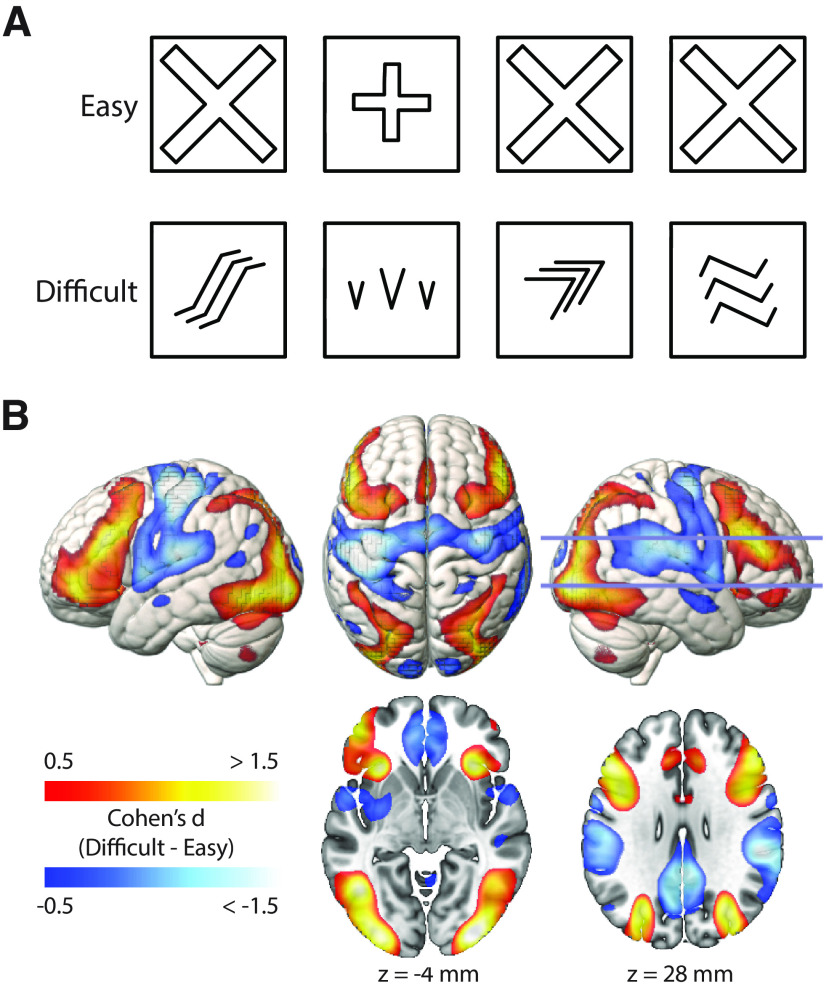
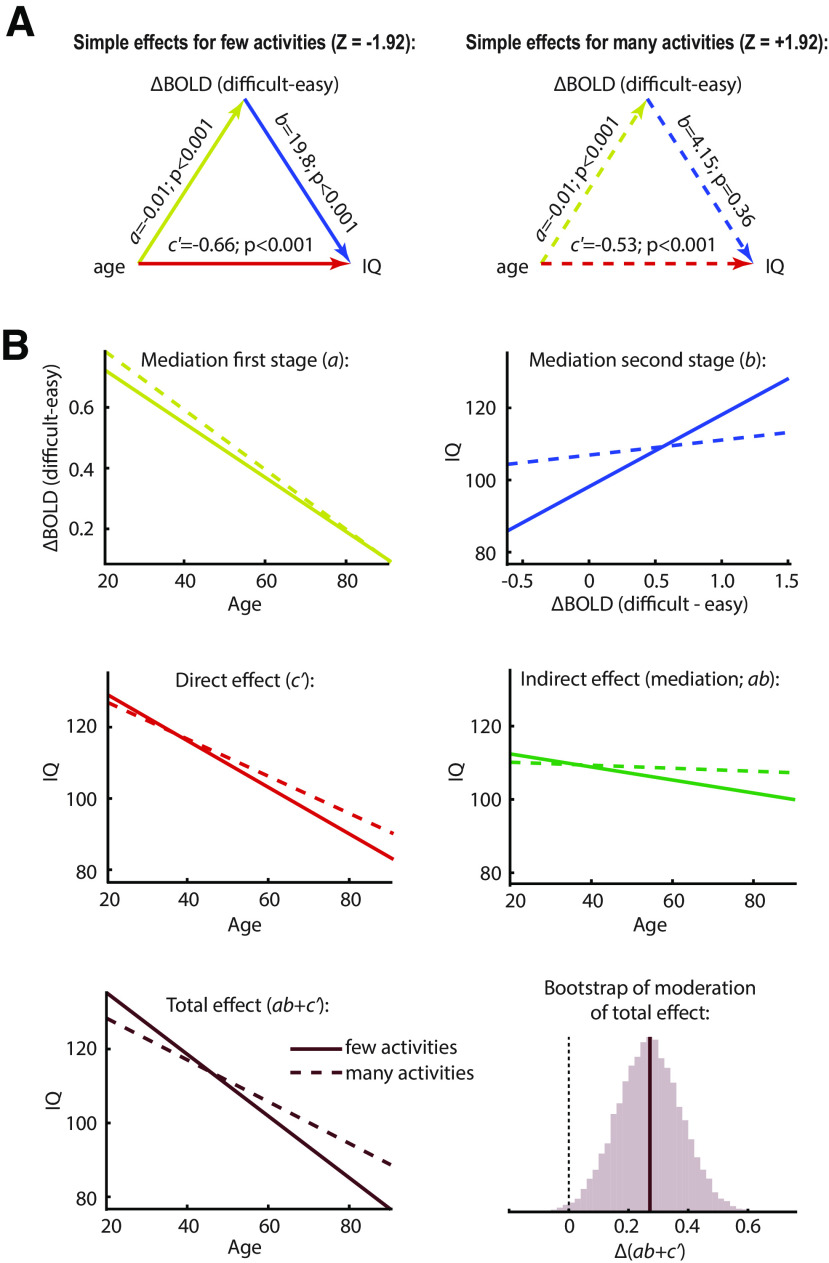
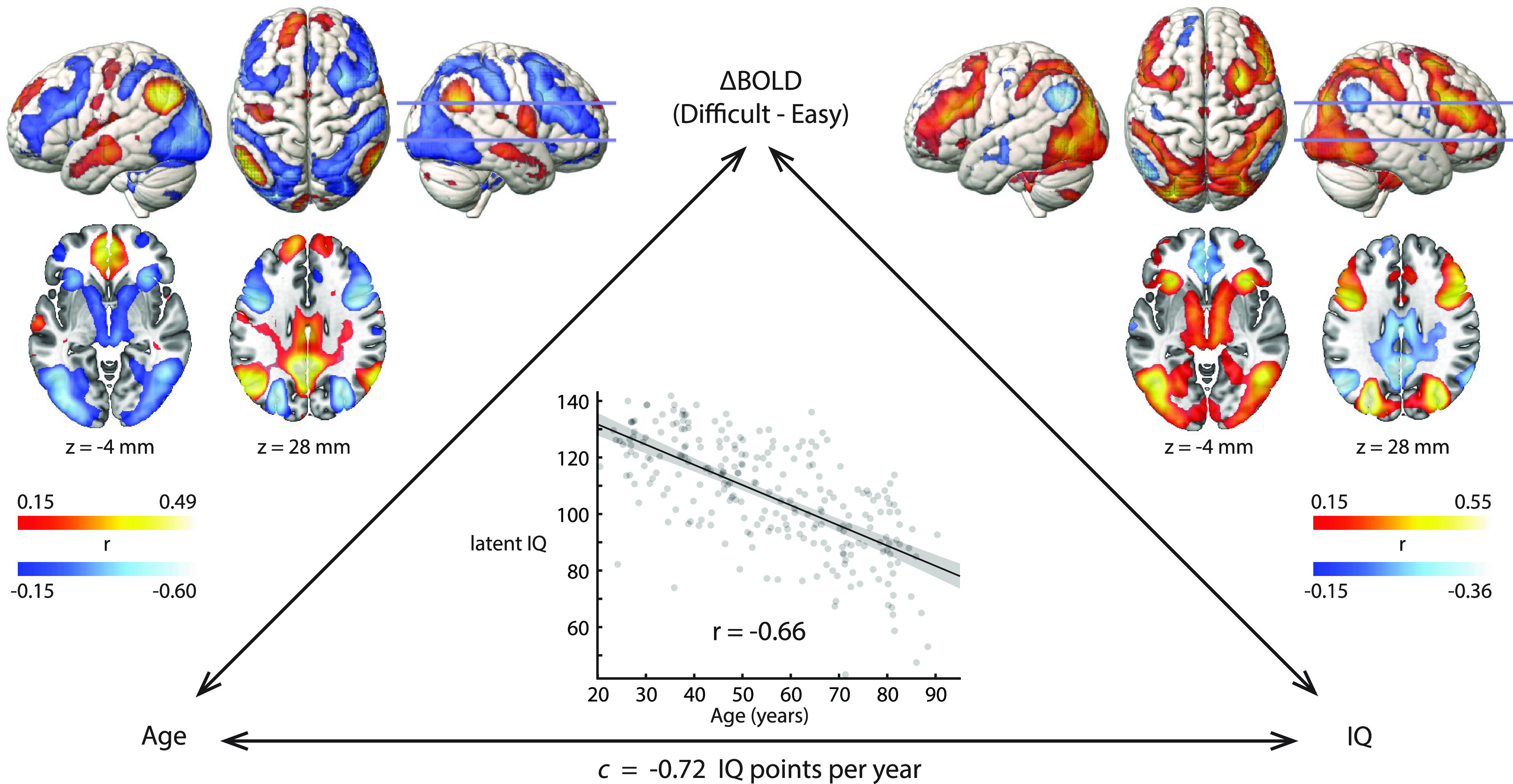
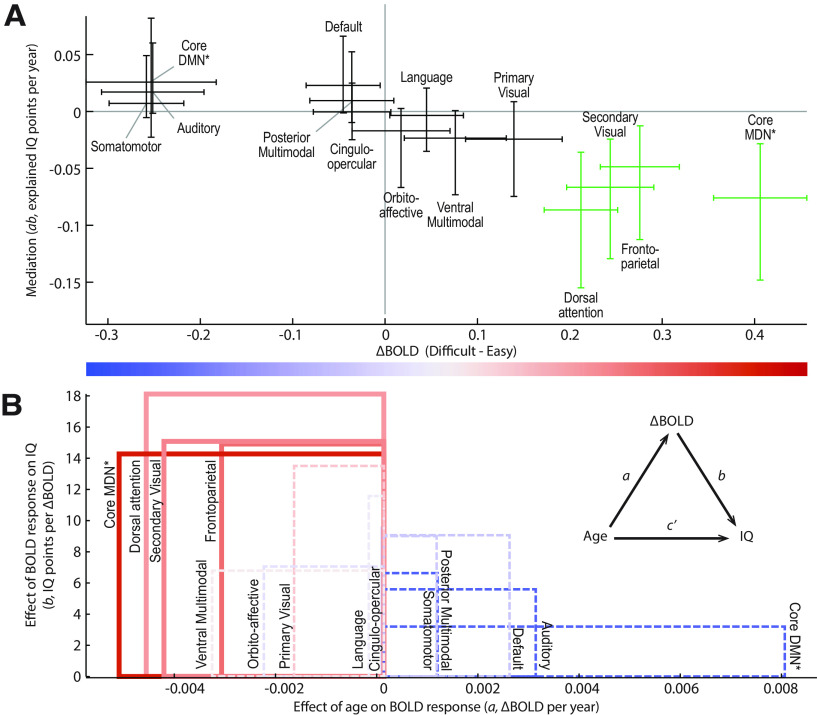
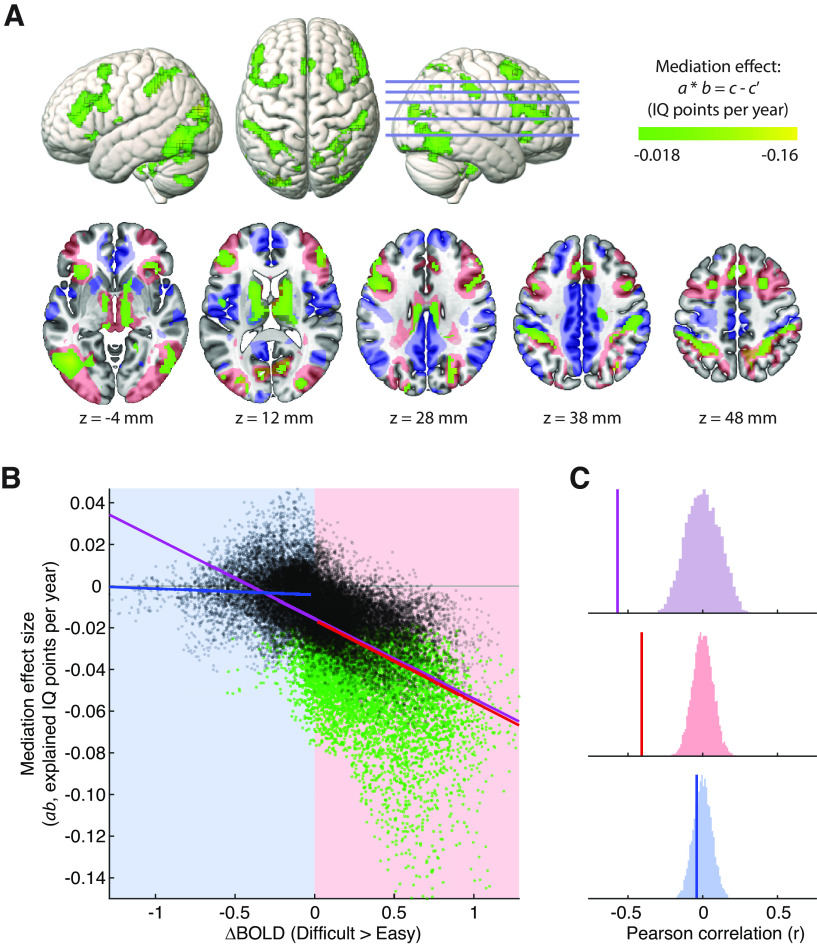
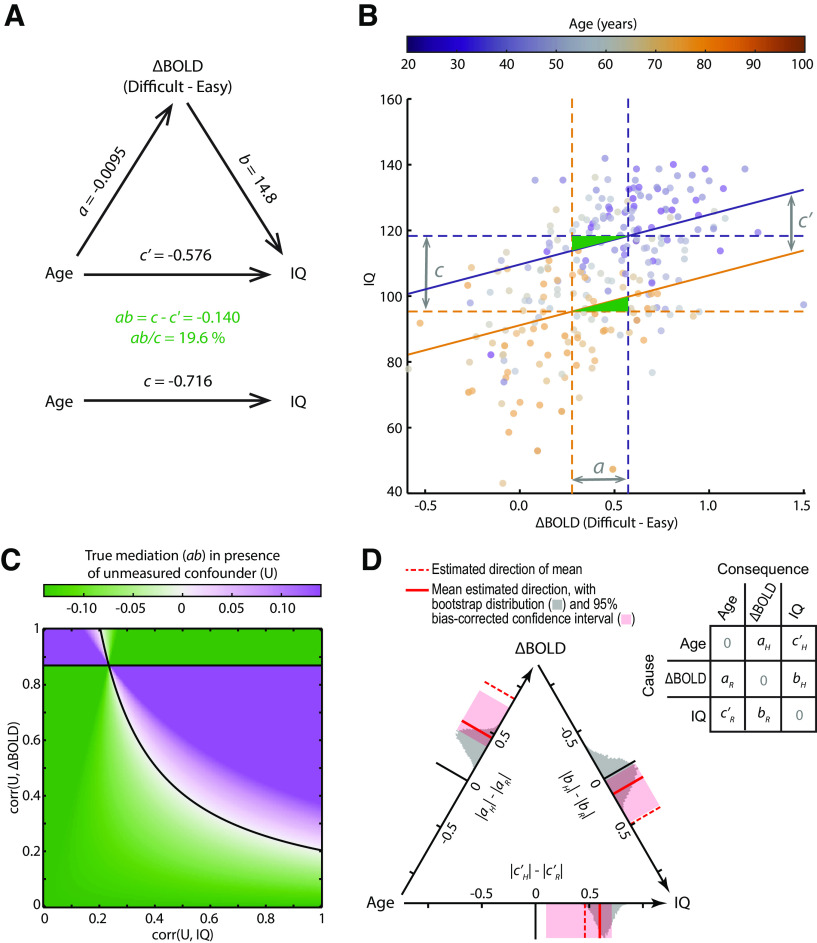
Fluid intelligence, the ability to solve novel, complex problems, declines steeply during healthy human aging. Using fMRI, fluid intelligence has been repeatedly associated with activation of a frontoparietal brain network, and impairment following focal damage to these regions suggests that fluid intelligence depends on their integrity. It is therefore possible that age-related functional differences in frontoparietal activity contribute to the reduction in fluid intelligence. This paper reports on analysis of the Cambridge Center for Ageing and Neuroscience data, a large, population-based cohort of healthy males and females across the adult lifespan. The data support a model in which age-related differences in fluid intelligence are partially mediated by the responsiveness of frontoparietal regions to novel problem-solving. We first replicate a prior finding of such mediation using an independent sample. We then precisely localize the mediating brain regions, and show that mediation is specifically associated with voxels most activated by cognitive demand, but not with voxels suppressed by cognitive demand. We quantify the robustness of this result to potential unmodeled confounders, and estimate the causal direction of the effects. Finally, exploratory analyses suggest that neural mediation of age-related differences in fluid intelligence is moderated by the variety of regular physical activities, more reliably than by their frequency or duration. An additional moderating role of the variety of nonphysical activities emerged when controlling for head motion. A better understanding of the mechanisms that link healthy aging with lower fluid intelligence may suggest strategies for mitigating such decline. Global populations are living longer, driving urgency to understand age-related cognitive declines. Fluid intelligence is of prime importance because it reflects performance across many domains, and declines especially steeply during healthy aging. Despite consensus that fluid intelligence is associated with particular frontoparietal brain regions, little research has investigated suggestions that under-responsiveness of these regions mediates age-related decline. We replicate a recent demonstration of such mediation, showing specific association with brain regions most activated by cognitive demand, and robustness to moderate confounding by unmodeled variables. By showing that this mediation model is moderated by the variety of regular physical activities, more reliably than by their frequency or duration, we identify a potential modifiable lifestyle factor that may help promote successful aging.
流体智力,即解决新颖、复杂问题的能力,在人类健康衰老过程中急剧下降。使用 fMRI,流体智力已多次与额顶叶大脑网络的激活相关联,并且这些区域的局灶性损伤后的损害表明流体智力取决于它们的完整性。因此,额顶叶活动与年龄相关的功能差异可能导致流体智力的降低。本文报告了对剑桥衰老与神经科学中心数据的分析,这是一个大型的、基于人群的健康男性和女性成年期队列。这些数据支持了一个模型,即流体智力与年龄相关的差异部分是由额顶叶区域对新问题解决的反应性介导的。我们首先在一个独立的样本中复制了这种中介的先前发现。然后,我们精确地定位了中介的大脑区域,并表明中介与认知需求激活的体素最相关,而与认知需求抑制的体素无关。我们量化了这个结果对潜在的未建模混杂因素的稳健性,并估计了效应的因果方向。最后,探索性分析表明,额顶叶区域对流体智力与年龄相关差异的神经中介作用受到常规体育活动多样性的调节,比其频率或持续时间更可靠。当控制头部运动时,非物理活动多样性的额外调节作用出现。更好地理解将健康衰老与较低的流体智力联系起来的机制可能会为减轻这种下降提供策略。全球人口的寿命越来越长,这促使人们迫切需要了解与年龄相关的认知衰退。流体智力非常重要,因为它反映了在许多领域的表现,并且在健康衰老过程中急剧下降。尽管普遍认为流体智力与特定的额顶叶大脑区域相关,但很少有研究调查了这些区域反应迟钝是否介导了与年龄相关的下降的建议。我们复制了最近对这种中介的证明,表明与认知需求激活最强的大脑区域有特定的关联,并且对未建模变量的适度混杂具有稳健性。通过表明这种中介模型受到常规体育活动多样性的调节,比频率或持续时间更可靠,我们确定了一个潜在的可改变的生活方式因素,可能有助于促进成功的衰老。