McConnell Brain Imaging Centre, Montreal Neurological Institute and Hospital, McGill University, Montreal, Canada.
Center for the Developing Brain, Child Mind Institute, New York, USA.
Commun Biol. 2020 Mar 5;3(1):103. doi: 10.1038/s42003-020-0794-7.
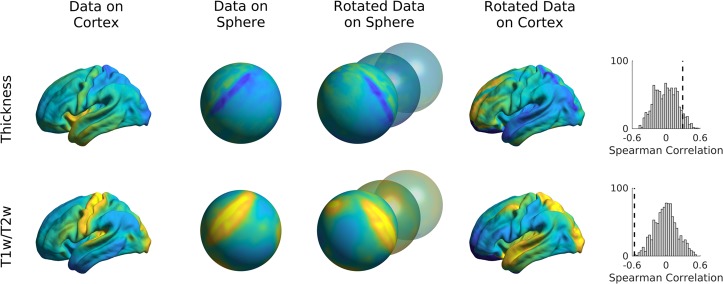
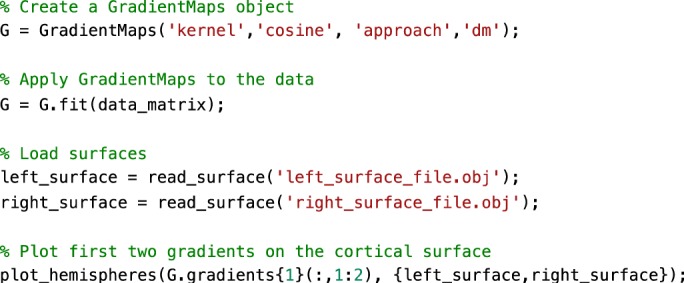
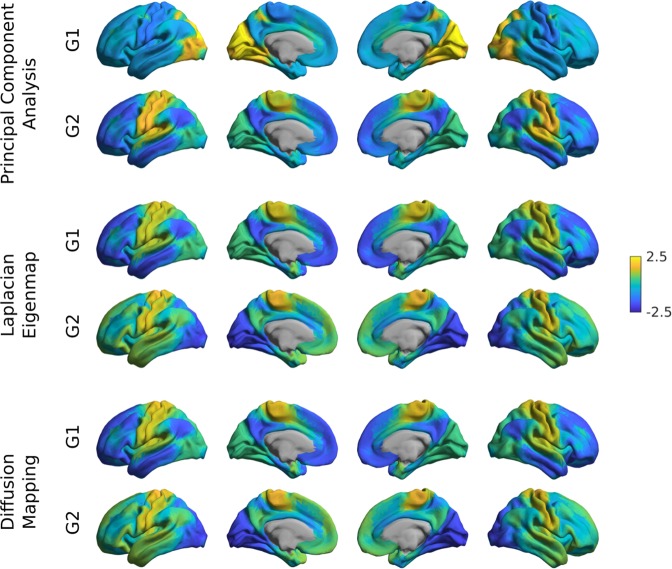
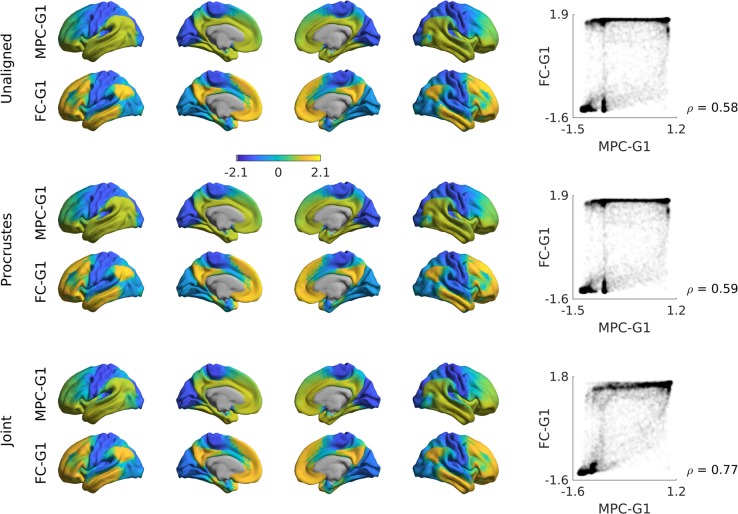
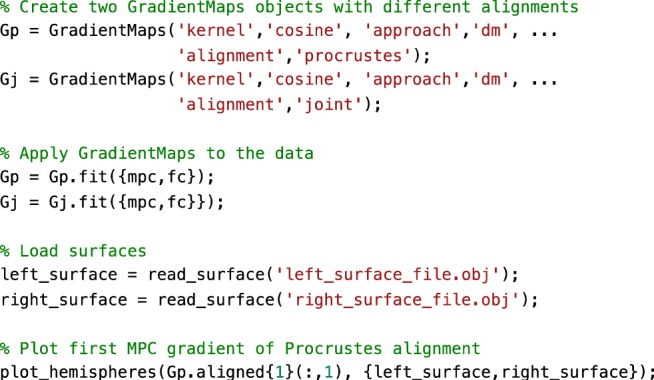
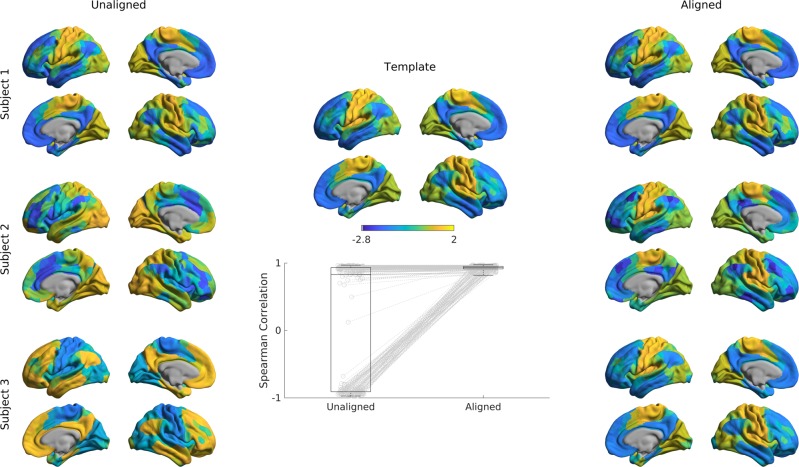
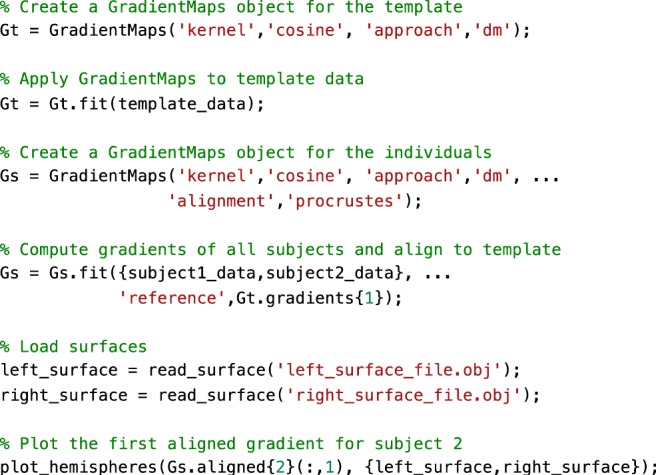
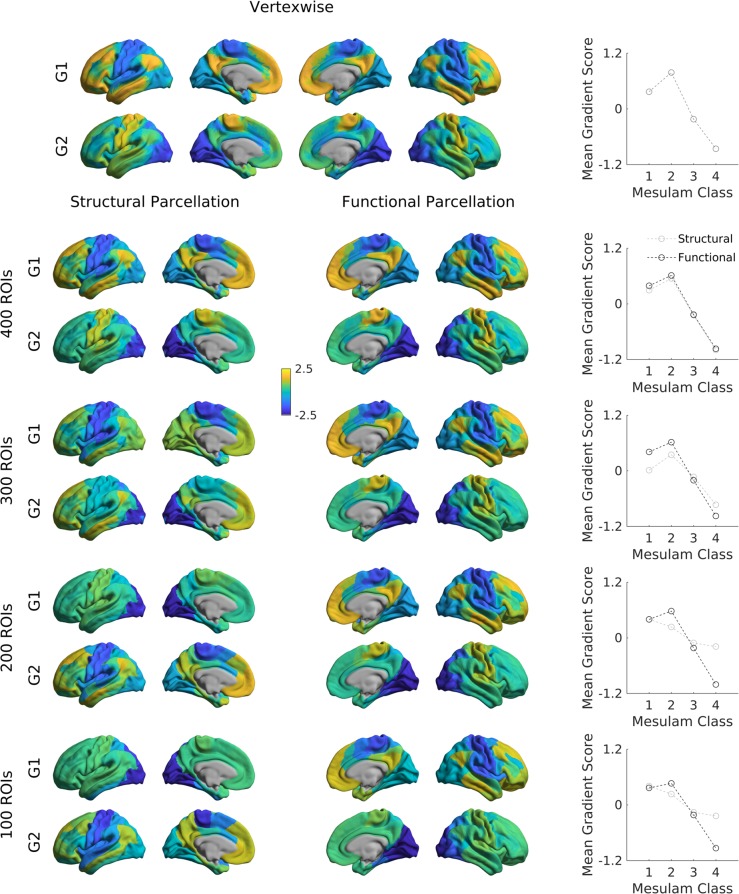
Understanding how cognitive functions emerge from brain structure depends on quantifying how discrete regions are integrated within the broader cortical landscape. Recent work established that macroscale brain organization and function can be described in a compact manner with multivariate machine learning approaches that identify manifolds often described as cortical gradients. By quantifying topographic principles of macroscale organization, cortical gradients lend an analytical framework to study structural and functional brain organization across species, throughout development and aging, and its perturbations in disease. Here, we present BrainSpace, a Python/Matlab toolbox for (i) the identification of gradients, (ii) their alignment, and (iii) their visualization. Our toolbox furthermore allows for controlled association studies between gradients with other brain-level features, adjusted with respect to null models that account for spatial autocorrelation. Validation experiments demonstrate the usage and consistency of our tools for the analysis of functional and microstructural gradients across different spatial scales.
理解认知功能如何从大脑结构中出现,取决于量化离散区域如何在更广泛的皮质景观中整合。最近的工作表明,宏观大脑组织和功能可以通过多元机器学习方法以紧凑的方式来描述,这些方法可以识别通常被描述为皮质梯度的流形。通过量化宏观组织的地形原则,皮质梯度为研究跨物种、贯穿发育和衰老以及疾病中其干扰的结构和功能大脑组织提供了一个分析框架。在这里,我们提出了 BrainSpace,这是一个用于 (i) 梯度识别,(ii) 对齐,和 (iii) 可视化的 Python/Matlab 工具箱。我们的工具箱还允许在梯度与其他大脑水平特征之间进行受控的关联研究,这些研究针对考虑空间自相关的空模型进行了调整。验证实验证明了我们的工具在分析不同空间尺度的功能和微观结构梯度方面的使用和一致性。