Wang Dennis D, Airhart Sophia E, Zhou Bo, Shireman Laura M, Jiang Siyi, Melendez Rodriguez Carolina, Kirkpatrick James N, Shen Danny D, Tian Rong, O'Brien Kevin D
Division of Cardiology, Department of Medicine, University of Washington, Seattle, Washington, USA.
Providence St. Vincent Medical Center, Portland, Oregon, USA.
JACC Basic Transl Sci. 2022 Sep 14;7(12):1183-1196. doi: 10.1016/j.jacbts.2022.06.012. eCollection 2022 Dec.
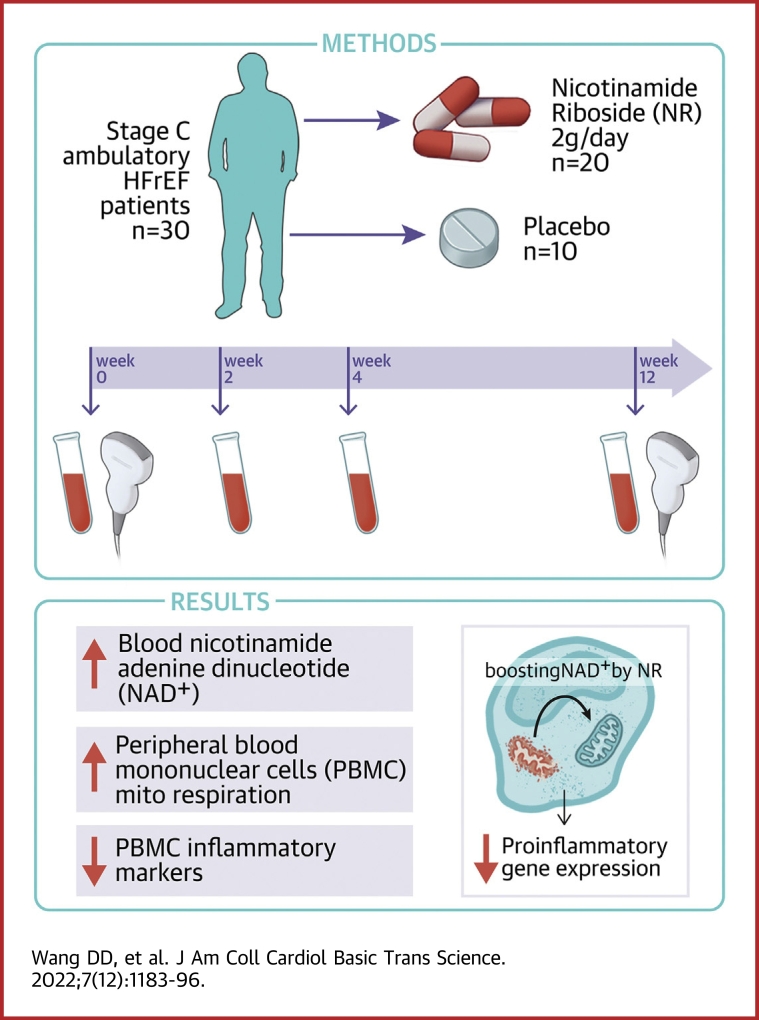
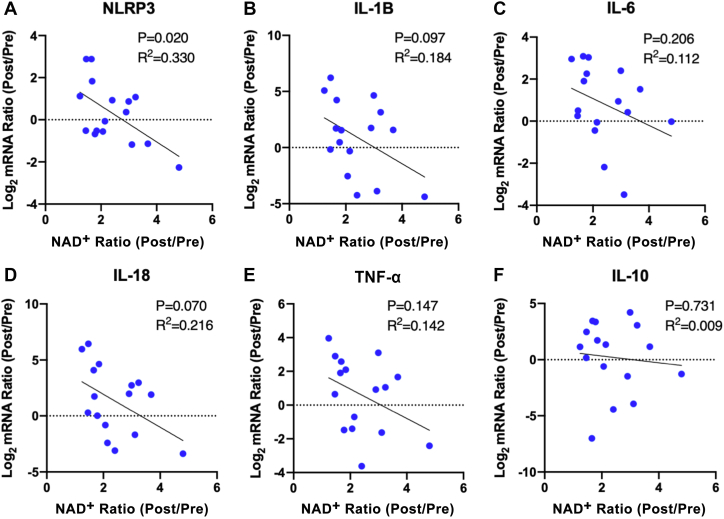
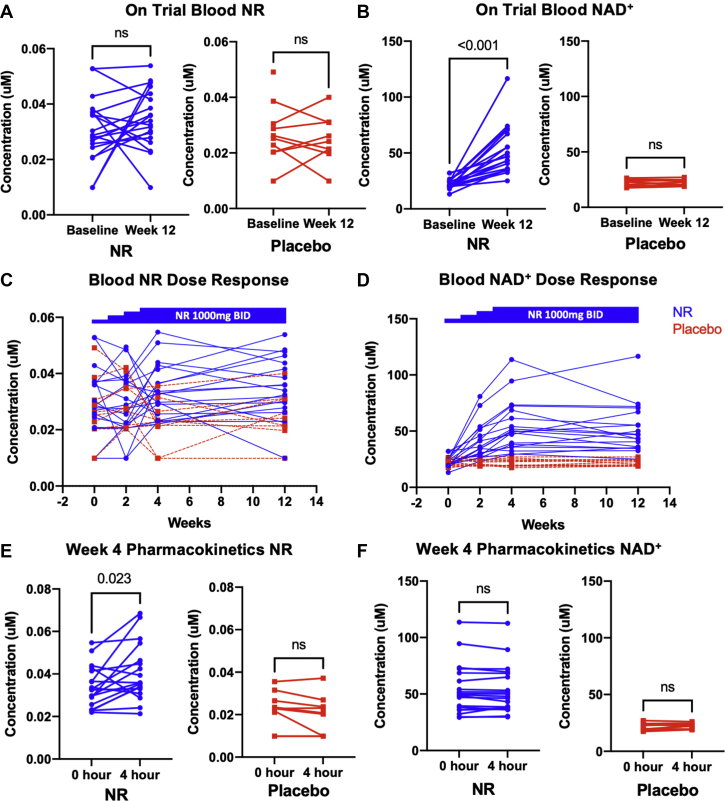
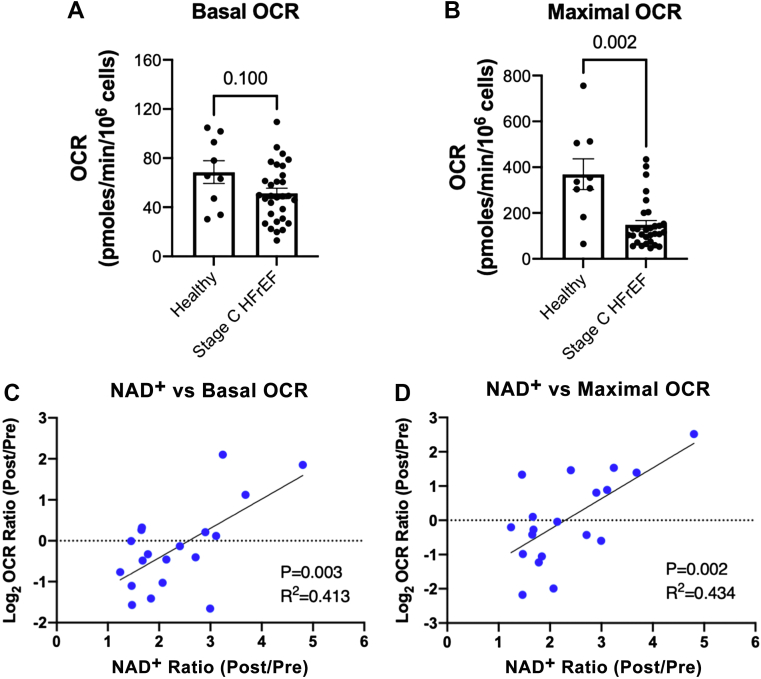
The mitochondrial dysfunction characteristic of heart failure (HF) is associated with changes in intracellular nicotinamide adenine dinucleotide (NAD) and NADH levels. Raising NAD levels with the NAD precursor, nicotinamide riboside (NR), may represent a novel HF treatment. In this 30-participant trial of patients with clinically stable HF with reduced ejection fraction, NR, at a dose of 1,000 mg twice daily, appeared to be safe and well tolerated, and approximately doubled whole blood NAD levels. Intraindividual NAD increases in response to NR correlated with increases in peripheral blood mononuclear cell basal ( = 0.413, 0.003) and maximal ( = 0.434, 0.002) respiration, and with decreased NLRP3 expression ( = 0.330, 0.020). (Nicotinamide Riboside in Systolic Heart Failure; NCT03423342).
心力衰竭(HF)的线粒体功能障碍特征与细胞内烟酰胺腺嘌呤二核苷酸(NAD)和NADH水平的变化有关。使用NAD前体烟酰胺核糖(NR)提高NAD水平可能代表一种新型的HF治疗方法。在这项针对30名射血分数降低的临床稳定HF患者的试验中,每日两次剂量为1000 mg的NR似乎安全且耐受性良好,并且使全血NAD水平增加了约一倍。个体内NAD对NR的增加与外周血单核细胞基础呼吸(r = 0.413,P < 0.003)和最大呼吸(r = 0.434,P < 0.002)的增加相关,并且与NLRP3表达的降低(r = 0.330,P = 0.020)相关。(收缩性心力衰竭中的烟酰胺核糖;NCT03423342)