Jiang Xifei, Deng Wenjia, Tao Siyao, Tang Zheng, Chen Yuehong, Tian Mengxin, Wang Ting, Tao Chenyang, Li Yize, Fang Yuan, Pu Congying, Gao Jun, Wang Xiaomin, Qu Weifeng, Gai Xiameng, Ding Zhenbin, Fu Yixian, Zheng Ying, Cao Siyuwei, Zhou Jian, Huang Min, Liu Weiren, Xu Jun, Fan Jia, Shi Yinghong
Department of Liver Surgery and Transplantation, Liver Cancer Institute, Zhongshan Hospital, Fudan University & Research Unit of Liver Cancer Recurrence and Metastasis, Chinese Academy of Medical Sciences, Shanghai, China.
Key Laboratory of Carcinogenesis and Cancer Invasion of Ministry of Education, Shanghai, China.
Cell Discov. 2023 Jan 17;9(1):7. doi: 10.1038/s41421-022-00504-0.
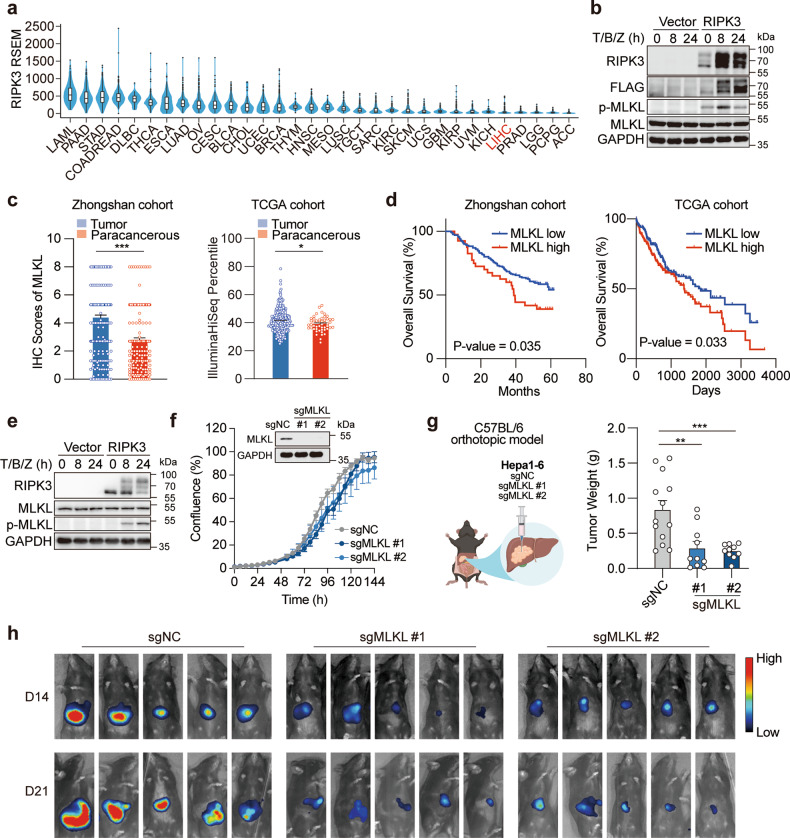
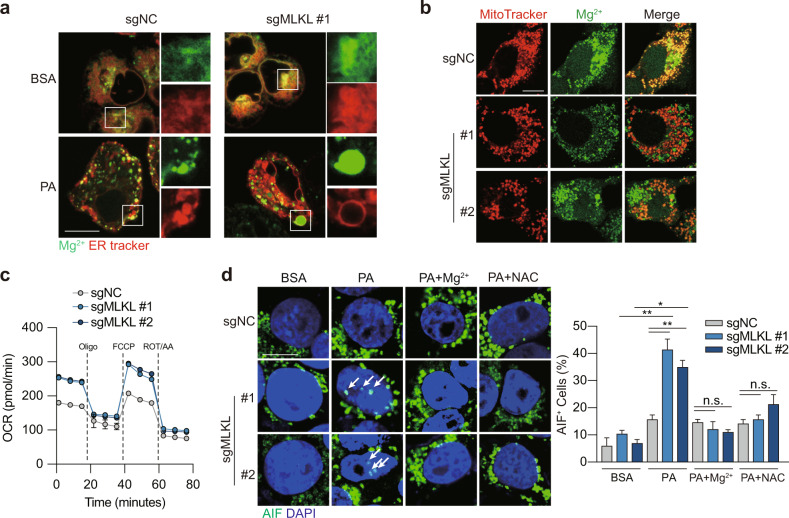
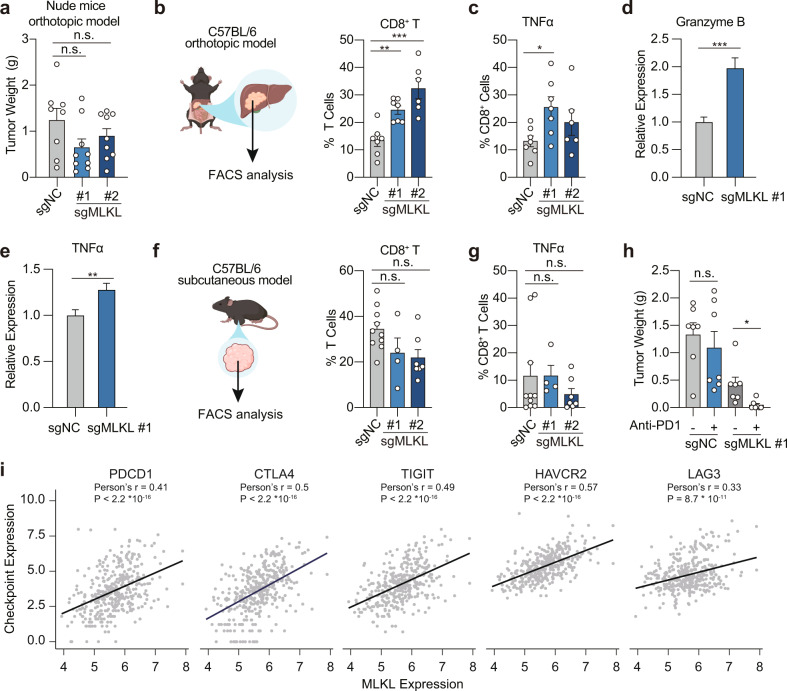
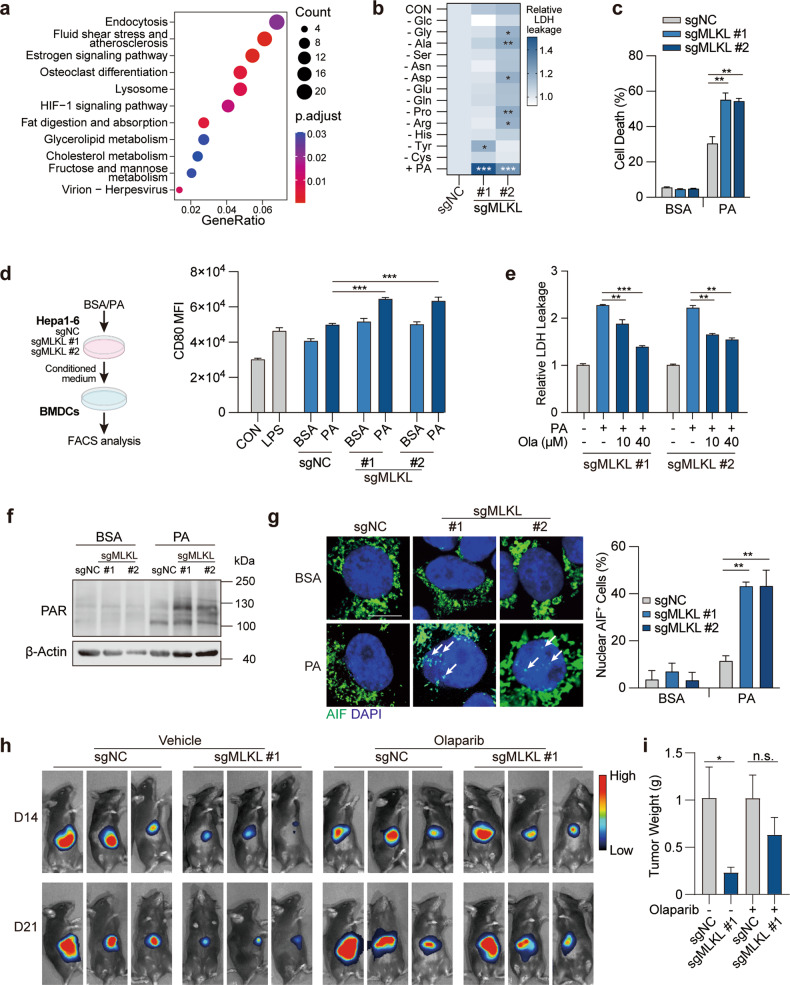
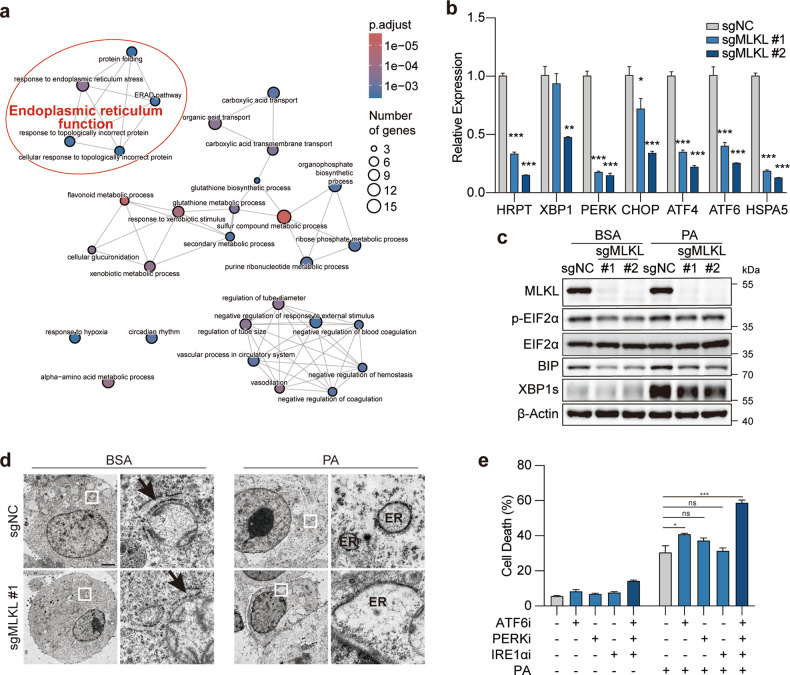
Mixed lineage kinase domain-like (MLKL) is widely accepted as an executioner of necroptosis, in which MLKL mediates necroptotic signaling and triggers cell death in a receptor-interacting protein kinase 3 (RIPK3)-dependent manner. Recently, it is increasingly noted that RIPK3 is intrinsically silenced in hepatocytes, raising a question about the role of MLKL in hepatocellular carcinoma (HCC). This study reports a previously unrecognized role of MLKL in regulating parthanatos, a programmed cell death distinct from necroptosis. In HCC cells with intrinsic RIPK3 deficiency, knockout of MLKL impedes the orthotopic tumor growth, activates the anti-tumor immune response and enhances the therapeutic effect of immune checkpoint blockade in syngeneic HCC tumor models. Mechanistically, MLKL is required for maintaining the endoplasmic reticulum (ER)-mitochondrial Mg dynamics in HCC cells. MLKL deficiency restricts ER Mg release and mitochondrial Mg uptake, leading to ER dysfunction and mitochondrial oxidative stress, which together confer increased susceptibility to metabolic stress-induced parthanatos. Importantly, pharmacological inhibition of poly(ADP-ribose) polymerase to block parthanatos restores the tumor growth and immune evasion in MLKL-knockout HCC tumors. Together, our data demonstrate a new RIPK3-independent role of MLKL in regulating parthanatos and highlight the role of MLKL in facilitating immune evasion in HCC.
混合谱系激酶结构域样蛋白(MLKL)被广泛认为是坏死性凋亡的执行者,在坏死性凋亡中,MLKL介导坏死性凋亡信号传导,并以受体相互作用蛋白激酶3(RIPK3)依赖的方式触发细胞死亡。最近,人们越来越多地注意到RIPK3在肝细胞中内在沉默,这引发了关于MLKL在肝细胞癌(HCC)中作用的疑问。本研究报道了MLKL在调节PARP-1依赖性程序性坏死(一种不同于坏死性凋亡的程序性细胞死亡)中以前未被认识的作用。在具有内在RIPK3缺陷的肝癌细胞中,敲除MLKL可阻碍原位肿瘤生长,激活抗肿瘤免疫反应,并增强同基因肝癌肿瘤模型中免疫检查点阻断的治疗效果。机制上,MLKL是肝癌细胞中维持内质网(ER)-线粒体镁动态平衡所必需的。MLKL缺陷会限制内质网镁释放和线粒体镁摄取,导致内质网功能障碍和线粒体氧化应激,这共同增加了对代谢应激诱导的程序性坏死的易感性。重要的是,药理学抑制聚(ADP-核糖)聚合酶以阻断程序性坏死可恢复敲除MLKL的肝癌肿瘤的生长和免疫逃逸。总之,我们的数据证明了MLKL在调节程序性坏死中一种新的不依赖RIPK3的作用,并突出了MLKL在促进肝癌免疫逃逸中的作用。