Gomez Osmanny, Parikh Sarthak, Davis Ty, Halpern Abby, Stanziola Felix, Corces Arturo
Department of Orthopaedic Surgery, Larkin Community Hospital, South Miami, FL 33143, United States.
J Orthop Case Rep. 2022 Jul;12(7):60-65. doi: 10.13107/jocr.2022.v12.i07.2918.
Knee dislocations are an uncommon complication following total knee arthroplasty (TKA). There are many causes of TKA dislocation; however, Wernicke-Korsakoff syndrome is one uncommon neurologic condition that increases the risk of TKA dislocation.
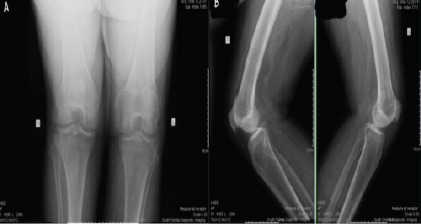
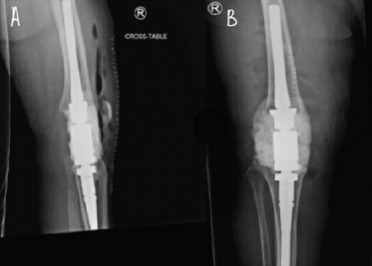
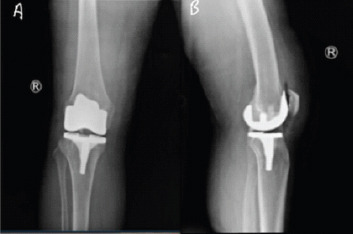
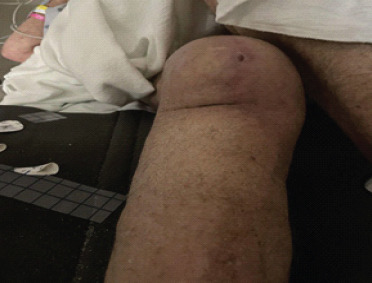
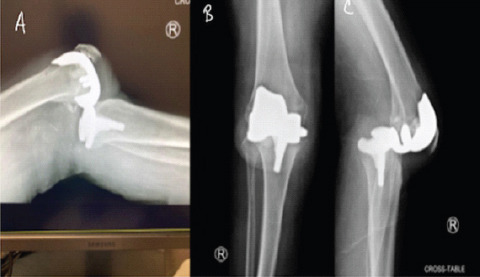
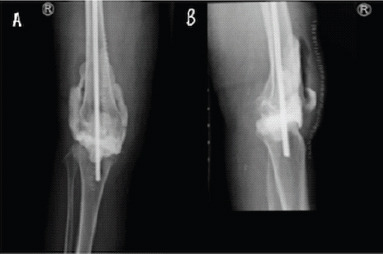
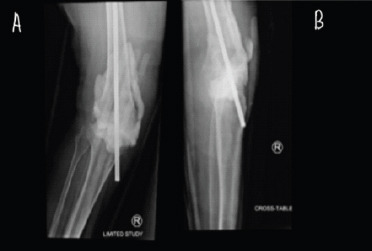
A 71-year-old male with presented to a local community hospital with knee pain due to advanced osteoarthritis of the knee and subsequently underwent an uncomplicated TKA with a cruciate retaining prosthesis. He eventually returned to the hospital due to infection, medical instability, chronic knee instability, and posterior tibiofemoral dislocation. A revision process was required. Throughout the course of management, the patient had altered mental status and was admitted to the intensive care unit. The first procedure involved removing the cruciate retaining prosthesis and replacing it with a static cement antibiotic spacer. This prosthesis was eventually dislocated through the tibia and a second procedure requiring the placement of an intercalary fusion was needed. The patient has not followed up after the hospital admission.
Wernicke-Korsakoff Syndrome is an uncommon condition that affects alcoholics and complicates treatment with joint replacement surgery. Patients with Wernicke-Korsakoff syndrome provide a unique set of challenges that may require multiple surgeries and varying prostheses. Chronic posterior tibiofemoral dislocation is one specific complication that may affect the management of these patients. As orthopedic surgeons, it is important to consider alcohol use disorder and Wernicke-Korsakoff Syndrome when treating patients with total joint replacement.
膝关节脱位是全膝关节置换术(TKA)后一种罕见的并发症。TKA脱位有多种原因;然而,韦尼克-科尔萨科夫综合征是一种罕见的神经系统疾病,会增加TKA脱位的风险。
一名71岁男性因膝关节晚期骨关节炎出现膝关节疼痛,就诊于当地社区医院,随后接受了使用保留交叉韧带假体的无并发症TKA手术。他最终因感染、医疗不稳定、慢性膝关节不稳定和胫股后脱位返回医院,需要进行翻修手术。在整个治疗过程中,患者精神状态改变,被收入重症监护病房。第一次手术包括取出保留交叉韧带的假体,并用静态骨水泥抗生素间隔物取而代之。该假体最终通过胫骨脱位,需要进行第二次手术,即置入间置融合术。患者入院后未进行随访。
韦尼克-科尔萨科夫综合征是一种罕见的疾病,影响酗酒者,并使关节置换手术的治疗复杂化。患有韦尼克-科尔萨科夫综合征的患者带来了一系列独特的挑战,可能需要多次手术和不同的假体。慢性胫股后脱位是一种可能影响这些患者治疗的特定并发症。作为骨科医生,在治疗全关节置换患者时,考虑酒精使用障碍和韦尼克-科尔萨科夫综合征很重要。