Ravi Rajesh, Athisuyambulingam Maharajan, Kanagaraj Shanmugavel, Tresnakova Nikola, Impellitteri Federica, Viswambaran Ganapiriya, Faggio Caterina
PG & Research Department of Zoology, Khadir Mohideen College, Affiliated to Bharathidasan University, Tiruchirappalli, Thanjavur Dist, Adirampattinam 614701, India.
Research Institute of Fish Culture and Hydrobiology, South Bohemian Research Center of Aquaculture and Biodiversity of Hydrocenoses, Faculty of Fisheries and Protection of Waters, University of South Bohemia in Ceske Budejovice, Zatisi 728/II, 389 25 Vodnany, Czech Republic.
Vet Sci. 2023 Jan 12;10(1):53. doi: 10.3390/vetsci10010053.
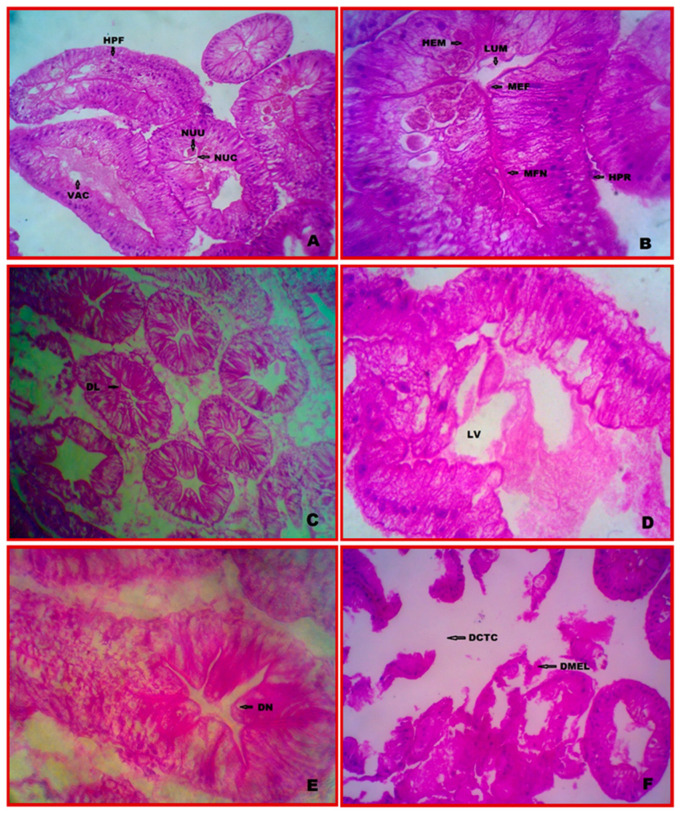
Chlorpyrifos is an organophosphate insecticide occurring in aquatic ecosystems. Due to exposure to xenobiotics, several harmful effects on aquatic organisms are noticed worldwide. Mangrove crabs are an ecologically important aquatic invertebrate species in food web interactions and in the mangrove ecosystem. Therefore, this study aimed to evaluate the cytotoxic effects of chlorpyrifos on the mangrove crab, . Crabs were exposed to 0.0294 and 0.0588 ppm of chlorpyrifos for 7 and 28 days. Cytopathologic effects on the gill, hepatopancreas, and muscle were investigated, and observations were compared with a control group. The results suggest that chlorpyrifos induces time- and concentration-dependent cytopathological alternations in the gill and exhibited epithelial lifting, oedema, necrosis, and a fusion of secondary lamellae and haemorrhage. The deceased hepatopancreas showed infiltration, a large lumen formation, and the disappearance of haemocytes, while the muscle tissue showed atrophy, necrosis, a wavy appearance, an accumulation of granular material between muscle fibres, and fragmentation in a mangrove crab. This study shows the great potential of cytopathological investigations, allows us to assess the sensitivity of various aquatic animal species to potentially dangerous compounds, and calculates safe concentrations with which to reduce pesticide use.
毒死蜱是一种存在于水生生态系统中的有机磷杀虫剂。由于接触到外来生物,全世界都注意到了它对水生生物的一些有害影响。红树林蟹是食物网相互作用和红树林生态系统中具有重要生态意义的水生无脊椎动物物种。因此,本研究旨在评估毒死蜱对红树林蟹的细胞毒性作用。将螃蟹暴露于0.0294和0.0588 ppm的毒死蜱中7天和28天。研究了对鳃、肝胰腺和肌肉的细胞病理学影响,并将观察结果与对照组进行了比较。结果表明,毒死蜱在鳃中诱导了时间和浓度依赖性的细胞病理学变化,表现为上皮层隆起、水肿、坏死、次生鳃小片融合和出血。死亡的肝胰腺表现为浸润、大腔形成和血细胞消失,而肌肉组织表现为萎缩、坏死、波浪状外观、肌纤维间颗粒物质积累以及红树林蟹中的碎片化。这项研究显示了细胞病理学研究的巨大潜力,使我们能够评估各种水生动物物种对潜在危险化合物的敏感性,并计算出可减少农药使用的安全浓度。