Ludwig Center at Harvard and Laboratory of Systems Pharmacology, Harvard Medical School, Boston, MA, USA.
Ludwig Center at Harvard and Laboratory of Systems Pharmacology, Harvard Medical School, Boston, MA, USA; Harvard Graduate Program in Biophysics, Harvard University, Cambridge, MA, USA.
Cell. 2023 Jan 19;186(2):363-381.e19. doi: 10.1016/j.cell.2022.12.028.
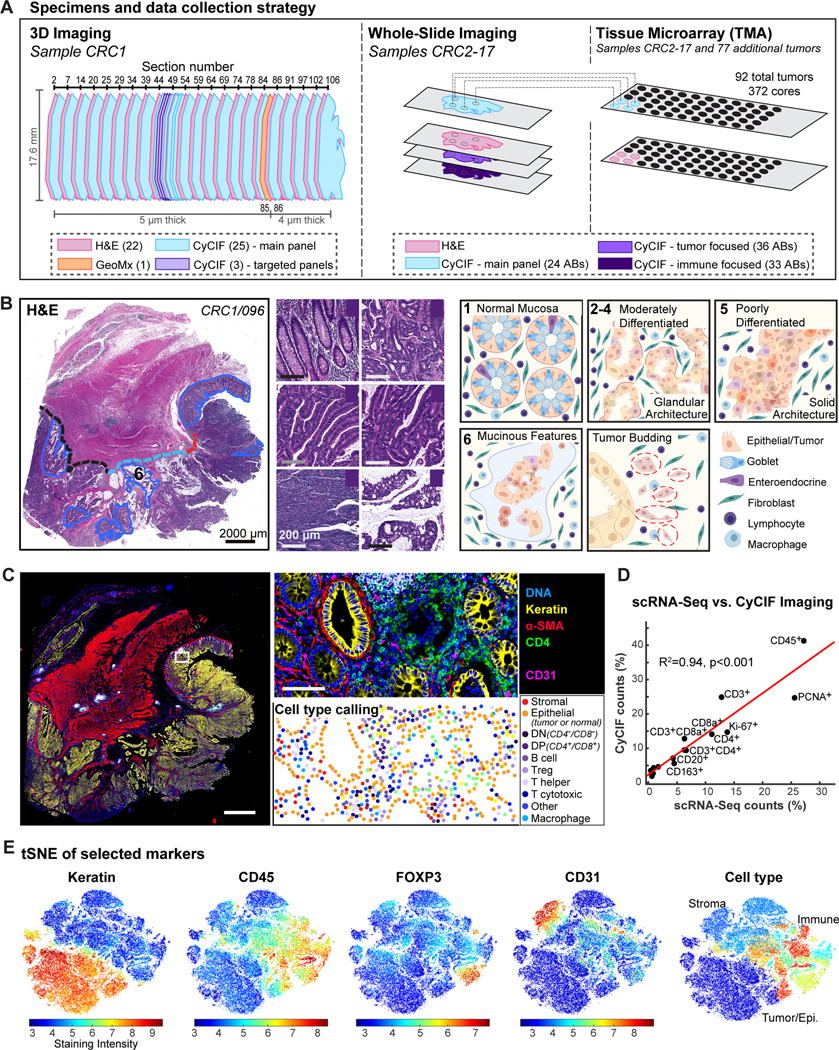
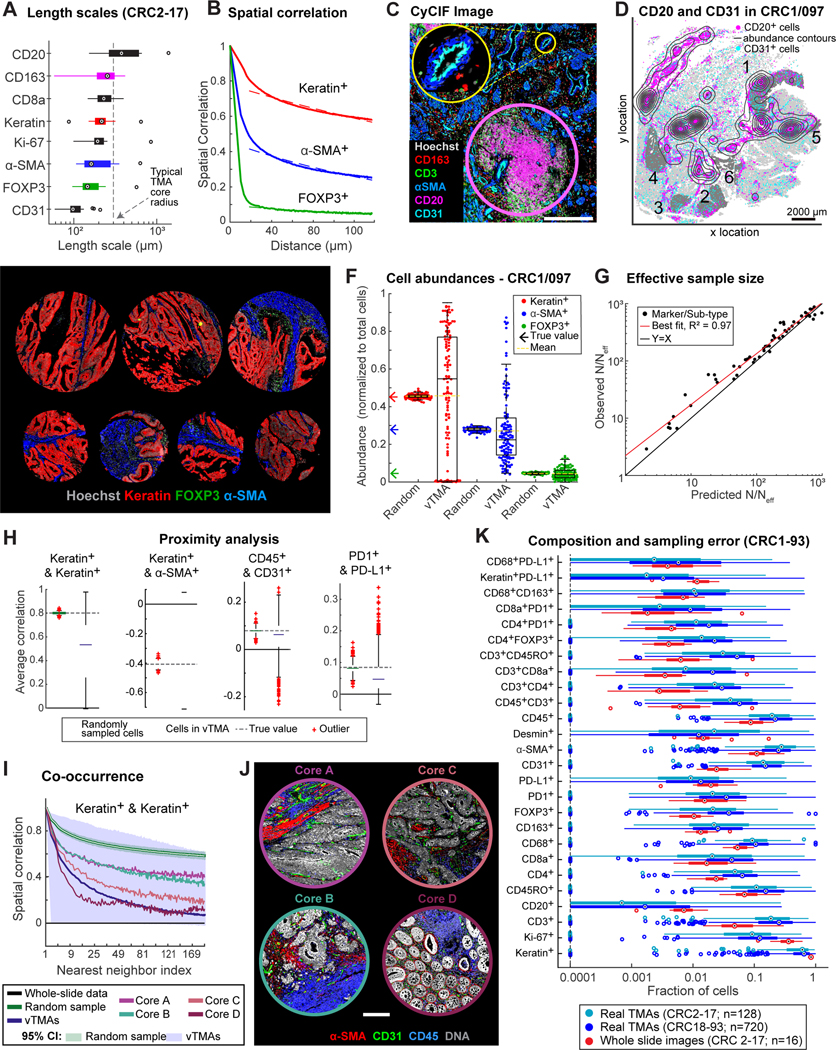
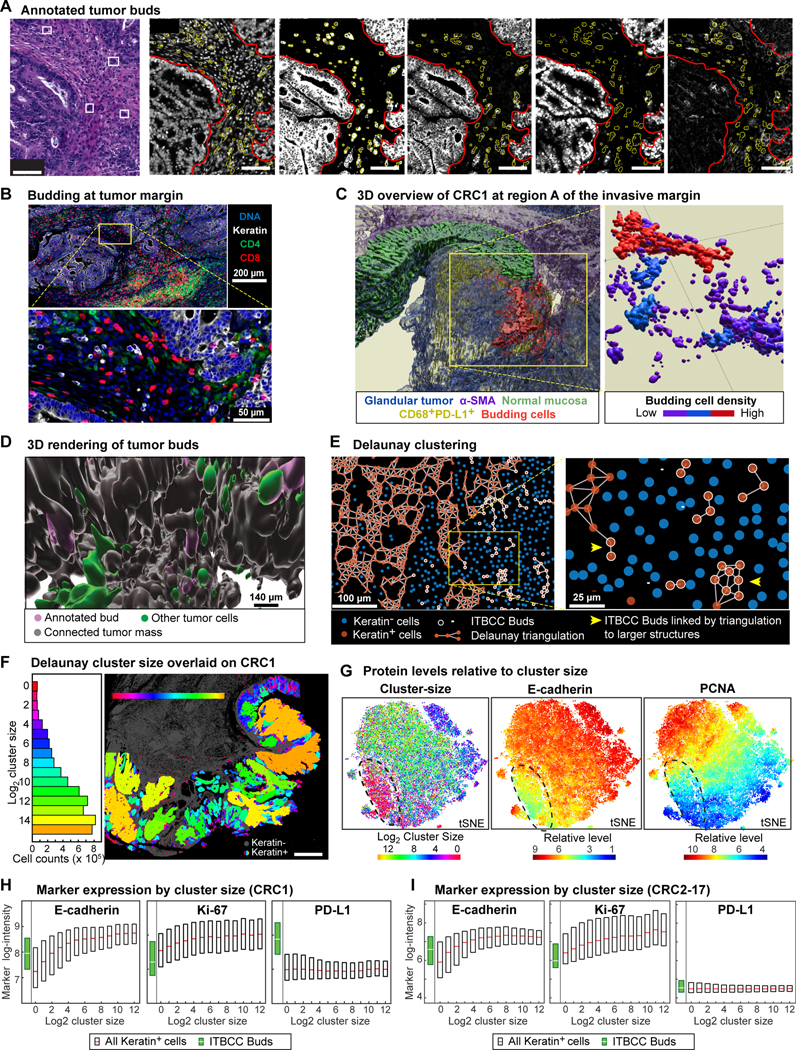
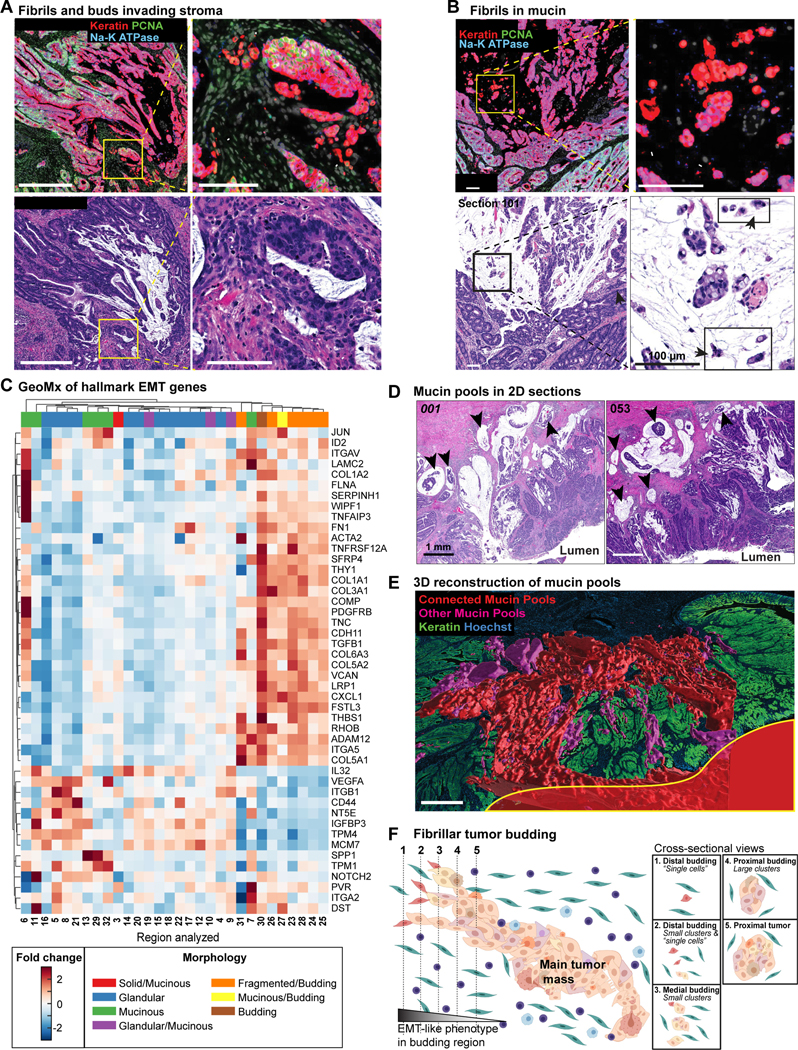
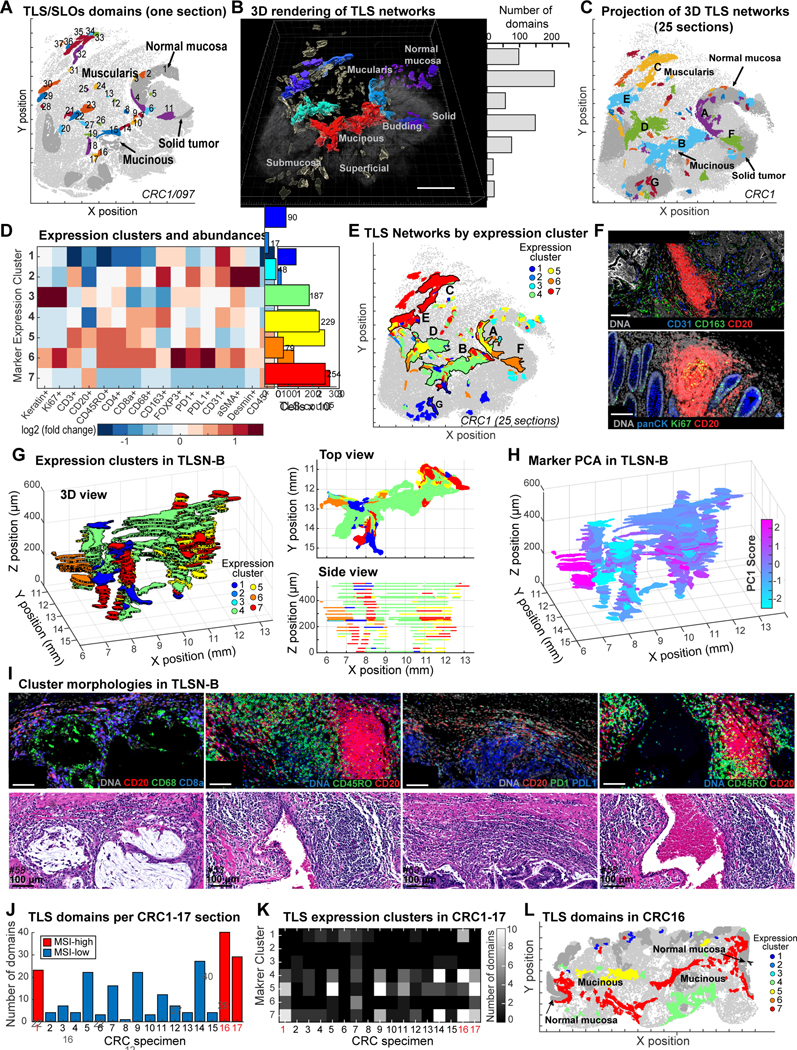
Advanced solid cancers are complex assemblies of tumor, immune, and stromal cells characterized by high intratumoral variation. We use highly multiplexed tissue imaging, 3D reconstruction, spatial statistics, and machine learning to identify cell types and states underlying morphological features of known diagnostic and prognostic significance in colorectal cancer. Quantitation of these features in high-plex marker space reveals recurrent transitions from one tumor morphology to the next, some of which are coincident with long-range gradients in the expression of oncogenes and epigenetic regulators. At the tumor invasive margin, where tumor, normal, and immune cells compete, T cell suppression involves multiple cell types and 3D imaging shows that seemingly localized 2D features such as tertiary lymphoid structures are commonly interconnected and have graded molecular properties. Thus, while cancer genetics emphasizes the importance of discrete changes in tumor state, whole-specimen imaging reveals large-scale morphological and molecular gradients analogous to those in developing tissues.
高级实体瘤是由肿瘤、免疫和基质细胞组成的复杂集合体,其特点是肿瘤内高度变异。我们使用高度多重化的组织成像、3D 重建、空间统计学和机器学习来识别结直肠癌中具有已知诊断和预后意义的形态特征背后的细胞类型和状态。在高多重标记空间中对这些特征进行定量分析,揭示了从一种肿瘤形态到另一种形态的反复转变,其中一些与致癌基因和表观遗传调节剂表达的长程梯度一致。在肿瘤侵袭边缘,肿瘤、正常和免疫细胞相互竞争,T 细胞抑制涉及多种细胞类型,3D 成像表明,看似局部的 2D 特征,如三级淋巴结构,通常是相互连接的,并且具有分级的分子特性。因此,虽然癌症遗传学强调肿瘤状态离散变化的重要性,但整个标本成像揭示了类似于发育组织的大规模形态和分子梯度。