Grünberg Lisa, Eisenburger Nina, Ferrari Nina, Friesen David, Haas Fabiola, Klaudius Marlen, Schmidt Lisa, Joisten Christine
Department for Physical Activity in Public Health, Institute of Movement and Neurosciences, German Sport University Cologne, Am Sportpark Müngersdorf 6, 50933 Cologne, Germany.
Cologne Center for Prevention in Childhood and Youth, Heart Center Cologne, University Hospital of Cologne, Kerpener Str. 62, 50937 Cologne, Germany.
Children (Basel). 2023 Jan 7;10(1):127. doi: 10.3390/children10010127.
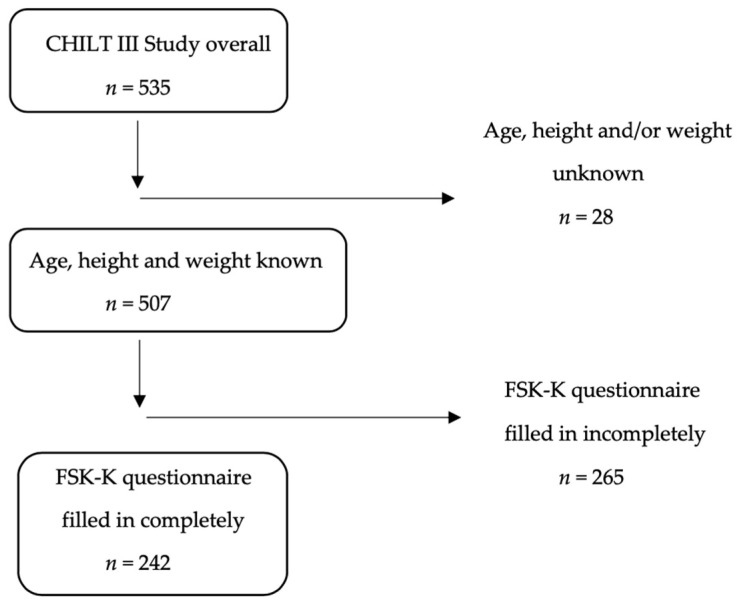
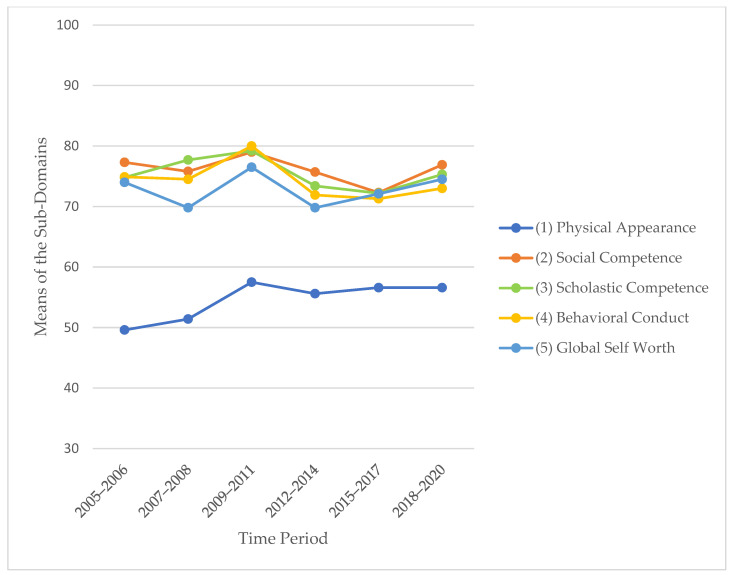
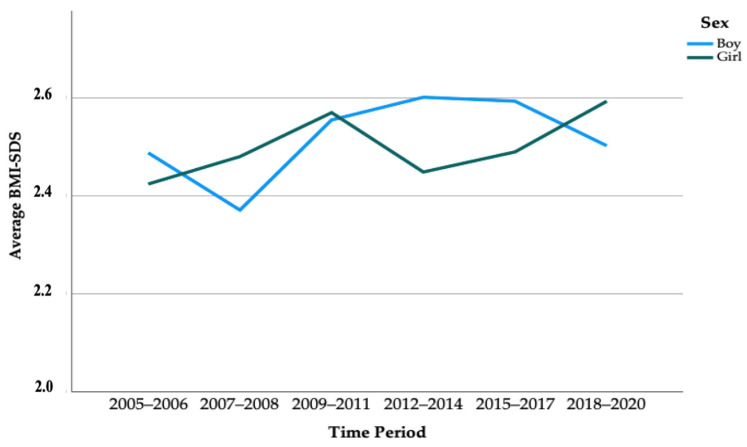
Juvenile obesity is associated with a lower self-concept. Given the continued prevalence of obesity, we examined the secular trend of body mass index standard deviation score (BMI-SDS) and self-concept in participants of a German weight management programme ( = 242, 53.3% female, mean age 12.5 ± 2.1 years, mean BMI-SDS 2.45 ± 0.46) over a period of 15 years. Anthropometric data, physical fitness (watt/kg), and demographic data were assessed. The years 2005 to 2020 were grouped into six sections containing a mean of = 40 participants. The questionnaire for the assessment of self and competence in children (FSK-K) was used to assess the following domains: "scholastic competence", "social competence", "physical appearance", "global self-worth", and "behavioural conduct". No significant between-group differences in self-assessment across self-concept domains were found. In all time periods, heavier children assigned the lowest rating to physical appearance. Social competence increased with higher physical fitness. Even though no negative trend in the self-concept of children with obesity was found in this cohort, the findings confirmed an association between juvenile overweight/obesity and lower physical self-concept, and between a better social competence and increasing physical fitness. Accompanying psychosocial care, therefore, rightly remains an important pillar of obesity therapy.
青少年肥胖与较低的自我概念相关。鉴于肥胖现象持续普遍,我们研究了德国一个体重管理项目参与者(n = 242,53.3%为女性,平均年龄12.5±2.1岁,平均体重指数标准差评分[BMI-SDS]为2.45±0.46)在15年期间BMI-SDS和自我概念的长期趋势。评估了人体测量数据、体能(瓦/千克)和人口统计学数据。2005年至2020年被分为六个部分,每个部分平均有n = 40名参与者。使用儿童自我与能力评估问卷(FSK-K)来评估以下领域:“学业能力”“社交能力”“外貌”“总体自我价值”和“行为表现”。在自我概念领域的自我评估中未发现显著的组间差异。在所有时间段,体重较重的儿童对外貌的评价最低。社交能力随着体能的提高而增强。尽管在该队列中未发现肥胖儿童自我概念的负面趋势,但研究结果证实了青少年超重/肥胖与较低的身体自我概念之间以及较好的社交能力与体能增强之间存在关联。因此,伴随心理社会护理仍然是肥胖治疗的重要支柱。