Neupane Dhurba
Department of Biochemistry and Molecular Biology, University of Nevada, Reno, NV 89557, USA.
Bioengineering (Basel). 2022 Dec 25;10(1):29. doi: 10.3390/bioengineering10010029.
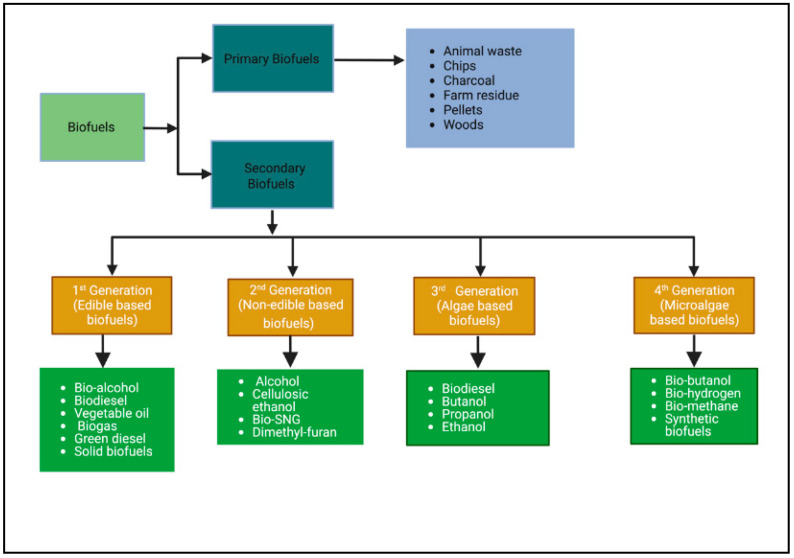
Ever-increasing population growth that demands more energy produces tremendous pressure on natural energy reserves such as coal and petroleum, causing their depletion. Climate prediction models predict that drought events will be more intense during the 21st century affecting agricultural productivity. The renewable energy needs in the global energy supply must stabilize surface temperature rise to 1.5 °C compared to pre-industrial values. To address the global climate issue and higher energy demand without depleting fossil reserves, growing bioenergy feedstock as the potential resource for biodiesel production could be a viable alternative. The interest in growing biofuels for biodiesel production has increased due to its potential benefits over fossil fuels and the flexibility of feedstocks. Therefore, this review article focuses on different biofuels and biomass resources for biodiesel production, their properties, procedure, factors affecting biodiesel production, different catalysts used, and greenhouse gas emissions from biodiesel production.
不断增长的人口对能源需求越来越多,这给煤炭和石油等自然能源储备带来了巨大压力,导致其枯竭。气候预测模型预测,21世纪干旱事件将更加严重,影响农业生产力。与工业化前的值相比,全球能源供应中的可再生能源需求必须将地表温度上升稳定在1.5°C。为了解决全球气候问题和更高的能源需求,同时又不耗尽化石燃料储备,种植生物能源原料作为生物柴油生产的潜在资源可能是一种可行的选择。由于生物柴油相对于化石燃料具有潜在优势以及原料的灵活性,用于生物柴油生产的生物燃料种植受到了更多关注。因此,这篇综述文章重点关注用于生物柴油生产的不同生物燃料和生物质资源、它们的特性、生产过程、影响生物柴油生产的因素、使用的不同催化剂以及生物柴油生产产生的温室气体排放。