Jeswani Harish K, Chilvers Andrew, Azapagic Adisa
Department of Chemical Engineering and Analytical Science, The University of Manchester, Manchester M13 9PL, UK.
Royal Academy of Engineering, 3 Carlton House Terrace, London SW1Y 5DG, UK.
Proc Math Phys Eng Sci. 2020 Nov;476(2243):20200351. doi: 10.1098/rspa.2020.0351. Epub 2020 Nov 25.
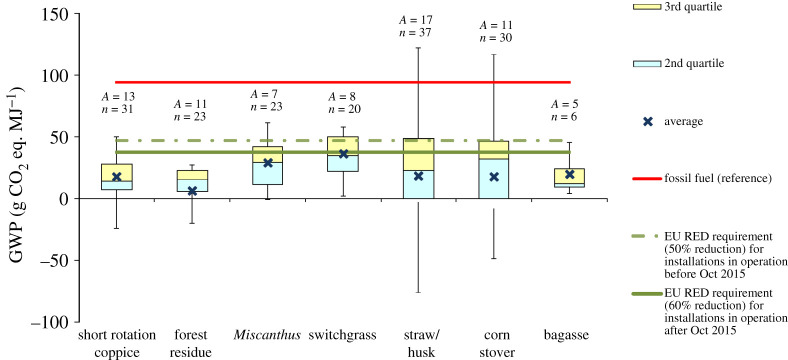
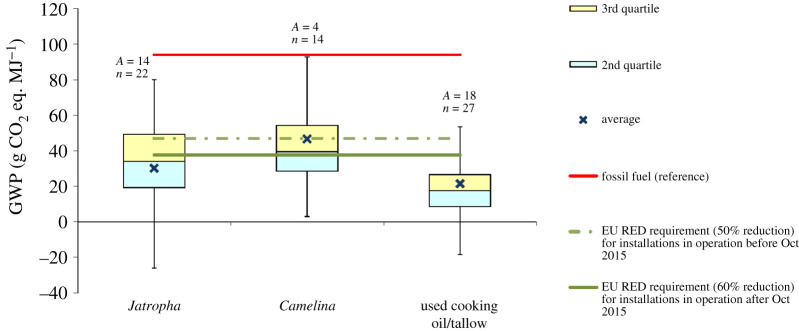
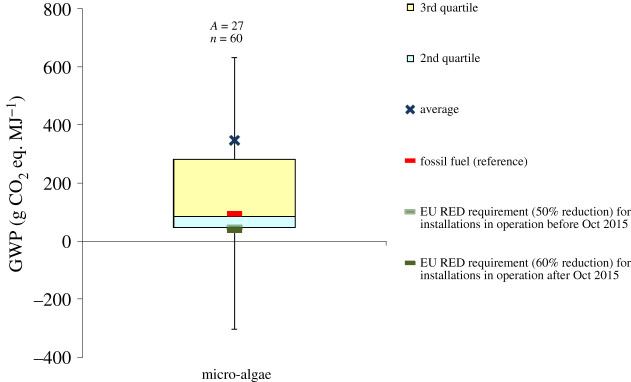
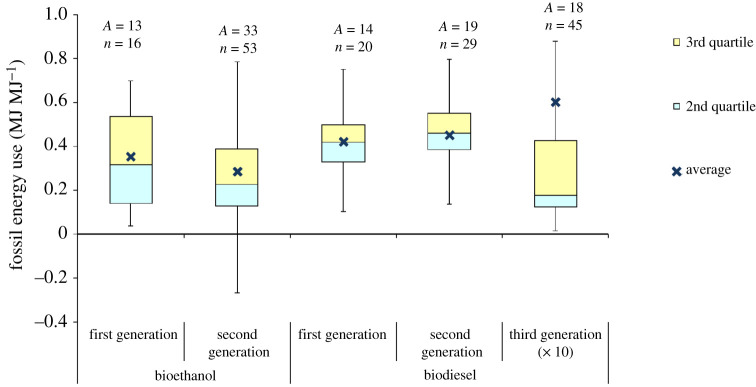
Biofuels are being promoted as a low-carbon alternative to fossil fuels as they could help to reduce greenhouse gas (GHG) emissions and the related climate change impact from transport. However, there are also concerns that their wider deployment could lead to unintended environmental consequences. Numerous life cycle assessment (LCA) studies have considered the climate change and other environmental impacts of biofuels. However, their findings are often conflicting, with a wide variation in the estimates. Thus, the aim of this paper is to review and analyse the latest available evidence to provide a greater clarity and understanding of the environmental impacts of different liquid biofuels. It is evident from the review that the outcomes of LCA studies are highly situational and dependent on many factors, including the type of feedstock, production routes, data variations and methodological choices. Despite this, the existing evidence suggests that, if no land-use change (LUC) is involved, first-generation biofuels can-on average-have lower GHG emissions than fossil fuels, but the reductions for most feedstocks are insufficient to meet the GHG savings required by the EU Renewable Energy Directive (RED). However, second-generation biofuels have, in general, a greater potential to reduce the emissions, provided there is no LUC. Third-generation biofuels do not represent a feasible option at present state of development as their GHG emissions are higher than those from fossil fuels. As also discussed in the paper, several studies show that reductions in GHG emissions from biofuels are achieved at the expense of other impacts, such as acidification, eutrophication, water footprint and biodiversity loss. The paper also investigates the key methodological aspects and sources of uncertainty in the LCA of biofuels and provides recommendations to address these issues.
生物燃料作为化石燃料的低碳替代品正在得到推广,因为它们有助于减少温室气体(GHG)排放以及交通领域相关的气候变化影响。然而,也有人担心其更广泛的应用可能会导致意想不到的环境后果。众多生命周期评估(LCA)研究已经考虑了生物燃料对气候变化和其他环境的影响。然而,他们的研究结果往往相互矛盾,估计值差异很大。因此,本文的目的是回顾和分析现有最新证据,以更清晰地了解不同液体生物燃料的环境影响。从综述中可以明显看出,LCA研究的结果高度依赖具体情况,并取决于许多因素,包括原料类型、生产路线、数据差异和方法选择。尽管如此,现有证据表明,如果不涉及土地利用变化(LUC),第一代生物燃料平均而言可以比化石燃料产生更低的温室气体排放,但大多数原料的减排量不足以满足欧盟可再生能源指令(RED)要求的温室气体减排目标。然而,一般来说,第二代生物燃料在不涉及土地利用变化的情况下具有更大的减排潜力。在目前的发展阶段,第三代生物燃料不是一个可行的选择,因为它们的温室气体排放高于化石燃料。正如本文中所讨论的,几项研究表明,生物燃料温室气体排放的减少是以牺牲其他影响为代价的,如酸化、富营养化、水足迹和生物多样性丧失。本文还研究了生物燃料生命周期评估中的关键方法学方面和不确定性来源,并提出了解决这些问题的建议。