School of Biomedical Engineering, University of British Columbia, 2222 Health Sciences Mall, Vancouver, BC V6T 1Z3, Canada.
Centre for Blood Research, University of British Columbia, 2350 Health Sciences Mall, Vancouver, BC V6T 1Z3, Canada.
Biosensors (Basel). 2022 Dec 29;13(1):53. doi: 10.3390/bios13010053.
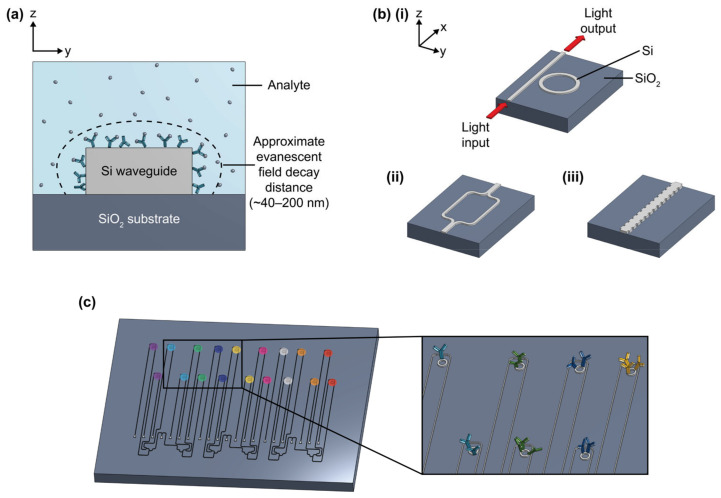
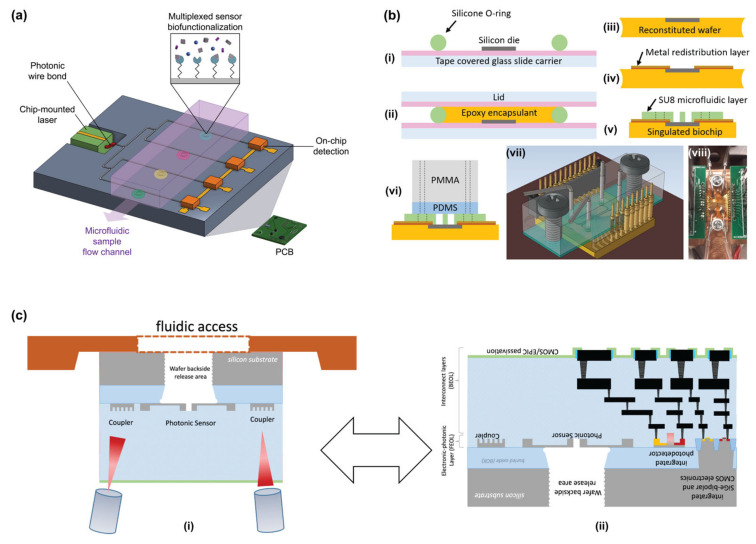
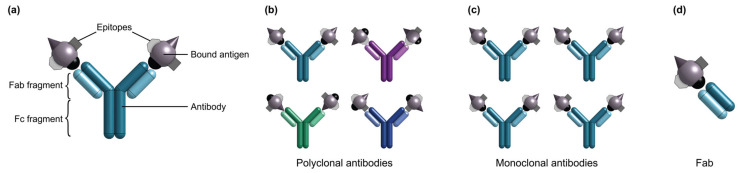
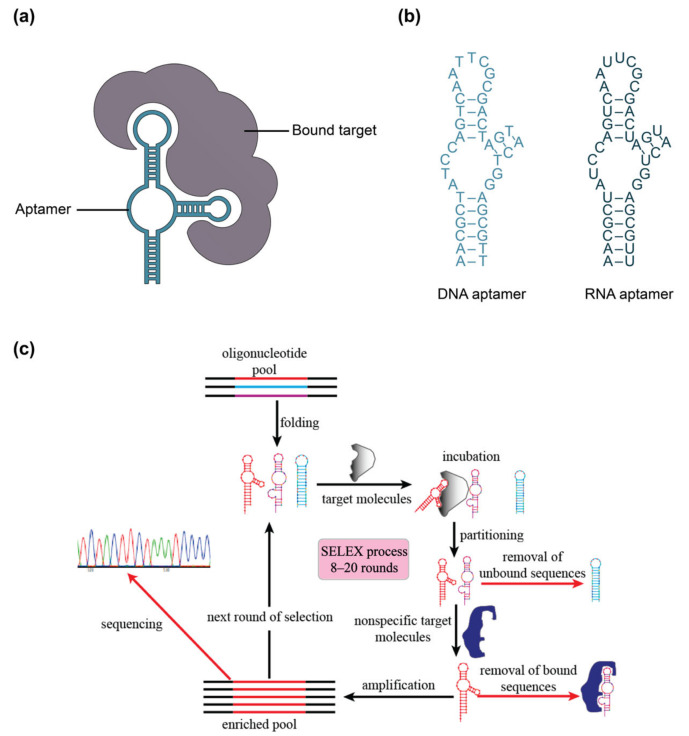
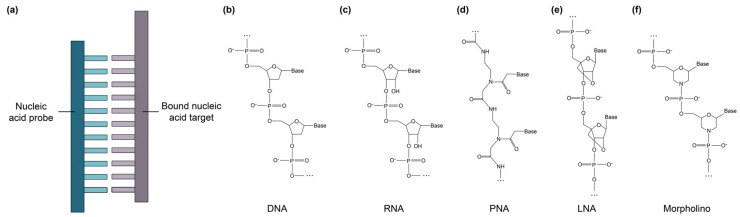
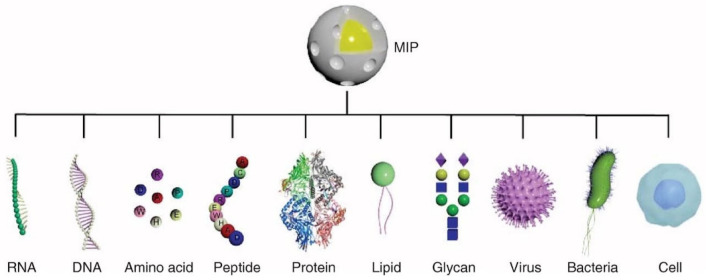
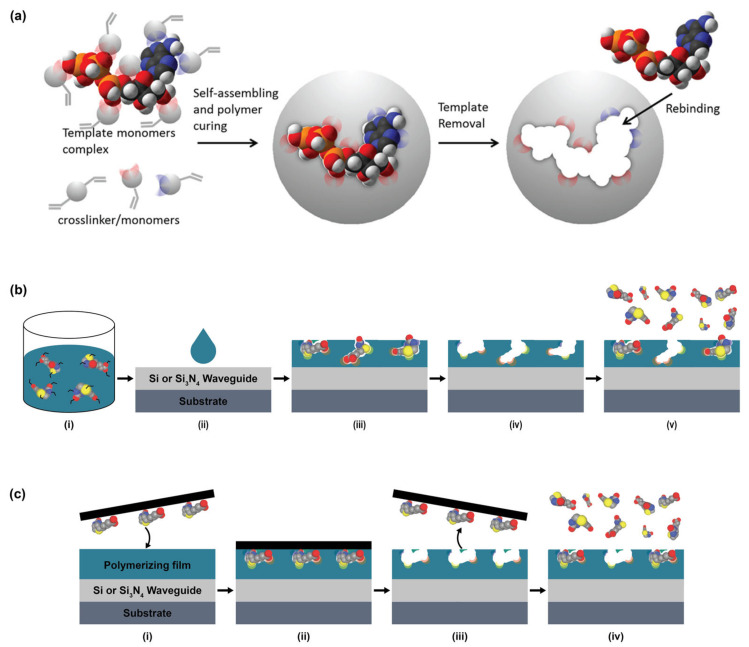
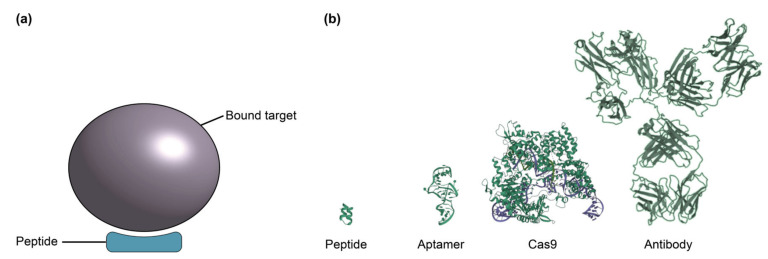
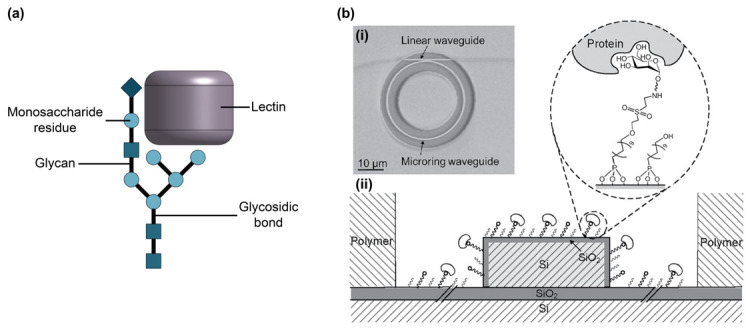
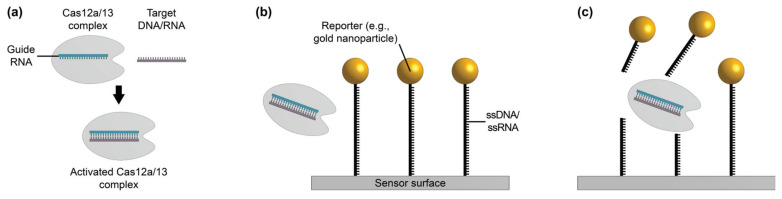
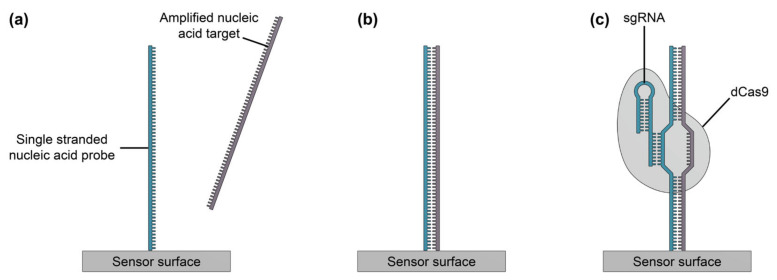
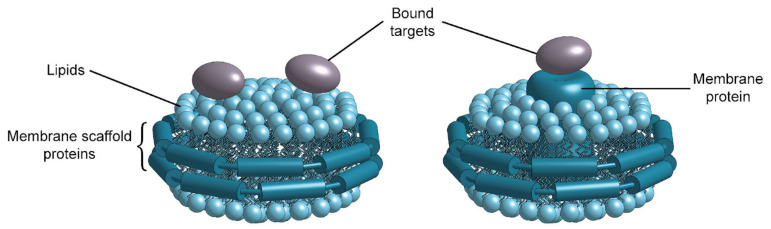
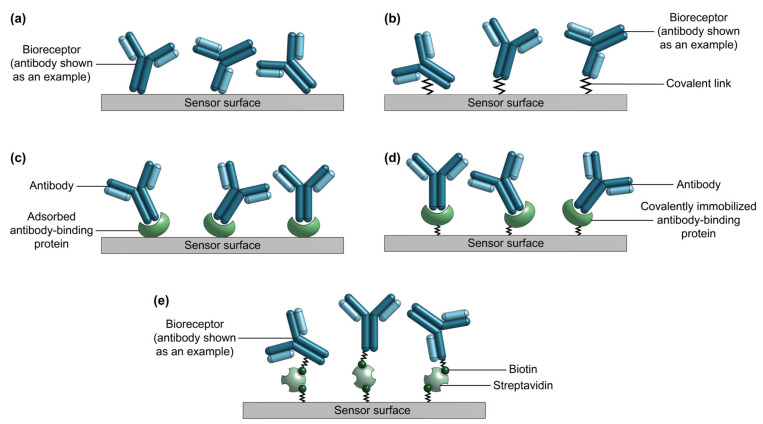
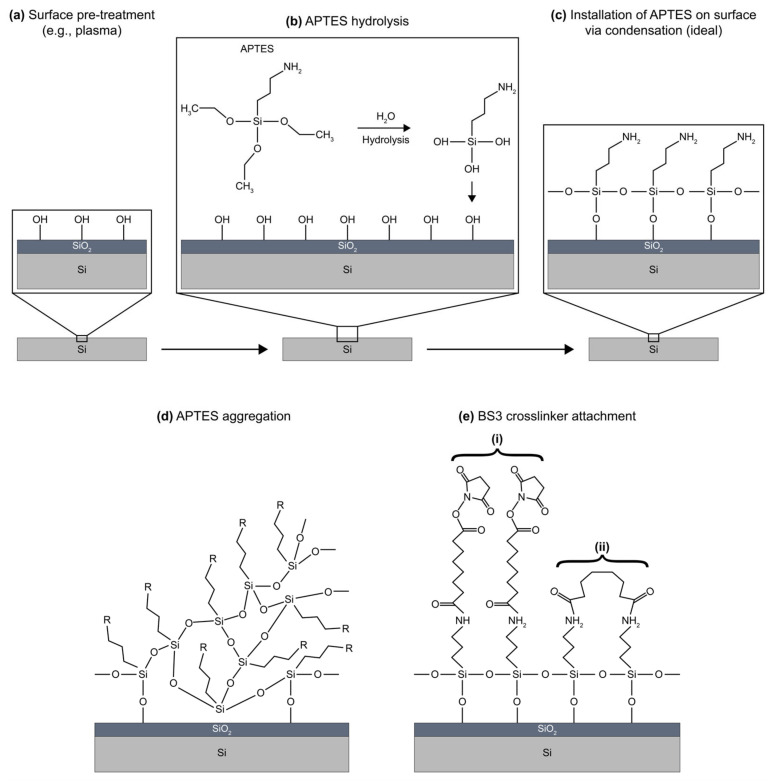
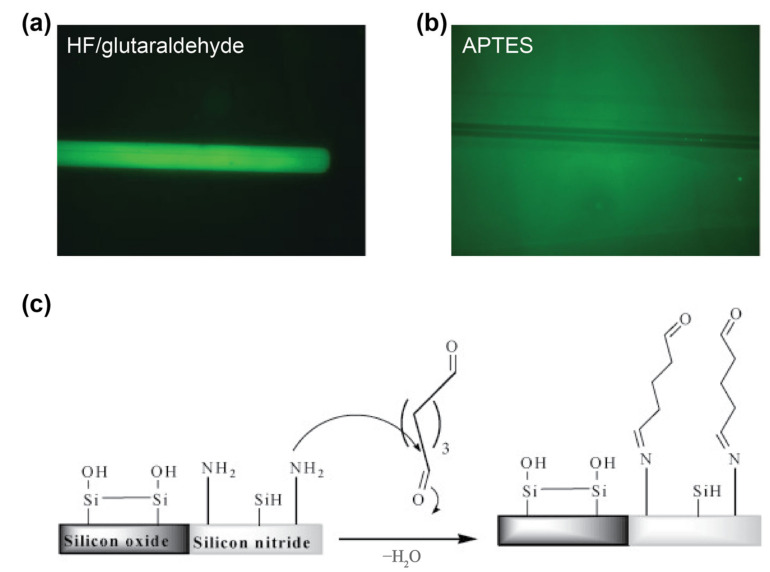
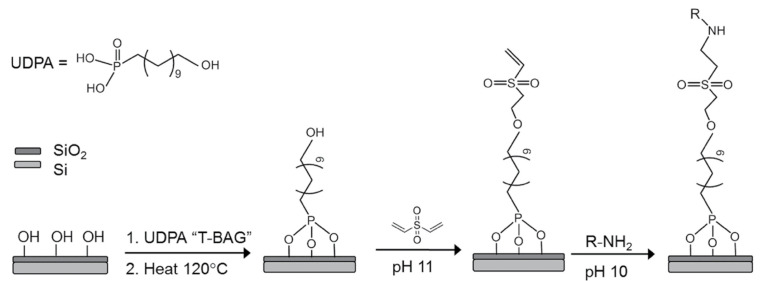
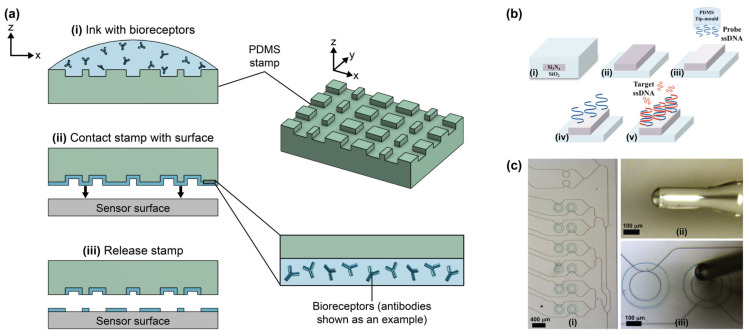
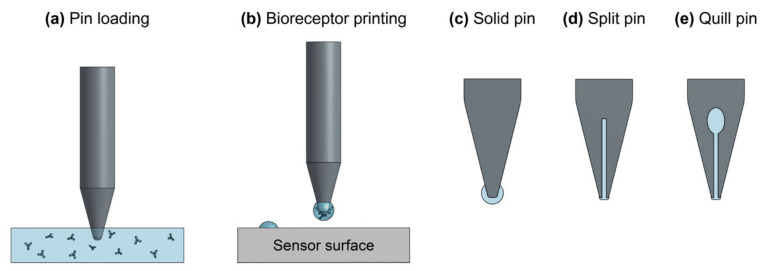
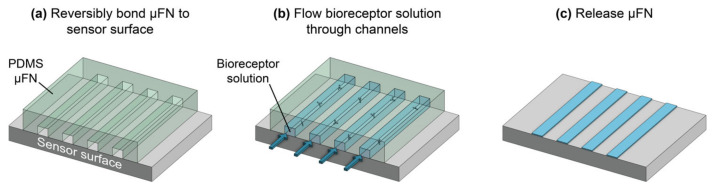
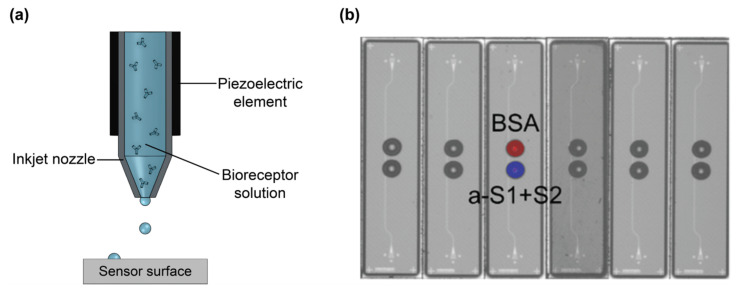
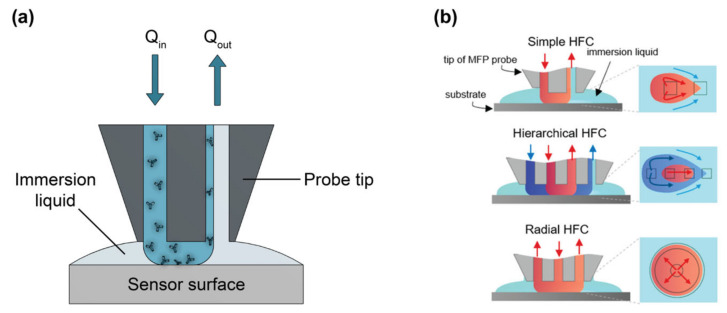
Silicon photonic (SiP) sensors offer a promising platform for robust and low-cost decentralized diagnostics due to their high scalability, low limit of detection, and ability to integrate multiple sensors for multiplexed analyte detection. Their CMOS-compatible fabrication enables chip-scale miniaturization, high scalability, and low-cost mass production. Sensitive, specific detection with silicon photonic sensors is afforded through biofunctionalization of the sensor surface; consequently, this functionalization chemistry is inextricably linked to sensor performance. In this review, we first highlight the biofunctionalization needs for SiP biosensors, including sensitivity, specificity, cost, shelf-stability, and replicability and establish a set of performance criteria. We then benchmark biofunctionalization strategies for SiP biosensors against these criteria, organizing the review around three key aspects: bioreceptor selection, immobilization strategies, and patterning techniques. First, we evaluate bioreceptors, including antibodies, aptamers, nucleic acid probes, molecularly imprinted polymers, peptides, glycans, and lectins. We then compare adsorption, bioaffinity, and covalent chemistries for immobilizing bioreceptors on SiP surfaces. Finally, we compare biopatterning techniques for spatially controlling and multiplexing the biofunctionalization of SiP sensors, including microcontact printing, pin- and pipette-based spotting, microfluidic patterning in channels, inkjet printing, and microfluidic probes.
硅光子(SiP)传感器由于其高可扩展性、低检测极限以及能够集成多个传感器进行多重分析物检测,因此为稳健且低成本的分散式诊断提供了一个很有前景的平台。它们的 CMOS 兼容制造能够实现芯片级的小型化、高可扩展性和低成本的大规模生产。硅光子传感器通过传感器表面的生物功能化实现敏感、特异性检测;因此,这种功能化化学与传感器性能紧密相关。在这篇综述中,我们首先强调了 SiP 生物传感器的生物功能化需求,包括灵敏度、特异性、成本、货架稳定性和可重复性,并建立了一套性能标准。然后,我们根据这些标准来比较 SiP 生物传感器的生物功能化策略,围绕三个关键方面组织综述:生物受体选择、固定化策略和图案化技术。首先,我们评估了生物受体,包括抗体、适体、核酸探针、分子印迹聚合物、肽、聚糖和凝集素。然后,我们比较了用于将生物受体固定在 SiP 表面上的吸附、生物亲和性和共价化学。最后,我们比较了用于空间控制和 SiP 传感器生物功能化的生物图案化技术,包括微接触印刷、基于针和移液管的点样、通道中的微流控图案化、喷墨打印和微流控探头。