Department of Nephrocardiology, Medical University of Lodz, ul. Zeromskiego 113, 90-549 Lodz, Poland.
Department of Nephrology, Hypertension and Family Medicine, Medical University of Lodz, ul. Zeromskiego 113, 90-549 Lodz, Poland.
Int J Mol Sci. 2023 Jan 10;24(2):1377. doi: 10.3390/ijms24021377.
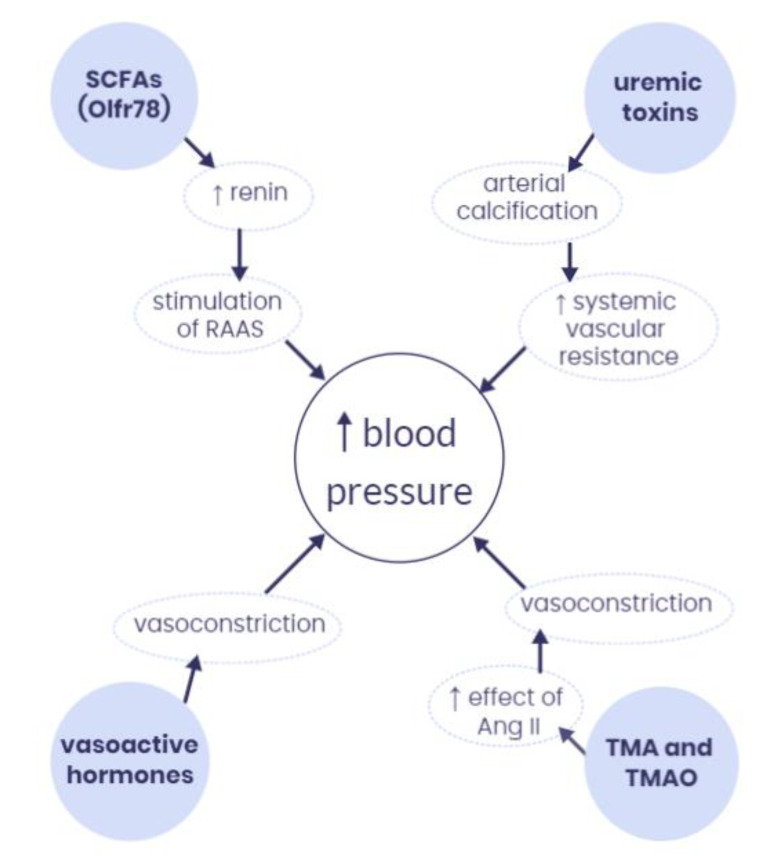
Arterial hypertension is a chronic disease which is very prevalent contemporarily. The aim of this review was to investigate the impact of gut microbiota on the development and potential treatment of hypertension, taking into consideration underlying molecular mechanisms. The bacteria present in the intestines have the ability to secrete different metabolites, which might play a significant role in the regulation of blood pressure. The most important include short-chain fatty acids (SCFAs), vasoactive hormones, trimethylamine (TMA) and trimethylamine N-oxide (TMAO) and uremic toxins, such as indoxyl sulfate (IS) and p-cresyl sulfate (PCS). Their action in regulating blood pressure is mainly based on their pro- or anti-inflammatory function. The use of specifically formulated probiotics to modify the composition of gut microbiota might be a beneficial way of supportive treatment of hypertension; however, further research on this topic is needed to choose the species of bacteria that could induce the hypotensive pattern.
动脉高血压是一种现代社会非常普遍的慢性病。本综述的目的是研究肠道微生物群对高血压的发展和潜在治疗的影响,同时考虑潜在的分子机制。肠道中的细菌能够分泌不同的代谢物,这些代谢物可能在调节血压方面发挥重要作用。其中最重要的包括短链脂肪酸(SCFAs)、血管活性激素、三甲胺(TMA)和三甲胺 N-氧化物(TMAO)以及尿毒症毒素,如吲哚硫酸酯(IS)和对甲酚硫酸酯(PCS)。它们调节血压的作用主要基于其抗炎或促炎功能。使用特定配方的益生菌来改变肠道微生物群的组成可能是支持高血压治疗的一种有益方法;然而,需要进一步研究该主题,以选择能够诱导降压模式的细菌种类。