Kostadinova Ivanka, Kondeva-Burdina Magdalena, Marinov Lyubomir, Vezenkov Lubomir L, Simeonova Rumyana
Department of Pharmacology, Pharmacotherapy and Toxicology, Faculty of Pharmacy, Medical University of Sofia, 2 Dunav Str., 1000 Sofia, Bulgaria.
Institut des Biomolécules Max Mousseron (IBMM), CNRS, Université de Montpellier, ENSCM, 226-234 Av. du Professeur Emile Jeanbrau, 34090 Montpellier, France.
Life (Basel). 2023 Jan 4;13(1):139. doi: 10.3390/life13010139.
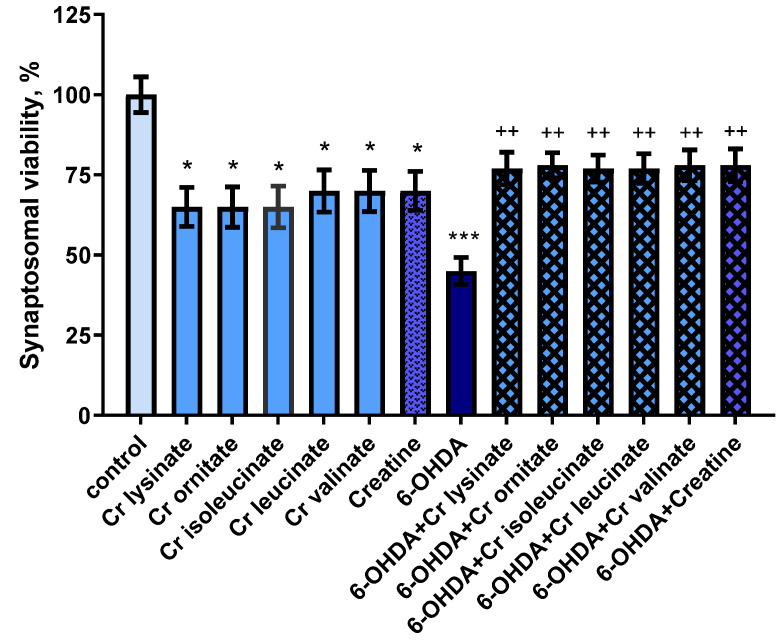
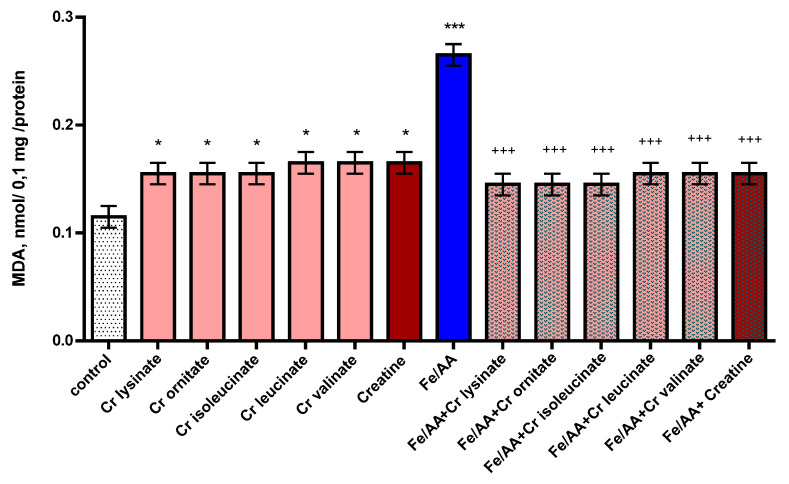
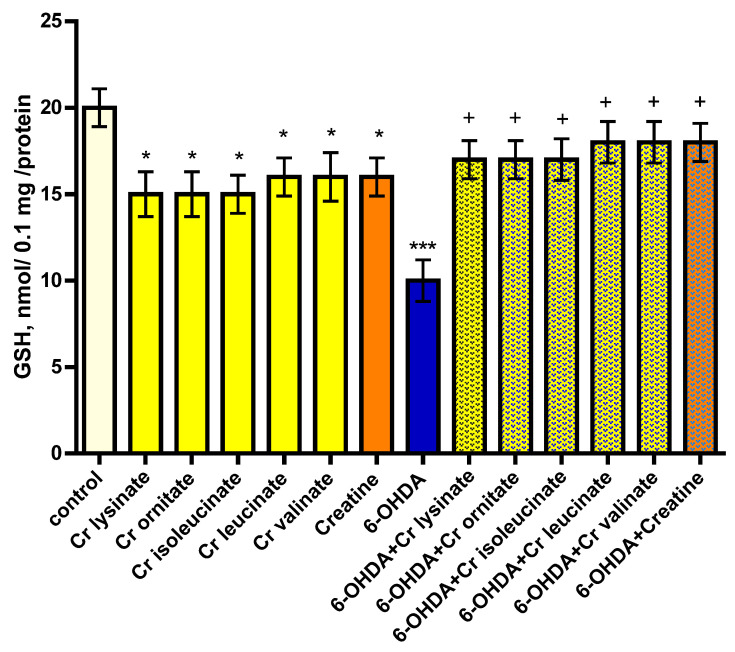
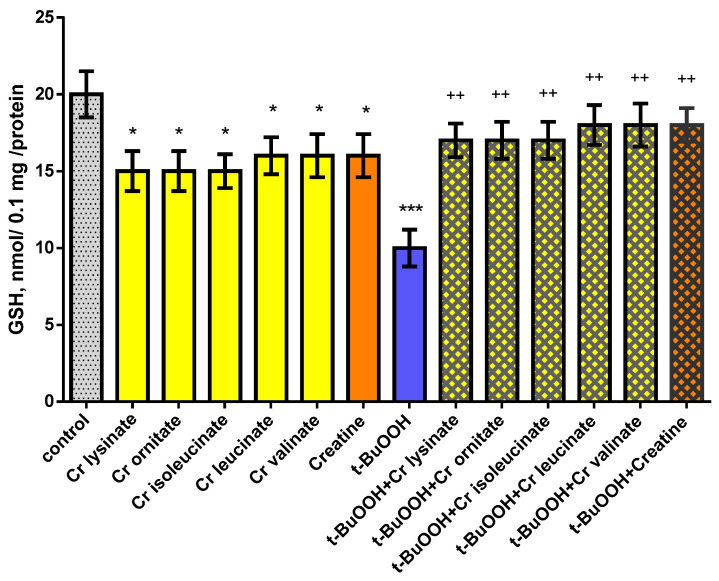
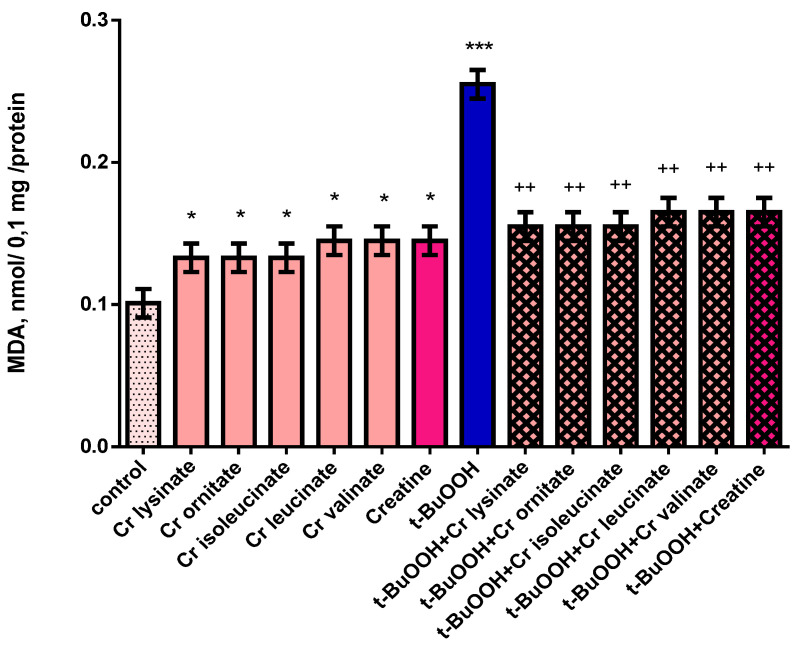
Oxidative stress is one of the key factors responsible for many diseases-neurodegenerative (Parkinson and Alzheimer) diseases, diabetes, atherosclerosis, etc. Creatine, a natural amino acid derivative, is capable of exerting mild, direct antioxidant activity in cultured mammalian cells acutely injured with an array of different reactive oxygen species (ROS) generating compounds. The aim of the study was in vitro (on isolated rat brain sub-cellular fractions-synaptosomes, mitochondria and microsomes) evaluation of newly synthetized creatine derivatives for possible antioxidant and neuroprotective activity. The synaptosomes and mitochondria were obtained by multiple centrifugations with Percoll, while microsomes-only by multiple centrifugations. Varying models of oxidative stress were used to study the possible antioxidant and neuroprotective effects of the respective compounds: on synaptosomes-6-hydroxydopamine; on mitochondria-tert-butyl hydroperoxide; and on microsomes-iron/ascorbate (non-enzyme-induced lipid peroxidation). Administered alone, creatine derivatives and creatine (at concentration 38 µM) revealed neurotoxic and pro-oxidant effects on isolated rat brain subcellular fractions (synaptosomes, mitochondria and microsomes). In models of 6-hydroxydopamine (on synaptosomes), tert-butyl hydroperoxide (on mitochondria) and iron/ascorbate (on microsomes)-induced oxidative stress, the derivatives showed neuroprotective and antioxidant effects. These effects may be due to the preservation of the reduced glutathione level, ROS scavenging and membranes' stabilizers against free radicals. Thus, they play a role in the antioxidative defense system and have a promising potential as therapeutic neuroprotective agents for the treatment of neurodegenerative disorders, connected with oxidative stress, such as Parkinson's disease.
氧化应激是导致许多疾病(神经退行性疾病如帕金森病和阿尔茨海默病、糖尿病、动脉粥样硬化等)的关键因素之一。肌酸是一种天然氨基酸衍生物,能够在受到一系列不同活性氧(ROS)生成化合物急性损伤的培养哺乳动物细胞中发挥轻度直接抗氧化活性。本研究的目的是在体外(对分离的大鼠脑亚细胞组分——突触体、线粒体和微粒体)评估新合成的肌酸衍生物可能具有的抗氧化和神经保护活性。突触体和线粒体通过使用Percoll多次离心获得,而微粒体仅通过多次离心获得。使用不同的氧化应激模型来研究相应化合物可能的抗氧化和神经保护作用:对突触体使用6 - 羟基多巴胺;对线粒体使用叔丁基过氧化氢;对微粒体使用铁/抗坏血酸(非酶诱导的脂质过氧化)。单独施用时,肌酸衍生物和肌酸(浓度为38 μM)对分离的大鼠脑亚细胞组分(突触体、线粒体和微粒体)显示出神经毒性和促氧化作用。在6 - 羟基多巴胺(对突触体)、叔丁基过氧化氢(对线粒体)和铁/抗坏血酸(对微粒体)诱导的氧化应激模型中,这些衍生物显示出神经保护和抗氧化作用。这些作用可能归因于还原型谷胱甘肽水平的维持、ROS清除以及膜对自由基的稳定作用。因此,它们在抗氧化防御系统中发挥作用,并且作为治疗与氧化应激相关的神经退行性疾病(如帕金森病)的治疗性神经保护剂具有广阔的潜力。