Royal Abhishek, John Denny, Bharti Omesh, Tanwar Ritesh, Bhagat Deepak Kumar, Padmawati Retna Siwi, Chaudhary Vishal, Umapathi Reddicherla, Bhadola Pradeep, Utarini Adi
Faculty of Medicine, Public Health and Nursing, Universitas Gadjah Mada, Yogyakarta 55281, Indonesia.
Faculty of Life and Allied Health Sciences, Ramaiah University of Applied Sciences, Bengaluru 560054, India.
Vaccines (Basel). 2022 Dec 30;11(1):88. doi: 10.3390/vaccines11010088.
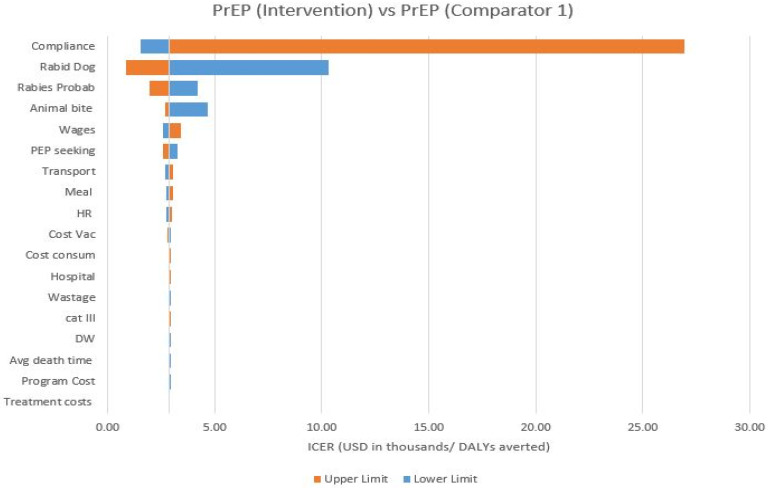
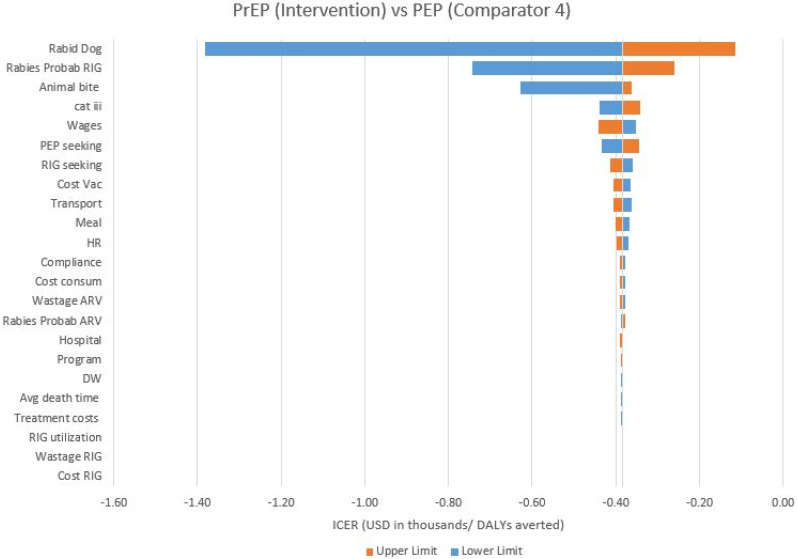
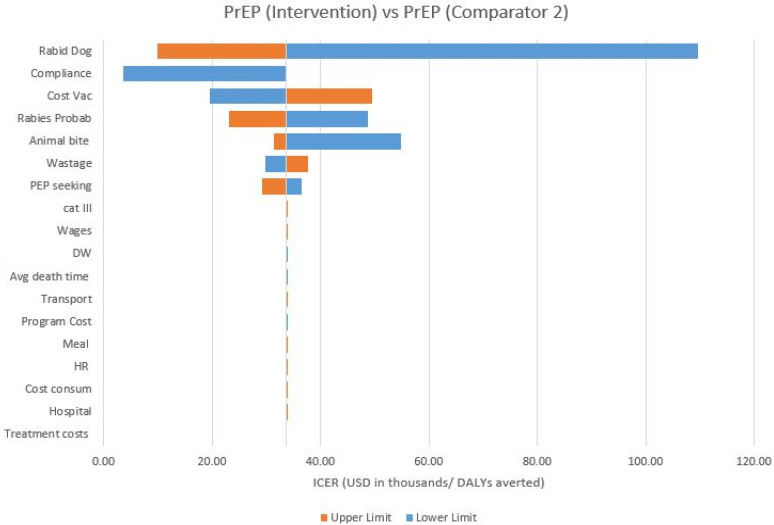
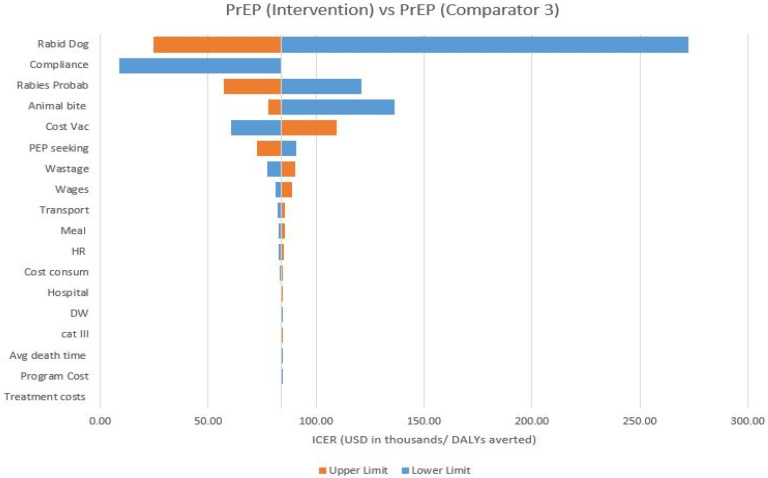
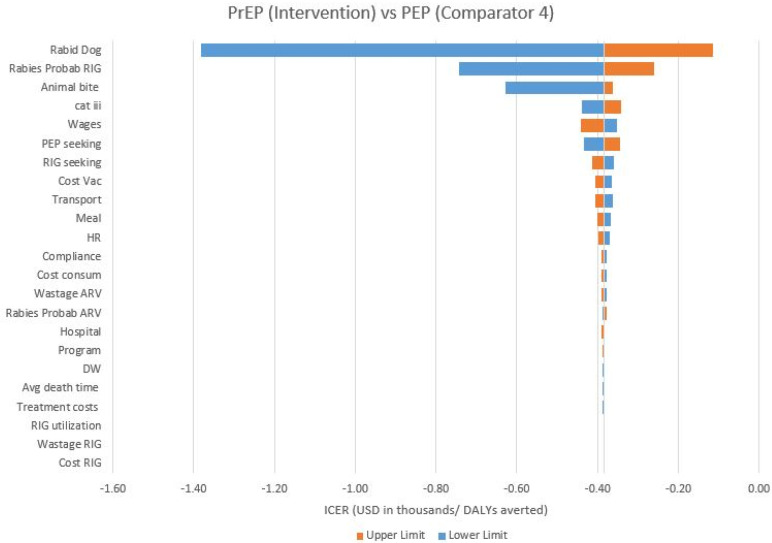
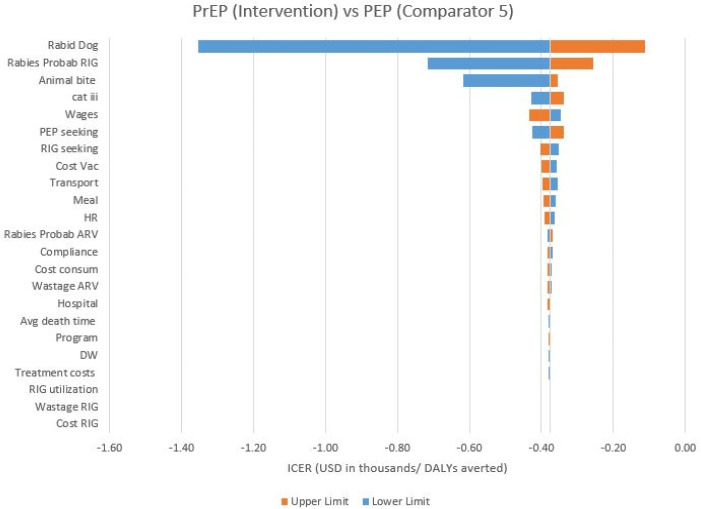
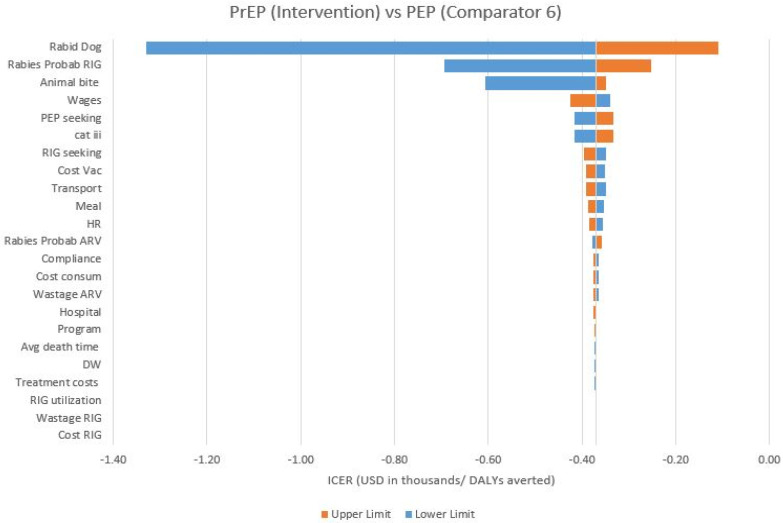
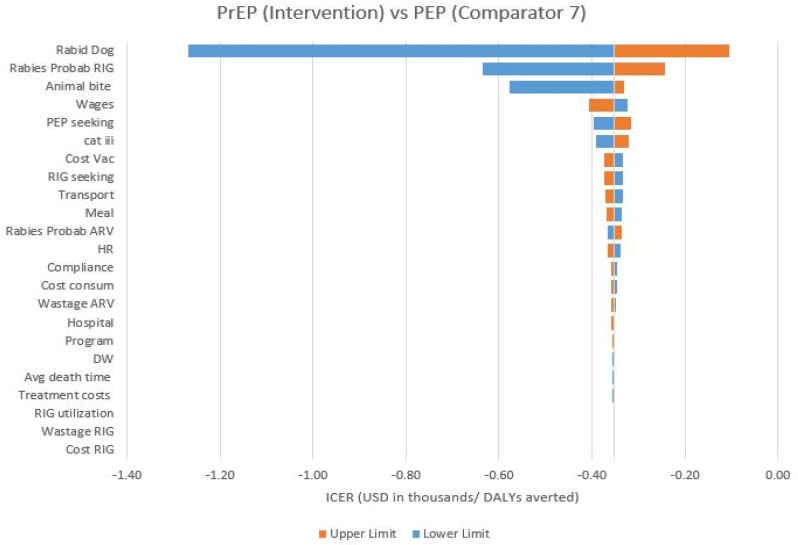
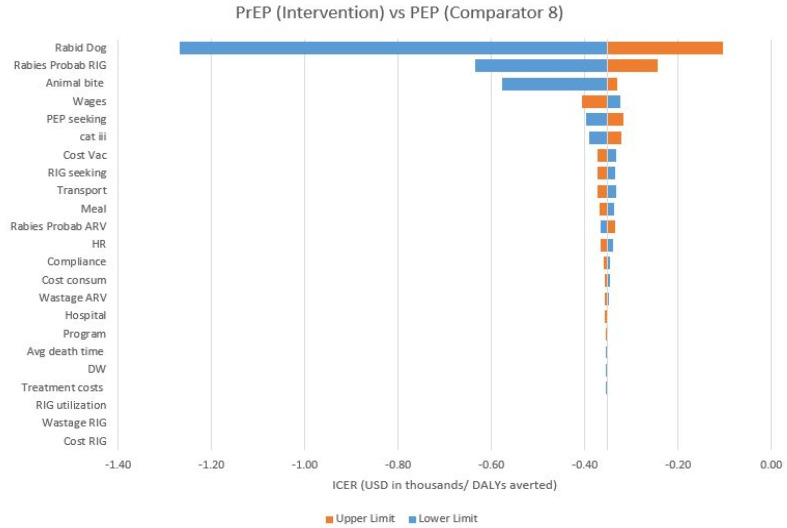
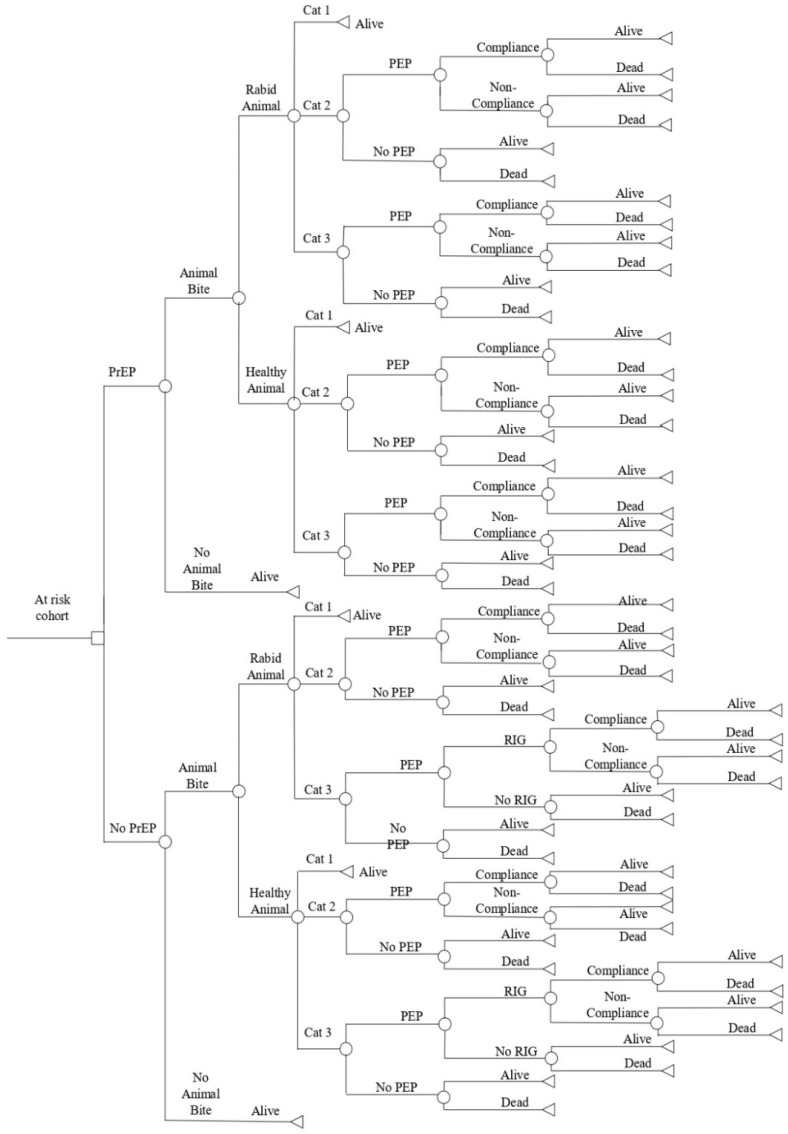
Children contribute to one-half of the total painful rabies mortalities in India. The state-of-the-art rabies mortality averting strategies need exploration for the effective implementation of pre-exposure prophylaxis (PrEP) in India. This study reports on the economic evaluation of various PrEP and post-exposure prophylaxis (PEP) strategies to avert rabies mortalities in school-aged children in India. A decision tree model has been developed for children in the age group of 5-15 years to evaluate various PrEP + PEP and PEP only regimens. The 2-site intradermal regimen administered on day zero and seven was chosen as the intervention [PrEP (I)]. ICER was calculated from the quasi-societal and quasi-health systems' perspectives for the base case analysis, along with one-way sensitivity, and scenario analyses for each regimen. The incremental DALYs averted per million population with the implementation of PrEP (I) ranged between 451 and 85,069 in 2020. The ICER was reported in the range of USD 384-352/DALY averted (non-dominant) in comparison to PEP regimens from a quasi-societal perspective. PrEP (I) is reported to be 'very cost effective' in comparison with PEP regimens from the quasi-societal and quasi-health systems' perspectives and reduce deaths by up to 89.9%. This study concludes that the PrEP (I) regimen is a cost-effective and life-saving strategy to avert painful mortalities due to rabies in school-aged children in India.
在印度,儿童占狂犬病致死总人数的一半。为在印度有效实施暴露前预防(PrEP),需要探索最先进的狂犬病致死率预防策略。本研究报告了印度学龄儿童中各种PrEP和暴露后预防(PEP)策略预防狂犬病致死的经济评估。已为5至15岁儿童开发了决策树模型,以评估各种PrEP + PEP和仅PEP方案。选择在第0天和第7天进行的2部位皮内接种方案作为干预措施[PrEP(I)]。从准社会和准卫生系统的角度计算基础案例分析的增量成本效益比(ICER),以及每种方案的单向敏感性分析和情景分析。2020年,实施PrEP(I)每百万人口避免的增量伤残调整生命年(DALYs)在451至85,069之间。从准社会角度来看,与PEP方案相比,ICER报告为每避免一个DALY 384 - 352美元(非主导)。从准社会和准卫生系统的角度来看,与PEP方案相比,PrEP(I)被报告为“非常具有成本效益”,并可将死亡人数减少多达89.9%。本研究得出结论,PrEP(I)方案是一种具有成本效益且能挽救生命的策略,可避免印度学龄儿童因狂犬病导致的痛苦死亡。