Zhao Ning, Wang Ying, Ma Yan, Liang Xiaoxue, Zhang Xi, Gao Yuan, Dong Yingying, Bai Dong, Hu Jingqing
Formula-Syndrome Research Center, Institute of Basic Theory for Chinese Medicine, China Academy of Chinese Medical Sciences, Beijing, China.
Department of Pharmacy, Xiyuan Hospital, China Academy of Chinese Medical Sciences, Beijing, China.
Front Cardiovasc Med. 2023 Jan 4;9:1038273. doi: 10.3389/fcvm.2022.1038273. eCollection 2022.
We assessed the efficacy of the traditional Chinese medicine formulation Jia-Wei-Si-Miao-Yong-An decoction (HJ11) in the treatment of acute coronary syndrome and evaluated its impact on the intestinal microbiota and their metabolites.
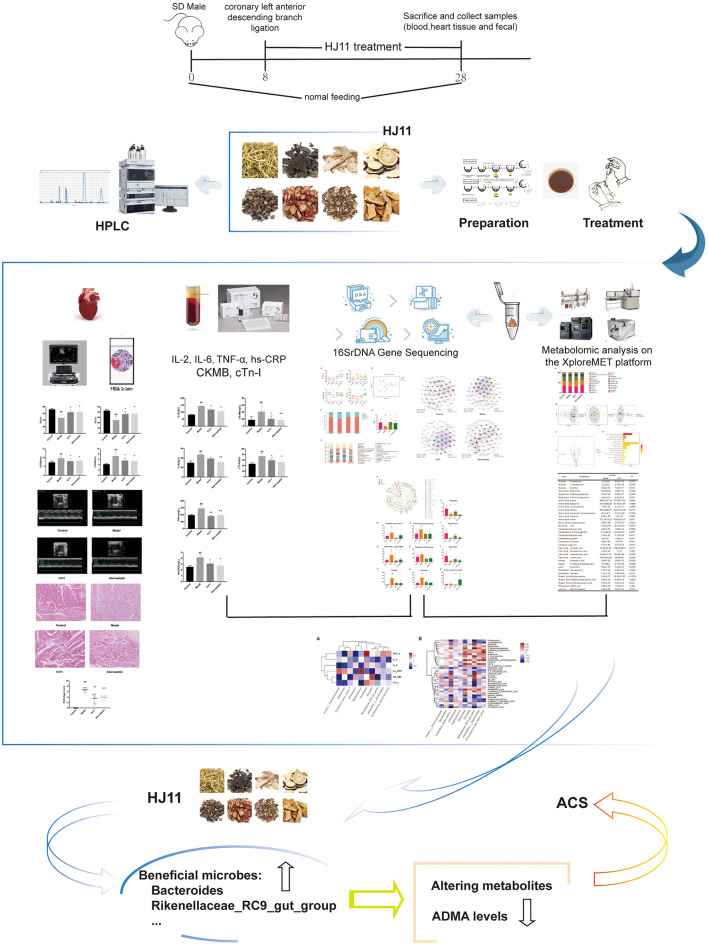
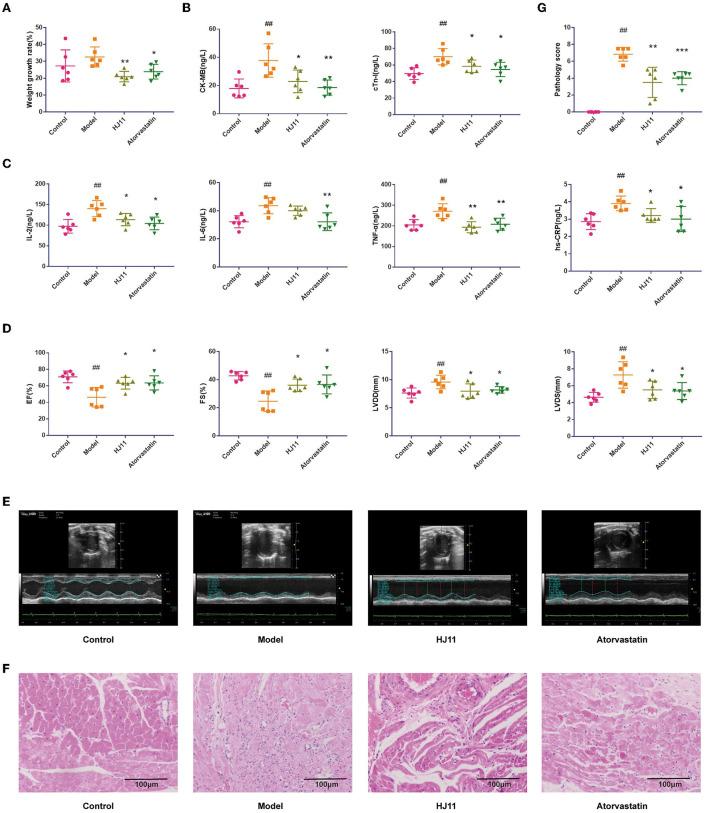
An acute coronary syndrome model was established in rats, which were randomly assigned to the model, HJ11 treatment, and atorvastatin treatment groups. Rats were then administered saline solution (model and sham operation control groups) or drugs by oral gavage for 28 d. Echocardiography was performed and serum creatine kinase-MB and cardiac troponin I levels were monitored to examine the cardiac function. Inflammation was evaluated using hematoxylin and eosin staining of heart tissue, and serum interleukin-2, interleukin-6, tumor necrosis factor alpha, and high-sensitivity C-reactive protein measurements. Gut microbiota composition was analyzed 16S rRNA gene sequencing. Metabolomics was used to determine fecal metabolites and elucidate the modes of action of HJ11 in acute coronary syndrome treatment.
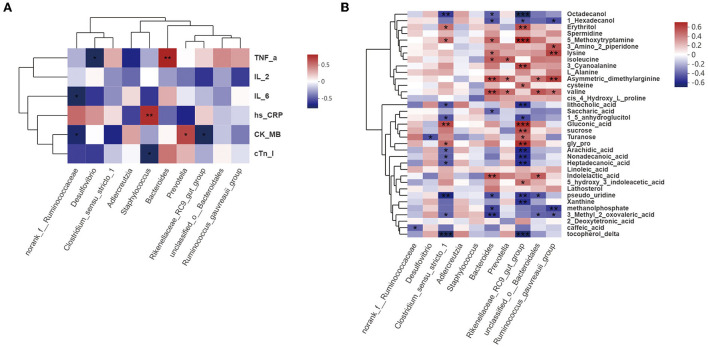
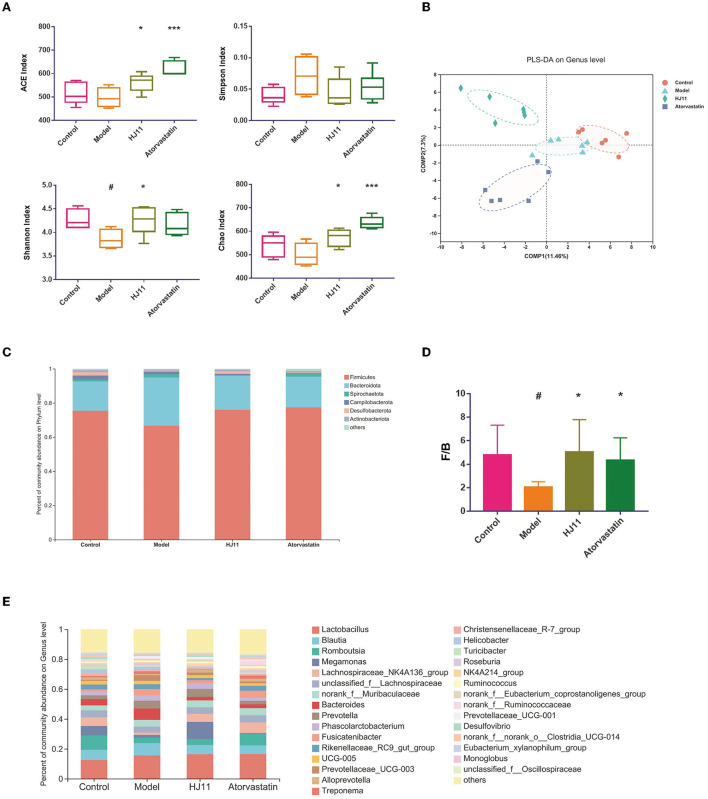
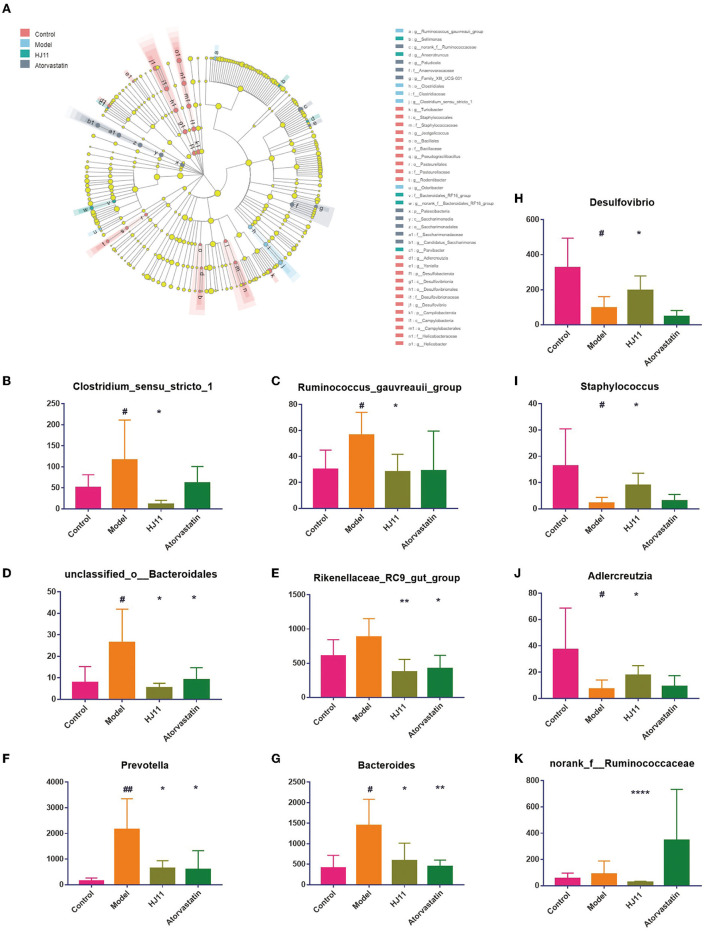
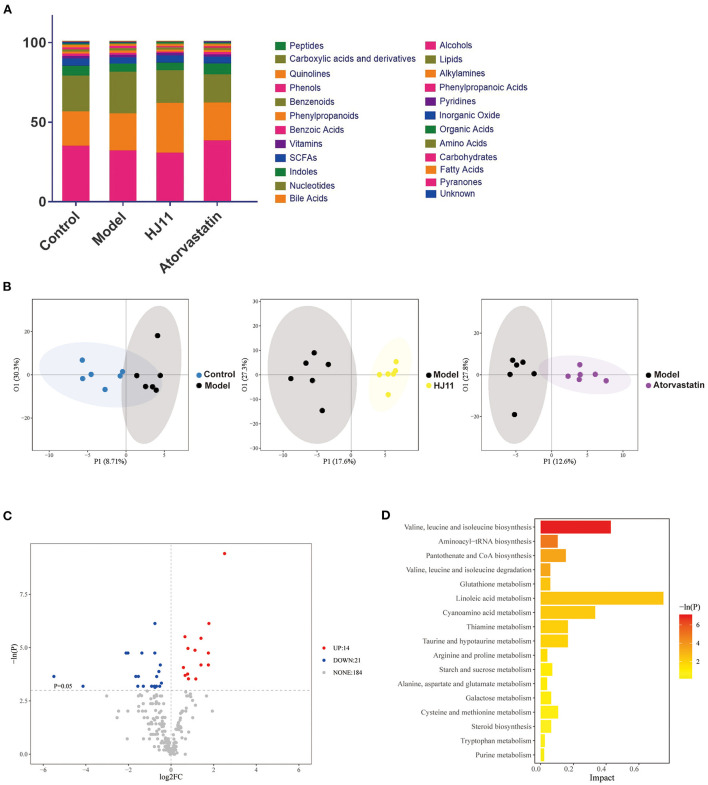
HJ11 improved cardiac function and attenuated inflammation in rats with acute coronary syndrome. Relative to the untreated model group, the HJ11-treated group presented normalized Firmicutes/Bacteroidetes ratio and reduced abundances of the bacterial genera , and . We found 23 differentially expressed intestinal metabolites, and the enriched metabolic pathways were mainly related to amino acid metabolism. We also discovered that asymmetric dimethylarginine levels were strongly associated with cardiovascular disease. Correlation analyses revealed strong associations among intestinal microflora, their metabolites, proinflammatory factors, and cardiac function. Hence, the therapeutic effects of HJ11 on acute coronary syndrome are related to specific alterations in gut microbiota and their metabolites.
This work demonstrated that HJ11 effectively treats acute coronary syndrome. HJ11 seems to increase the abundance of beneficial bacterial taxa ( and _group), mitigate the risk factors associated with cardiovascular disease, alter bacterial metabolites, lower asymmetric dimethylarginine levels, and effectively treat acute coronary syndrome.
我们评估了中药制剂加味四妙勇安汤(HJ11)治疗急性冠脉综合征的疗效,并评估其对肠道微生物群及其代谢产物的影响。
在大鼠中建立急性冠脉综合征模型,将其随机分为模型组、HJ11治疗组和阿托伐他汀治疗组。然后通过口服灌胃给予大鼠生理盐水(模型组和假手术对照组)或药物,持续28天。进行超声心动图检查,并监测血清肌酸激酶-MB和心肌肌钙蛋白I水平以检查心脏功能。使用苏木精-伊红染色评估心脏组织炎症,并检测血清白细胞介素-2、白细胞介素-6、肿瘤坏死因子α和高敏C反应蛋白。通过16S rRNA基因测序分析肠道微生物群组成。采用代谢组学方法确定粪便代谢产物,并阐明HJ11治疗急性冠脉综合征的作用模式。
HJ11改善了急性冠脉综合征大鼠的心脏功能并减轻了炎症。与未治疗的模型组相比,HJ11治疗组的厚壁菌门/拟杆菌门比例正常化,细菌属丰度降低。我们发现了23种差异表达的肠道代谢产物,富集的代谢途径主要与氨基酸代谢有关。我们还发现不对称二甲基精氨酸水平与心血管疾病密切相关。相关性分析揭示了肠道微生物群、其代谢产物、促炎因子和心脏功能之间的密切关联。因此,HJ11对急性冠脉综合征的治疗作用与肠道微生物群及其代谢产物的特定改变有关。
这项研究表明HJ11能有效治疗急性冠脉综合征。HJ11似乎增加了有益细菌类群(和_group)的丰度,减轻了与心血管疾病相关的危险因素,改变了细菌代谢产物,降低了不对称二甲基精氨酸水平,并有效治疗了急性冠脉综合征。