Xu Xiuming, Shen Yingjia, Zhang Yuchen, Li Qianying, Wang Wenqing, Chen Luzhen, Chen Guangcheng, Ng Wei Lun, Islam Md Nazrul, Punnarak Porntep, Zheng Hailei, Zhu Xueyi
Key Laboratory of the Ministry of Education for Coastal and Wetland Ecosystems, College of the Environment and Ecology, Xiamen University, Xiamen, China.
School of Life Sciences, Xiamen University, Xiamen, China.
Front Plant Sci. 2023 Jan 4;13:1075353. doi: 10.3389/fpls.2022.1075353. eCollection 2022.
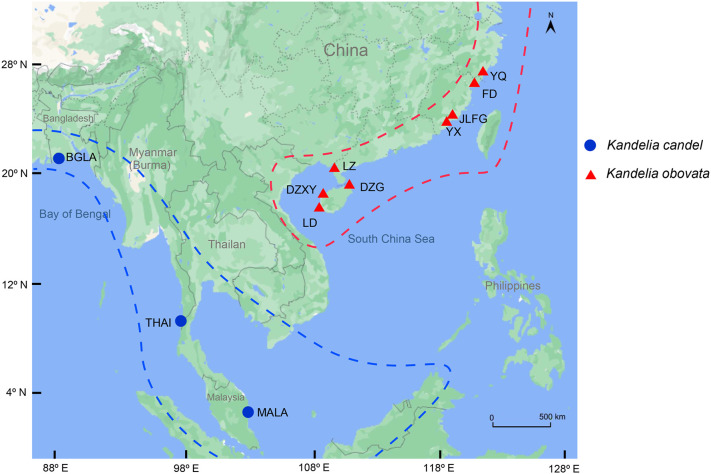
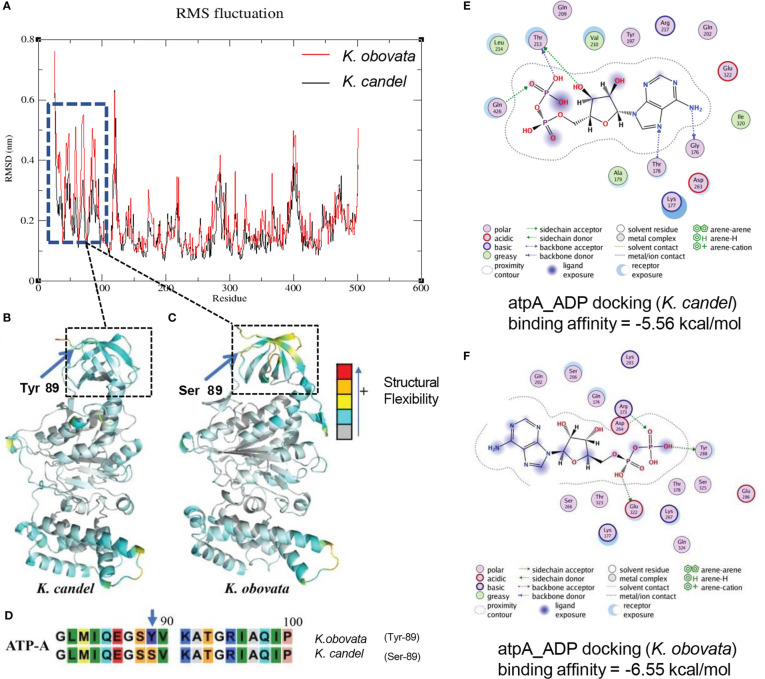
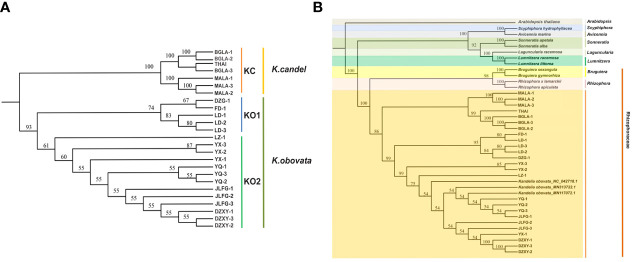
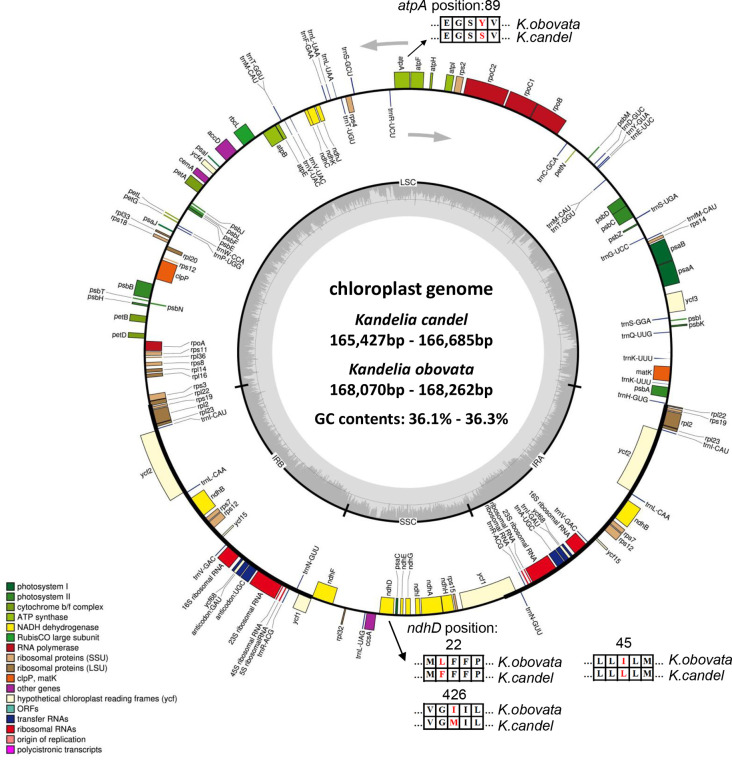
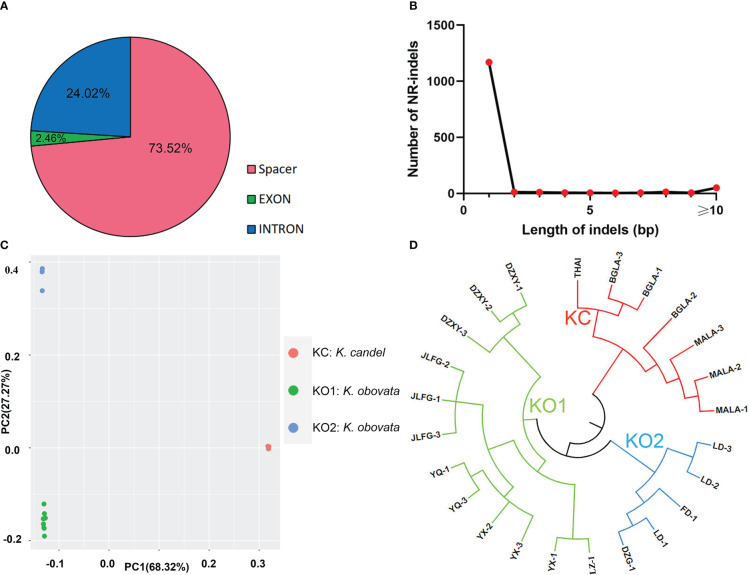
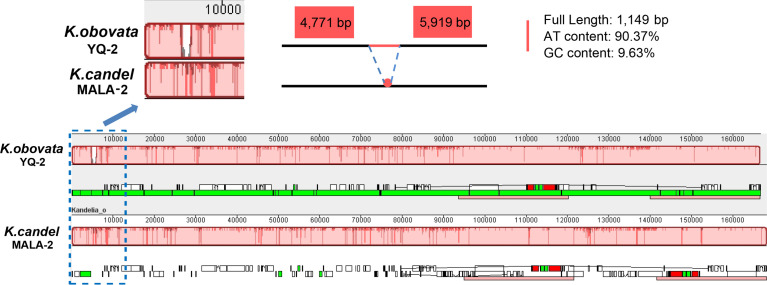
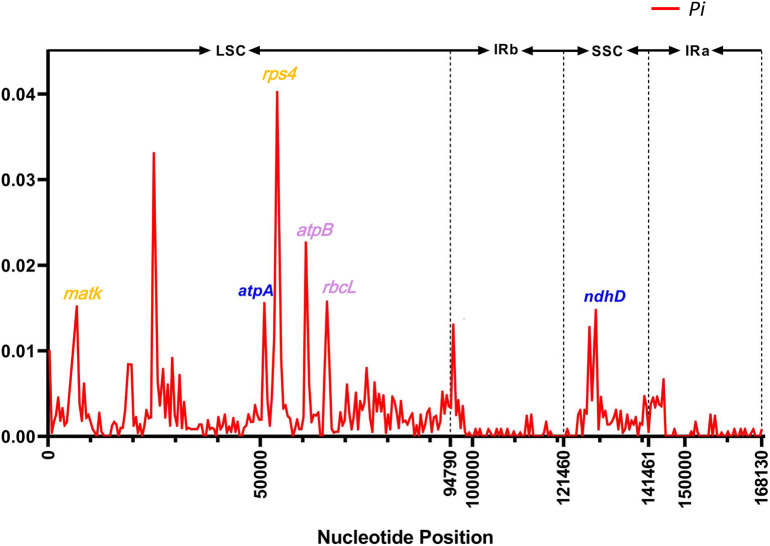
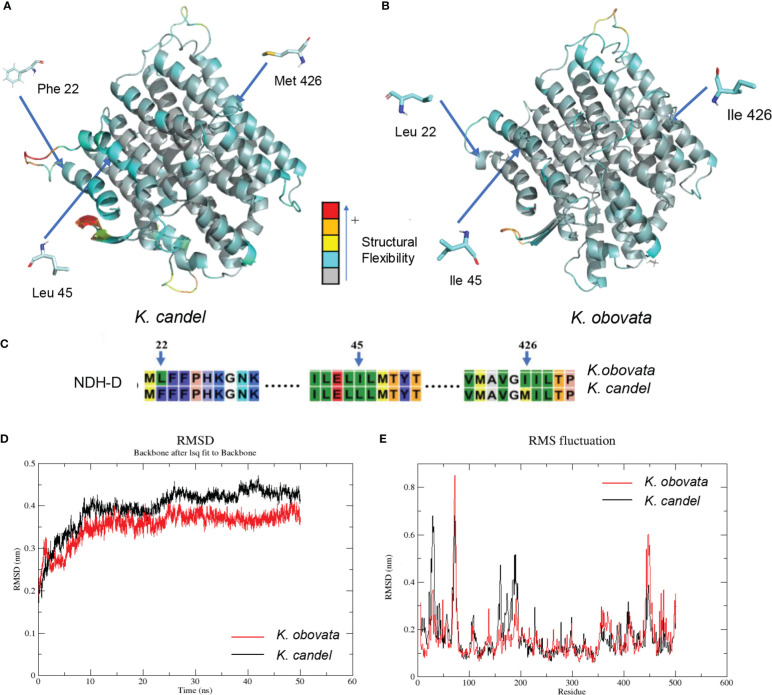
In 2003, was identified as a new mangrove species differentiated from . However, little is known about their chloroplast (cp) genome differences and their possible ecological significance. In this study, 25 whole cp genomes, with seven samples of from Malaysia, Thailand, and Bangladesh and 18 samples of from China, were sequenced for comparison. The cp genomes of both species encoded 128 genes, namely 83 protein-coding genes, 37 tRNA genes, and eight rRNA genes, but the cp genome size of was ~2 kb larger than that of due to the presence of more and longer repeat sequences. Of these, tandem repeats and simple sequence repeats exhibited great differences. Principal component analysis based on indels, and phylogenetic tree analyses constructed with homologous protein genes from the single-copy genes, as well as 38 homologous pair genes among 13 mangrove species, gave strong support to the separation of the two species within the genus. Homologous genes and showed intraspecific consistency and interspecific differences. Molecular dynamics simulations of their corresponding proteins, NAD(P)H dehydrogenase chain 4 (NDH-D) and ATP synthase subunit alpha (ATP-A), predicted them to be significantly different in the functions of photosynthetic electron transport and ATP generation in the two species. These results suggest that the energy requirement was a pivotal factor in their adaptation to differential environments geographically separated by the South China Sea. Our results also provide clues for future research on their physiological and molecular adaptation mechanisms to light and temperature.
2003年, 被鉴定为一种与 不同的新红树物种。然而,关于它们叶绿体(cp)基因组的差异及其可能的生态意义却知之甚少。在本研究中,对25个完整的cp基因组进行了测序以作比较,其中包括来自马来西亚、泰国和孟加拉国的7个 样本以及来自中国的18个 样本。两种物种的cp基因组都编码128个基因,即83个蛋白质编码基因、37个tRNA基因和8个rRNA基因,但由于存在更多且更长的重复序列, 的cp基因组大小比 大约大2 kb。其中,串联重复和简单序列重复表现出很大差异。基于插入缺失的主成分分析,以及用来自单拷贝基因的同源蛋白质基因构建的系统发育树分析,以及13种红树物种中的38对同源基因,都有力地支持了 属内这两个物种的分离。同源基因 和 表现出种内一致性和种间差异。对其相应蛋白质NAD(P)H脱氢酶链4(NDH-D)和ATP合酶亚基α(ATP-A)的分子动力学模拟预测,它们在两种物种的光合电子传递和ATP生成功能上有显著差异。这些结果表明,能量需求是它们适应被南海地理分隔的不同环境的关键因素。我们的结果也为未来研究它们对光和温度的生理及分子适应机制提供了线索。