Shu Long, Yu Dan, Jin Fubi
Department of Nutrition, Zhejiang Hospital, Hangzhou, Zhejiang, China.
Department of Endocrinology, Zhejiang Hospital, Hangzhou, Zhejiang, China.
Front Nutr. 2023 Jan 4;9:1077452. doi: 10.3389/fnut.2022.1077452. eCollection 2022.
Accumulating epidemiological evidence has shown the favorable associations between healthy dietary patterns and risk of glioma, although the results remain inconclusive.
We therefore carried out a systematic review and meta-analysis to summarize the evidence from previous published studies, and to clarify the effects of healthy dietary patterns, typical healthy foods on glioma.
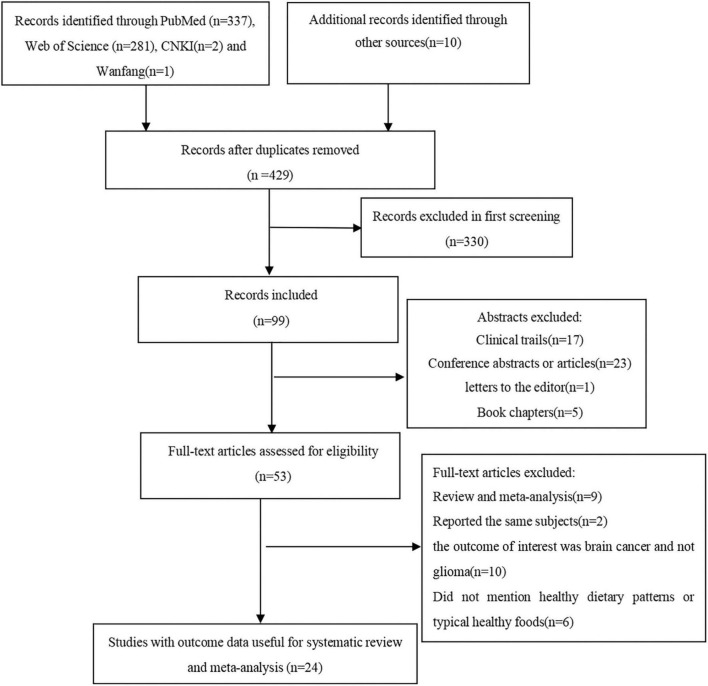
PubMed, Web of Science, CNKI, and Wan fang data were searched from inception up to September 2022 for eligible studies. Two authors independently performed the literature search, study selection, data extraction, and quality assessment. Heterogeneity across studies was estimated using the Cochran's test and statistic. According to heterogeneity, the fixed-effects model or random-effects model was selected to obtain the relative risk (RR) of the merger. Subgroup analysis, sensitivity analysis and publication bias were also used for our analysis.
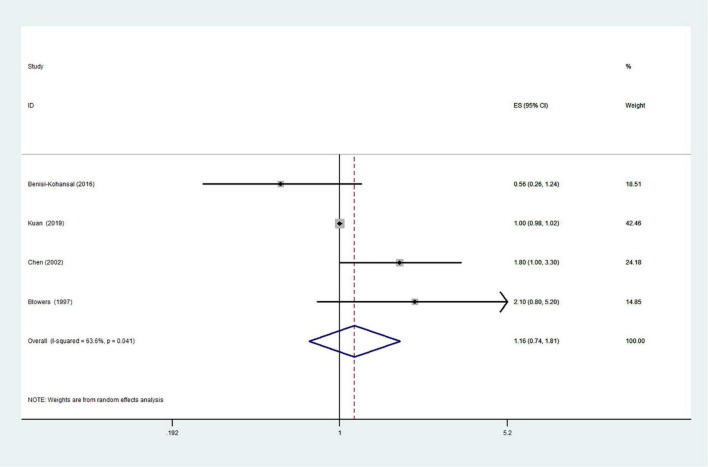
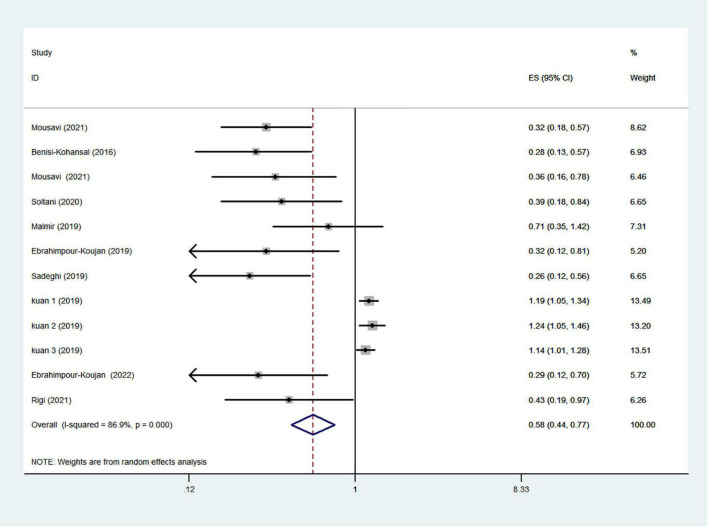
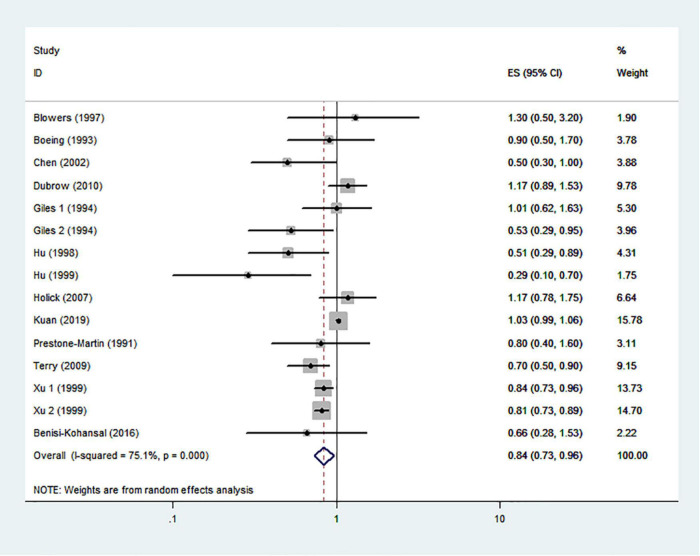
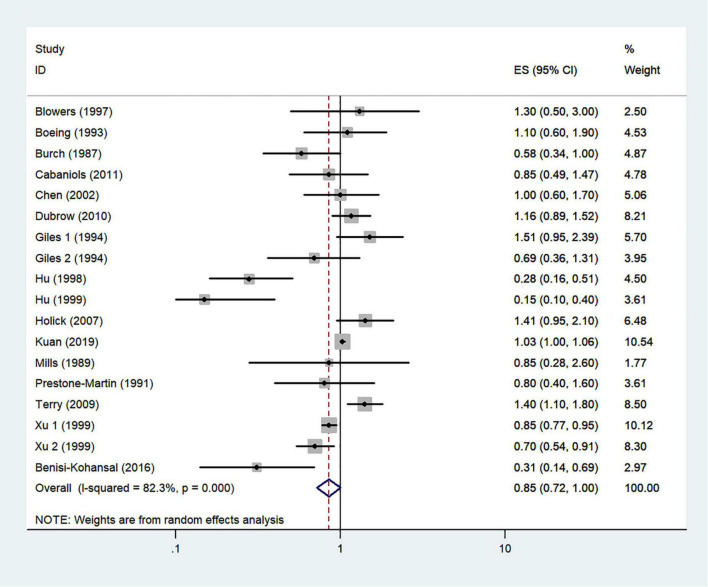
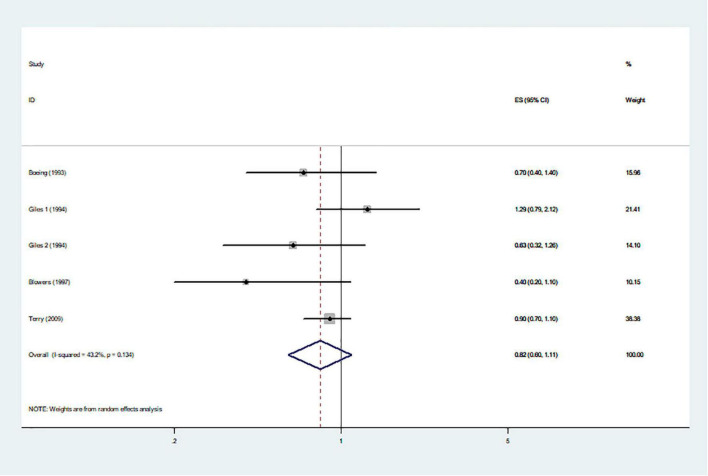
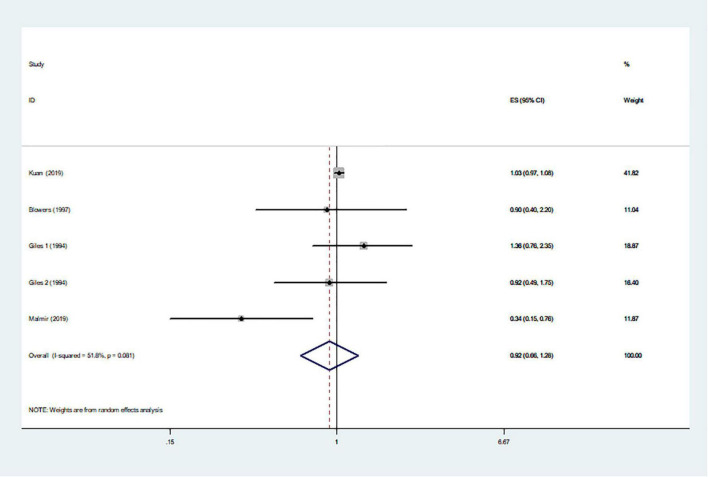
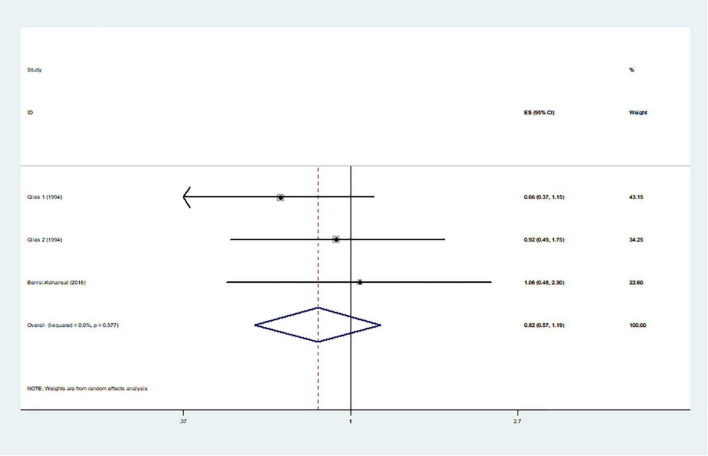
Twenty-four articles that met the selection criteria, involving 7,278 glioma cases and 2,143,528 participants, were included in our analysis. There was a reduced risk of glioma in the highest compared with the lowest categories of healthy dietary patterns (RR = 0.58; 95% CI: 0.44-0.77; < 0.0001). Moreover, compared with the lowest intakes, the highest intakes of vegetables (RR = 0.84; 95% CI: 0.73-0.96; = 0.012) and fruits (RR = 0.85; 95% CI: 0.72-1.00; = 0.045) significantly reduce the risk of glioma. However, the intakes of fresh fish, nuts, whole grains, and dairy products showed no statistically significant associations with the risk of glioma ( > 0.05).
Findings from this systematic review and meta-analysis indicate that higher intakes of healthy dietary patterns, vegetables, and fruits are significantly associated with the lower risk of glioma. Further studies, particularly with prospective design, are required to confirm our findings.
越来越多的流行病学证据表明,健康的饮食模式与胶质瘤风险之间存在有益关联,尽管结果仍无定论。
因此,我们进行了一项系统评价和荟萃分析,以总结先前发表研究的证据,并阐明健康饮食模式、典型健康食物对胶质瘤的影响。
检索了PubMed、Web of Science、中国知网和万方数据,从数据库建立至2022年9月,查找符合条件的研究。两位作者独立进行文献检索、研究筛选、数据提取和质量评估。使用Cochran's检验和I²统计量估计研究间的异质性。根据异质性,选择固定效应模型或随机效应模型来获得合并的相对风险(RR)。亚组分析、敏感性分析和发表偏倚也用于我们的分析。
24篇符合入选标准的文章被纳入我们的分析,涉及7278例胶质瘤病例和2143528名参与者。与健康饮食模式最低类别相比,最高类别患胶质瘤的风险降低(RR = 0.58;95%CI:0.44 - 0.77;P < 0.0001)。此外,与摄入量最低者相比,蔬菜摄入量最高者(RR = 0.84;95%CI:0.73 - 0.96;P = 0.012)和水果摄入量最高者(RR = 0.85;95%CI:0.72 - 1.00;P = 0.045)显著降低了患胶质瘤的风险。然而,新鲜鱼类、坚果、全谷物和乳制品的摄入量与胶质瘤风险之间无统计学显著关联(P > 0.05)。
这项系统评价和荟萃分析的结果表明,健康饮食模式、蔬菜和水果的摄入量较高与较低的胶质瘤风险显著相关。需要进一步的研究,特别是前瞻性设计的研究,来证实我们的发现。