
慢性酒精代谢导致神经元中的 DNA 修复错误和细胞周期诱导的衰老。
Chronic alcohol metabolism results in DNA repair infidelity and cell cycle-induced senescence in neurons.
机构信息
School of Life Sciences, Faculty of Science, The Chinese University of Hong Kong, Hong Kong, Hong Kong.
Department of Cell Biology and Neuroscience, Rutgers University, Piscataway, New Jersey, USA.
出版信息
Aging Cell. 2023 Feb;22(2):e13772. doi: 10.1111/acel.13772. Epub 2023 Jan 23.
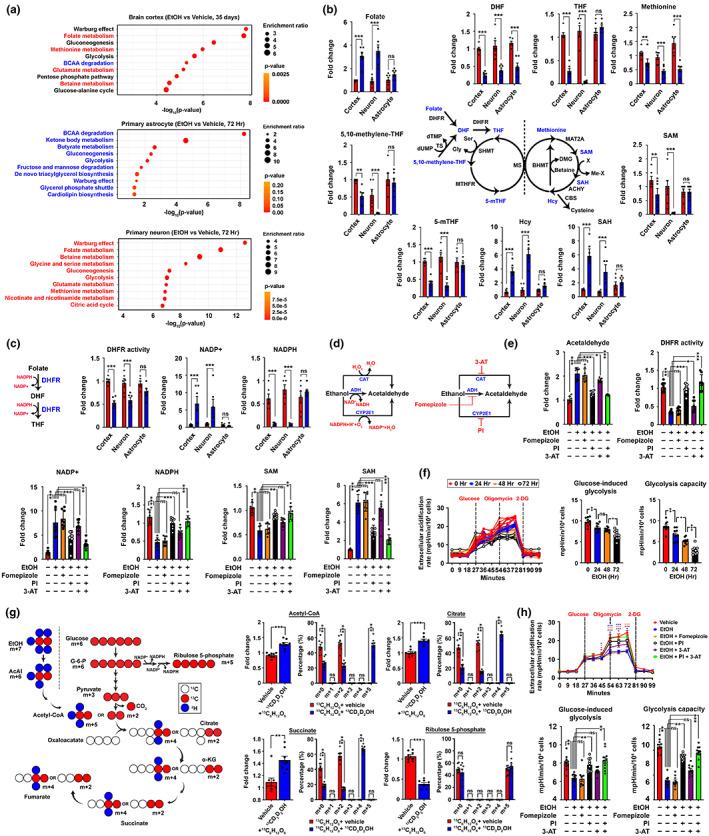
Chronic binge-like drinking is a risk factor for age-related dementia, however, the lasting and irreversible effect of alcohol on the brain remains elusive. Transcriptomic changes in brain cortices revealed pro-ageing hallmarks upon chronic ethanol exposure and these changes predominantly occur in neurons. The changes are attributed to a prioritized ethyl alcohol oxidation in these cells via the NADPH-dependent cytochrome pathway. This hijacks the folate metabolism of the 1-carbon network which supports the pathway choice of DNA repair via the non-cell cycle-dependent mismatch repair networks. The lost-in-function of such results in the de-inactivation of the less preferred cell cycle-dependent homologous recombination (HR) repair, forcing these post-mitotic cells to re-engage in a cell cycle-like process. However, mature neurons are post-mitotic. Therefore, instead of successfully completing a full round of cell cycle which is necessary for the completion of HR-mediated repair; these cells are arrested at checkpoints. The resulting persistence of repair intermediates induces and promotes the nuclear accumulation of p21 and cyclin B-a trigger for permanent cell cycle exits and irreversible senescence response. Supplementation of bioactive 5-methyl tetrahydrofolate simultaneously at times with ethyl alcohol exposure supports the fidelity of the 1-carbon network and hence the activity of the mismatch repair. This prevents aberrant and irreversible cell cycle re-entry and senescence events of neurons. Together, our findings offer a direct connection between binge-drinking behaviour and its irreversible impact on the brain, which makes it a potential risk factor for dementia.
慢性 binge 样饮酒是与年龄相关的痴呆的一个风险因素,然而,酒精对大脑的持久和不可逆转的影响仍然难以捉摸。大脑皮质的转录组变化显示出慢性乙醇暴露时的促衰老特征,这些变化主要发生在神经元中。这些变化归因于这些细胞中通过 NADPH 依赖性细胞色素途径优先进行乙基酒精氧化。这劫持了支持通过非细胞周期依赖的错配修复网络进行 DNA 修复的 1 碳途径的叶酸代谢。这种失去功能导致不太受青睐的细胞周期依赖性同源重组 (HR) 修复的去失活,迫使这些有丝分裂后细胞重新参与类似于细胞周期的过程。然而,成熟神经元是有丝分裂后的。因此,这些细胞没有成功完成 HR 介导的修复所必需的完整一轮细胞周期;而是在检查点处被阻滞。修复中间体的持续存在诱导并促进 p21 和细胞周期蛋白 B 的核积累 - 这是永久细胞周期退出和不可逆衰老反应的触发因素。在同时暴露于乙醇的情况下补充生物活性 5-甲基四氢叶酸可支持 1 碳途径的保真度,从而维持错配修复的活性。这可防止神经元的异常和不可逆的细胞周期再进入和衰老事件。总之,我们的研究结果提供了 binge 饮酒行为与其对大脑的不可逆影响之间的直接联系,这使其成为痴呆症的一个潜在风险因素。




 Zotero 插件