Stanford Cardiovascular Institute, Stanford University School of Medicine, Stanford, CA 94305, USA.
Institute for Stem Cell Biology and Regenerative Medicine, Stanford University School of Medicine, Stanford, CA 94305, USA.
Sci Transl Med. 2023 Jan 25;15(680):eabp9952. doi: 10.1126/scitranslmed.abp9952.
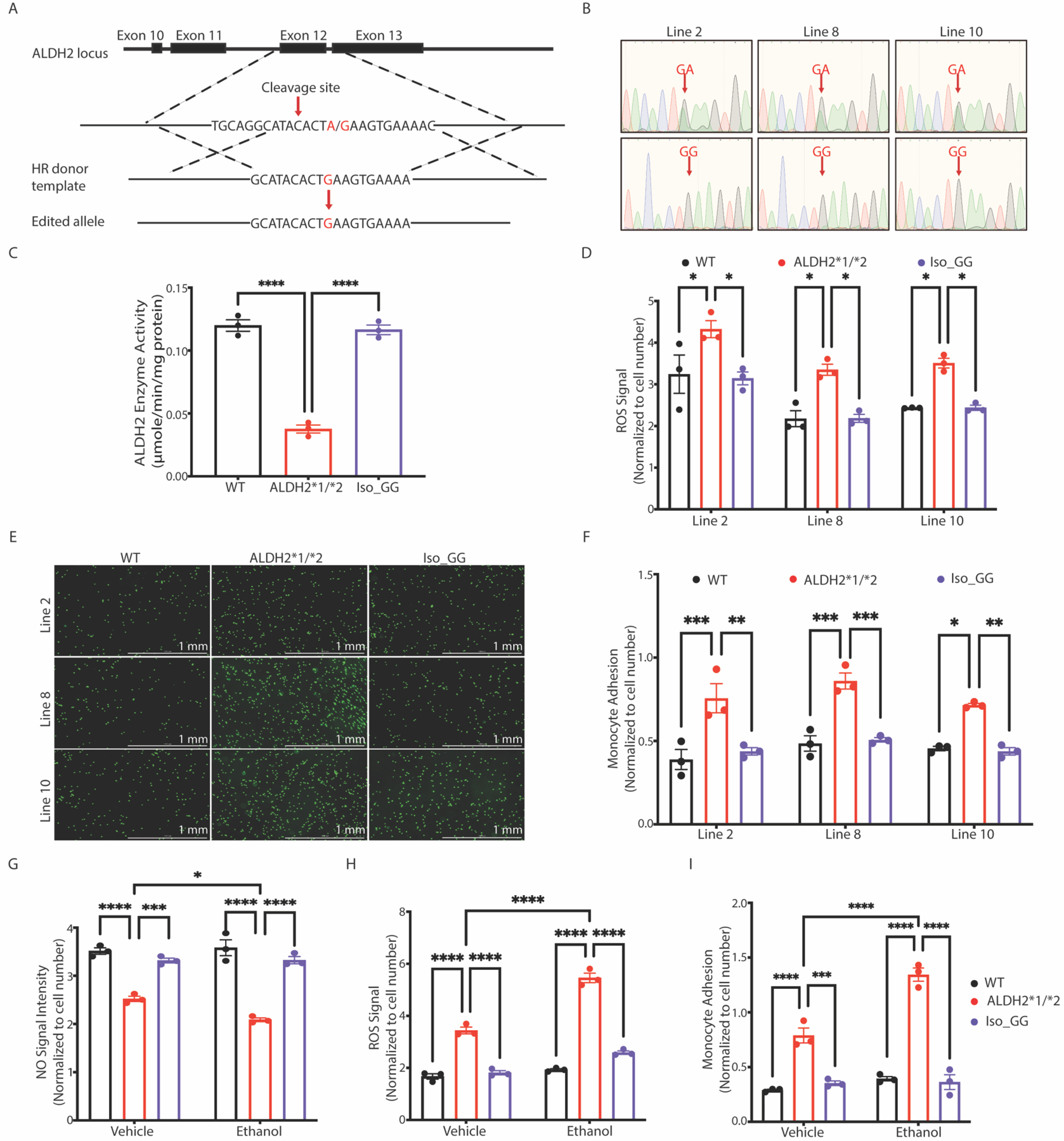
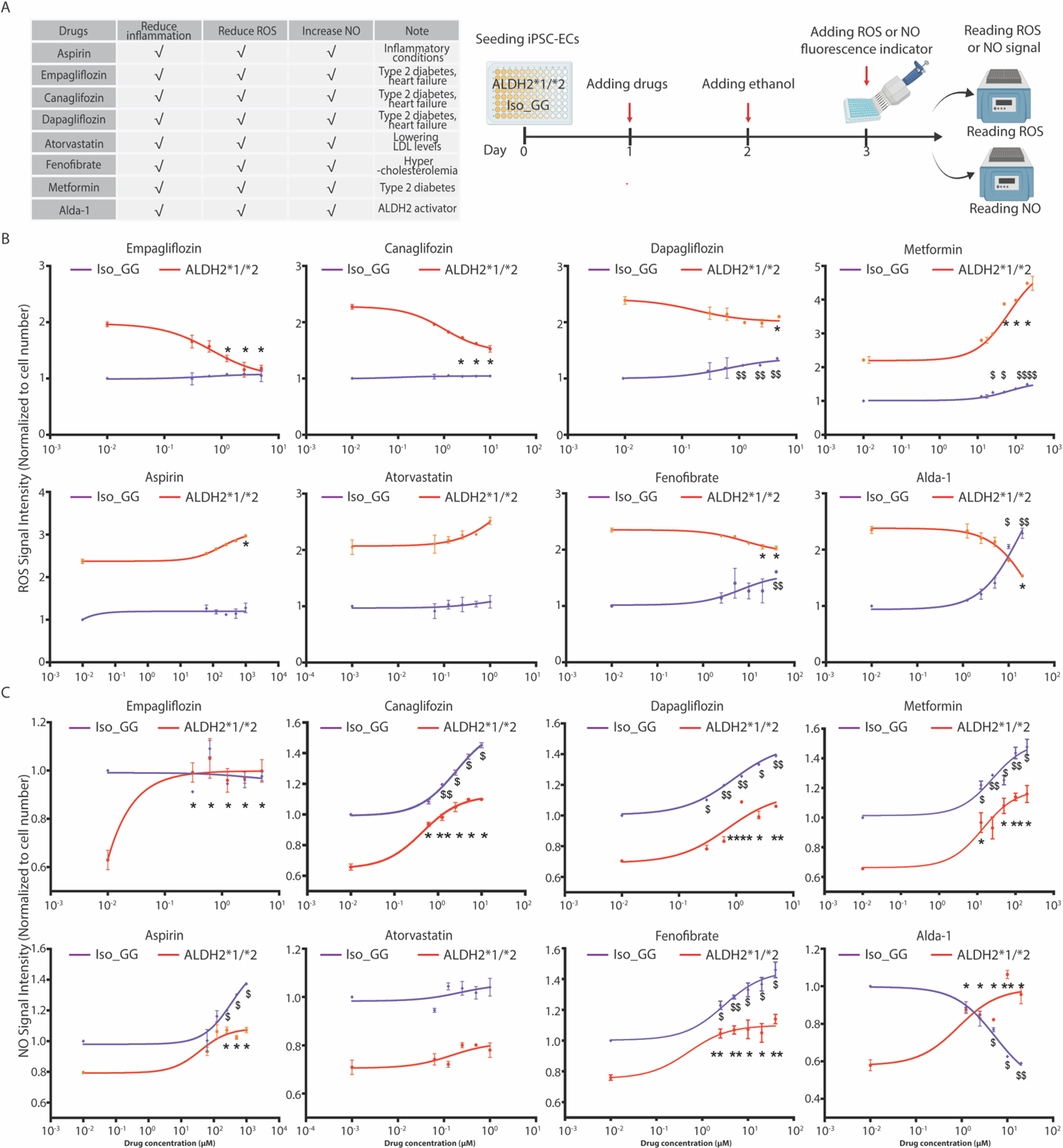
The common aldehyde dehydrogenase 2 () alcohol flushing variant known as affects ∼8% of the world's population. Even in heterozygous carriers, this missense variant leads to a severe loss of ALDH2 enzymatic activity and has been linked to an increased risk of coronary artery disease (CAD). Endothelial cell (EC) dysfunction plays a determining role in all stages of CAD pathogenesis, including early-onset CAD. However, the contribution of to EC dysfunction and its relation to CAD are not fully understood. In a large genome-wide association study (GWAS) from Biobank Japan, was found to be one of the strongest single-nucleotide polymorphisms associated with CAD. Clinical assessment of endothelial function showed that human participants carrying exhibited impaired vasodilation after light alcohol drinking. Using human induced pluripotent stem cell-derived ECs (iPSC-ECs) and CRISPR-Cas9-corrected iPSC-ECs, we modeled -induced EC dysfunction in vitro, demonstrating an increase in oxidative stress and inflammatory markers and a decrease in nitric oxide (NO) production and tube formation capacity, which was further exacerbated by ethanol exposure. We subsequently found that sodium-glucose cotransporter 2 inhibitors (SGLT2i) such as empagliflozin mitigated -associated EC dysfunction. Studies in knock-in mice further demonstrated that empagliflozin attenuated -mediated vascular dysfunction in vivo. Mechanistically, empagliflozin inhibited Na/H-exchanger 1 (NHE-1) and activated AKT kinase and endothelial NO synthase (eNOS) pathways to ameliorate -induced EC dysfunction. Together, our results suggest that induces EC dysfunction and that SGLT2i may potentially be used as a preventative measure against CAD for carriers.
常见的乙醛脱氢酶 2 () 酒精潮红变体,称为 ,影响了世界上约 8%的人口。即使在杂合子携带者中,这种错义变体也导致 ALDH2 酶活性严重丧失,并与冠心病 (CAD) 的风险增加有关。内皮细胞 (EC) 功能障碍在 CAD 发病机制的所有阶段都起着决定性作用,包括早发 CAD。然而, 对 EC 功能障碍的贡献及其与 CAD 的关系尚不完全清楚。在来自日本生物银行的一项大型全基因组关联研究 (GWAS) 中, 被发现是与 CAD 相关性最强的单核苷酸多态性之一。内皮功能的临床评估表明,携带 的人类参与者在轻度饮酒后表现出血管扩张受损。使用人类诱导多能干细胞衍生的 EC(iPSC-EC)和经 CRISPR-Cas9 校正的 iPSC-EC,我们在体外模拟了 诱导的 EC 功能障碍,证明氧化应激和炎症标志物增加,一氧化氮 (NO) 产生和管状形成能力降低,而乙醇暴露进一步加剧了这种情况。随后,我们发现钠-葡萄糖共转运蛋白 2 抑制剂 (SGLT2i),如恩格列净,可减轻 引起的 EC 功能障碍。 在 敲入小鼠中的研究进一步表明,恩格列净在体内减轻了 介导的血管功能障碍。从机制上讲,恩格列净抑制 Na/H 交换器 1 (NHE-1) 并激活 AKT 激酶和内皮型一氧化氮合酶 (eNOS) 途径,从而改善 诱导的 EC 功能障碍。总之,我们的结果表明 诱导 EC 功能障碍,SGLT2i 可能可作为预防 CAD 的措施用于 携带者。