Berger Justin H, Finck Brian N
Division of Pediatric Cardiology, Department of Pediatrics and.
Division of Nutritional Science and Obesity Medicine, Department of Medicine, Washington University School of Medicine, St. Louis, Missouri, USA.
J Clin Invest. 2024 Dec 16;134(24):e187097. doi: 10.1172/JCI187097.
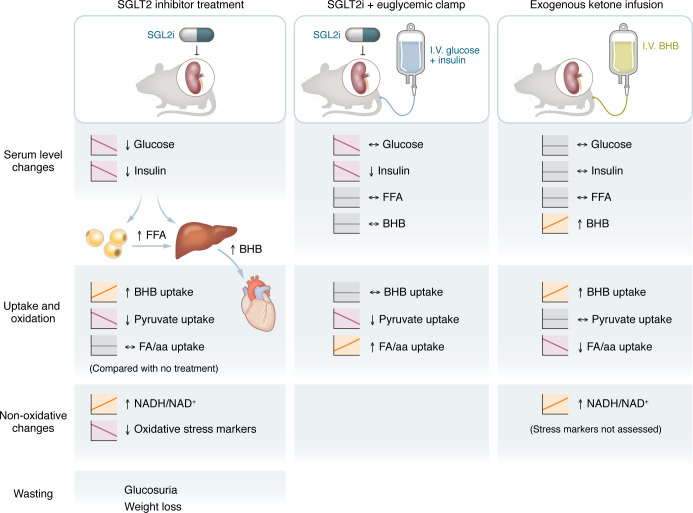
Despite the impressive clinical benefits and widespread adoption of sodium glucose cotransporter 2 inhibitors (SGLT2i) to treat all classes of heart failure, their cardiovascular mechanisms of action are poorly understood. Proposed mechanisms range broadly and include enhanced ketogenesis, where the mild ketosis associated with SGLT2i use is presumed to be beneficial. However, in this issue of the JCI, carefully conducted metabolic flux studies by Goedeke et al. comparing the effects of SGLT2i and exogenous ketones suggest differential effects. Thus, the mechanisms of action for SGLT2i are likely pleiotropic, and further work is needed to fully understand their beneficial effects.
尽管钠-葡萄糖协同转运蛋白2抑制剂(SGLT2i)在治疗各类心力衰竭方面具有显著的临床益处且被广泛应用,但其心血管作用机制仍知之甚少。提出的作用机制范围广泛,包括增强生酮作用,即与使用SGLT2i相关的轻度酮症被认为是有益的。然而,在本期《临床研究杂志》(JCI)中,Goedeke等人精心开展的代谢通量研究比较了SGLT2i和外源性酮的作用,结果显示了不同的效应。因此,SGLT2i的作用机制可能具有多效性,需要进一步开展研究以充分了解其有益作用。