Institute of Medical Biochemistry Leopoldo de Meis, Federal University of Rio de Janeiro, 21941-902, Rio de Janeiro RJ, Brazil.
Institute of Biomedical Sciences, Federal University of Rio de Janeiro, 21941-902, Rio de Janeiro RJ, Brazil.
eNeuro. 2023 Feb 13;10(2). doi: 10.1523/ENEURO.0256-22.2023. Print 2023 Feb.
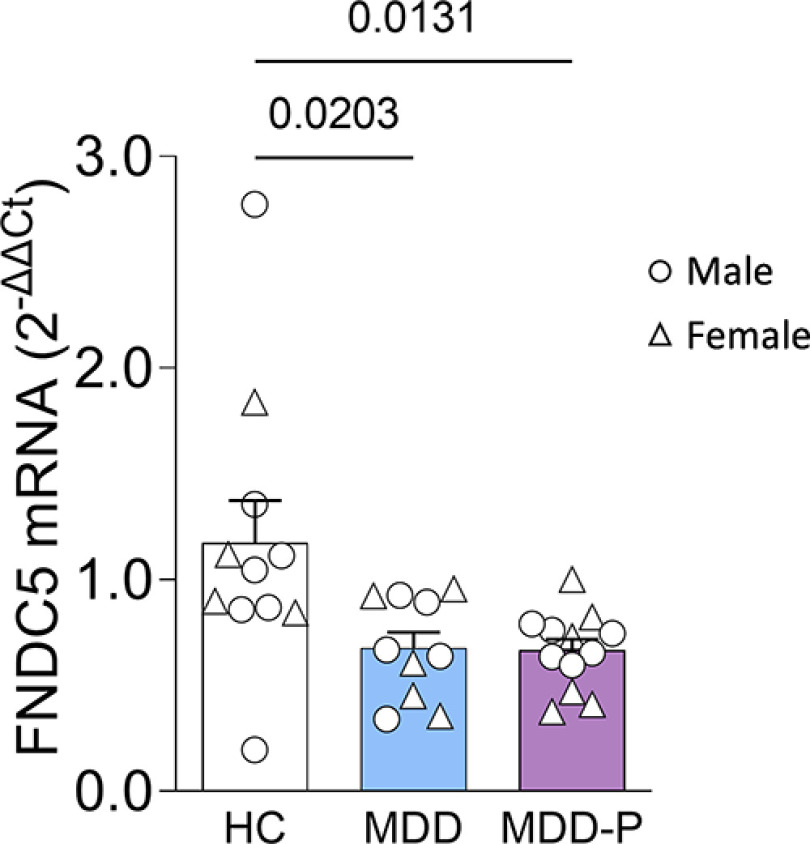
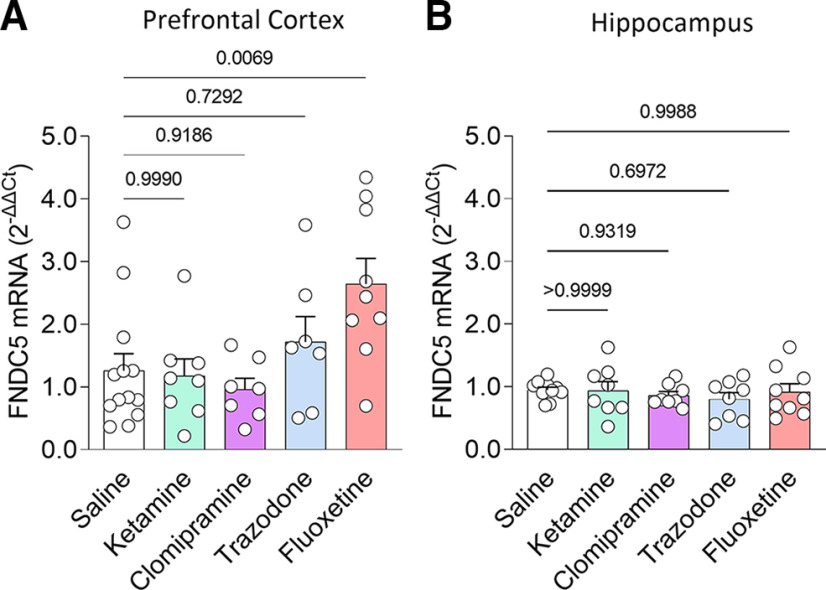
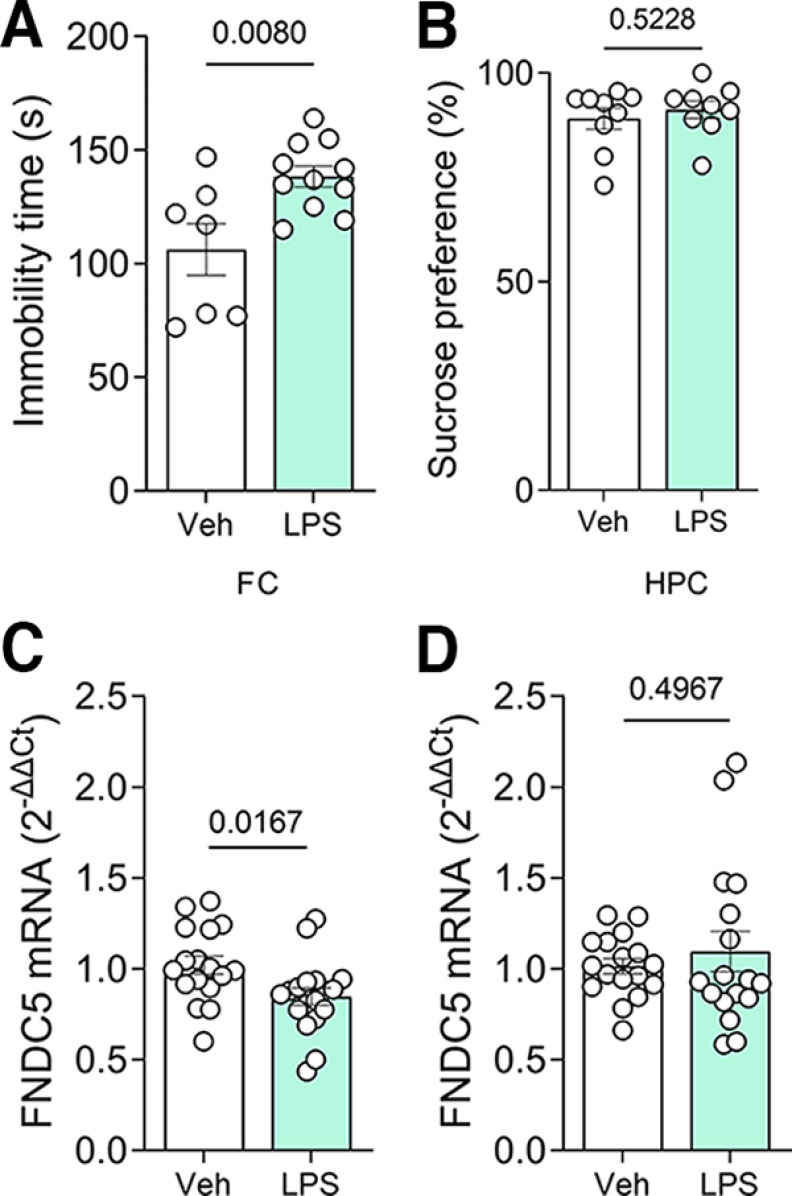
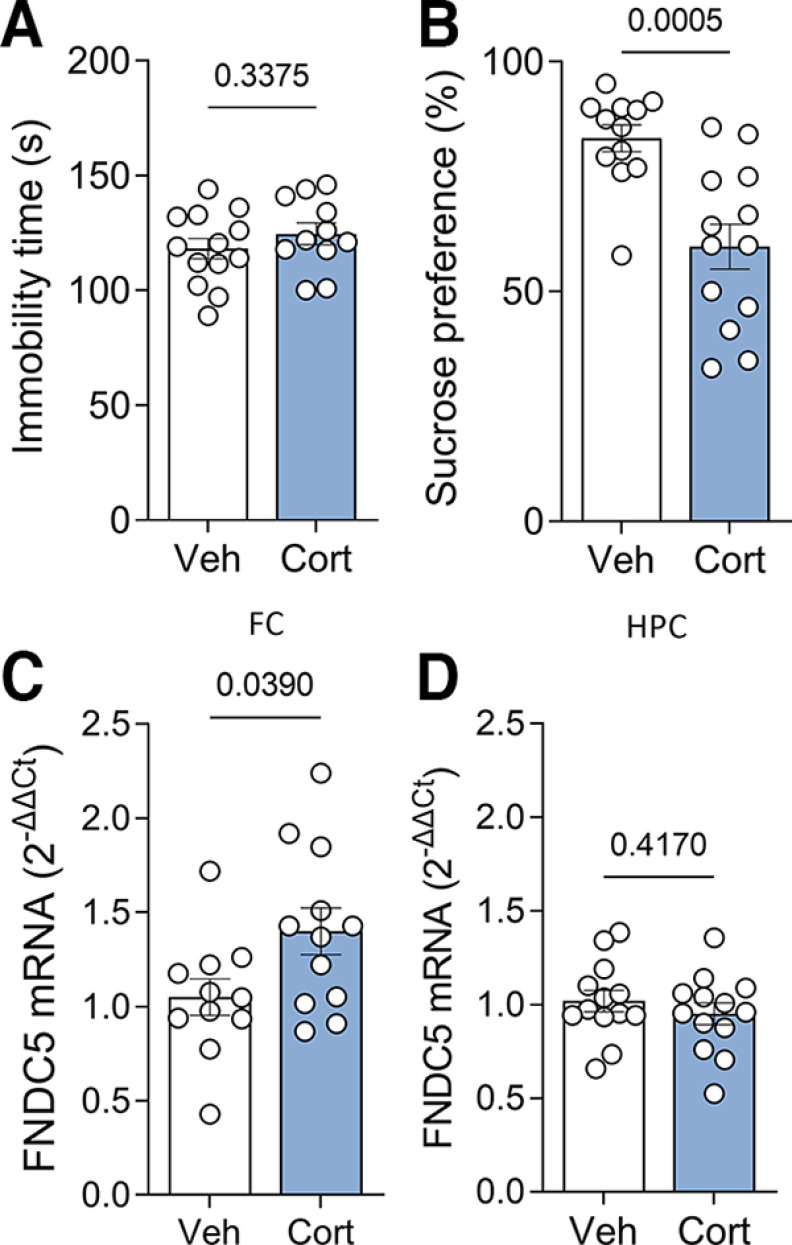
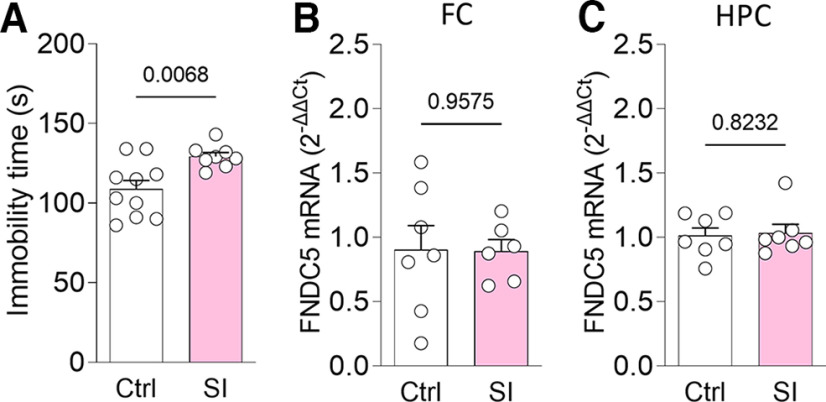
Major depressive disorder (MDD) is a major cause of disability in adults. MDD is both a comorbidity and a risk factor for Alzheimer's disease (AD), and regular physical exercise has been associated with reduced incidence and severity of MDD and AD. Irisin is an exercise-induced myokine derived from proteolytic processing of fibronectin type III domain-containing protein 5 (FNDC5). FNDC5/irisin is reduced in the brains of AD patients and mouse models. However, whether brain FNDC5/irisin expression is altered in depression remains elusive. Here, we investigate changes in expression in postmortem brain tissue from MDD individuals and mouse models of depression. We found decreased expression in the MDD prefrontal cortex, both with and without psychotic traits. We further demonstrate that the induction of depressive-like behavior in male mice by lipopolysaccharide decreased expression in the frontal cortex, but not in the hippocampus. Conversely, chronic corticosterone administration increased expression in the frontal cortex, but not in the hippocampus. Social isolation in mice did not result in altered expression in either frontal cortex or hippocampus. Finally, fluoxetine, but not other antidepressants, increased gene expression in the mouse frontal cortex. Results indicate a region-specific modulation of in depressive-like behavior and by antidepressant in mice. Our finding of decreased prefrontal cortex expression in MDD individuals differs from results in mice, highlighting the importance of carefully interpreting observations in mice. The reduction in mRNA suggests that decreased central FNDC5/irisin could comprise a shared pathologic mechanism between MDD and AD.
重度抑郁症(MDD)是导致成年人残疾的主要原因。MDD 既是阿尔茨海默病(AD)的合并症也是其危险因素,有规律的体育锻炼与 MDD 和 AD 的发病率和严重程度降低有关。鸢尾素是一种运动诱导的肌因子,来源于纤维连接蛋白 III 型结构域蛋白 5(FNDC5)的蛋白水解处理。AD 患者和小鼠模型的大脑中 FNDC5/鸢尾素减少。然而,抑郁症患者大脑中 FNDC5/鸢尾素的表达是否发生改变仍不清楚。在这里,我们研究了 MDD 个体和抑郁小鼠模型死后脑组织中 表达的变化。我们发现 MDD 前额叶皮层中的 表达减少,不论是否存在精神病特征。我们进一步证明,脂多糖诱导雄性小鼠出现抑郁样行为会降低前额叶皮层中的 表达,但不会降低海马体中的表达。相反,慢性皮质酮处理会增加前额叶皮层中的 表达,但不会增加海马体中的表达。在小鼠中进行社交隔离不会导致前额叶皮层或海马体中的 表达发生改变。最后,氟西汀而非其他抗抑郁药会增加小鼠前额叶皮层中的 基因表达。结果表明, 在抑郁样行为和抗抑郁药中存在特定区域的调节作用。我们在 MDD 个体中发现的前额叶皮层 表达减少与在小鼠中的结果不同,这突出了在解释小鼠观察结果时要谨慎的重要性。 mRNA 的减少表明中枢 FNDC5/鸢尾素减少可能是 MDD 和 AD 之间共有的病理机制。