Guillemeney Lilian, Lermusiaux Laurent, Landaburu Guillaume, Wagnon Benoit, Abécassis Benjamin
Univ. Lyon, ENS de Lyon, CNRS, Laboratoire de Chimie, 69342, Lyon, France.
Commun Chem. 2022 Jan 12;5(1):7. doi: 10.1038/s42004-021-00621-z.
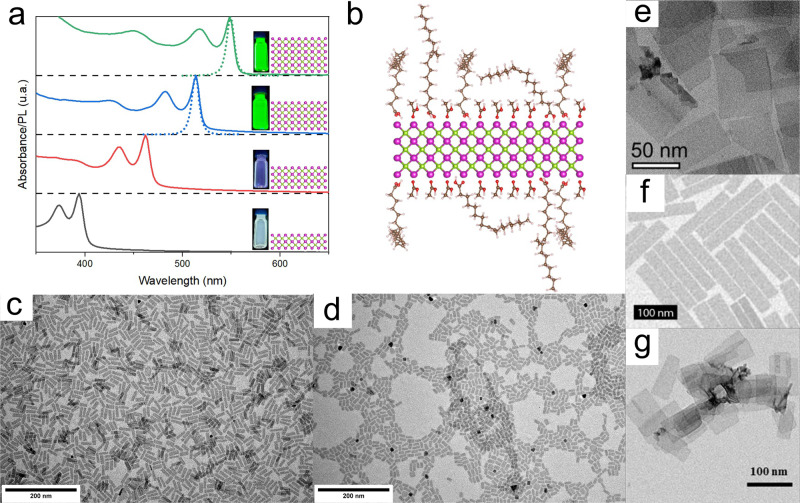
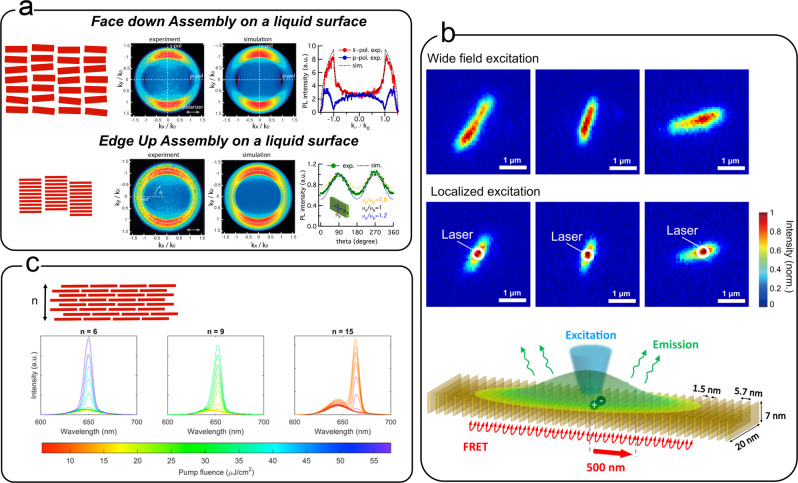
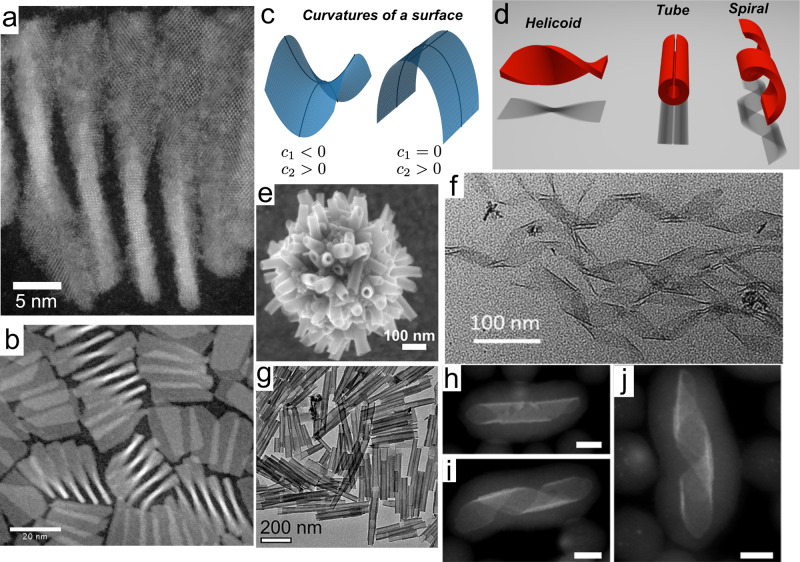
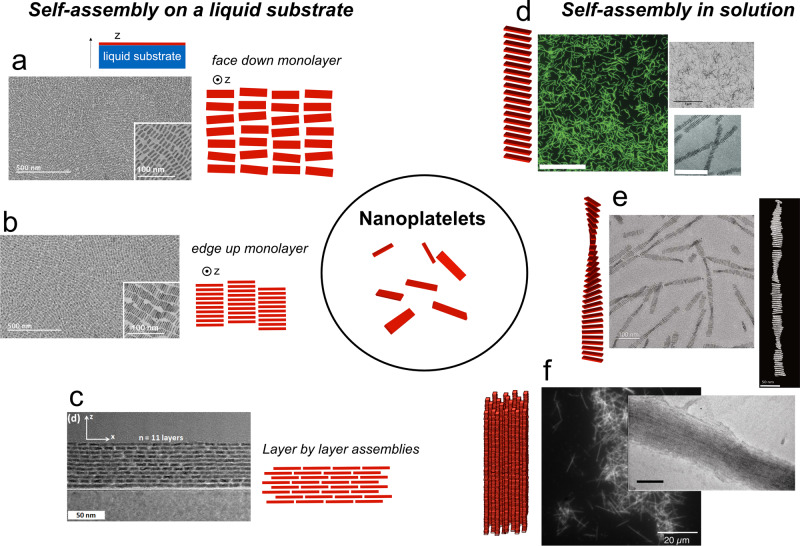
Semi-conducting nanoplatelets are two-dimensional nanoparticles whose thickness is in the nanometer range and controlled at the atomic level. They have come up as a new category of nanomaterial with promising optical properties due to the efficient confinement of the exciton in the thickness direction. In this perspective, we first describe the various conformations of these 2D nanoparticles which display a variety of bent and curved geometries and present experimental evidences linking their curvature to the ligand-induced surface stress. We then focus on the assembly of nanoplatelets into superlattices to harness the particularly efficient energy transfer between them, and discuss different approaches that allow for directional control and positioning in large scale assemblies. We emphasize on the fundamental aspects of the assembly at the colloidal scale in which ligand-induced forces and kinetic effects play a dominant role. Finally, we highlight the collective properties that can be studied when a fine control over the assembly of nanoplatelets is achieved.
半导体纳米片是二维纳米颗粒,其厚度在纳米范围内且在原子水平上受到控制。由于激子在厚度方向上的有效限制,它们作为一类具有前景光学性质的新型纳米材料而出现。从这个角度来看,我们首先描述这些二维纳米颗粒的各种构象,它们呈现出各种弯曲和卷曲的几何形状,并给出将其曲率与配体诱导的表面应力联系起来的实验证据。然后,我们专注于将纳米片组装成超晶格,以利用它们之间特别高效的能量转移,并讨论在大规模组装中实现定向控制和定位的不同方法。我们强调在胶体尺度上组装的基本方面,其中配体诱导的力和动力学效应起主导作用。最后,我们强调当对纳米片的组装实现精细控制时可以研究的集体性质。