Department of Medical Sciences, Institute of Biomedicine, University of Aveiro, 3810-193, Aveiro, Portugal.
Lab3R - Respiratory Research and Rehabilitation Laboratory, School of Health Sciences (ESSUA), University of Aveiro, Aveiro, Portugal.
Respir Res. 2023 Jan 25;24(1):29. doi: 10.1186/s12931-023-02339-z.
Pulmonary Rehabilitation (PR) is one of the most cost-effective therapies for chronic obstructive pulmonary disease (COPD) management. There are, however, people who do not respond to PR and reasons for non-response are mostly unknown. PR is likely to change the airway microbiota and this could play a role in its responsiveness. In this study we have explored the association between PR effectiveness and specific alterations in oral microbiota and inflammation.
A prospective longitudinal study was conducted. Data on exercise capacity, dyspnoea, impact of disease and 418 saliva samples were collected from 76 patients, half of whom participated in a 12-weeks PR programme. Responders and non-responders to PR (dyspnoea, exercise-capacity and impact of disease) were defined based on minimal clinically important differences.
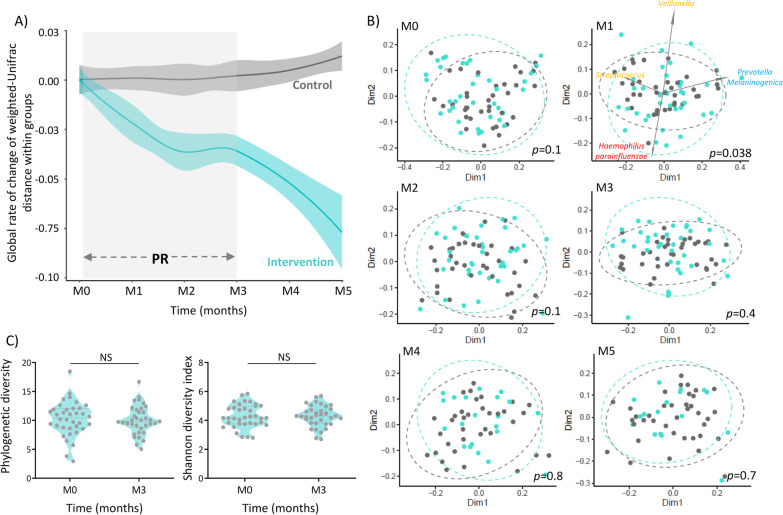
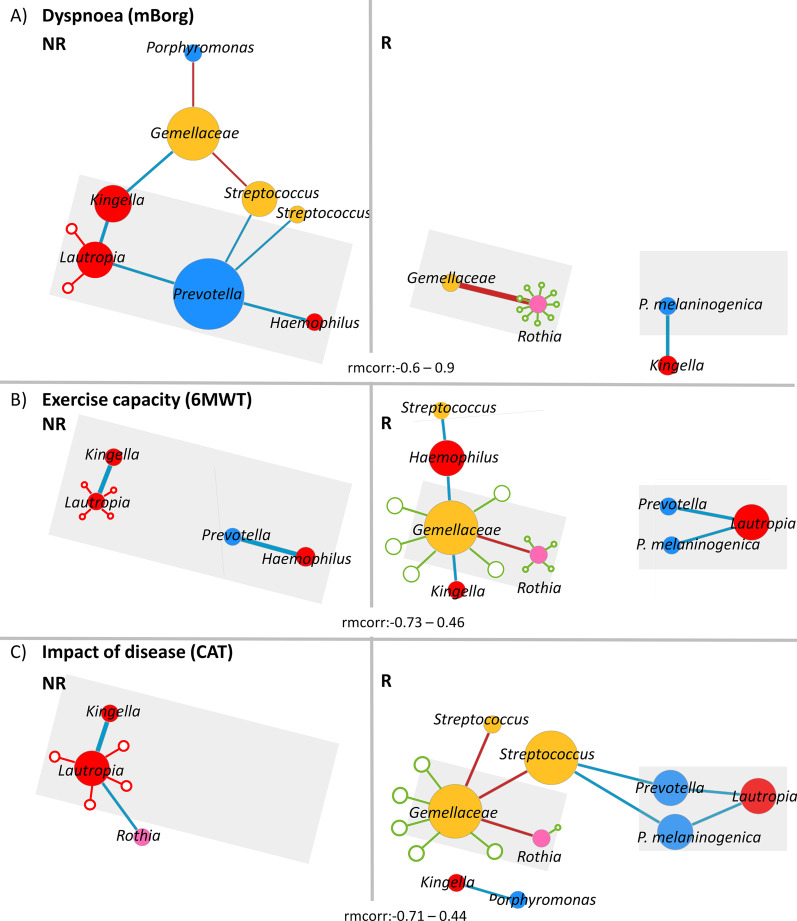
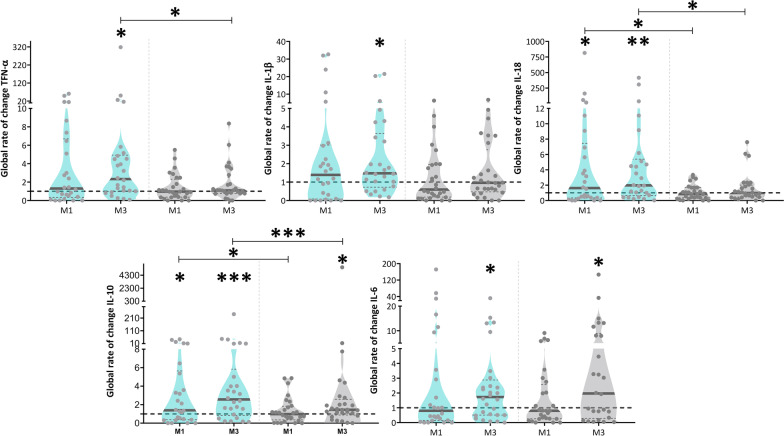
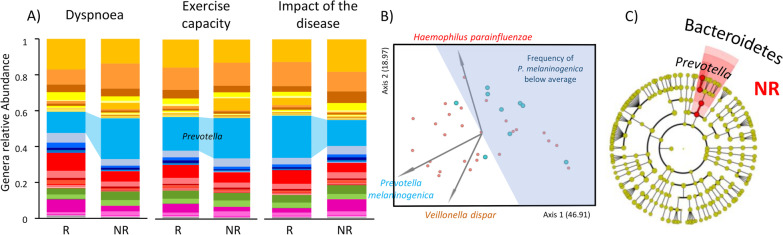
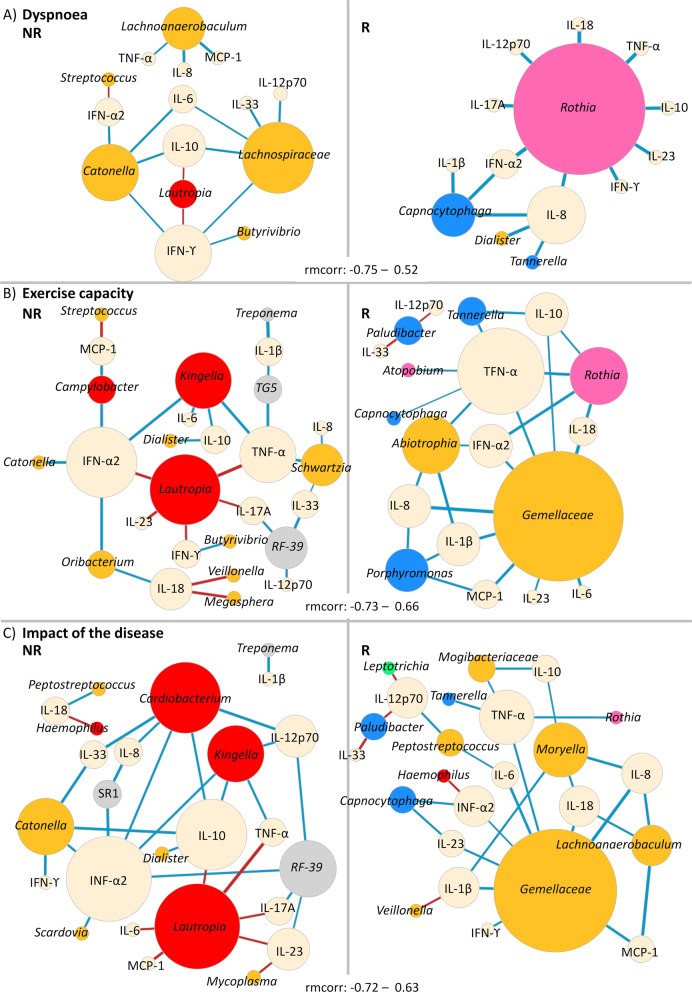
Changes in microbiota, including Prevotella melaninogenica and Streptococcus were observed upon PR. Prevotella, previously found to be depleted in severe COPD, increased during the first month of PR in responders. This increase was negatively correlated with Streptococcus and Lautropia, known to be enriched in severe cases of COPD. Simultaneously, an anti-inflammatory commensal of the respiratory tract, Rothia, correlated strongly and negatively with several pro-inflammatory markers, whose levels were generally boosted by PR. Conversely, in non-responders, the observed decline in Prevotella correlated negatively with Streptococcus and Lautropia whose fluctuations co-occurred with several pro-inflammatory markers.
PR is associated with changes in oral microbiota. Specifically, PR increases salivary Prevotella melaninogenica and avoids the decline in Rothia and the increase in Streptococcus and Lautropia in responders, which may contribute to the benefits of PR.
肺康复(PR)是慢性阻塞性肺疾病(COPD)管理中最具成本效益的治疗方法之一。然而,有些人对 PR 没有反应,而反应不敏感的原因大多未知。PR 可能会改变气道微生物群,这可能在其反应性中发挥作用。在这项研究中,我们探讨了 PR 效果与口腔微生物群和炎症的特定变化之间的关联。
进行了一项前瞻性纵向研究。从 76 名患者中收集了运动能力、呼吸困难、疾病影响以及 418 份唾液样本的数据,其中一半患者参加了为期 12 周的 PR 计划。根据最小临床重要差异定义了 PR 的应答者和无应答者(呼吸困难、运动能力和疾病影响)。
PR 后观察到微生物群的变化,包括普雷沃氏菌属和链球菌属。先前在严重 COPD 中发现消耗的普雷沃氏菌在 PR 的第一个月内增加。这种增加与链球菌属和 Lautropia 呈负相关,后者已知在严重 COPD 病例中丰富。同时,呼吸道的抗炎共生菌 Rothia 与几个促炎标志物强烈且负相关,这些标志物的水平通常通过 PR 得到增强。相反,在无应答者中,观察到普雷沃氏菌的下降与链球菌属和 Lautropia 呈负相关,其波动与几个促炎标志物同时发生。
PR 与口腔微生物群的变化有关。具体来说,PR 增加唾液普雷沃氏菌属,避免了应答者中 Rothia 的下降以及链球菌属和 Lautropia 的增加,这可能有助于 PR 的益处。