The Azrieli Faculty of Medicine, Bar Ilan University, Tzfat, Israel.
Galilee Medical Center, Nahariah, Israel.
Epidemiol Infect. 2023 Jan 4;151:e16. doi: 10.1017/S0950268822001996.
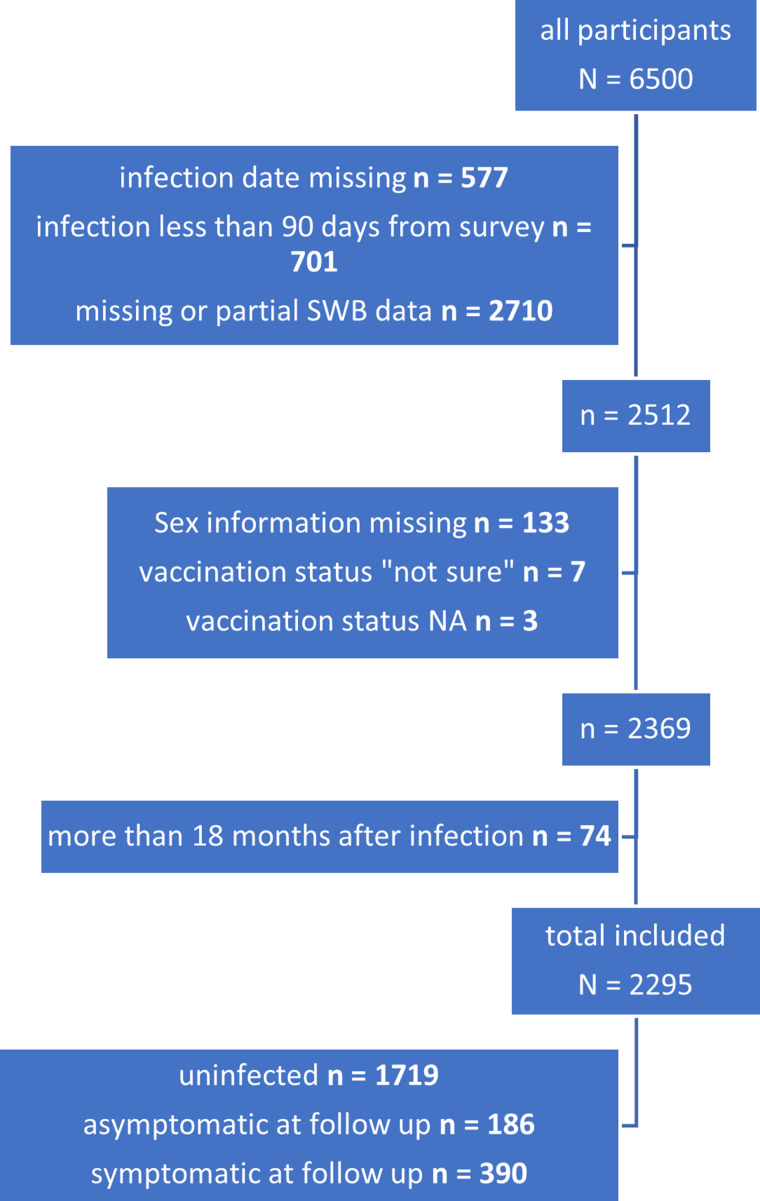
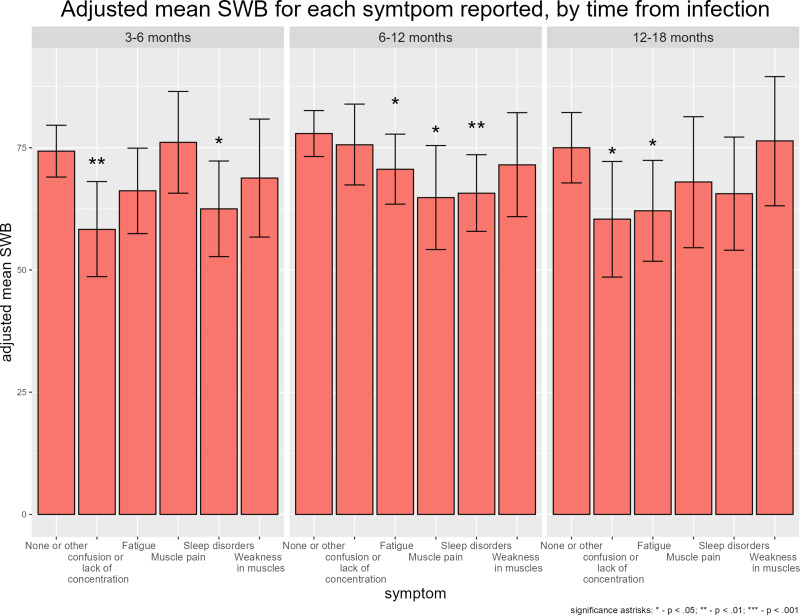
The impact of individual symptoms reported post-COVID-19 on subjective well-being (SWB) is unknown. We described associations between SWB and selected reported symptoms following SARS-CoV-2 infection. We analysed reported symptoms and subjective well being from 2295 participants (of which 576 reporting previous infection) in an ongoing longitudinal cohort study taking place in Israel. We estimated changes in SWB associated with reported selected symptoms at three follow-up time points (3-6, 6-12 and 12-18 months post infection) among participants reporting previous SARS-CoV-2 infection, adjusted for key demographic variables, using linear regression. Our results suggest that the biggest and most sustained changes in SWB stems from non-specific symptoms (fatigue -7.7 percentage points (pp), confusion/ lack of concentration -10.7 pp, and sleep disorders -11.5pp, < 0.005), whereas the effect of system-specific symptoms, such as musculoskeletal symptoms (weakness in muscles and muscle pain) on SWB, are less profound and more transient. Taking a similar approach for other symptoms and following individuals over time to describe trends in SWB changes attributable to specific symptoms will help understand the post-acute phase of COVID-19 and how it should be defined and better managed. Post-acute COVID19 symptoms were associated with a significant decrease in subjective well being up to 18 months after initial infection.
感染 SARS-CoV-2 后报告的个别症状对主观幸福感(SWB)的影响尚不清楚。我们描述了 SWB 与 SARS-CoV-2 感染后选定报告症状之间的关系。我们分析了正在以色列进行的一项正在进行的纵向队列研究中 2295 名参与者(其中 576 名报告有先前感染)的报告症状和主观幸福感。我们使用线性回归估计了在报告先前 SARS-CoV-2 感染的参与者中,在感染后 3-6、6-12 和 12-18 个月的三个随访时间点,与报告的选定症状相关的 SWB 变化,调整了关键人口统计学变量。我们的研究结果表明,SWB 最大和最持续的变化源自非特异性症状(疲劳-7.7 个百分点(pp),困惑/注意力不集中-10.7 pp,睡眠障碍-11.5pp,<0.005),而系统特异性症状(如肌肉骨骼症状(肌肉无力和肌肉疼痛)对 SWB 的影响则不那么明显且更短暂。对于其他症状采用类似的方法,并随着时间的推移对个体进行跟踪,以描述归因于特定症状的 SWB 变化趋势,将有助于了解 COVID-19 的急性后期以及如何定义和更好地管理 COVID-19。急性后 COVID19 症状与初始感染后长达 18 个月的主观幸福感显著下降有关。