Kakehi Ryoko, Hori Hiroaki, Yoshida Fuyuko, Itoh Mariko, Lin Mingming, Niwa Madoka, Narita Megumi, Ino Keiko, Imai Risa, Sasayama Daimei, Kamo Toshiko, Kunugi Hiroshi, Kim Yoshiharu
Department of Behavioral Medicine, National Center of Neurology and Psychiatry, National Institute of Mental Health, Tokyo, Japan.
Department of Medical Science, Tohoku University Graduate School of Medicine, Sendai, Japan.
Front Psychiatry. 2023 Jan 9;13:967779. doi: 10.3389/fpsyt.2022.967779. eCollection 2022.
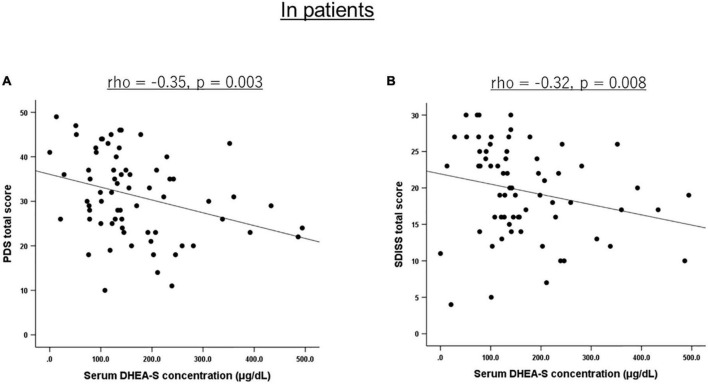
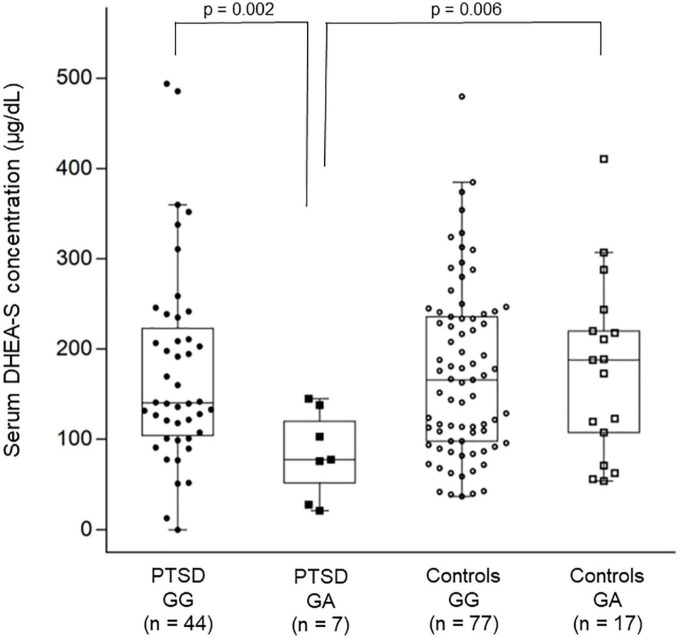
Accumulated evidence shows that psychological trauma and posttraumatic stress disorder (PTSD) are associated with dysfunction in the hypothalamic-pituitary-adrenal (HPA) axis. Besides the HPA axis hormones, recent evidence suggests that the renin-angiotensin-aldosterone (RAA) system and genetic factors may be involved in trauma/PTSD as well as in HPA axis regulation. This study attempted to better understand the HPA axis function in relation to PTSD and childhood maltreatment by simultaneously examining RAA system and genetic polymorphisms of candidate genes. Here we studied 69 civilian women with PTSD and 107 healthy control women without DSM-IV-based traumatic experience. Childhood maltreatment history was assessed with the Childhood Trauma Questionnaire. PTSD severity was assessed with the Posttraumatic Diagnostic Scale. Functional disability was assessed with the Sheehan Disability Scale. HPA axis was examined by measuring blood levels of cortisol, adrenocorticotropic hormone, and dehydroepiandrosterone-sulphate (DHEA-S). RAA system was examined by measuring blood renin and aldosterone levels. The rs1360780 and rs1006737 polymorphisms were genotyped. No significant differences were seen between patients and controls in any of the five hormone levels. DHEA-S levels were significantly negatively correlated with overall PTSD severity ( = 0.003) and functional disability ( = 0.008). A two-way analysis of variance with diagnostic groups and genotypes as fixed factors revealed that patients with the rs1006737 A-allele had significantly lower DHEA-S levels than patients with the GG genotype ( = 0.002) and controls with the A-allele ( = 0.006). Childhood maltreatment history was not significantly correlated with any of the five hormone levels. These results were generally unchanged after controlling for the potentially confounding effect of age, depression, and anxiety. Our findings suggest that lower DHEA-S levels could indicate more severe subtype of PTSD, the association of which might be partly modified by the polymorphism.
越来越多的证据表明,心理创伤和创伤后应激障碍(PTSD)与下丘脑 - 垂体 - 肾上腺(HPA)轴功能障碍有关。除了HPA轴激素外,最近的证据表明肾素 - 血管紧张素 - 醛固酮(RAA)系统和遗传因素可能也参与了创伤/PTSD以及HPA轴调节。本研究试图通过同时检测RAA系统和候选基因的基因多态性来更好地了解与PTSD和童年期虐待相关的HPA轴功能。我们研究了69名患有PTSD的平民女性和107名没有基于DSM-IV创伤经历的健康对照女性。采用儿童创伤问卷评估童年期虐待史。采用创伤后诊断量表评估PTSD严重程度。采用希恩残疾量表评估功能残疾情况。通过测量血液中皮质醇、促肾上腺皮质激素和硫酸脱氢表雄酮(DHEA-S)水平来检测HPA轴。通过测量血液肾素和醛固酮水平来检测RAA系统。对rs1360780和rs1006737多态性进行基因分型。患者和对照组在五种激素水平中的任何一种上均未观察到显著差异。DHEA-S水平与PTSD总体严重程度(P = 0.003)和功能残疾(P = 0.008)显著负相关。以诊断组和基因型作为固定因素的双向方差分析显示,携带rs1006737 A等位基因的患者的DHEA-S水平显著低于携带GG基因型的患者(P = 0.002)和携带A等位基因的对照组(P = 0.006)。童年期虐待史与五种激素水平中的任何一种均无显著相关性。在控制年龄、抑郁和焦虑的潜在混杂效应后,这些结果总体上没有变化。我们的研究结果表明,较低的DHEA-S水平可能表明PTSD的更严重亚型,其关联可能部分地由该多态性所改变。