University of Arizona College of Medicine-Phoenix, Phoenix, AZ, USA.
WWAMI Medical Education Program, University of Idaho, Moscow, ID, USA.
J Gen Intern Med. 2023 May;38(6):1501-1515. doi: 10.1007/s11606-023-08026-5. Epub 2023 Jan 26.
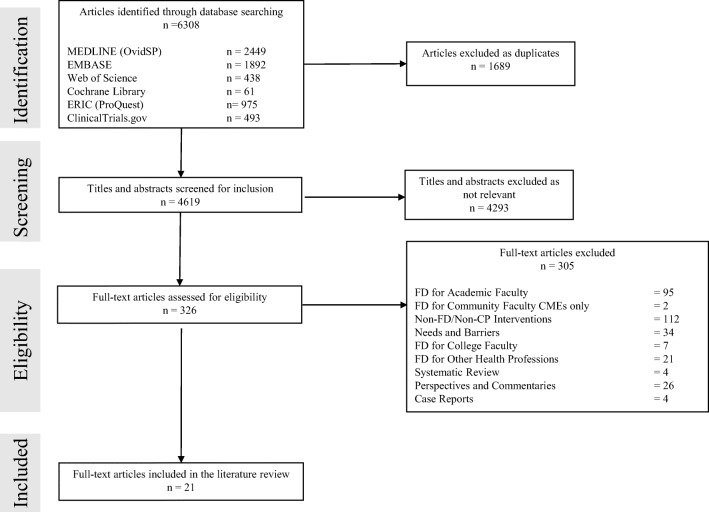
Community teaching physicians (i.e., community preceptors) have assumed an important role in medical education. More than half of medical schools use community settings to train medical students. Whether community preceptors are well prepared for their teaching responsibilities is unknown. In addition, best practice for faculty development (FD) of this population of preceptors has not been defined. The authors conducted a narrative review of the literature to describe FD programs for community preceptors that may be helpful to medical schools for future planning. Many databases were searched from their establishment to May 2022. Studies that described FD programs for community preceptors were included. Data were organized according to program aim, duration, setting, participants, content, and outcomes. The Communities of Practice theoretical framework was used to present findings. From a total of 6308 articles, 326 were eligible for full review, 21 met inclusion criteria. Sixty-seven percent (14/21) conducted a needs assessment; 57% (12/21) were developed by the medical school; 81% (17/21) included only community preceptors. Number of participants ranged from six to 1728. Workshops were often (24%, 5/21) used and supplemented by role-play, online modules, or instructional videos. Few programs offered opportunities to practice with standardized learners. Content focused primarily on teaching skills. Five programs offered CME credits as an incentive for engagement. Participant surveys were most often used for program evaluation. Learner evaluations and focus groups were used less often. Participants reported satisfaction and improvement in teaching skills after attending the program. Faculty development for community preceptors is primarily delivered through workshops and online materials, although direct observations of teaching with feedback from FD faculty and learners may be more helpful for training. Future studies need to focus on the long-term impact of FD on community preceptors' teaching skills, identity formation as medical educators, and student learning.
社区教学医师(即社区导师)在医学教育中扮演着重要的角色。超过一半的医学院校利用社区环境来培训医学生。目前尚不清楚社区导师是否已经为他们的教学职责做好了充分准备。此外,针对这一群体导师的师资发展(FD)最佳实践也尚未确定。作者对文献进行了叙述性综述,以描述可能有助于医学院校进行未来规划的社区导师 FD 计划。从建立到 2022 年 5 月,许多数据库都进行了搜索。纳入了描述社区导师 FD 计划的研究。根据计划目标、持续时间、地点、参与者、内容和结果对数据进行了组织。实践社区理论框架用于呈现研究结果。从总共 6308 篇文章中,有 326 篇文章符合全文审查标准,其中 21 篇符合纳入标准。67%(14/21)进行了需求评估;57%(12/21)由医学院校开发;81%(17/21)仅包括社区导师。参与者人数从 6 人到 1728 人不等。工作坊经常使用(24%,5/21),并辅以角色扮演、在线模块或教学视频。很少有计划提供与标准化学习者实践的机会。内容主要集中在教学技能上。有 5 个计划提供 CME 学分作为参与的激励措施。参与者调查最常用于程序评估。学习者评估和焦点小组使用较少。参加项目后,参与者报告说对教学技能的满意度和提高度。社区导师的师资发展主要通过工作坊和在线材料进行,尽管 FD 教师和学习者对教学进行直接观察并提供反馈可能更有助于培训。未来的研究需要关注 FD 对社区导师教学技能、医学教育者身份形成以及学生学习的长期影响。