Ling Lijun, Luo Hong, Zhao Yunhua, Yang Caiyun, Cheng Wenting, Pang Mingmei
College of Life Science, Northwest Normal University, Lanzhou, China.
Bioactive Products Engineering Research Center for Gansu Distinctive Plants, Northwest Normal University, Lanzhou, China.
Front Microbiol. 2023 Jan 10;13:1068144. doi: 10.3389/fmicb.2022.1068144. eCollection 2022.
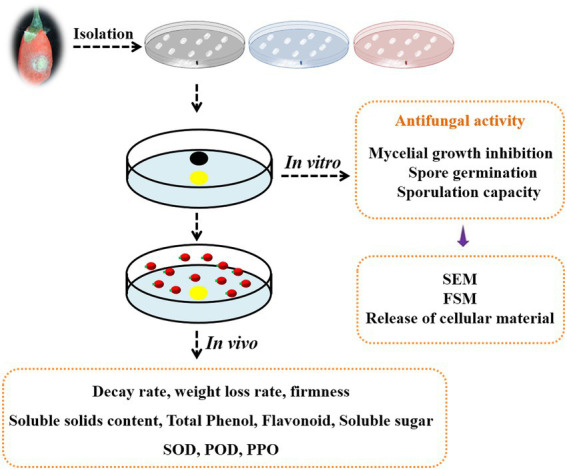
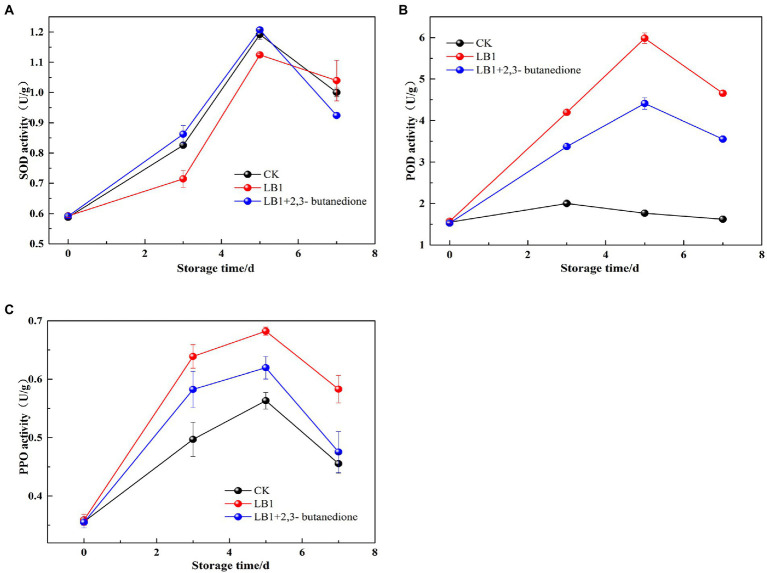
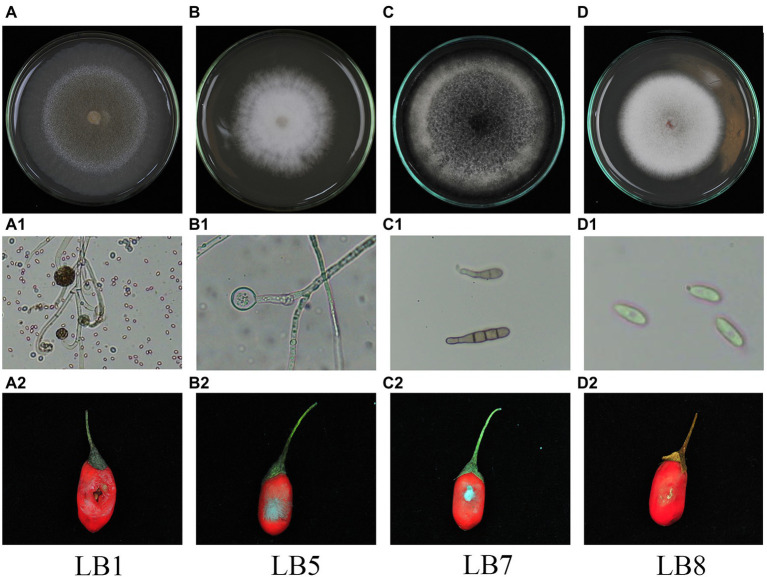
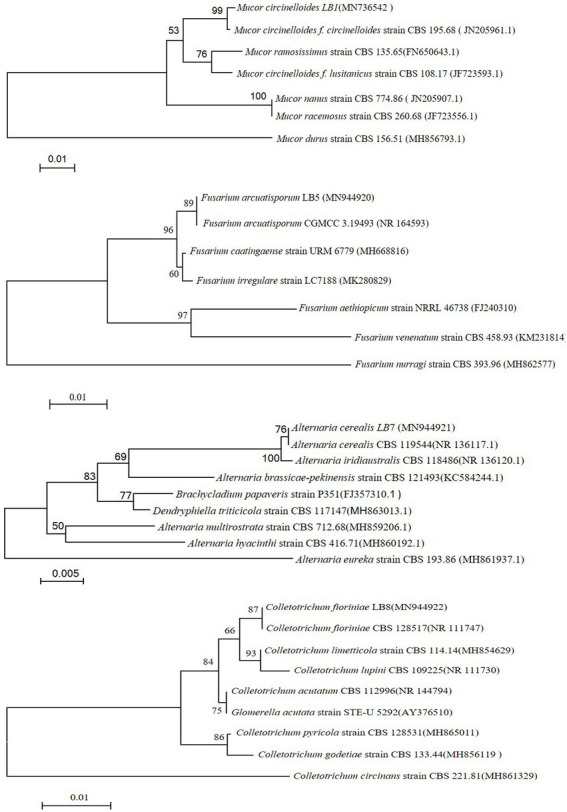
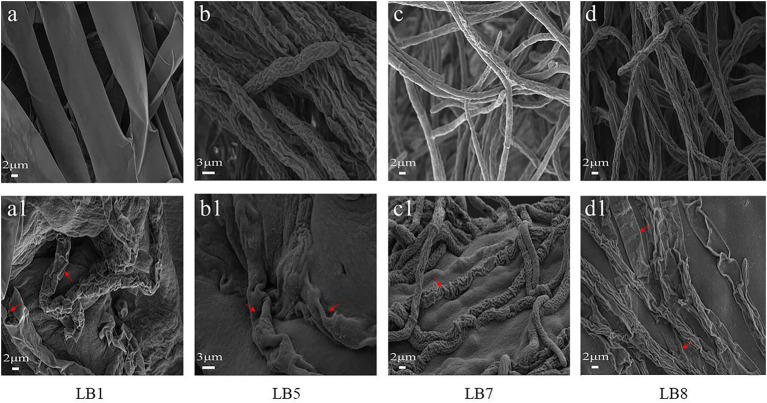
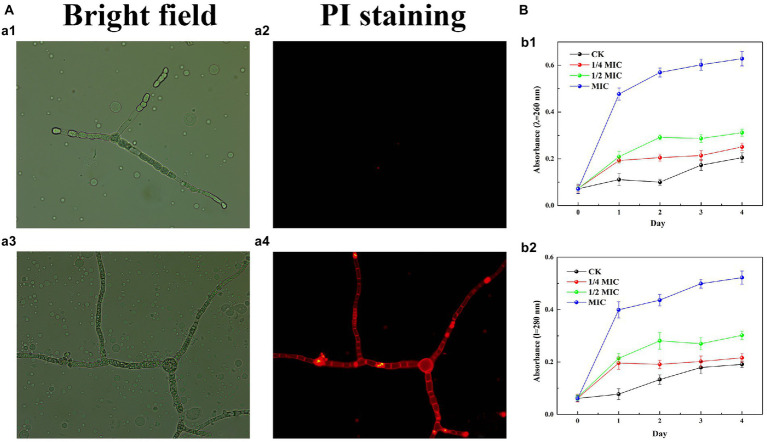
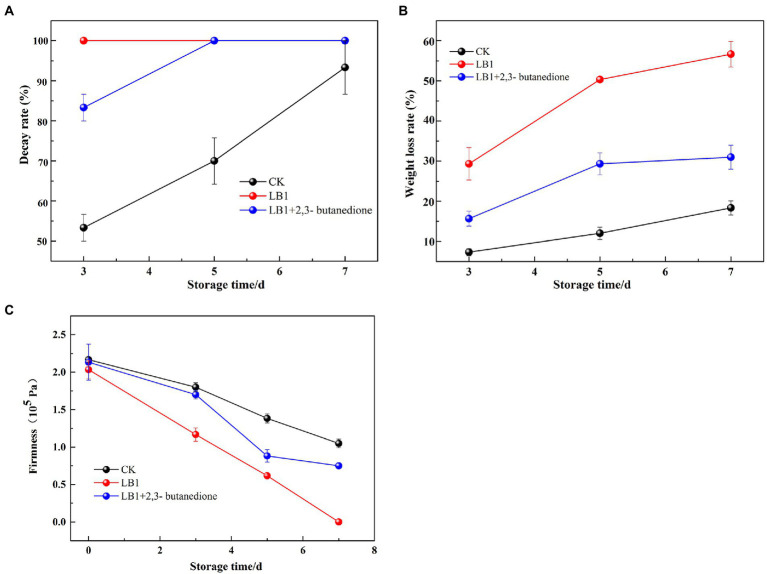
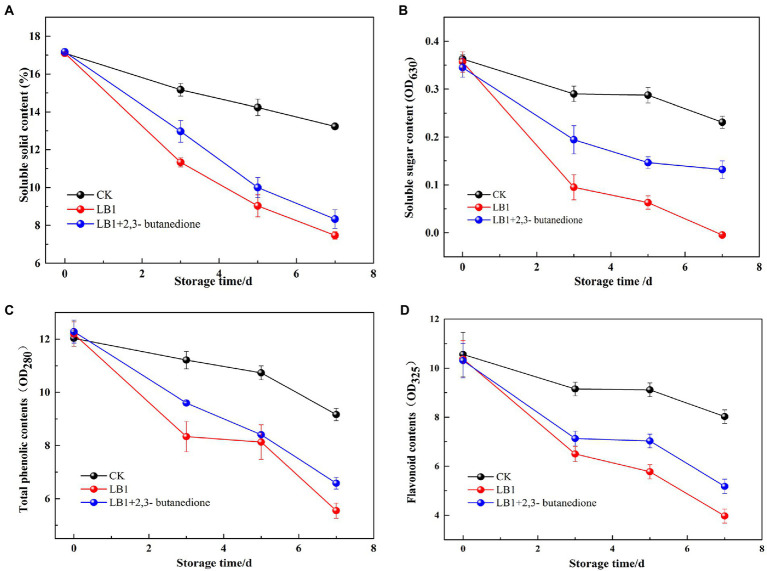
Fungal pathogen contamination is one of the most important factors affecting the postharvest quality and shelf life of wolfberry fruits. Therefore, the prevention and control of fungal pathogens that cause fruit rot has become particularly important. Volatile antifungal agents of biological origin have broad application prospects. They may be safer and more efficient than traditional physical and chemical methods. Four pathogenic fungi were isolated and purified from rotting wolfberry. These pathogenic fungi were determined to be LB1, LB5, LB7, and LB8. In vitro fumigation experiments showed that 2,3-butanedione can effectively inhibit the mycelial growth, spore germination, and sporulation ability of pathogenic fungi. The scanning electron microscope (SEM) showed morphological changes in hyphae. Propidium iodide (PI) Staining and leakage of 260 and 280 nm-absorbing increased, suggesting damage to cell membranes. Furthermore, 2,3-butanedione was found to significantly improve fruit firmness, soluble solid, total phenol, flavonoid, and soluble sugar content, as well as higher SOD enzyme activity and lower PPO and POD enzyme activity in the treated fruit, indicating that 2,3-butanedione can effectively reduce the adverse effects of pathogenic fungi in wolfberry. Based on these results, we conclude that 2,3-butanedione is effective against infection by pathogenic fungi in post-harvest wolfberry. 2,3-butanedione should be considered a viable substitute for conventional fungicides that are currently used to control rot in wolfberry.
真菌病原体污染是影响枸杞果实采后品质和货架期的最重要因素之一。因此,预防和控制导致果实腐烂的真菌病原体变得尤为重要。生物源挥发性抗真菌剂具有广阔的应用前景。它们可能比传统的物理和化学方法更安全、更有效。从腐烂的枸杞中分离并纯化出四种致病真菌。这些致病真菌被确定为LB1、LB5、LB7和LB8。体外熏蒸实验表明,2,3-丁二酮能有效抑制致病真菌的菌丝生长、孢子萌发和产孢能力。扫描电子显微镜(SEM)显示了菌丝的形态变化。碘化丙啶(PI)染色以及260和280nm吸光度的泄漏增加,表明细胞膜受到损伤。此外,发现2,3-丁二酮能显著提高处理果实的硬度、可溶性固形物、总酚、黄酮和可溶性糖含量,以及更高的超氧化物歧化酶(SOD)活性和更低的多酚氧化酶(PPO)和过氧化物酶(POD)活性,表明2,3-丁二酮能有效减轻枸杞中致病真菌的不利影响。基于这些结果,我们得出结论,2,3-丁二酮对采后枸杞中致病真菌的感染有效。2,3-丁二酮应被视为目前用于控制枸杞腐烂的传统杀菌剂的可行替代品。