Division of Cardiovascular Medicine, Department of Internal Medicine, Kurume University School of Medicine, 67 Asahimachi, Kurume, 830- 0011, Japan.
Biostatistics Center, Kurume University, Kurume, Japan.
Heart Vessels. 2023 Jun;38(6):793-802. doi: 10.1007/s00380-023-02238-9. Epub 2023 Jan 27.
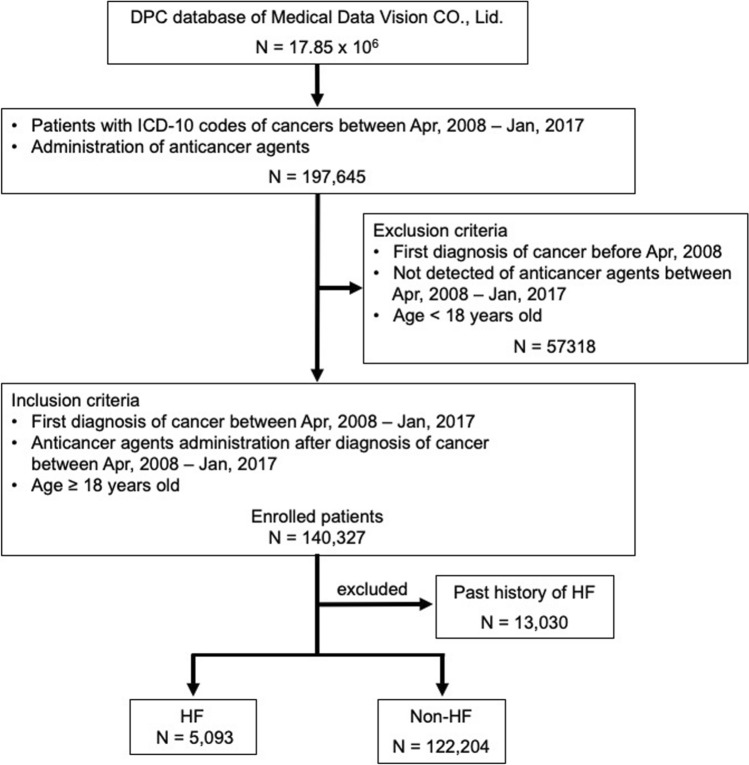
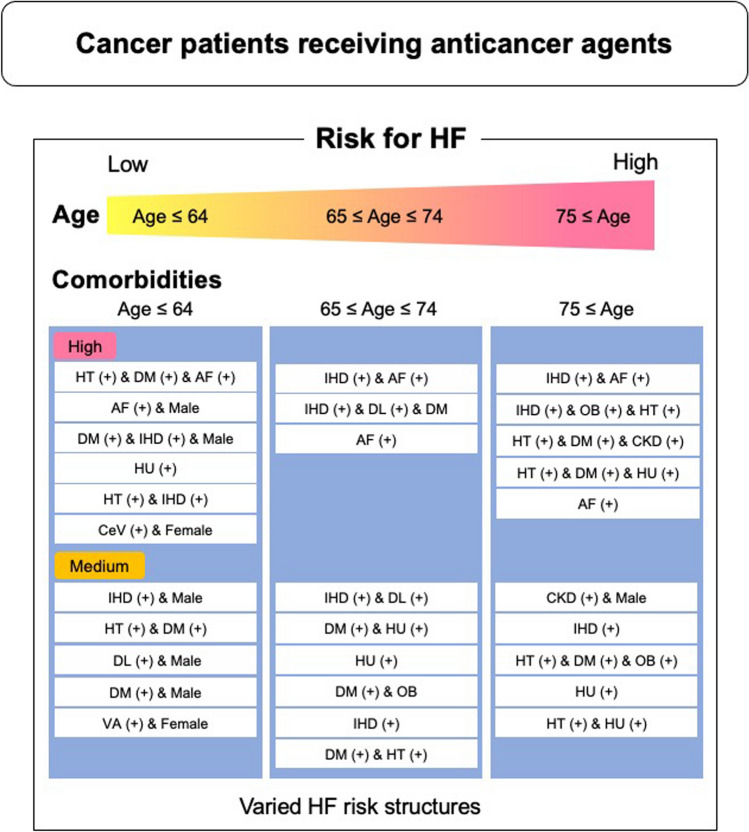
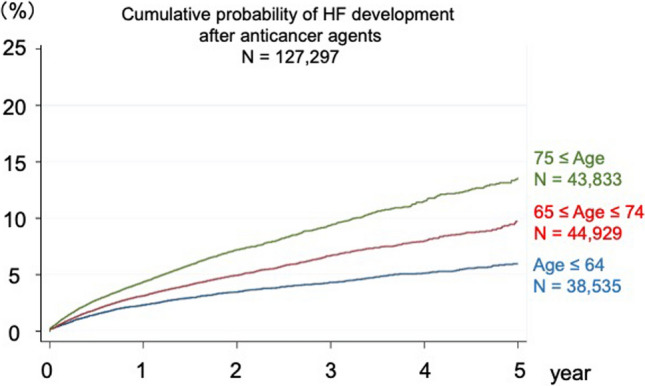
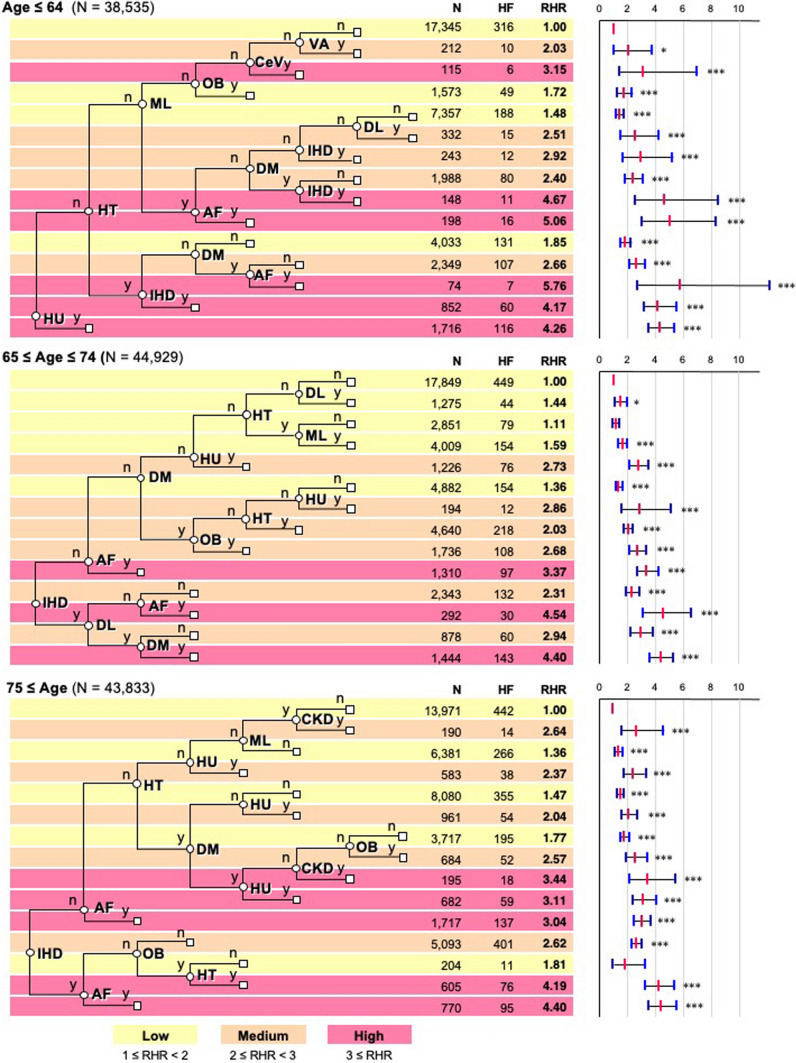
As the prognosis of cancer patients has been improved, comorbidity of heart failure (HF) in cancer survivors is a serious concern, especially in the aged population. This study aimed to examine the risk factors of HF development after treatment by anticancer agents, using a machine learning-based analysis of a massive dataset obtained from the electronic health record (EHR) in Japan. This retrospective, cohort study, using a dataset from 2008 to 2017 in the Diagnosis Procedure Combination (DPC) database in Japan, enrolled 140,327 patients. The structure of risk factors was determined using multivariable analysis and classification and regression tree (CART) algorithm for time-to-event data. The mean follow-up period was 1.55 years. The prevalence of HF after anticancer agent administration were 4.0%. HF was more prevalent in the older than the younger. As the presence of cardiovascular diseases and various risk factors predicted HF, CART analysis of the risk factors revealed that the risk factor structures complicatedly differed among different age groups. The highest risk combination was hypertension, diabetes mellitus, and atrial fibrillation in the group aged ≤ 64 years, and the presence of ischemic heart disease was a key in both groups aged 65-74 years and 75 ≤ years. The machine learning-based approach was able to develop complicated HF risk structures in cancer patients after anticancer agents in different age population, of which knowledge would be essential for realizing precision medicine to improve the prognosis of cancer patients.
随着癌症患者的预后得到改善,癌症幸存者合并心力衰竭(HF)成为一个严重的问题,尤其是在老年人群中。本研究旨在使用基于机器学习的分析方法,从日本电子健康记录(EHR)中获取的大量数据集,研究抗癌药物治疗后 HF 发展的危险因素。这是一项回顾性队列研究,使用了日本 2008 年至 2017 年的诊断程序组合(DPC)数据库中的数据集,共纳入了 140327 例患者。使用多变量分析和分类回归树(CART)算法对时间事件数据确定了危险因素的结构。平均随访时间为 1.55 年。抗癌药物治疗后 HF 的患病率为 4.0%。HF 在老年人中的发病率高于年轻人。由于心血管疾病和各种危险因素的存在预测 HF,对危险因素的 CART 分析显示,不同年龄组的危险因素结构复杂程度不同。≤64 岁组的最高风险组合是高血压、糖尿病和心房颤动,而 65-74 岁和 75≤岁组的关键是缺血性心脏病。基于机器学习的方法能够为不同年龄组的癌症患者开发出复杂的抗癌药物治疗后 HF 风险结构,这对于实现精准医学以改善癌症患者的预后至关重要。