College of Animal Science and Technology, Gansu Agricultural University, Lanzhou, 730070, China.
Gansu Key Laboratory of Animal Generational Physiology and Reproductive Regulation, Lanzhou, 730070, China.
BMC Genomics. 2023 Jan 28;24(1):50. doi: 10.1186/s12864-023-09146-2.
The detection of selective traits in different populations can not only reveal current mechanisms of artificial selection for breeding, but also provide new insights into phenotypic variation in new varieties and the search for genes associated with important traits. Panou sheep is a cultivated breed of Tibetan sheep in China with stable genetic performance, consistent appearance and fast growth and development after decades of artificial selection and cultivation. Due to long-term adaptation to the high altitude, cold and hypoxic environment in the plateau area, they may have formed a unique gene pool that is different from other Tibetan sheep breeds. To explore the genetic resources of Panou sheep, we used next-generation sequencing technology for the first time to investigate the genome-wide population structure, genetic diversity, and candidate signatures of positive selection in Panou sheep.
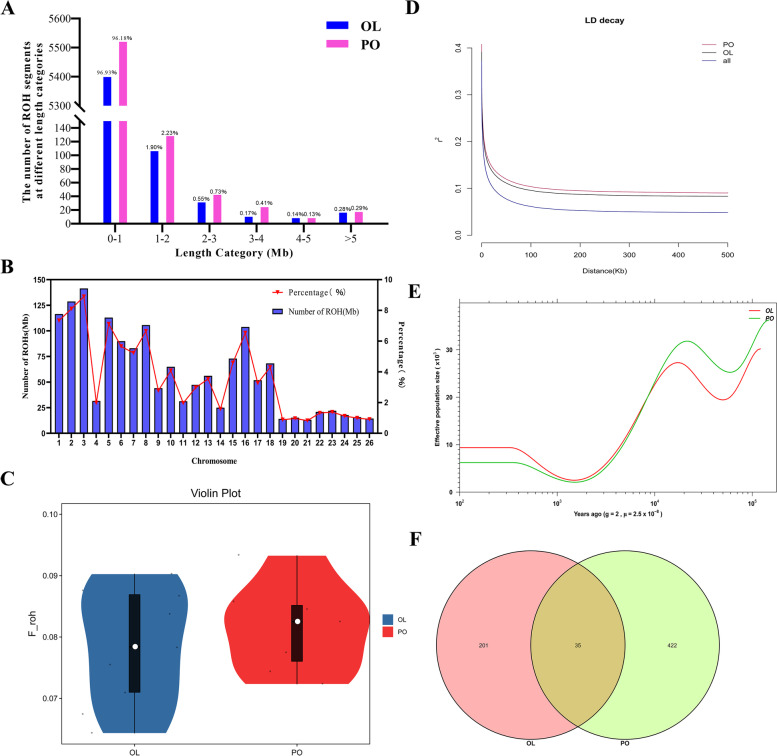
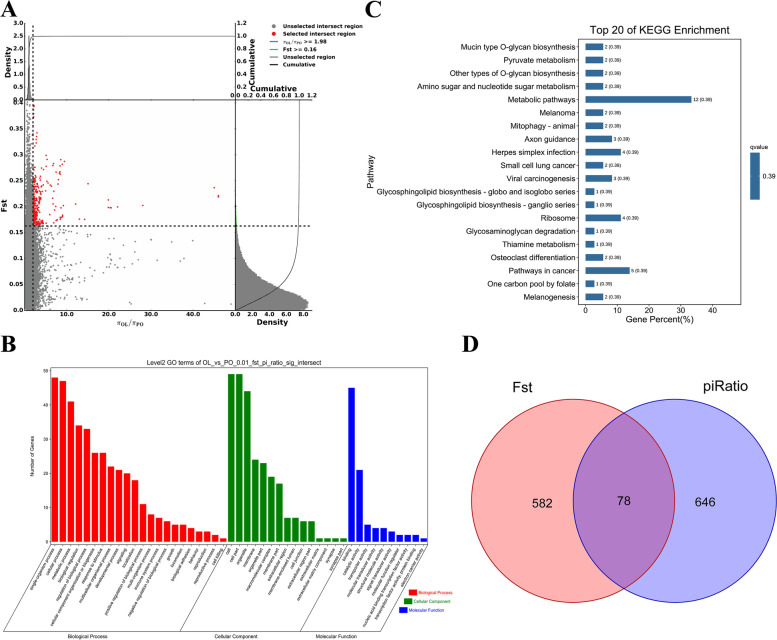
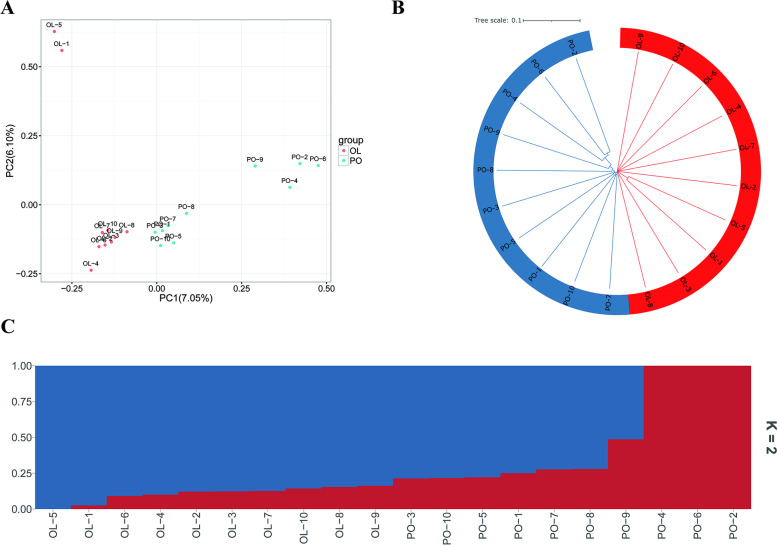
Comparative genomic analysis with the closely related species Oula sheep (a native breed of Tibetan sheep in China) was used to screen the population selection signal of Panou sheep. Principal component analysis and neighbor joining tree showed that Panou sheep and Oula sheep had differences in population differentiation. Furthermore, analyses of population structure, they came from the same ancestor, and when K = 2, the two populations could be distinguished. Panou sheep exhibit genetic diversity comparable to Oula sheep, as shown by observed heterozygosity, expected heterozygosity and runs of homozygosity. Genome-wide scanning using the Fst and π ratio methods revealed a list of potentially selected related genes in Panou sheep compared to Oula sheep, including histone deacetylase 9 (HDAC9), protein tyrosine kinase 2 (PTK2), microphthalmia-related transcription factor (MITF), vesicular amine transporter 1 (VAT1), trichohyalin-like 1 (TCHHL1), amine oxidase, copper containing 3 (AOC3), interferon-inducible protein 35 (IFI35).
The results suggest that traits related to growth and development and plateau adaptation may be selection targets for the domestication and breeding improvement of Tibetan sheep. This study provides the fundamental footprints for Panou sheep breeding and management.
在不同群体中检测选择性特征不仅可以揭示当前用于繁殖的人工选择的机制,还可以为新品种的表型变异和与重要性状相关基因的寻找提供新的见解。盘羊是中国培育的藏绵羊品种,经过几十年的人工选择和培育,具有稳定的遗传性能、一致的外貌和快速的生长发育。由于长期适应高原地区的高海拔、寒冷和缺氧环境,它们可能形成了一个独特的不同于其他藏绵羊品种的基因库。为了探索盘羊的遗传资源,我们首次利用下一代测序技术研究了盘羊的全基因组群体结构、遗传多样性和正选择的候选特征。
与密切相关的物种欧拉羊(中国本土藏绵羊品种)进行比较基因组分析,筛选盘羊的群体选择信号。主成分分析和邻接树分析表明,盘羊和欧拉羊在群体分化上存在差异。此外,群体结构分析表明,它们来自同一祖先,当 K = 2 时,这两个群体可以区分开来。盘羊表现出与欧拉羊相当的遗传多样性,表现为观测杂合度、期望杂合度和纯合子运行。使用 Fst 和 π 比率方法进行全基因组扫描,发现与欧拉羊相比,盘羊中存在一系列可能与选择相关的基因,包括组蛋白去乙酰化酶 9(HDAC9)、蛋白酪氨酸激酶 2(PTK2)、小眼相关转录因子(MITF)、囊泡胺转运体 1(VAT1)、毛角蛋白样 1(TCHHL1)、胺氧化酶、铜 3(AOC3)、干扰素诱导蛋白 35(IFI35)。
这些结果表明,与生长发育和高原适应相关的性状可能是藏绵羊驯化和选育改良的选择目标。本研究为盘羊的选育和管理提供了基础足迹。