Mano Omer, Choi Minseung, Tanaka Ryosuke, Creamer Matthew S, Matos Natalia C B, Shomar Joseph, Badwan Bara A, Clandinin Thomas R, Clark Damon A
Department of Molecular, Cellular, and Developmental Biology, Yale University, New Haven, CT 06511, USA.
Department of Neurobiology, Stanford University, Stanford, CA 94305, USA.
bioRxiv. 2023 Apr 15:2023.01.06.523055. doi: 10.1101/2023.01.06.523055.
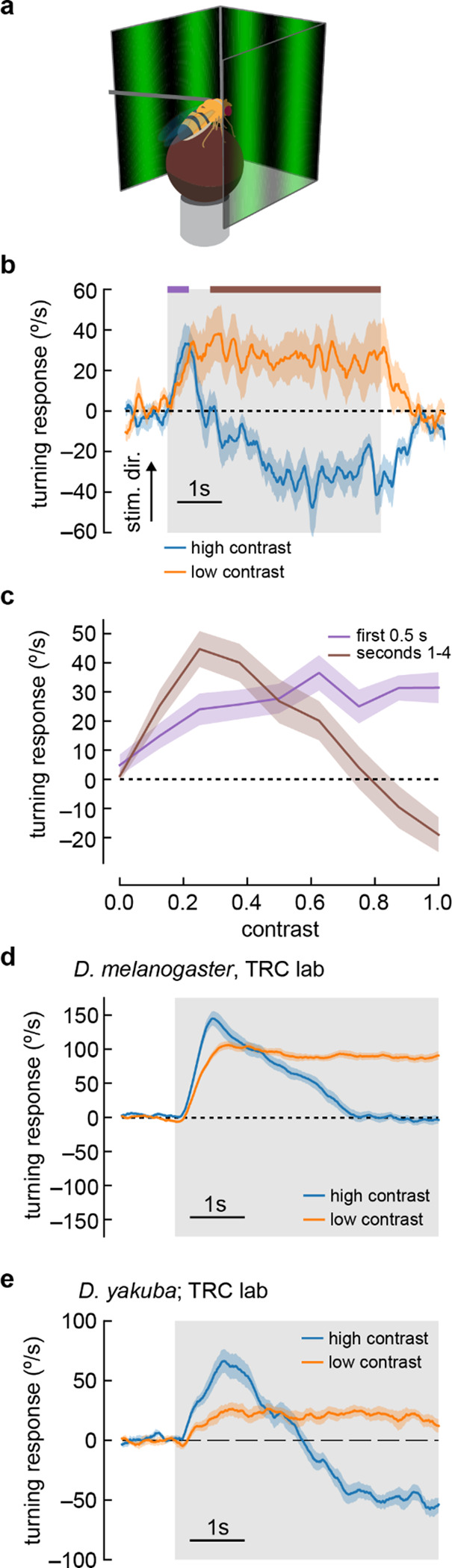
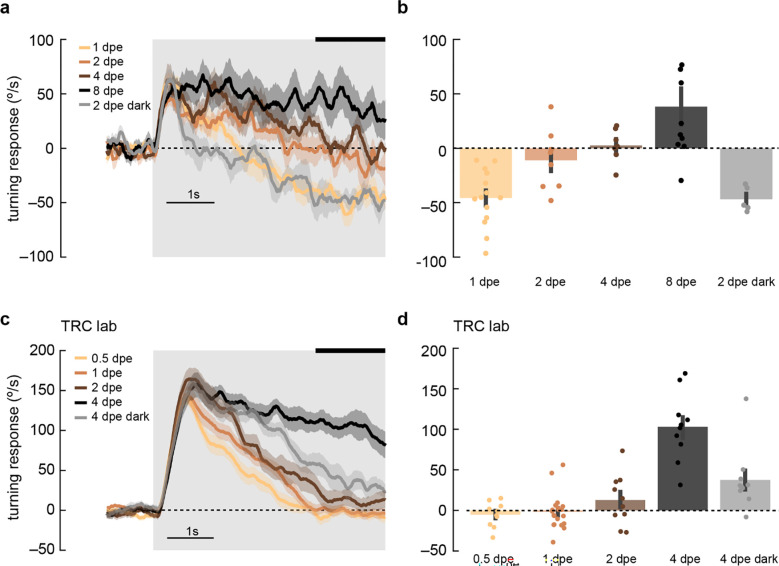
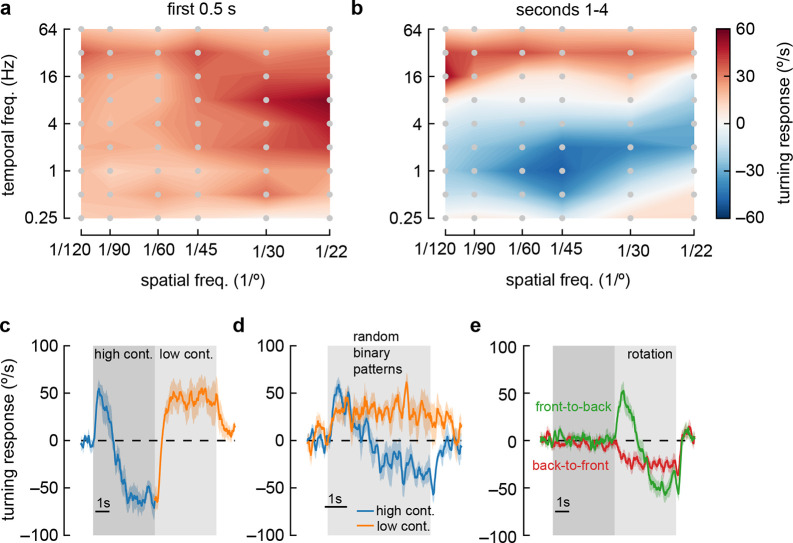
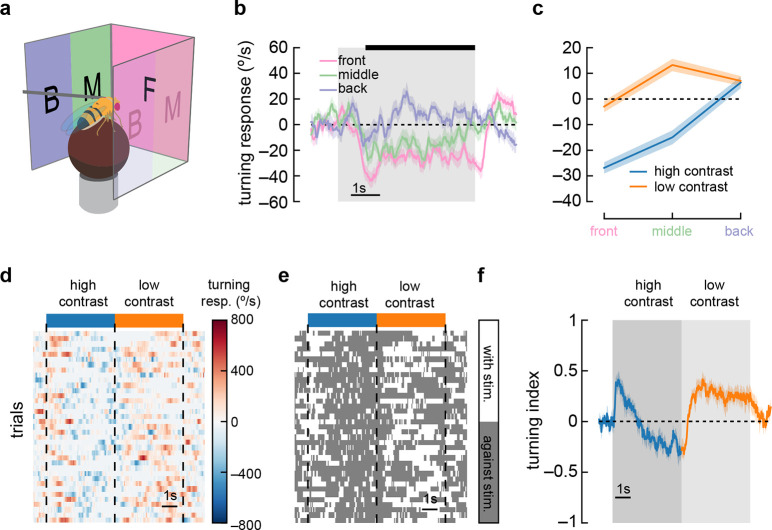
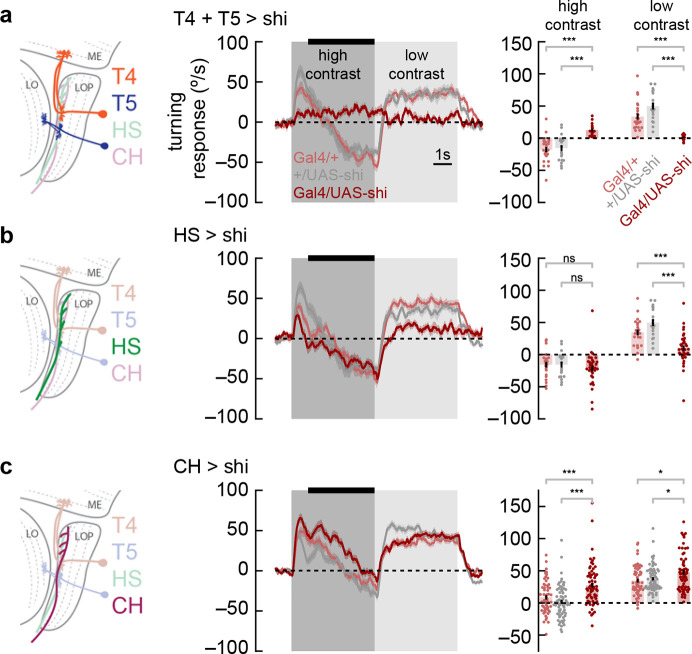
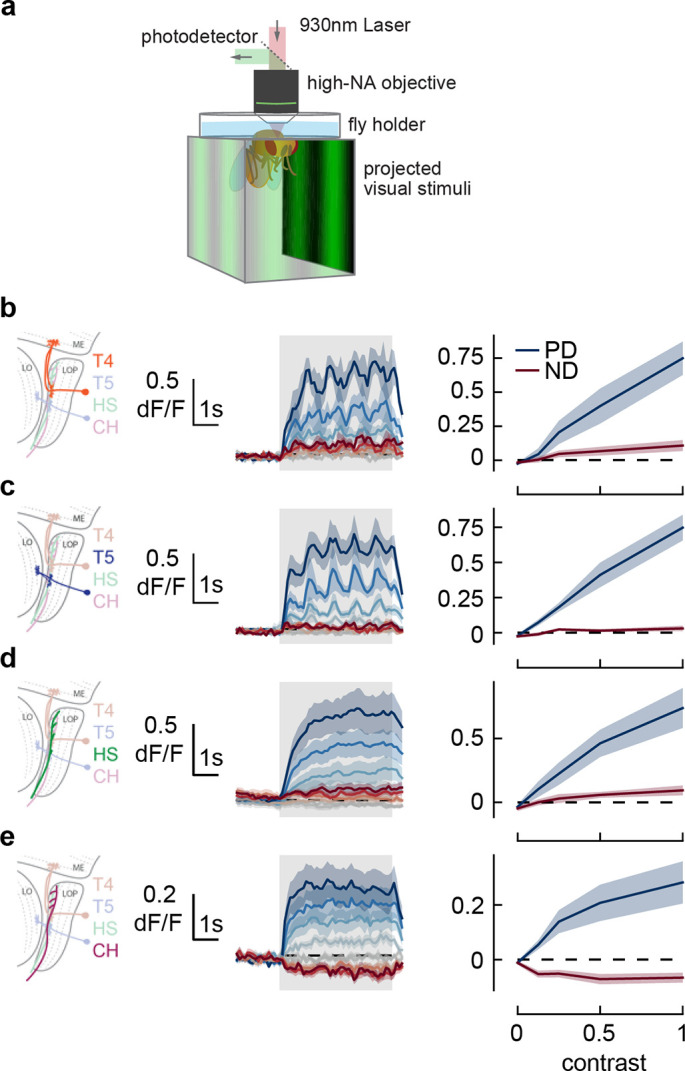
Locomotor movements cause visual images to be displaced across the eye, a retinal slip that is counteracted by stabilizing reflexes in many animals. In insects, optomotor turning causes the animal to turn in the direction of rotating visual stimuli, thereby reducing retinal slip and stabilizing trajectories through the world. This behavior has formed the basis for extensive dissections of motion vision. Here, we report that under certain stimulus conditions, two Drosophila species, including the widely studied D. melanogaster, can suppress and even reverse the optomotor turning response over several seconds. Such "anti-directional turning" is most strongly evoked by long-lasting, high-contrast, slow-moving visual stimuli that are distinct from those that promote syn-directional optomotor turning. Anti-directional turning, like the syn-directional optomotor response, requires the local motion detecting neurons T4 and T5. A subset of lobula plate tangential cells, CH cells, show involvement in these responses. Imaging from a variety of direction-selective cells in the lobula plate shows no evidence of dynamics that match the behavior, suggesting that the observed inversion in turning direction emerges downstream of the lobula plate. Further, anti-directional turning declines with age and exposure to light. These results show that Drosophila optomotor turning behaviors contain rich, stimulus-dependent dynamics that are inconsistent with simple reflexive stabilization responses.
运动行为会使视觉图像在眼睛上发生位移,即视网膜滑动,许多动物通过稳定反射来抵消这种滑动。在昆虫中,视动转向会使动物朝着旋转视觉刺激的方向转动,从而减少视网膜滑动并稳定其在环境中的轨迹。这种行为构成了对运动视觉进行广泛剖析的基础。在此,我们报告,在某些刺激条件下,包括广泛研究的黑腹果蝇在内的两种果蝇能够在数秒内抑制甚至逆转视动转向反应。这种“反向转向”最强烈地由持久、高对比度、缓慢移动的视觉刺激诱发,这些刺激不同于那些促进同向视动转向的刺激。与同向视动反应一样,反向转向需要局部运动检测神经元T4和T5。小叶板切向细胞的一个子集,即CH细胞,参与了这些反应。从小叶板中各种方向选择性细胞进行成像,未发现与该行为相匹配的动态变化证据,这表明观察到的转向方向反转出现在小叶板下游。此外,反向转向会随着年龄增长和光照暴露而减弱。这些结果表明,果蝇的视动转向行为包含丰富的、依赖于刺激的动态变化,这与简单的反射性稳定反应不一致。