Yarawsky Alexander E, Ori Andrea L, English Lance R, Whitten Steven T, Herr Andrew B
Division of Immunobiology, Cincinnati Children's Hospital Medical Center, Cincinnati, OH 45229, USA.
Medical Sciences Baccalaureate Program, University of Cincinnati, Cincinnati, OH 45267, USA.
bioRxiv. 2023 Jan 7:2023.01.06.523059. doi: 10.1101/2023.01.06.523059.
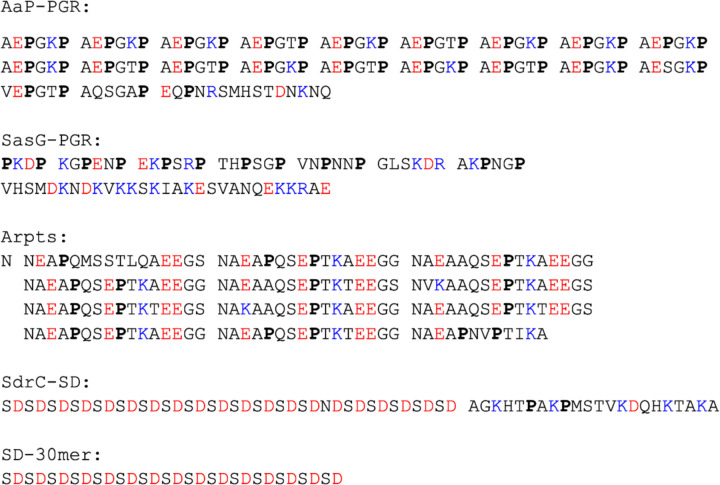
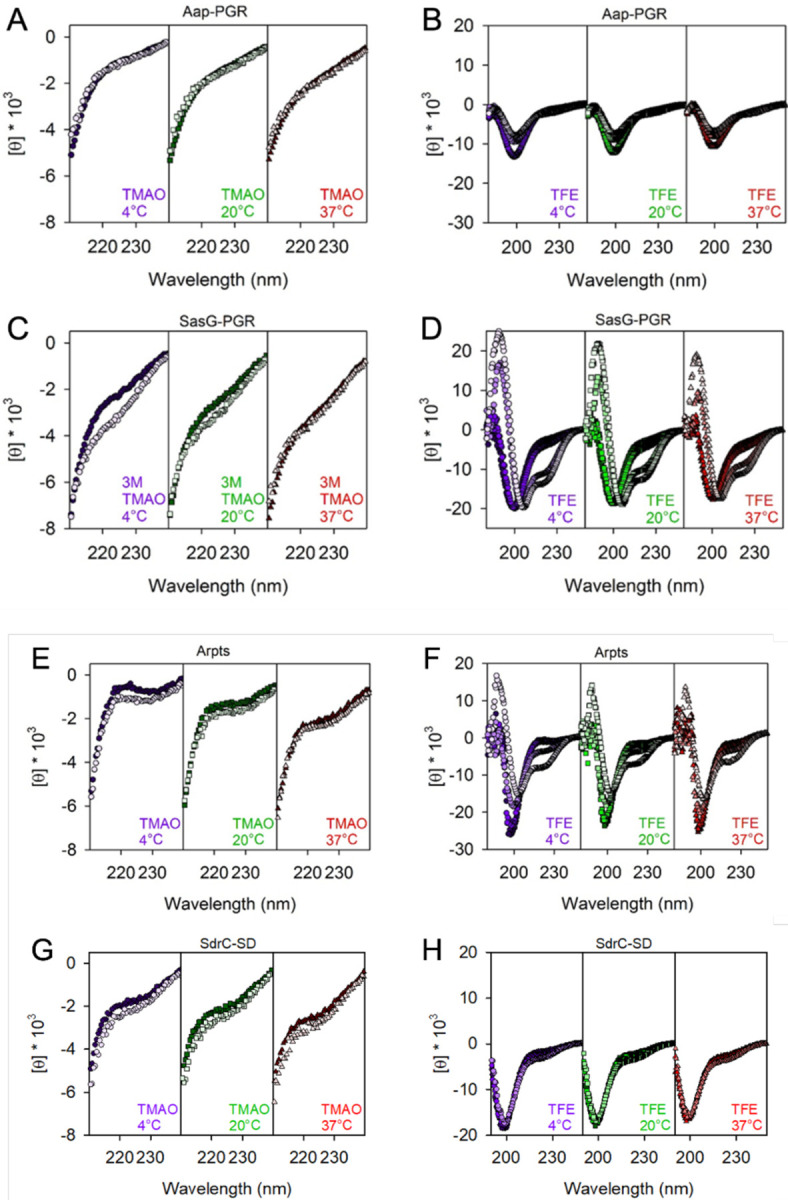
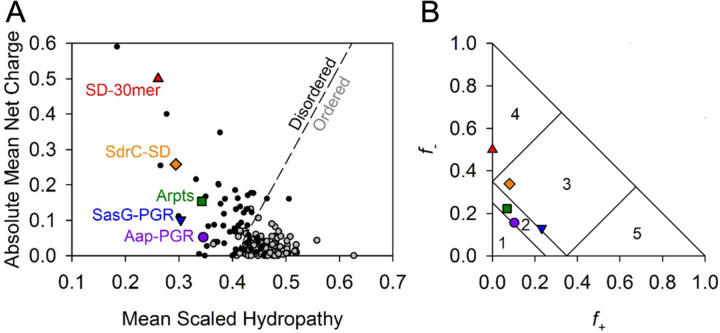
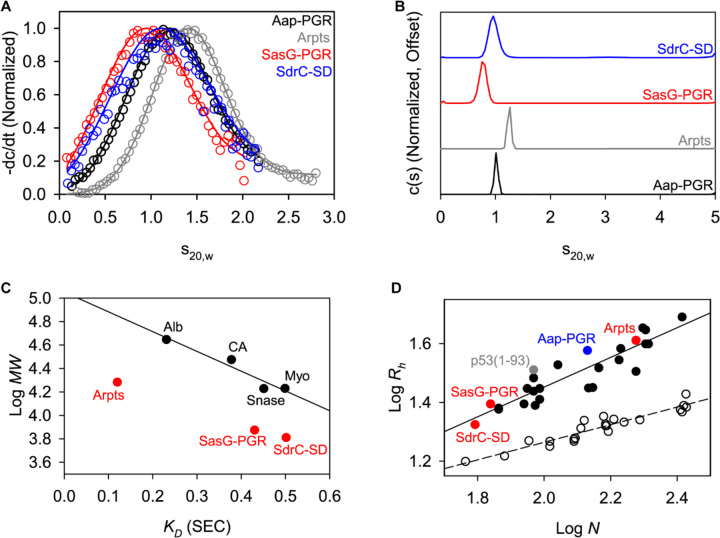
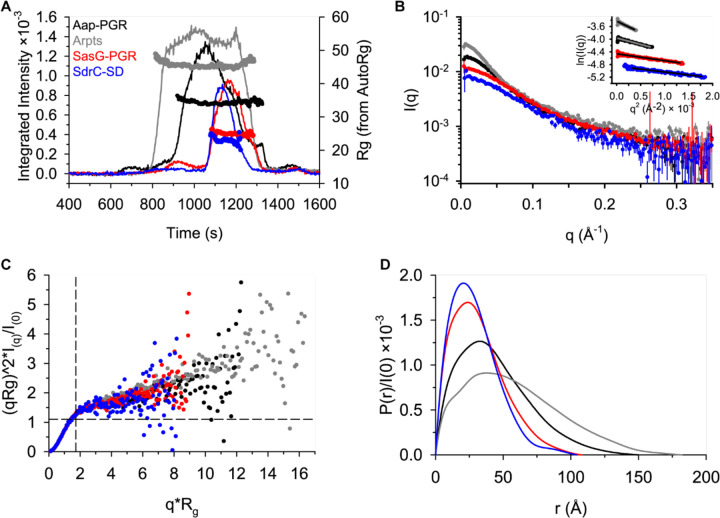
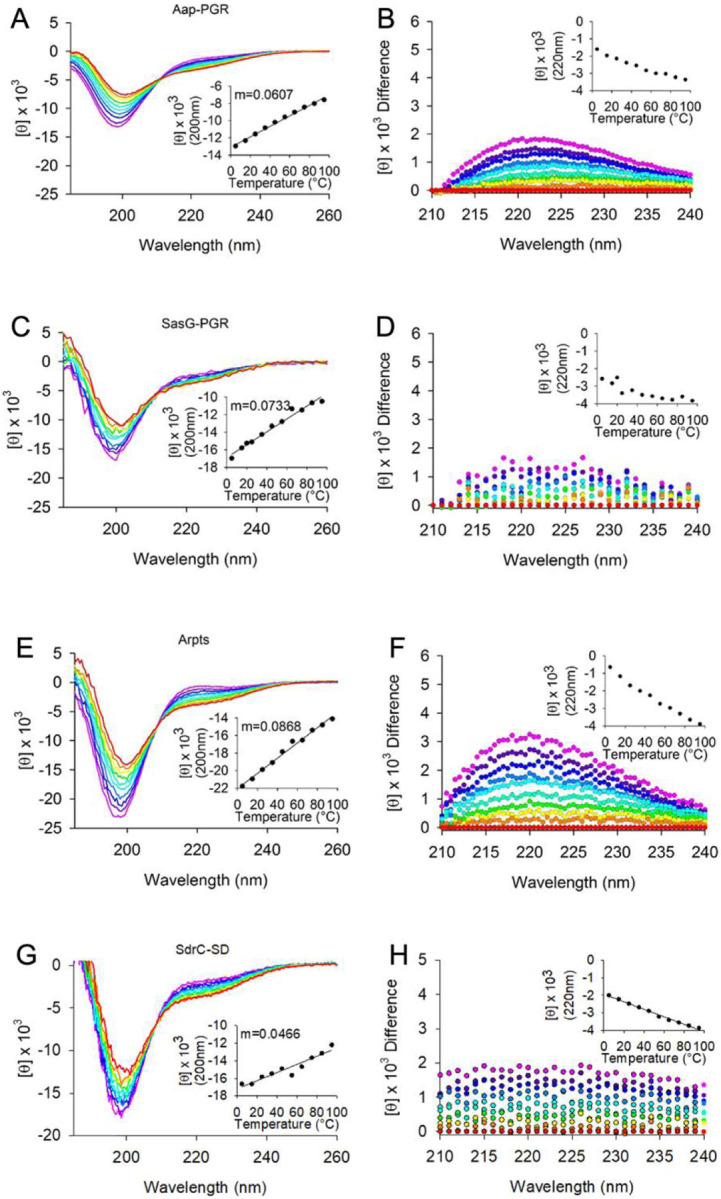
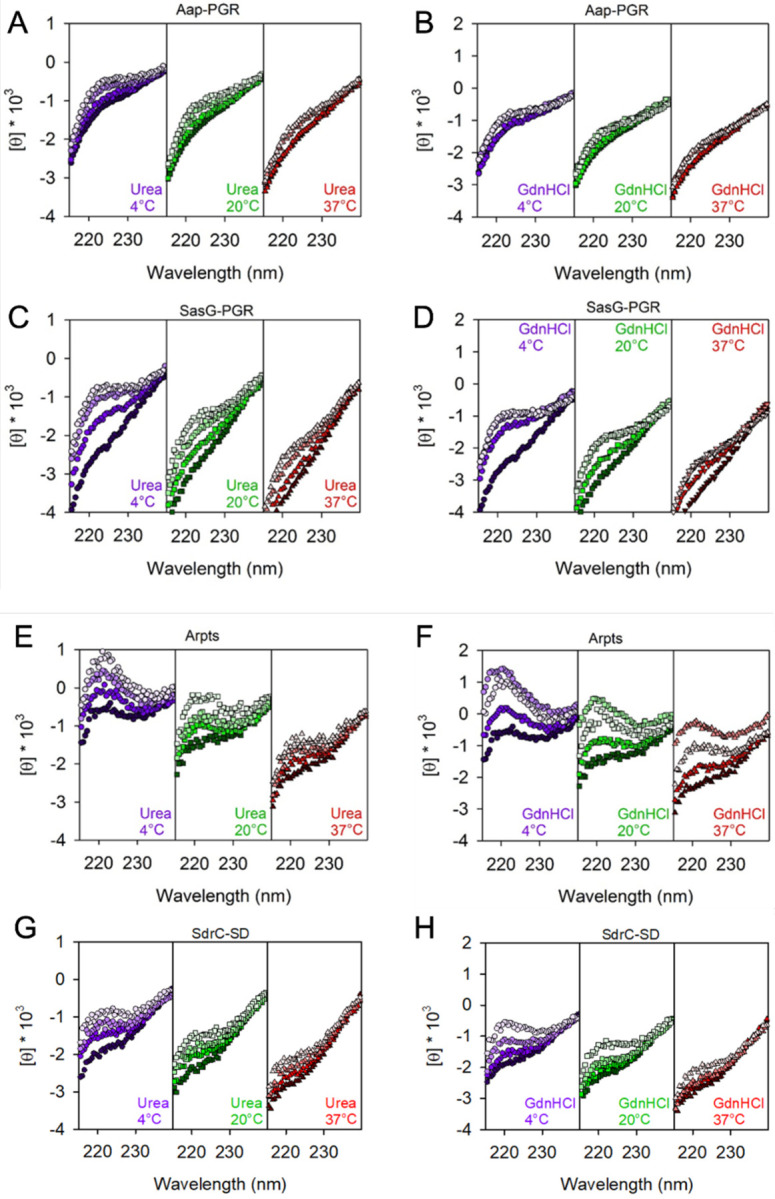
and are highly problematic bacteria in hospital settings. This stems, at least in part, from strong abilities to form biofilms on abiotic or biotic surfaces. Biofilms are well-organized multicellular aggregates of bacteria, which, when formed on indwelling medical devices, lead to infections that are difficult to treat. Cell wall-anchored (CWA) proteins are known to be important players in biofilm formation and infection. Many of these proteins have putative stalk-like regions or regions of low complexity near the cell wall-anchoring motif. Recent work demonstrated the strong propensity of the stalk region of the accumulation-associated protein (Aap) to remain highly extended under solution conditions that typically induce compaction or other significant conformational changes. This behavior is consistent with the expected function of a stalk-like region that is covalently attached to the cell wall peptidoglycan and projects the adhesive domains of Aap away from the cell surface. In this study, we evaluate whether the ability to resist compaction is a common theme among stalk regions from various staphylococcal CWA proteins. Circular dichroism spectroscopy was used to examine secondary structure changes as a function of temperature and cosolvents along with sedimentation velocity analytical ultracentrifugation and SAXS to characterize structural characteristics in solution. All stalk regions tested are intrinsically disordered, lacking secondary structure beyond random coil and polyproline type II helix, and they all sample highly extended conformations. Remarkably, the Ser-Asp dipeptide repeat region of SdrC exhibited nearly identical behavior in solution when compared to the Aap Pro/Gly-rich region, despite highly divergent sequence patterns, indicating conservation of function by various distinct staphylococcal CWA protein stalk regions.
[细菌名称1]和[细菌名称2]是医院环境中极具问题的细菌。这至少部分源于它们在非生物或生物表面形成生物膜的强大能力。生物膜是细菌组织良好的多细胞聚集体,当在植入式医疗设备上形成时,会导致难以治疗的感染。已知细胞壁锚定(CWA)蛋白是生物膜形成和感染中的重要参与者。这些蛋白中的许多在细胞壁锚定基序附近具有假定的茎状区域或低复杂性区域。最近的研究表明,积累相关蛋白(Aap)的茎状区域在通常会诱导压缩或其他显著构象变化的溶液条件下仍具有高度伸展的强烈倾向。这种行为与共价连接到细胞壁肽聚糖并将Aap的粘附结构域从细胞表面伸出的茎状区域的预期功能一致。在本研究中,我们评估抵抗压缩的能力是否是各种葡萄球菌CWA蛋白茎状区域的共同特征。使用圆二色光谱来检查二级结构随温度和共溶剂的变化,同时结合沉降速度分析超离心和小角X射线散射来表征溶液中的结构特征。所有测试的茎状区域本质上都是无序的,除了无规卷曲和多聚脯氨酸II型螺旋外缺乏二级结构,并且它们都呈现高度伸展的构象。值得注意的是,尽管序列模式差异很大,但与Aap富含脯氨酸/甘氨酸的区域相比,SdrC的丝氨酸 - 天冬氨酸二肽重复区域在溶液中表现出几乎相同的行为,这表明各种不同的葡萄球菌CWA蛋白茎状区域在功能上具有保守性。