Goto Yusuke, Yoda Ken, Weimerskirch Henri, Sato Katsufumi
Centre d'Etudes Biologiques de Chizé, CNRS, 79360 Villiers En Bois, France.
Graduate School of Environmental Studies, Nagoya University, Furo, Chikusa, Nagoya 464-8601, Japan.
PNAS Nexus. 2022 Mar 10;1(1):pgac023. doi: 10.1093/pnasnexus/pgac023. eCollection 2022 Mar.
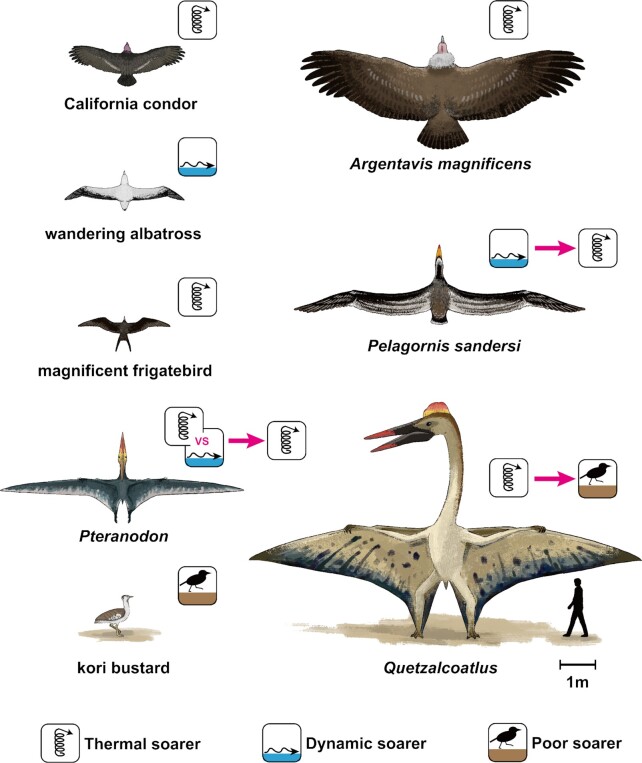
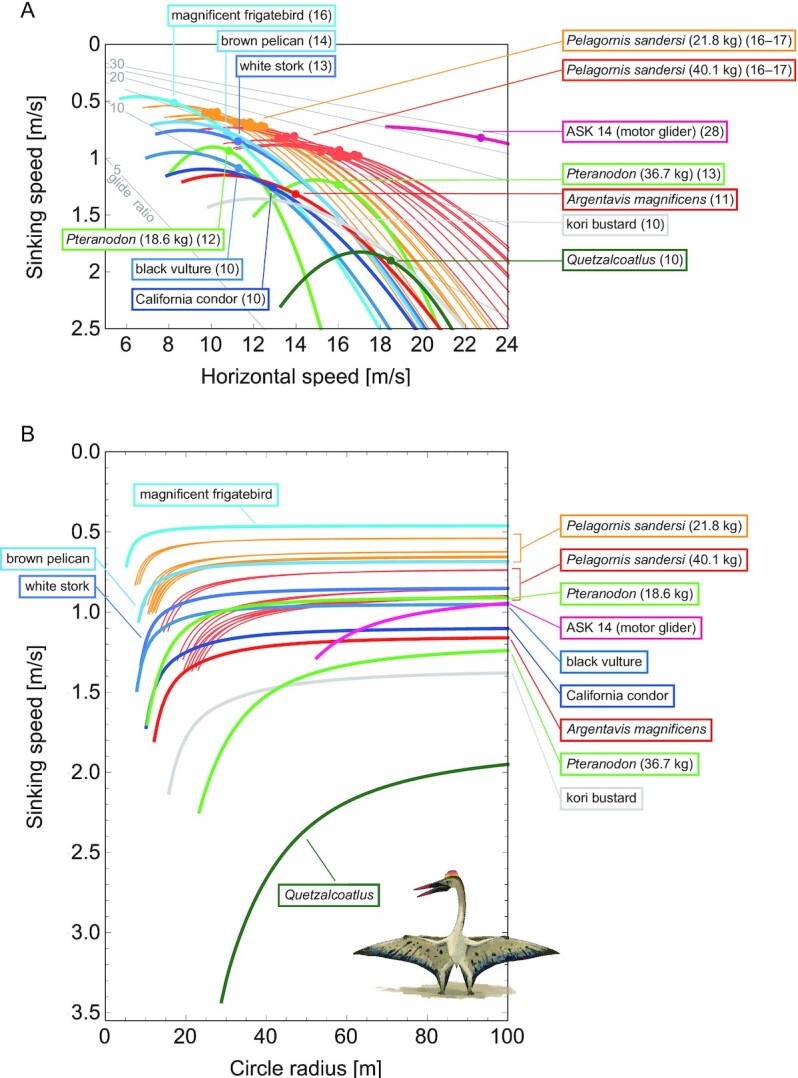
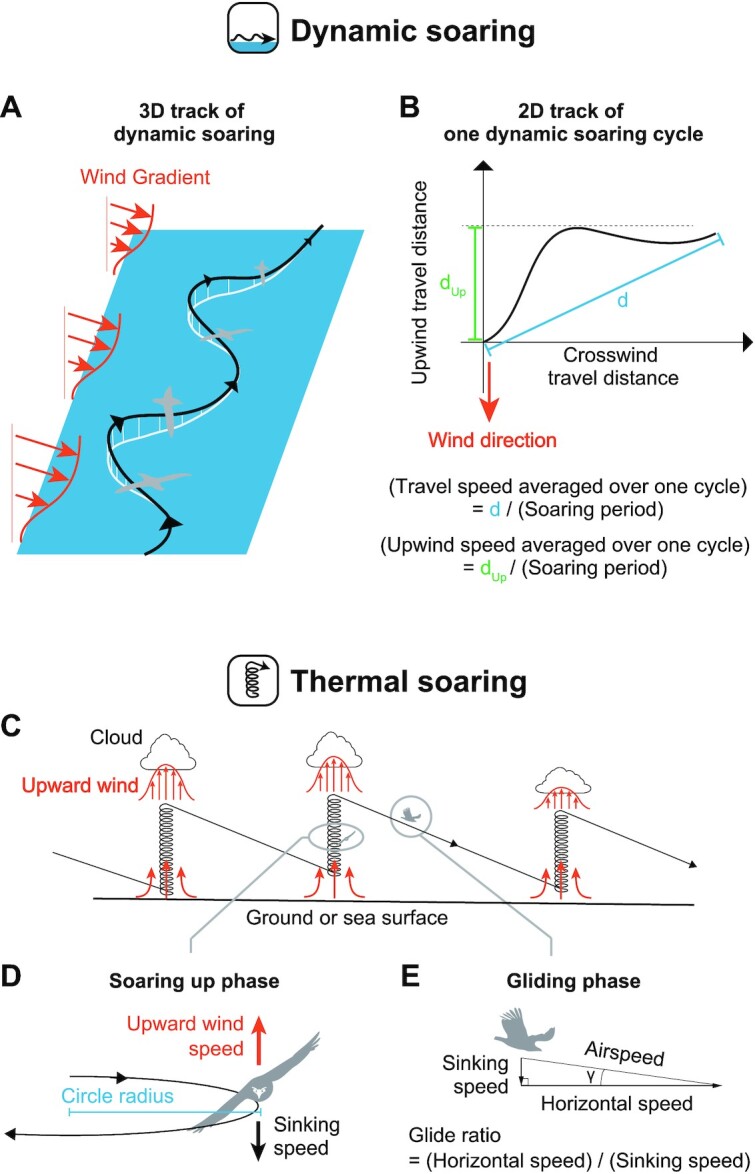
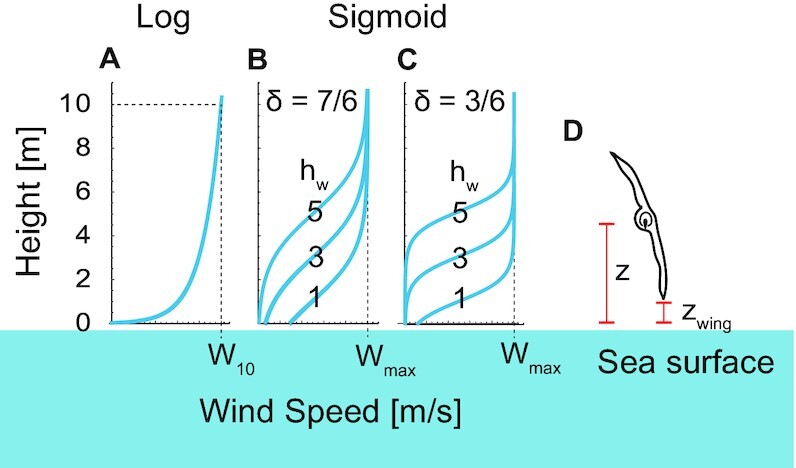
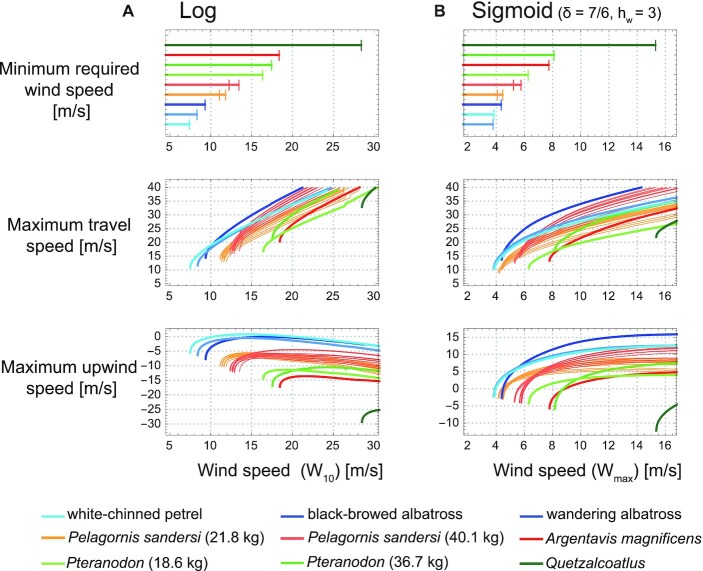
The largest extinct volant birds ( and ) and pterosaurs ( and ) are thought to have used wind-dependent soaring flight, similar to modern large birds. There are 2 types of soaring: thermal soaring, used by condors and frigatebirds, which involves the use of updrafts to ascend and then glide horizontally; and dynamic soaring, used by albatrosses, which involves the use of wind speed differences with height above the sea surface. Previous studies have suggested that used dynamic soaring, while and used thermal soaring. For , there is debate over whether they used dynamic or thermal soaring. However, the performance and wind speed requirements of dynamic and thermal soaring for these species have not yet been quantified comprehensively. We quantified these values using aerodynamic models and compared them with that of extant birds. For dynamic soaring, we quantified maximum travel speeds and maximum upwind speeds. For thermal soaring, we quantified the animal's sinking speed circling at a given radius and how far it could glide losing a given height. Our results confirmed those from previous studies that and used thermal soaring. Conversely, the results for and were contrary to those from previous studies. used thermal soaring, and had a poor ability both in dynamic and thermal soaring. Our results demonstrate the need for comprehensive assessments of performance and required wind conditions when estimating soaring styles of extinct flying species.
最大的已灭绝会飞鸟类(以及)和翼龙(以及)被认为曾利用依赖风的翱翔飞行,类似于现代大型鸟类。有两种翱翔方式:热气流翱翔,被兀鹰和军舰鸟所采用,即利用上升气流上升然后水平滑翔;以及动力翱翔,被信天翁所采用,即利用海面上方不同高度的风速差异。先前的研究表明,[具体物种1]采用动力翱翔,而[具体物种2]和[具体物种3]采用热气流翱翔。对于[具体物种4],关于它们是采用动力翱翔还是热气流翱翔存在争议。然而,这些物种进行动力翱翔和热气流翱翔的性能及风速要求尚未得到全面量化。我们使用空气动力学模型对这些数值进行了量化,并将它们与现存鸟类的数值进行了比较。对于动力翱翔,我们量化了最大行进速度和最大逆风速度。对于热气流翱翔,我们量化了动物在给定半径盘旋时的下沉速度以及它在失去给定高度时能够滑翔的距离。我们的结果证实了先前研究中[具体物种2]和[具体物种3]采用热气流翱翔的结论。相反,[具体物种1]和[具体物种4]的结果与先前研究的结果相反。[具体物种1]采用热气流翱翔,而[具体物种4]在动力翱翔和热气流翱翔方面能力都很差。我们的结果表明,在估计已灭绝飞行物种的翱翔方式时,需要对性能和所需风况进行全面评估。