Lin Lieqing, Chen Ruibin, Zhu Yinting, Xie Weijie, Jing Huaiguo, Chen Langcheng, Zou Minqing
Center of Campus Network & Modern Educational Technology, Guangdong University of Technology, Guangzhou, China.
School of Computer, Guangdong University of Technology, Guangzhou, China.
Front Microbiol. 2023 Jan 11;13:1093615. doi: 10.3389/fmicb.2022.1093615. eCollection 2022.
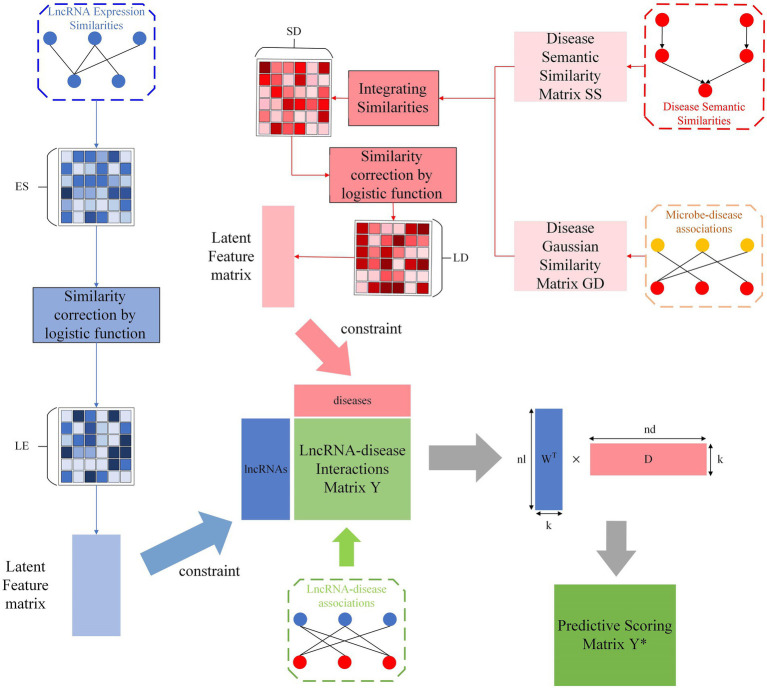
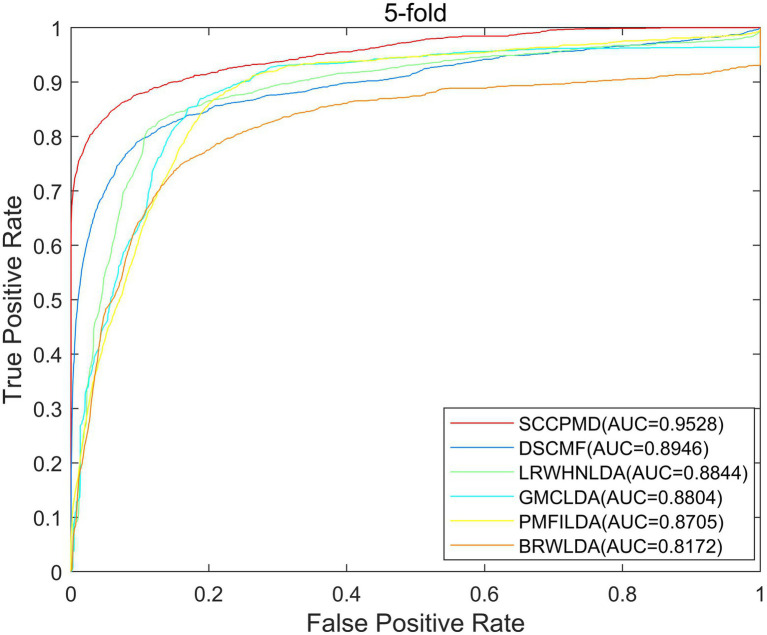
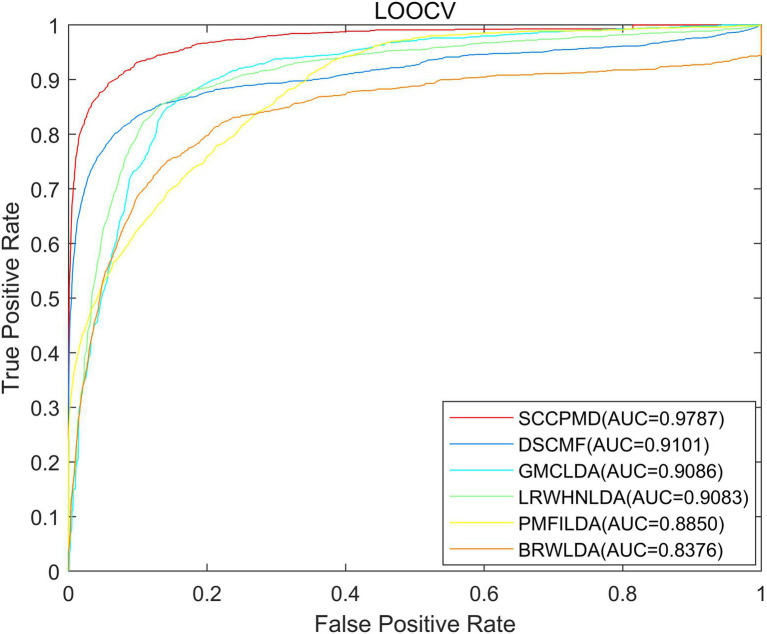
Accumulating evidence has demonstrated various associations of long non-coding RNAs (lncRNAs) with human diseases, such as abnormal expression due to microbial influences that cause disease. Gaining a deeper understanding of lncRNA-disease associations is essential for disease diagnosis, treatment, and prevention. In recent years, many matrix decomposition methods have also been used to predict potential lncRNA-disease associations. However, these methods do not consider the use of microbe-disease association information to enrich disease similarity, and also do not make more use of similarity information in the decomposition process. To address these issues, we here propose a correction-based similarity-constrained probability matrix decomposition method (SCCPMD) to predict lncRNA-disease associations. The microbe-disease associations are first used to enrich the disease semantic similarity matrix, and then the logistic function is used to correct the lncRNA and disease similarity matrix, and then these two corrected similarity matrices are added to the probability matrix decomposition as constraints to finally predict the potential lncRNA-disease associations. The experimental results show that SCCPMD outperforms the five advanced comparison algorithms. In addition, SCCPMD demonstrated excellent prediction performance in a case study for breast cancer, lung cancer, and renal cell carcinoma, with prediction accuracy reaching 80, 100, and 100%, respectively. Therefore, SCCPMD shows excellent predictive performance in identifying unknown lncRNA-disease associations.
越来越多的证据表明长链非编码RNA(lncRNA)与人类疾病存在多种关联,例如由于微生物影响导致疾病而出现的异常表达。深入了解lncRNA与疾病的关联对于疾病的诊断、治疗和预防至关重要。近年来,许多矩阵分解方法也被用于预测潜在的lncRNA与疾病的关联。然而,这些方法没有考虑利用微生物与疾病的关联信息来丰富疾病相似性,并且在分解过程中也没有更多地利用相似性信息。为了解决这些问题,我们在此提出一种基于校正的相似性约束概率矩阵分解方法(SCCPMD)来预测lncRNA与疾病的关联。首先利用微生物与疾病的关联来丰富疾病语义相似性矩阵,然后使用逻辑函数校正lncRNA和疾病相似性矩阵,接着将这两个校正后的相似性矩阵作为约束添加到概率矩阵分解中,最终预测潜在的lncRNA与疾病的关联。实验结果表明,SCCPMD优于五种先进的比较算法。此外,SCCPMD在乳腺癌、肺癌和肾细胞癌的案例研究中表现出优异的预测性能,预测准确率分别达到80%、100%和100%。因此,SCCPMD在识别未知的lncRNA与疾病的关联方面表现出优异的预测性能。