Fowlkes Jason D, Winkler Robert, Rack Philip D, Plank Harald
Center for Nanophase Materials Sciences, Oak Ridge National Laboratory, Oak Ridge, Tennessee37831, United States.
Christian Doppler Laboratory for Direct-Write Fabrication of 3D Nano-Probes (DEFINE), Institute of Electron Microscopy and Nanoanalysis, Graz University of Technology, 8010Graz, Austria.
ACS Omega. 2023 Jan 11;8(3):3148-3175. doi: 10.1021/acsomega.2c06596. eCollection 2023 Jan 24.
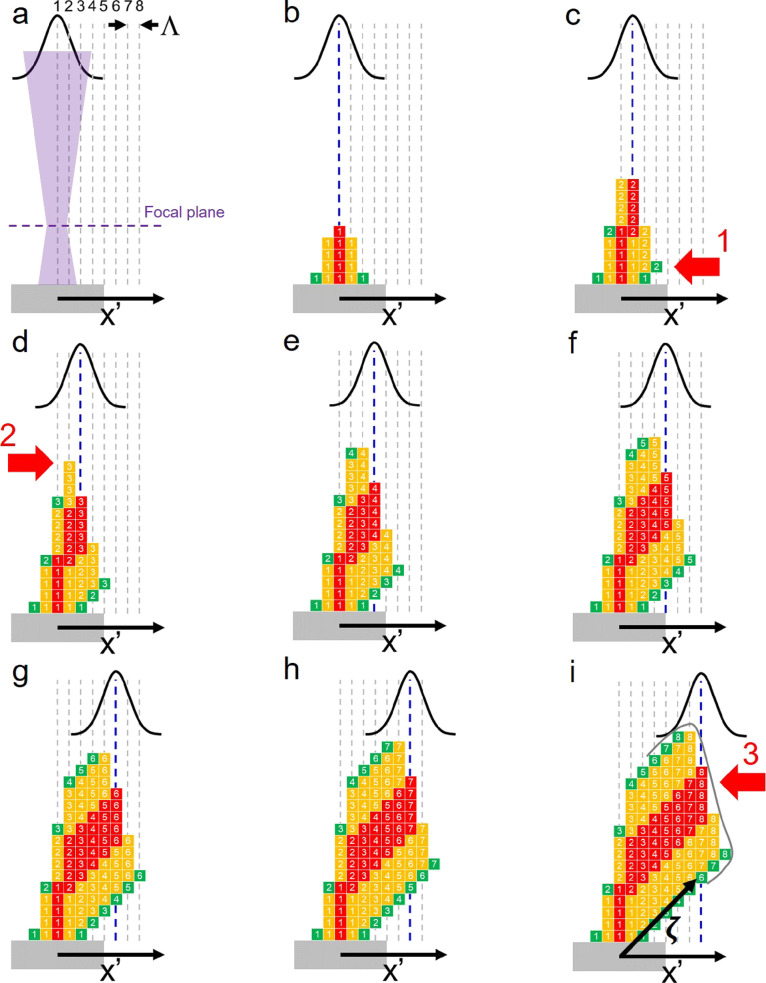
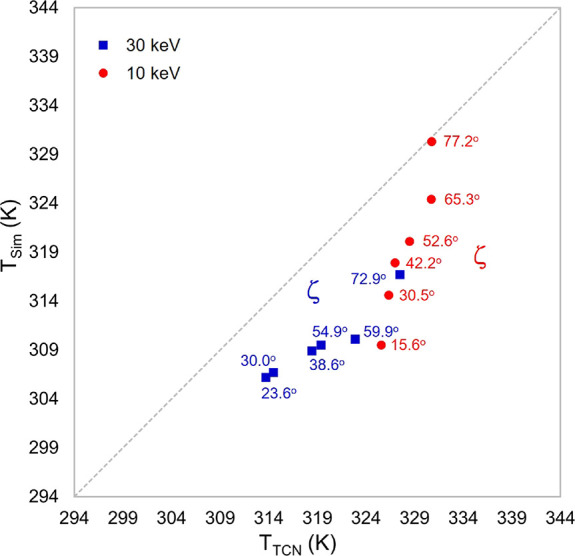
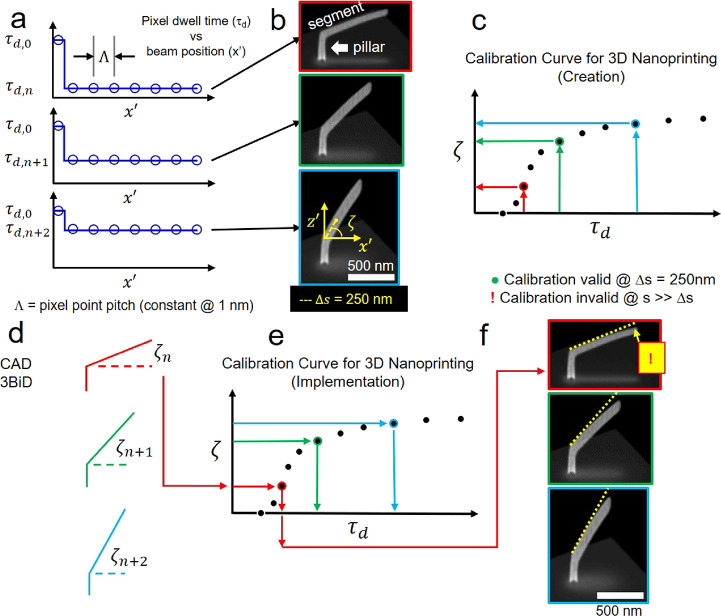
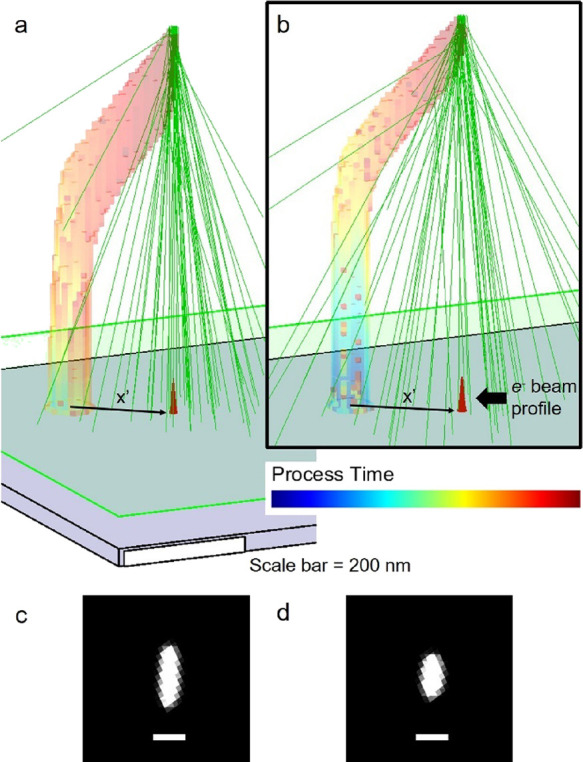
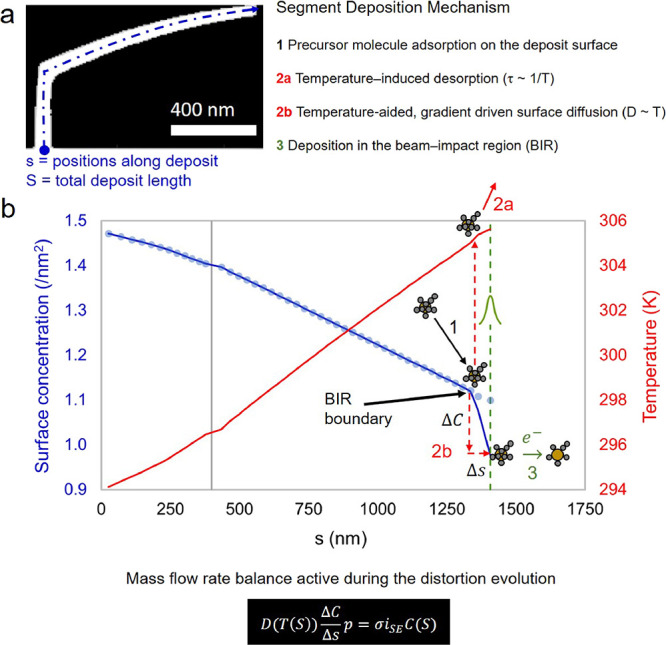
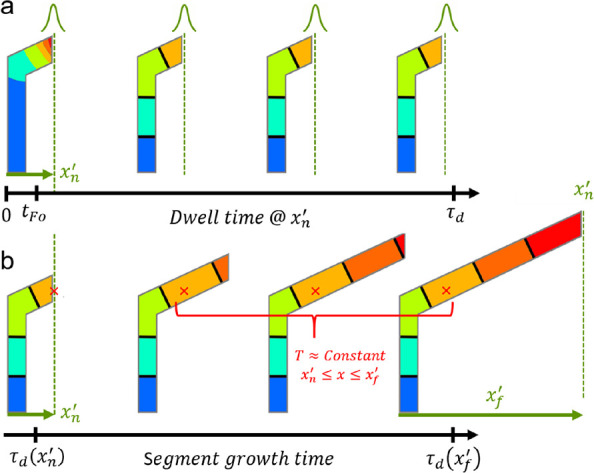
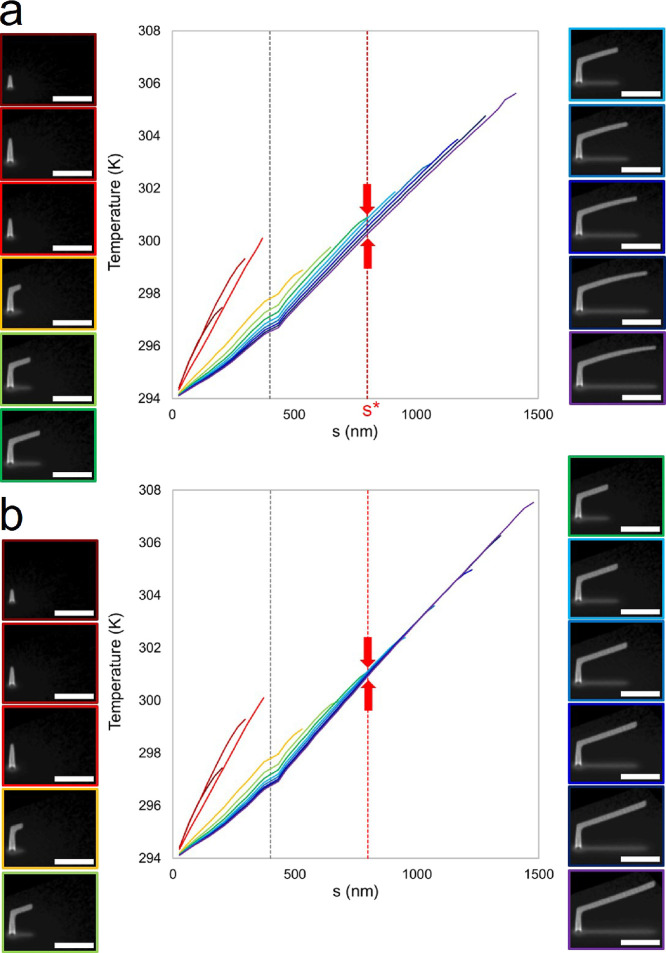
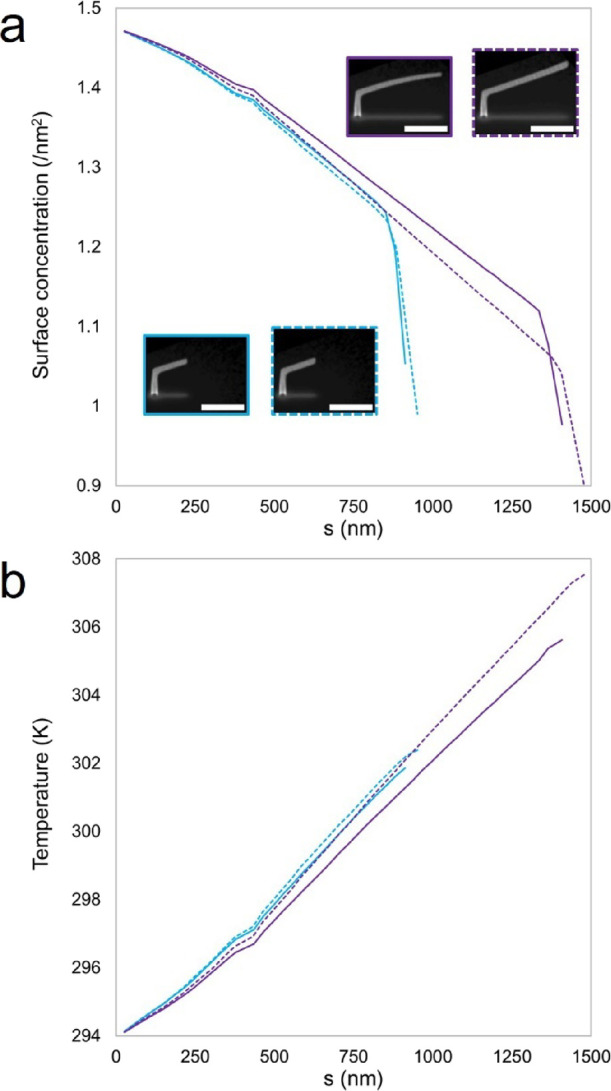
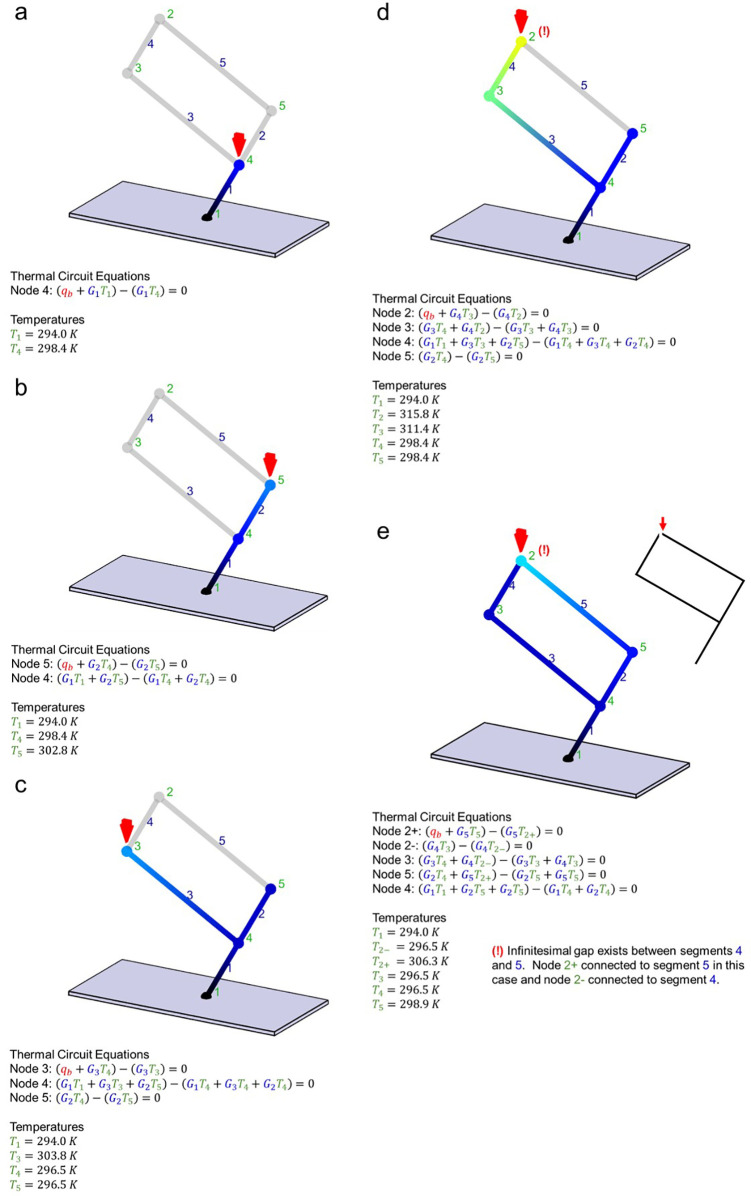
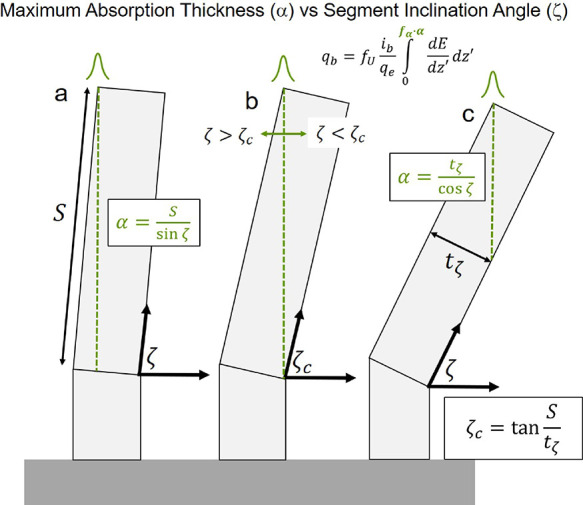
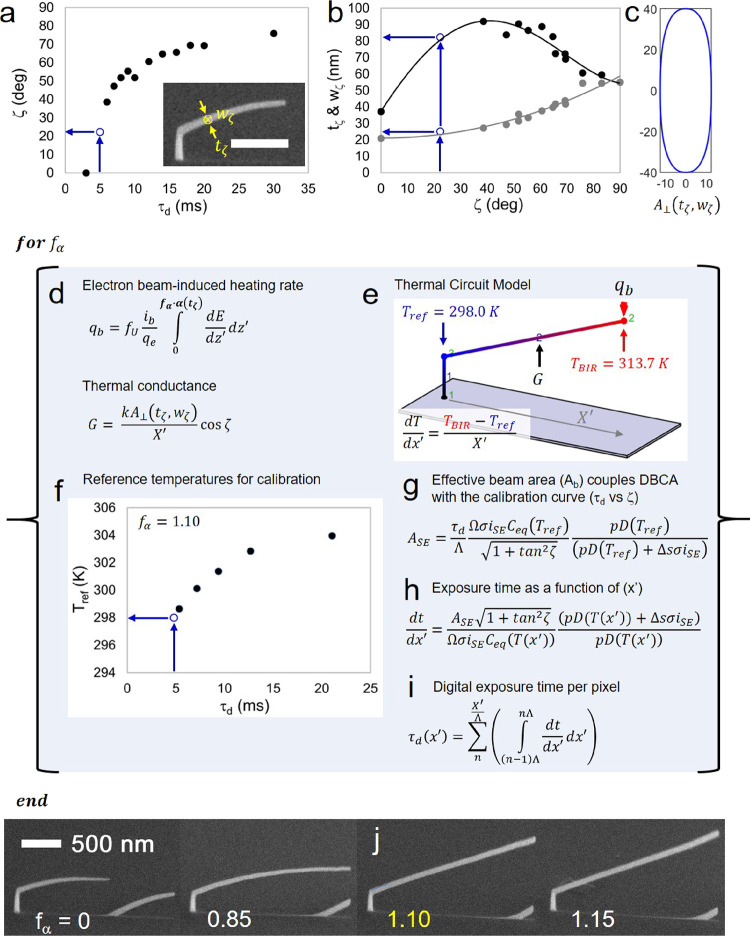
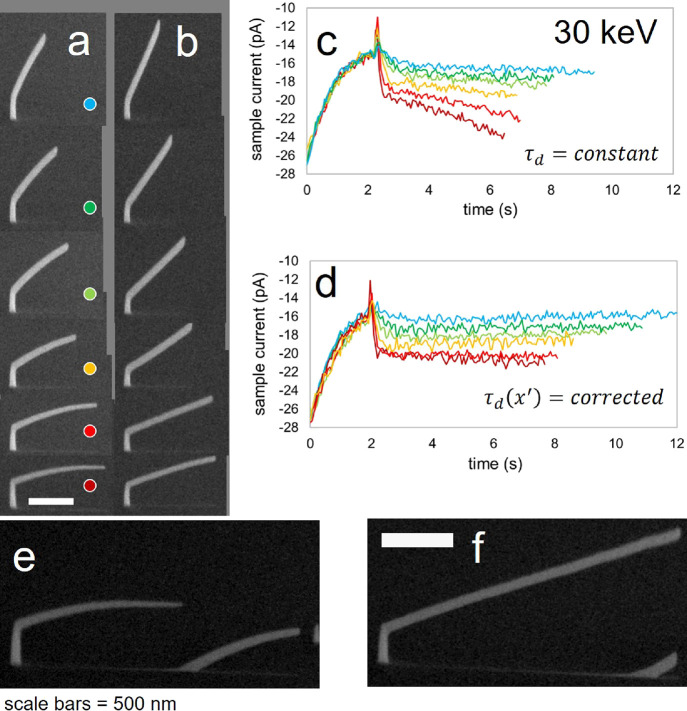
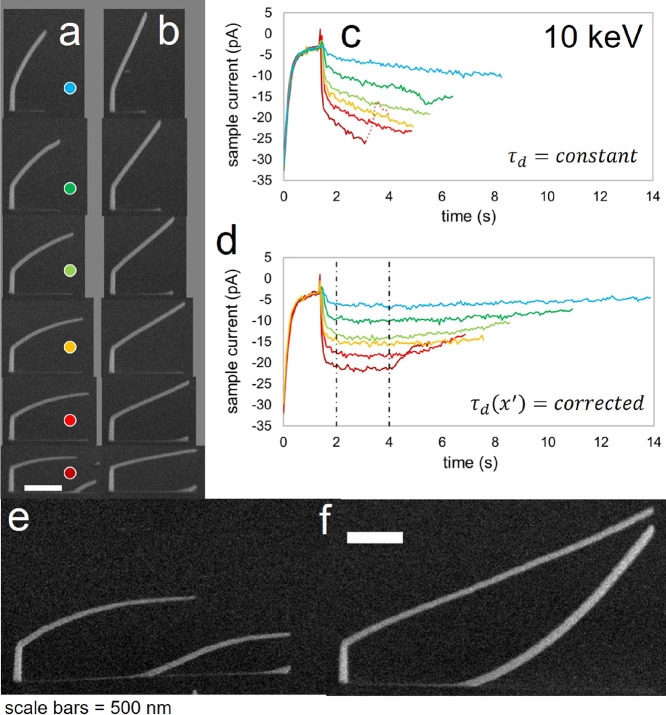
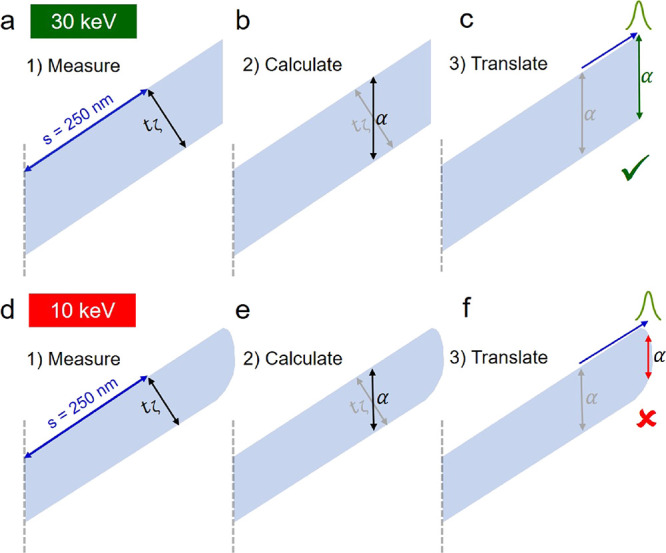
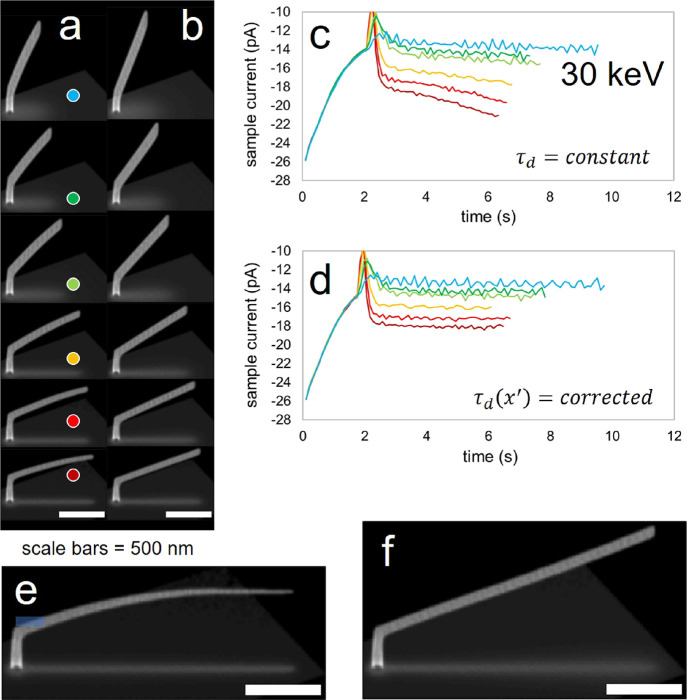
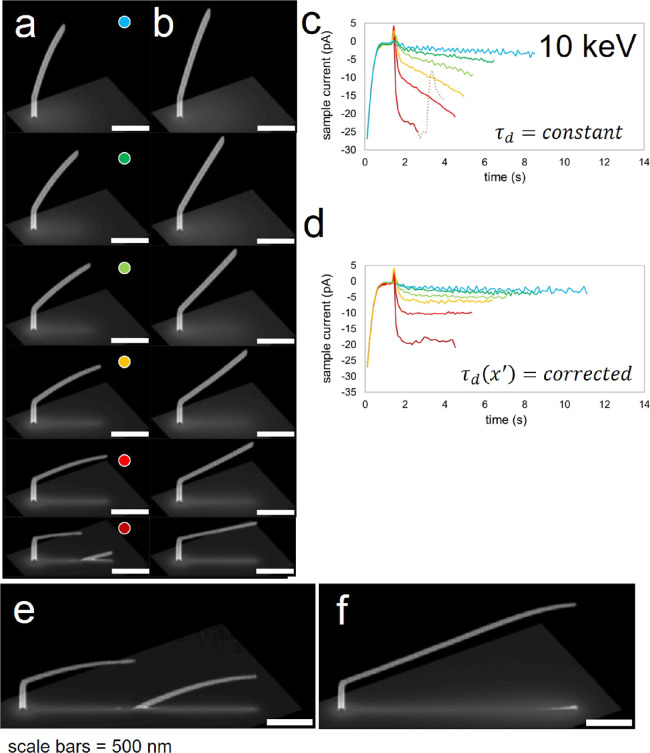
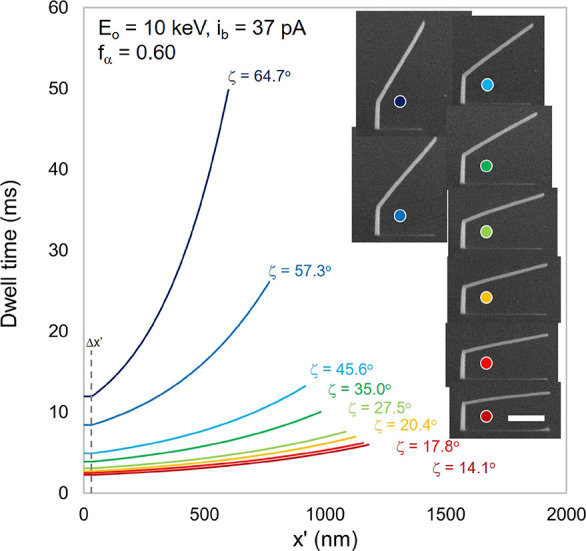
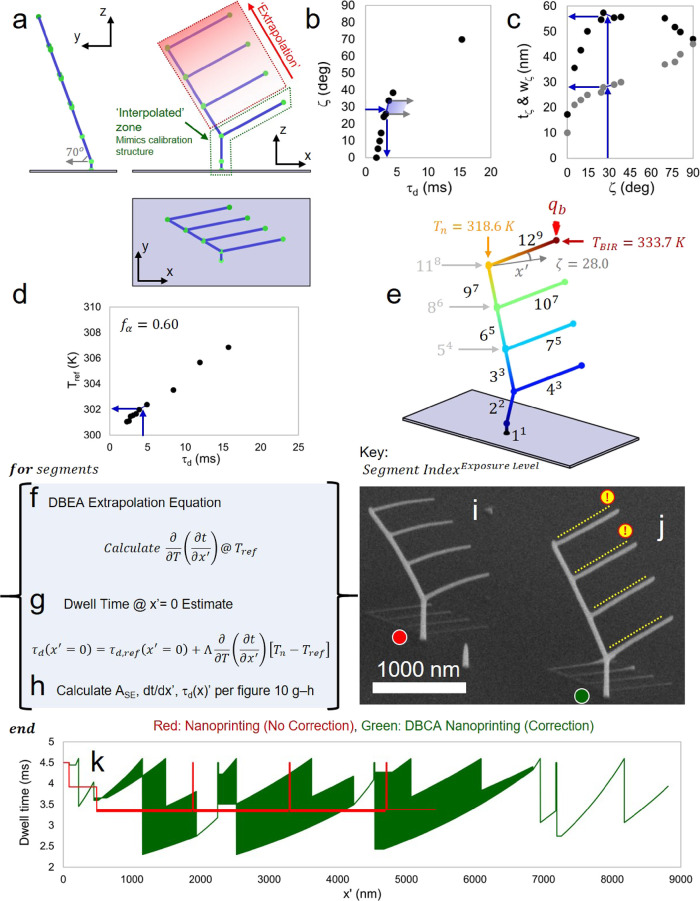
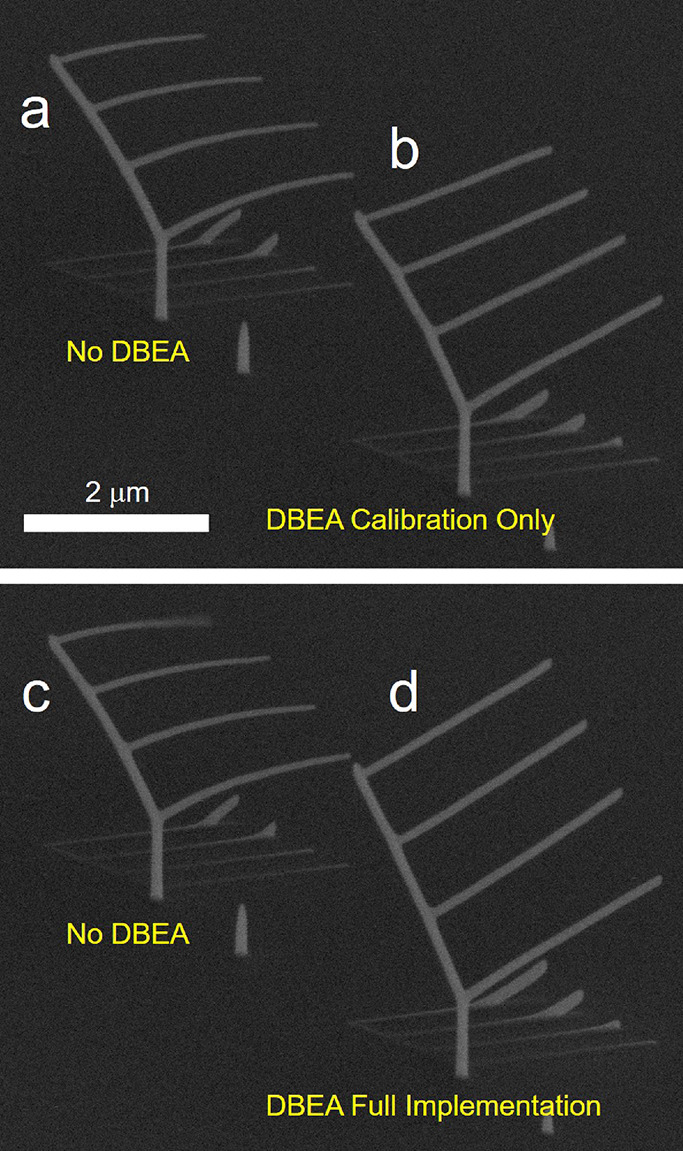
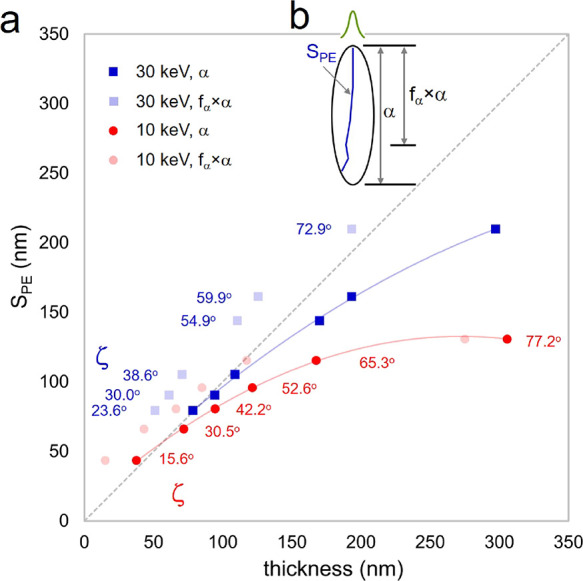
3D nanoprinting, using focused electron beam-induced deposition, is prone to a common structural artifact arising from a temperature gradient that naturally evolves during deposition, extending from the electron beam impact region (BIR) to the substrate. Inelastic electron energy loss drives the Joule heating and surface temperature variations lead to precursor surface concentration variations due, in most part, to temperature-dependent precursor surface desorption. The result is unwanted curvature when prescribing linear segments in 3D objects, and thus, complex geometries contain distortions. Here, an electron dose compensation strategy is presented to offset deleterious heating effects; the Decelerating Beam Exposure Algorithm, or DBEA, which corrects for nanowire bending , during computer-aided design, uses an analytical solution derived from information gleaned from 3D nanoprinting simulations. Electron dose modulation is an ideal solution for artifact correction because variations in electron dose have no influence on temperature. Thus, the generalized compensation strategy revealed here will help advance 3D nanoscale printing fidelity for focused electron beam-induced deposition.
使用聚焦电子束诱导沉积的3D纳米打印容易出现一种常见的结构伪影,这种伪影是由沉积过程中自然形成的温度梯度引起的,该温度梯度从电子束撞击区域(BIR)延伸到基底。非弹性电子能量损失驱动焦耳热,表面温度变化导致前驱体表面浓度变化,这在很大程度上是由于温度依赖的前驱体表面解吸。结果是在3D物体中规定线性段时会出现不需要的曲率,因此,复杂的几何形状会包含变形。在此,提出了一种电子剂量补偿策略来抵消有害的加热效应;减速束曝光算法(DBEA)在计算机辅助设计期间校正纳米线弯曲,它使用从3D纳米打印模拟中收集的信息得出的解析解。电子剂量调制是校正伪影的理想解决方案,因为电子剂量的变化对温度没有影响。因此,这里揭示的广义补偿策略将有助于提高聚焦电子束诱导沉积的3D纳米级打印保真度。