Mortimer B. Zuckerman Mind Brain Behavior Institute, Columbia University, New York, NY 10027.
Department of Neuroscience, Columbia University, New York, NY 10027.
Proc Natl Acad Sci U S A. 2023 Feb 7;120(6):e2114747120. doi: 10.1073/pnas.2114747120. Epub 2023 Jan 30.
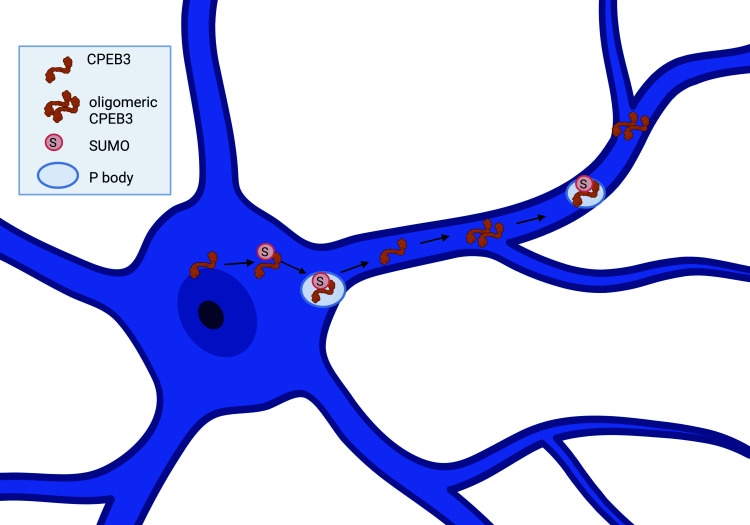
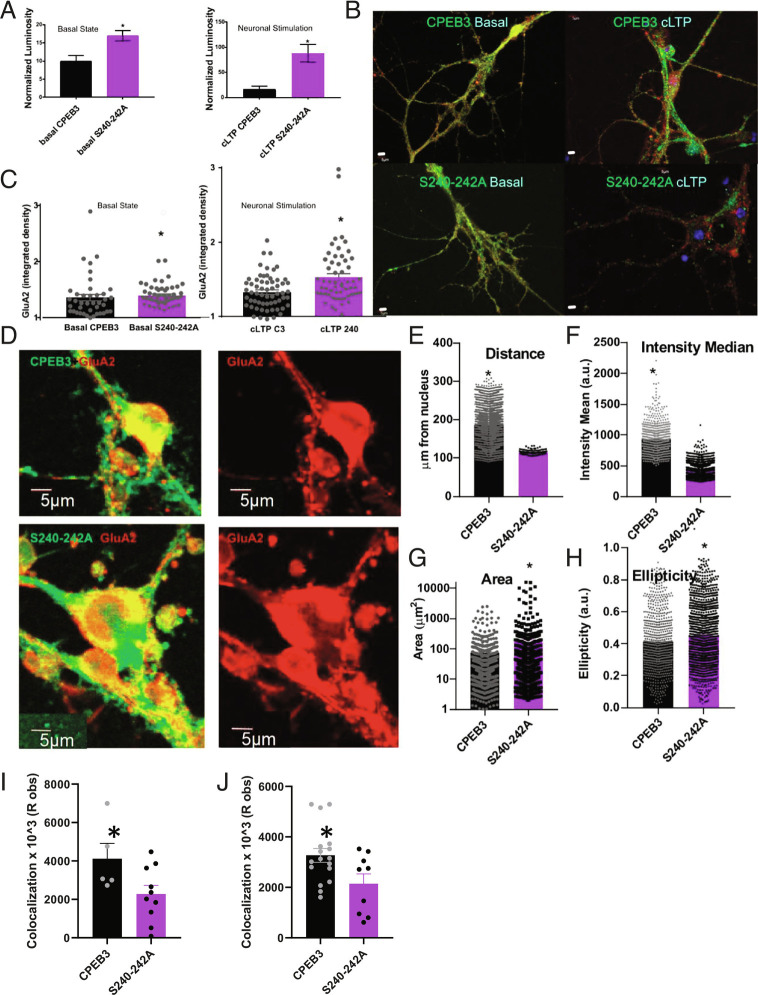
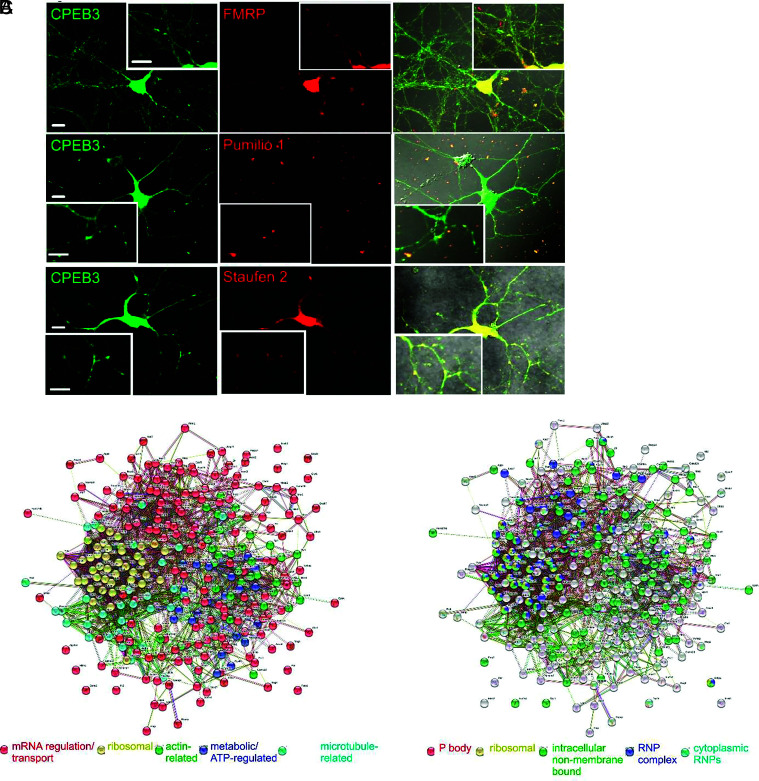
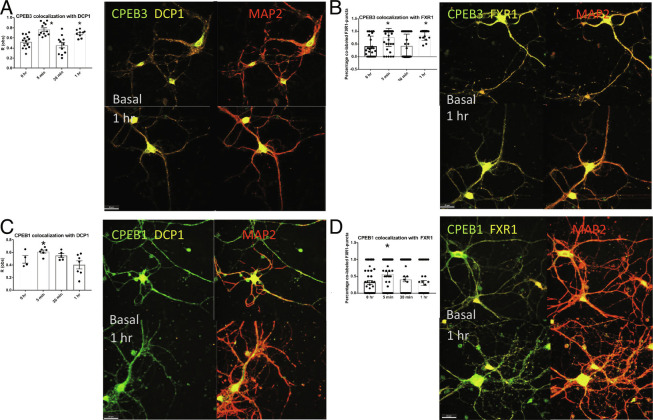
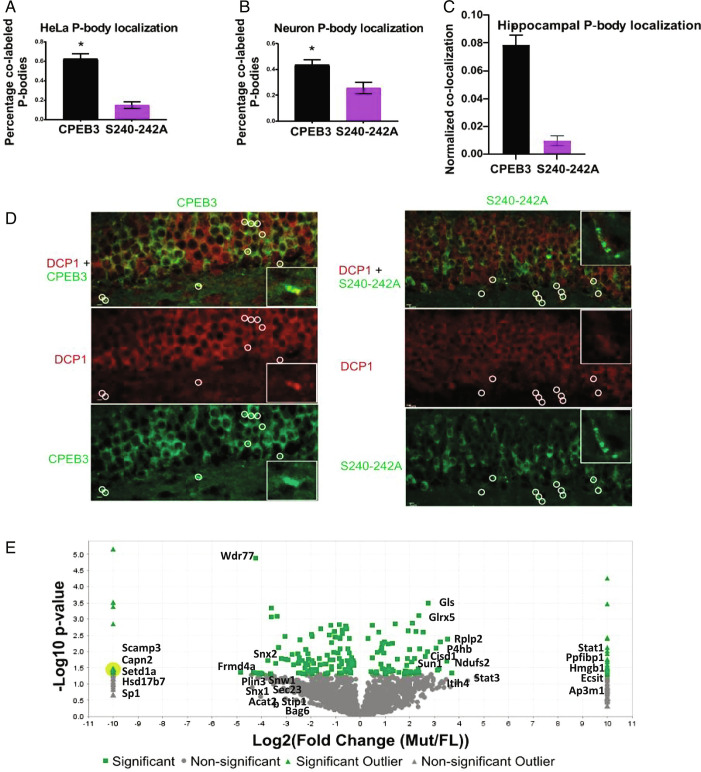
Biomolecular condensates, membraneless organelles found throughout the cell, play critical roles in many aspects of cellular function. Ribonucleoprotein granules (RNPs) are a type of biomolecular condensate necessary for local protein synthesis and are involved in synaptic plasticity and long-term memory. Most of the proteins in RNPs possess low-complexity motifs (LCM), allowing for increased promiscuity of protein-protein interactions. Here, we describe the importance of protein-protein interactions mediated by the LCM of RNA-binding protein cytoplasmic polyadenylation element binding protein 3 (CPEB3). CPEB3 is necessary for long-term synaptic plasticity and memory persistence, but the mechanisms involved are still not completely elucidated. We now present key mechanisms involved in its regulation of synaptic plasticity. We find that CPEB3-LCM plays a role in appropriate local protein synthesis of messenger ribonucleic acid (mRNA) targets, through crucial protein-protein interactions that drive localization to neuronal Decapping protein 1 (DCP1)-bodies. Translation-promoting CPEB3 and translation-inhibiting CPEB1 are packaged into neuronal RNP granules immediately after chemical long-term potentiation is induced, but only translation-promoting CPEB3 is repackaged to these organelles at later time points. This localization to neuronal RNP granules is critical for functional influence on translation as well as overall local protein synthesis (measured as α-amino-3-hydroxy-5-methyl-4-isoxazolepropionic acid (AMPA) insertion into the membrane and localization to the synapse). We therefore conclude that protein-protein interaction between the LCM of CPEB3 plays a critical role in local protein synthesis by utilizing neuronal RNP granules.
生物分子凝聚物是细胞内无膜细胞器,在细胞功能的许多方面发挥着关键作用。核糖核蛋白颗粒(RNP)是一种生物分子凝聚物,对于局部蛋白质合成是必需的,并且参与突触可塑性和长期记忆。RNP 中的大多数蛋白质都具有低复杂度基序(LCM),从而增加了蛋白质-蛋白质相互作用的混杂性。在这里,我们描述了 RNA 结合蛋白细胞质多聚腺苷酸化元件结合蛋白 3(CPEB3)的 LCM 介导的蛋白质-蛋白质相互作用的重要性。CPEB3 对于长期突触可塑性和记忆持久性是必需的,但涉及的机制仍未完全阐明。我们现在介绍其调节突触可塑性的关键机制。我们发现,CPEB3-LCM 通过关键的蛋白质-蛋白质相互作用发挥作用,这些相互作用促使其定位到神经元去帽蛋白 1(DCP1)-体,从而对信使 RNA(mRNA)靶标进行适当的局部蛋白质合成。促进翻译的 CPEB3 和抑制翻译的 CPEB1 在化学长时程增强作用诱导后立即被包装到神经元 RNP 颗粒中,但只有促进翻译的 CPEB3 会在稍后的时间点被重新包装到这些细胞器中。这种定位于神经元 RNP 颗粒对于翻译以及整体局部蛋白质合成(以 α-氨基-3-羟基-5-甲基-4-异恶唑丙酸(AMPA)插入膜和定位到突触来衡量)的功能影响是至关重要的。因此,我们得出结论,CPEB3 的 LCM 之间的蛋白质-蛋白质相互作用通过利用神经元 RNP 颗粒在局部蛋白质合成中发挥关键作用。