Ruffieux Hélène, Hanson Aimee L, Lodge Samantha, Lawler Nathan G, Whiley Luke, Gray Nicola, Nolan Tui H, Bergamaschi Laura, Mescia Federica, Turner Lorinda, de Sa Aloka, Pelly Victoria S, Kotagiri Prasanti, Kingston Nathalie, Bradley John R, Holmes Elaine, Wist Julien, Nicholson Jeremy K, Lyons Paul A, Smith Kenneth G C, Richardson Sylvia, Bantug Glenn R, Hess Christoph
MRC Biostatistics Unit, University of Cambridge, Cambridge Biomedical Campus, Cambridge, UK.
Cambridge Institute of Therapeutic Immunology and Infectious Disease, Jeffrey Cheah Biomedical Centre, University of Cambridge, Cambridge, UK.
Nat Immunol. 2023 Feb;24(2):349-358. doi: 10.1038/s41590-022-01380-2. Epub 2023 Jan 30.
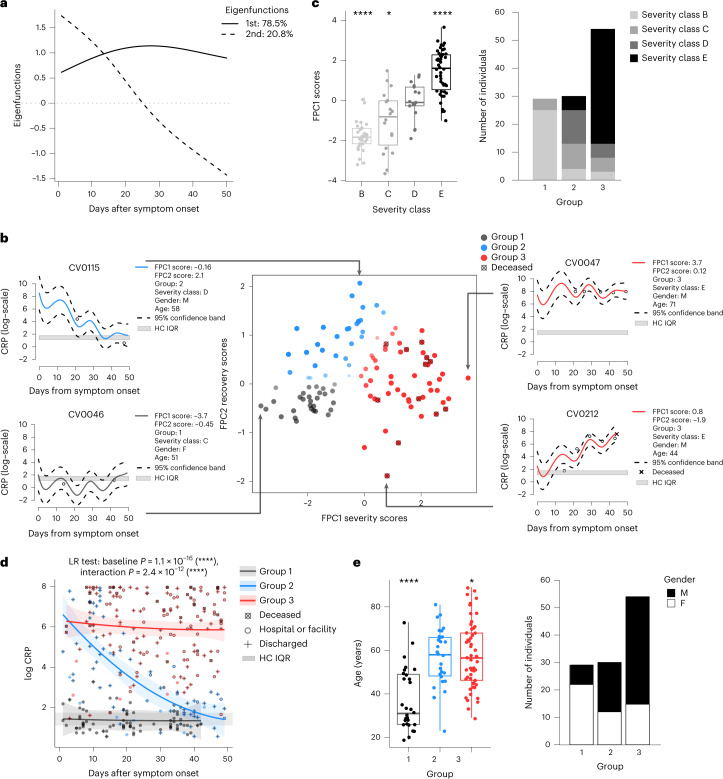
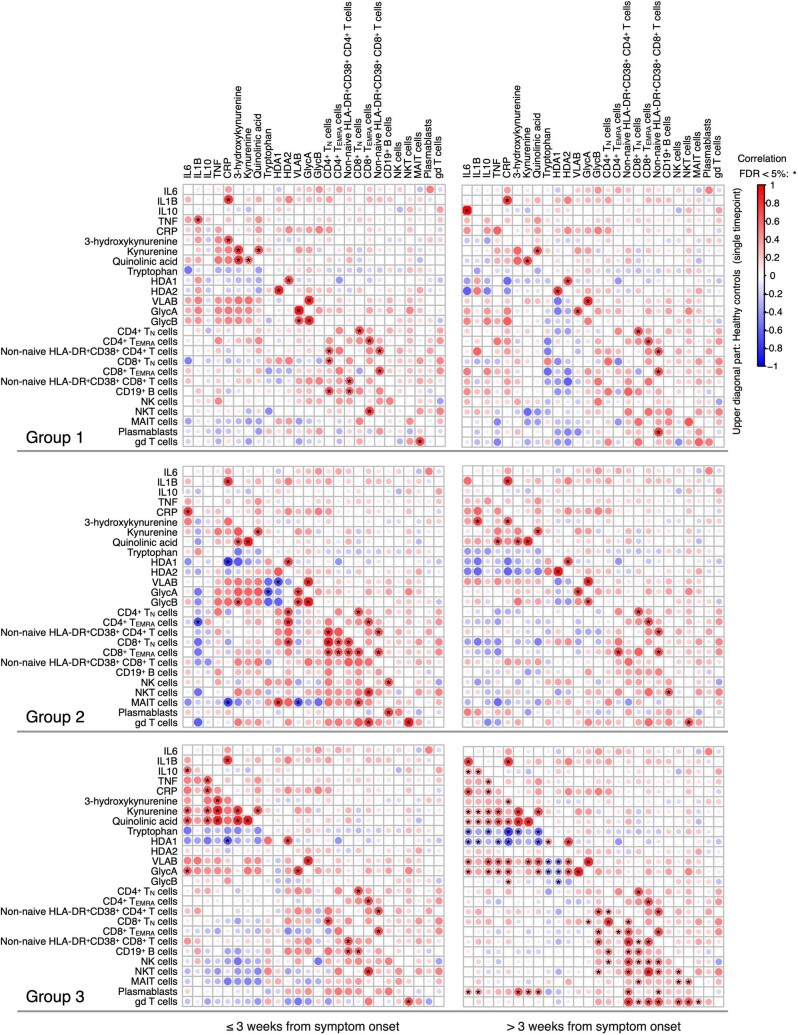
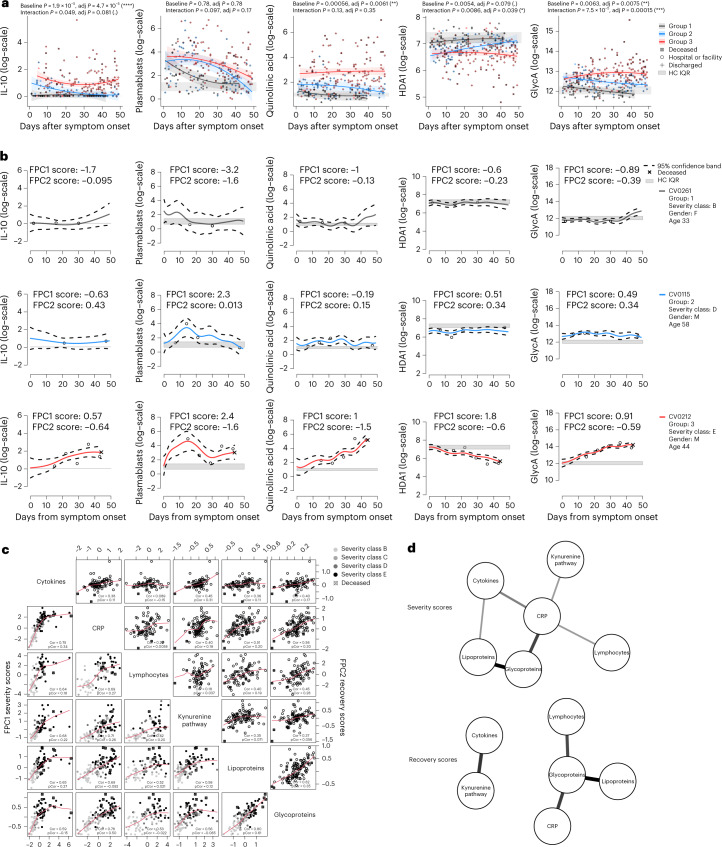
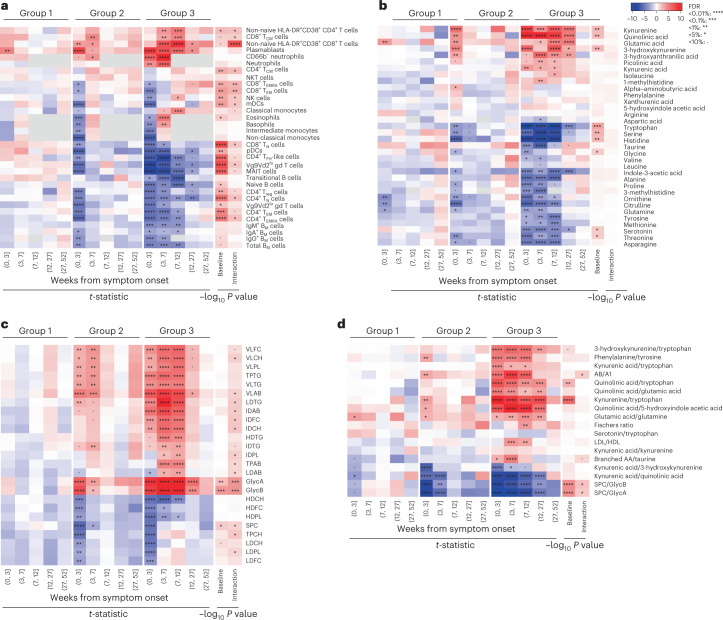
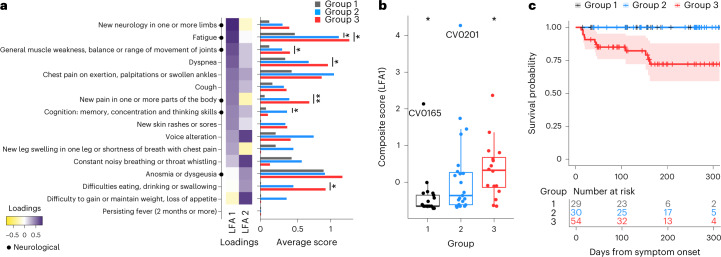
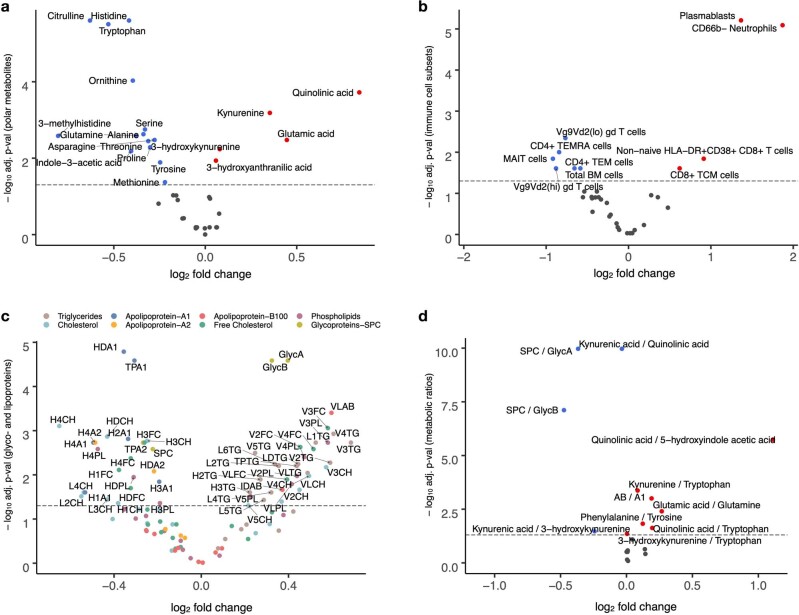
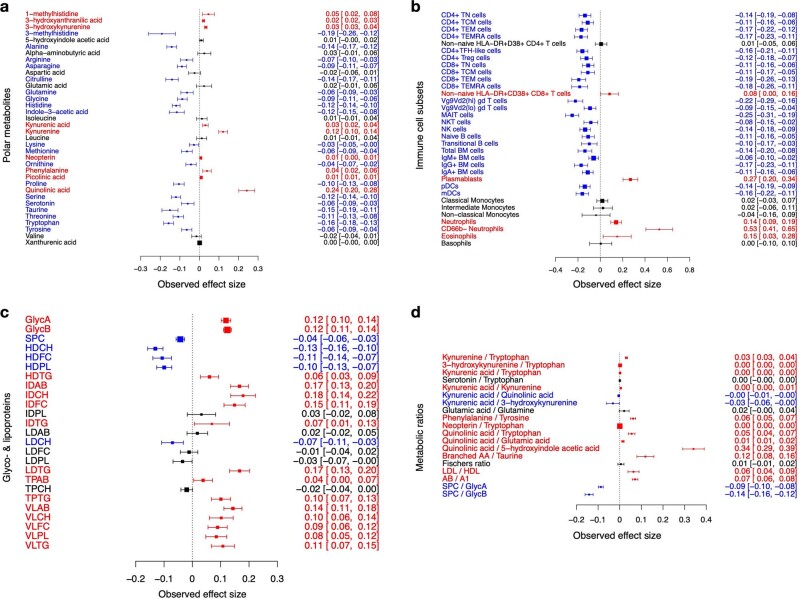
The biology driving individual patient responses to severe acute respiratory syndrome coronavirus 2 infection remains ill understood. Here, we developed a patient-centric framework leveraging detailed longitudinal phenotyping data and covering a year after disease onset, from 215 infected individuals with differing disease severities. Our analyses revealed distinct 'systemic recovery' profiles, with specific progression and resolution of the inflammatory, immune cell, metabolic and clinical responses. In particular, we found a strong inter-patient and intra-patient temporal covariation of innate immune cell numbers, kynurenine metabolites and lipid metabolites, which highlighted candidate immunologic and metabolic pathways influencing the restoration of homeostasis, the risk of death and that of long COVID. Based on these data, we identified a composite signature predictive of systemic recovery, using a joint model on cellular and molecular parameters measured soon after disease onset. New predictions can be generated using the online tool http://shiny.mrc-bsu.cam.ac.uk/apps/covid-19-systemic-recovery-prediction-app , designed to test our findings prospectively.
驱动个体患者对严重急性呼吸综合征冠状病毒2感染反应的生物学机制仍未得到充分理解。在此,我们开发了一个以患者为中心的框架,利用详细的纵向表型数据,涵盖疾病发作后一年,来自215名具有不同疾病严重程度的感染者。我们的分析揭示了不同的“全身恢复”特征,包括炎症、免疫细胞、代谢和临床反应的特定进展和消退。特别是,我们发现患者间和患者内先天免疫细胞数量、犬尿氨酸代谢物和脂质代谢物存在强烈的时间共变,这突出了影响体内平衡恢复、死亡风险和长期新冠风险的候选免疫和代谢途径。基于这些数据,我们使用疾病发作后不久测量的细胞和分子参数的联合模型,确定了一个预测全身恢复的综合特征。可以使用在线工具http://shiny.mrc-bsu.cam.ac.uk/apps/covid-19-systemic-recovery-prediction-app生成新的预测,该工具旨在前瞻性地测试我们的发现。