Department of General Surgery, Renmin Hospital of Wuhan University, Wuhan, China.
Department of Hepatobiliary Surgery, Renmin Hospital of Wuhan University, Wuhan, China.
Cancer Sci. 2023 May;114(5):2001-2013. doi: 10.1111/cas.15741. Epub 2023 Feb 14.
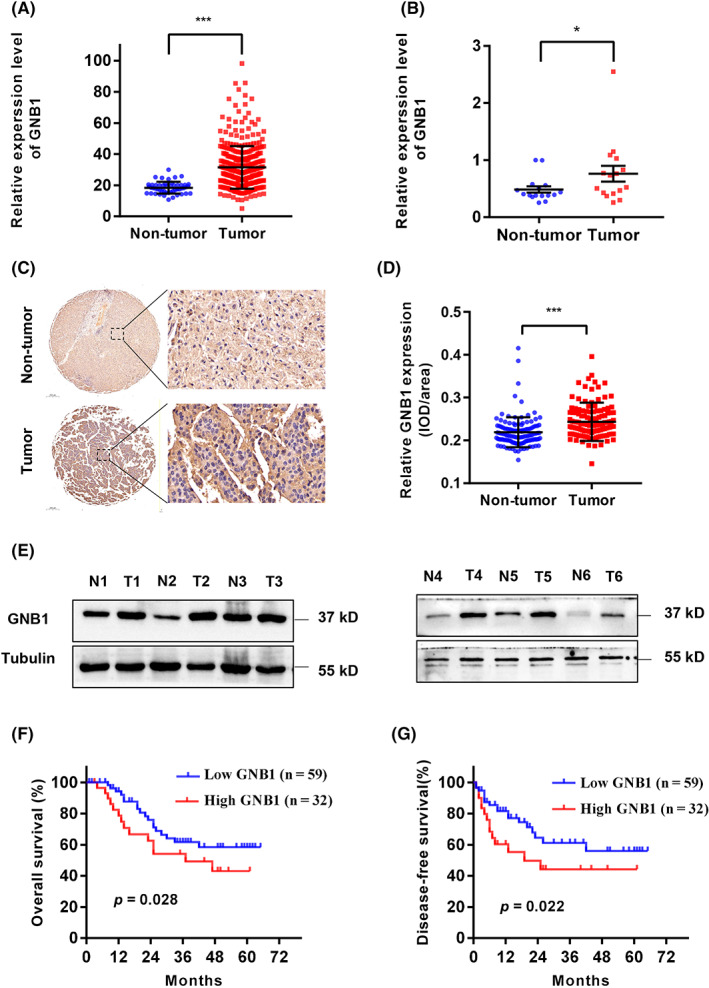
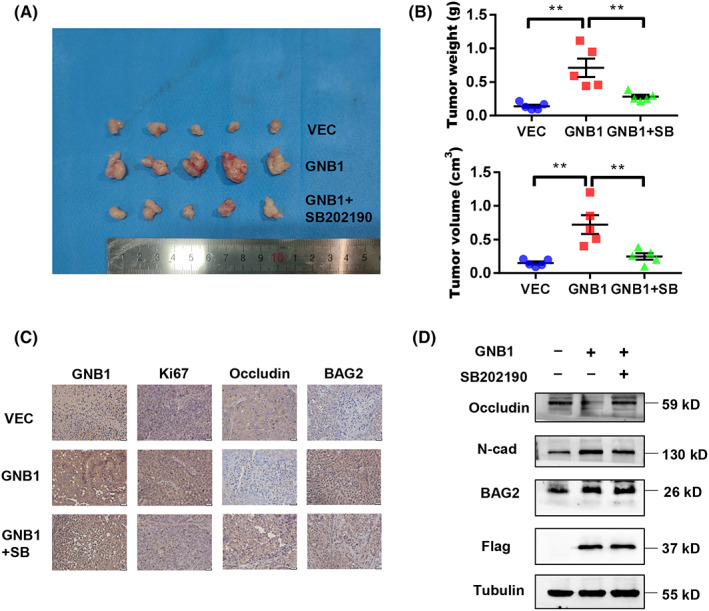
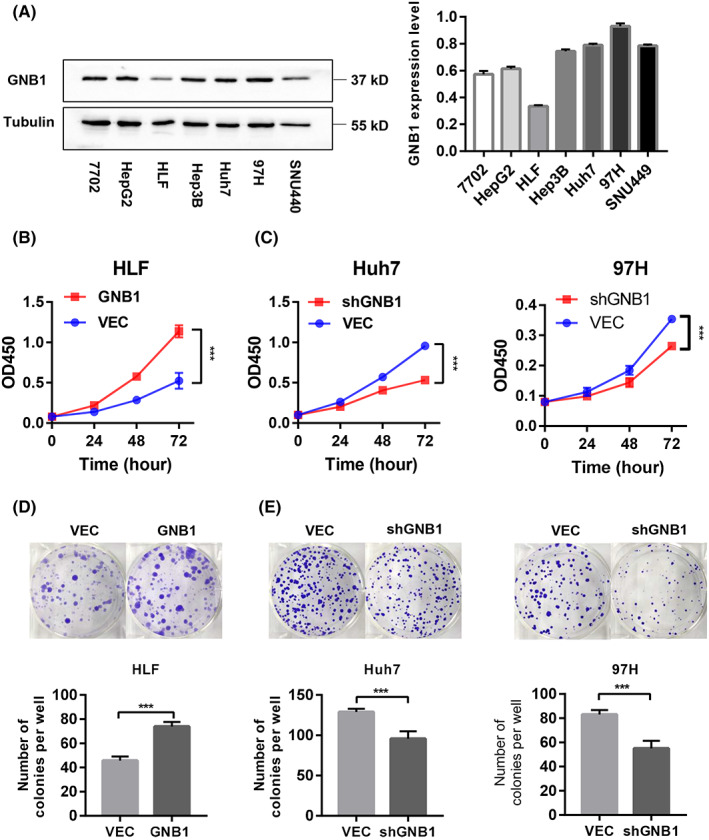
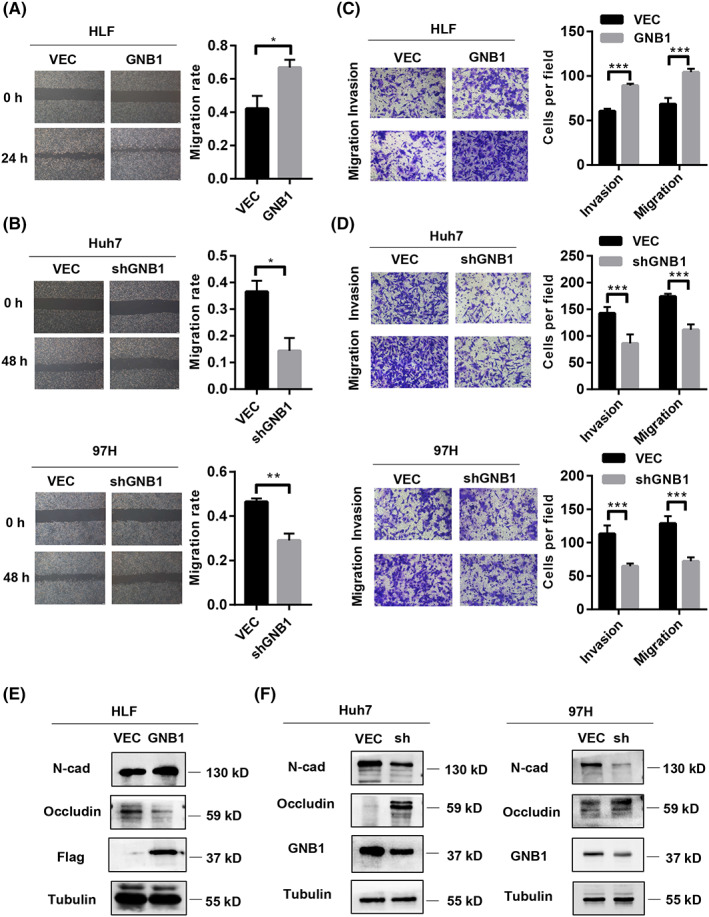
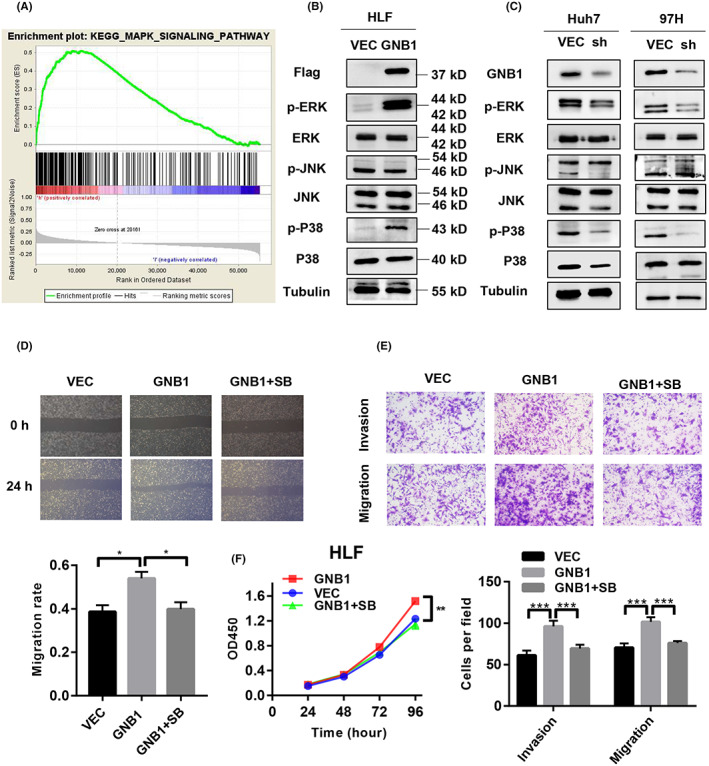
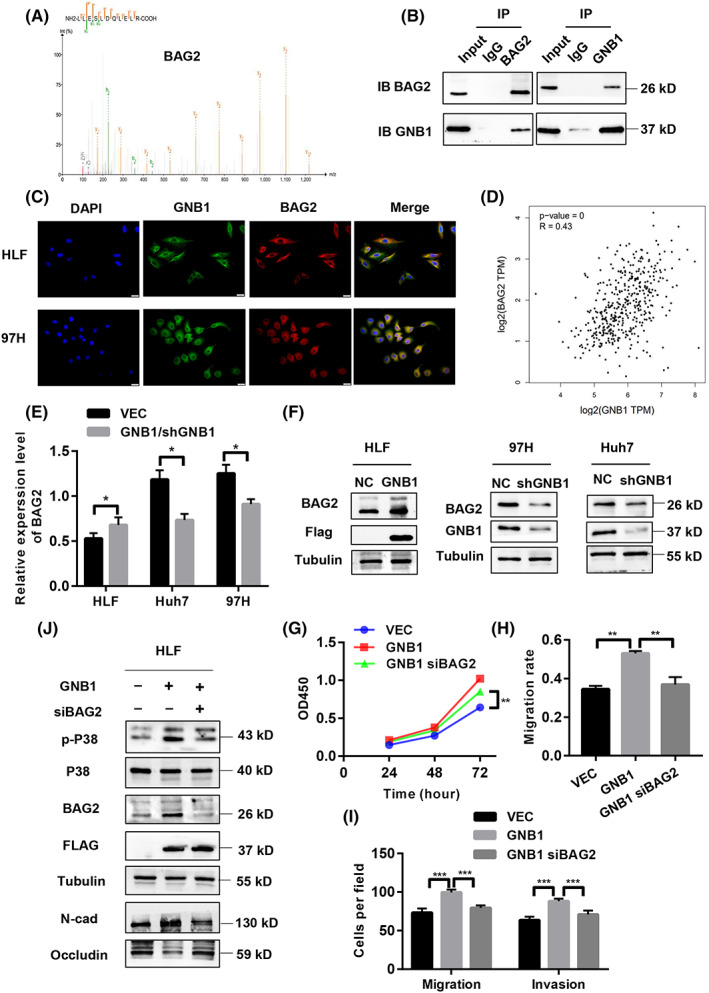
G-proteins are intracellular partners of G-protein-coupled receptors. As a member of the G-protein family, GNB1 has been shown to play a pro-cancer role in lung cancer and breast cancer. However, the biological function and detailed mechanisms of GNB1 in hepatocellular carcinoma progression are unclear. In this study, we investigated the effects of GNB1 and its possible mechanism of action in hepatocellular carcinoma (HCC). The clinical significance of GNB1 was evaluated in a large cohort of HCC patients, showing that GNB1 was overexpressed in HCC compared to adjacent normal liver tissues, and increased GNB1 expression was associated with poor prognosis. We also demonstrated that GNB1 enhances cell proliferation, colony formation, and cell migration and invasion in vitro and promotes the epithelial-to-mesenchymal transition process in HCC cells. Tumor xenograft model assay confirmed the oncogenic role of GNB1 in tumorigenicity in nude mice. Activation of P38 signaling was found in the GNB1 overexpressed HCC cells. Further intervention of P38 confirmed it as an important signaling pathway for the oncogenic role of GNB1 in HCC. Moreover, co-immunoprecipitation followed by liquid chromatograph-mass spectrometry identified that GNB1 exerted oncogenic functions via the interaction of BAG2 and activated P38 signaling pathway. Together, our results reveal that GNB1 plays a pivotal oncogenic role in HCC by promoting the P38 pathway via cooperating with BAG2. GNB1 may serve as a prognostic biomarker for patients with HCC.
G 蛋白是 G 蛋白偶联受体的细胞内伴侣。作为 G 蛋白家族的一员,GNB1 已被证明在肺癌和乳腺癌中发挥致癌作用。然而,GNB1 在肝细胞癌进展中的生物学功能和详细机制尚不清楚。在这项研究中,我们研究了 GNB1 及其在肝细胞癌(HCC)中可能的作用机制。在大量 HCC 患者中评估了 GNB1 的临床意义,结果表明与相邻正常肝组织相比,GNB1 在 HCC 中过表达,并且 GNB1 表达增加与预后不良相关。我们还证明,GNB1 在体外增强了 HCC 细胞的增殖、集落形成和细胞迁移侵袭,并促进了 EMT 过程。肿瘤异种移植模型试验证实了 GNB1 在裸鼠致瘤性中的致癌作用。在 GNB1 过表达的 HCC 细胞中发现了 P38 信号的激活。进一步干预 P38 证实其是 GNB1 在 HCC 中致癌作用的重要信号通路。此外,免疫沉淀结合液质联用鉴定出 GNB1 通过与 BAG2 相互作用并激活 P38 信号通路发挥致癌功能。总之,我们的结果表明,GNB1 通过与 BAG2 合作促进 P38 通路在 HCC 中发挥关键致癌作用。GNB1 可能可作为 HCC 患者的预后生物标志物。