Department of Anesthesiology, McGovern Medical School, The University of Texas Health Science Center at Houston, Houston, Texas.
Department of Clinical Cancer Prevention, The University of Texas MD Anderson Cancer Center, Houston, Texas.
Cancer Res. 2023 Apr 4;83(7):1111-1127. doi: 10.1158/0008-5472.CAN-22-2553.
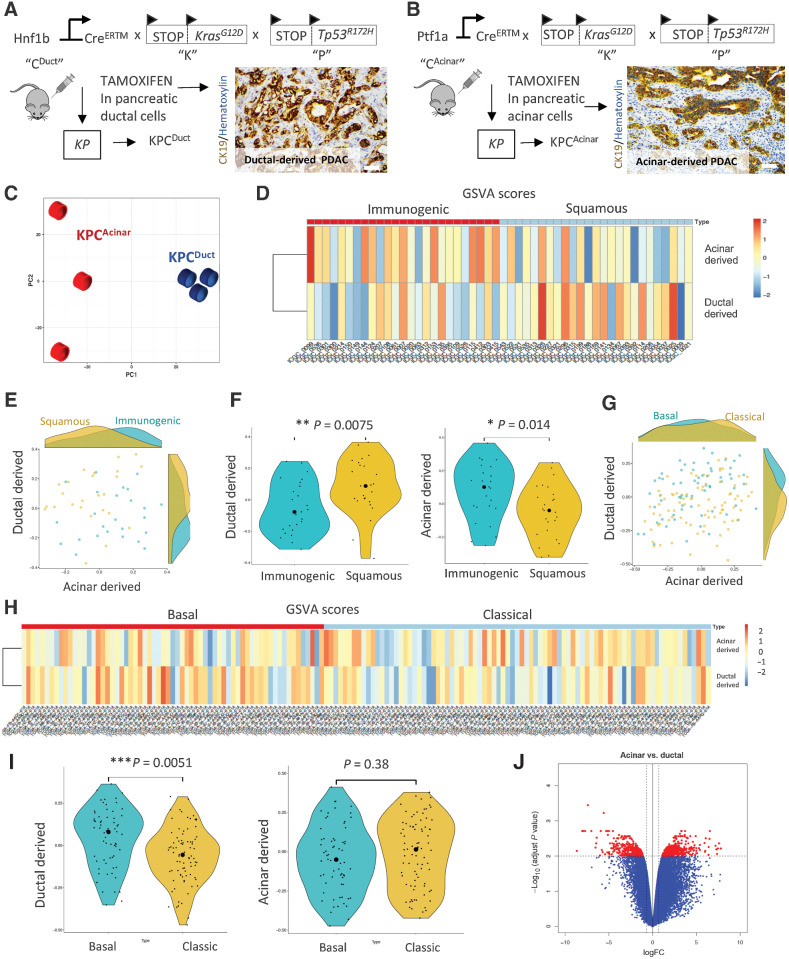
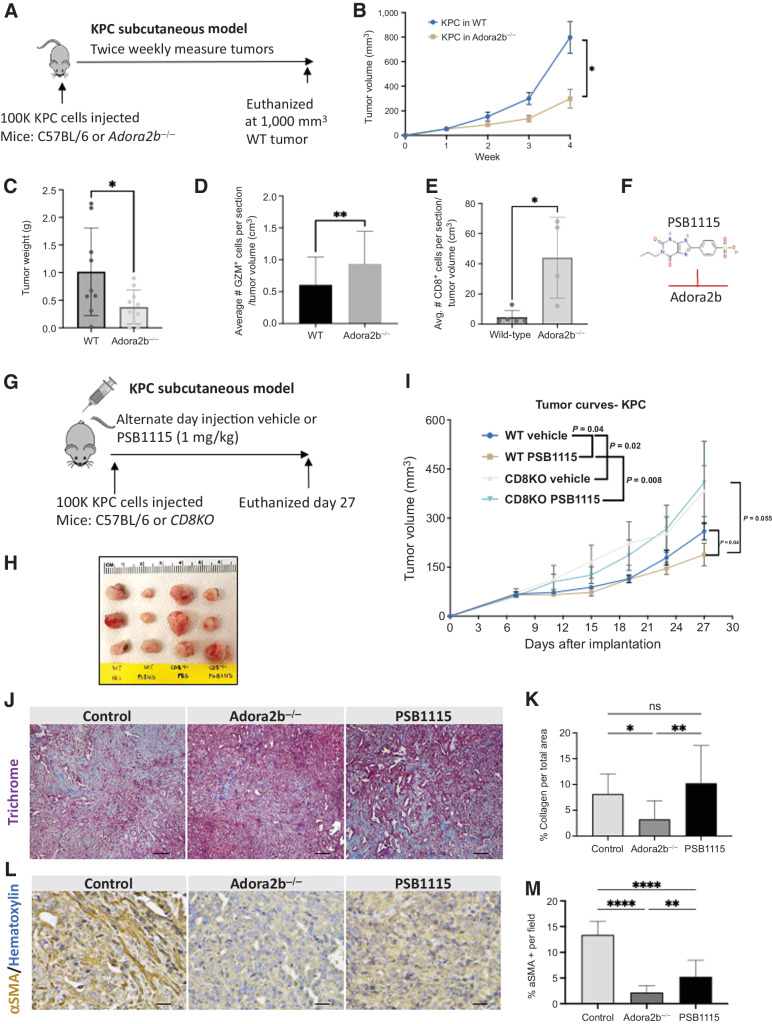
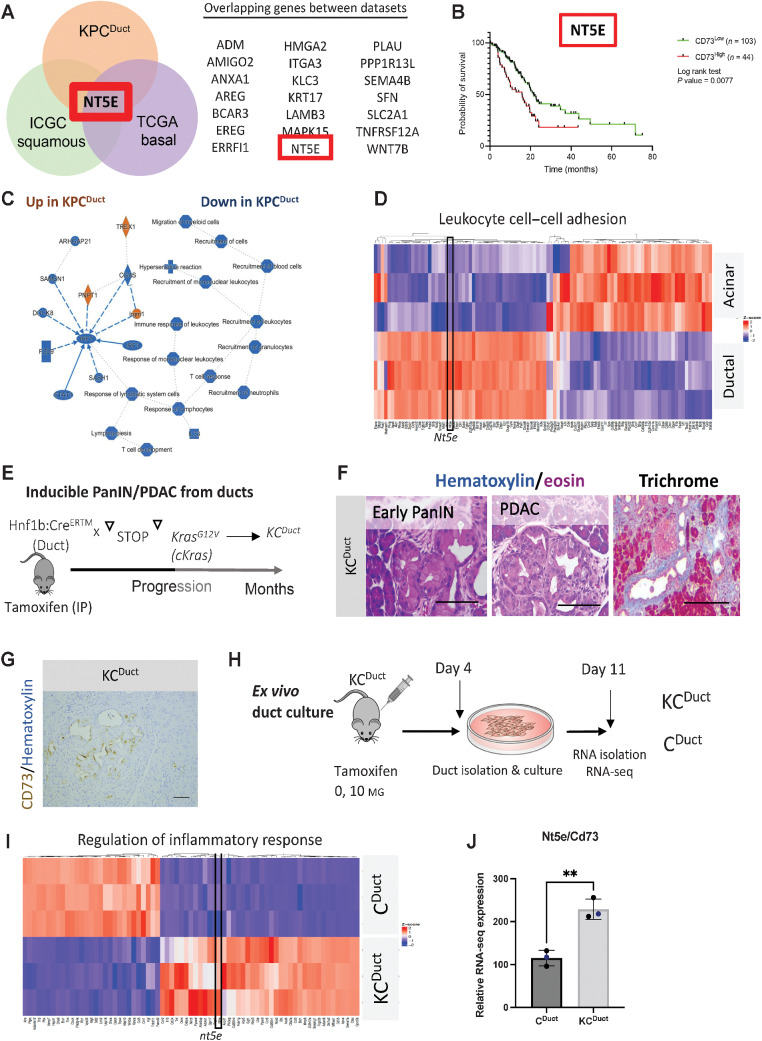
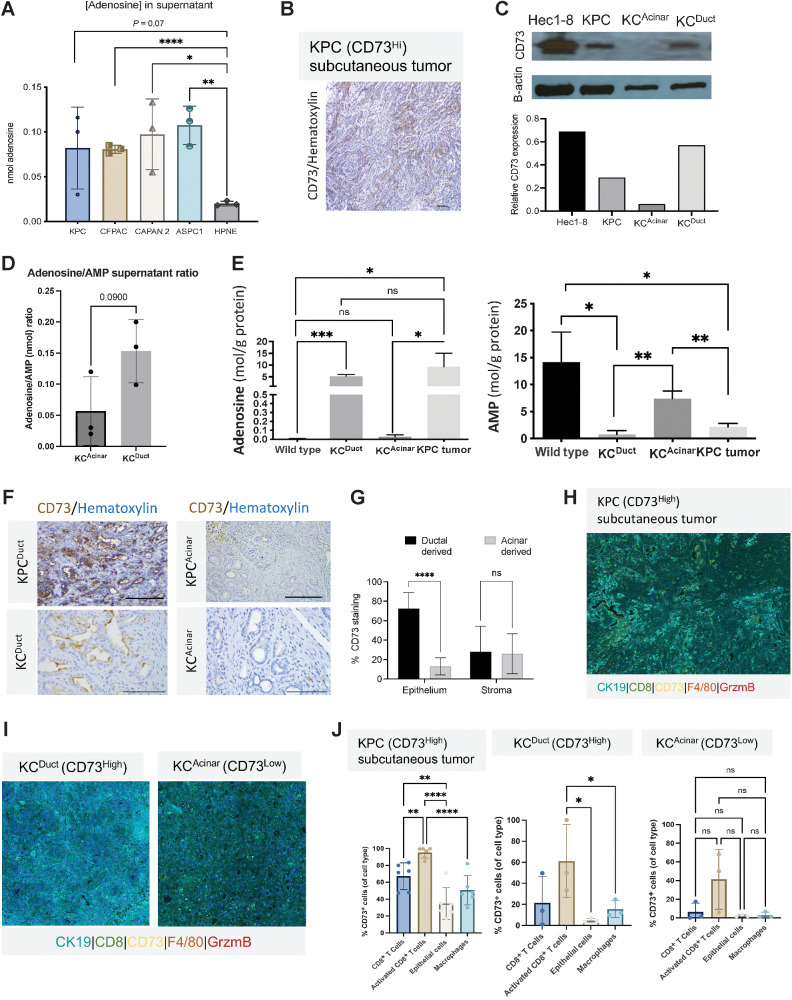
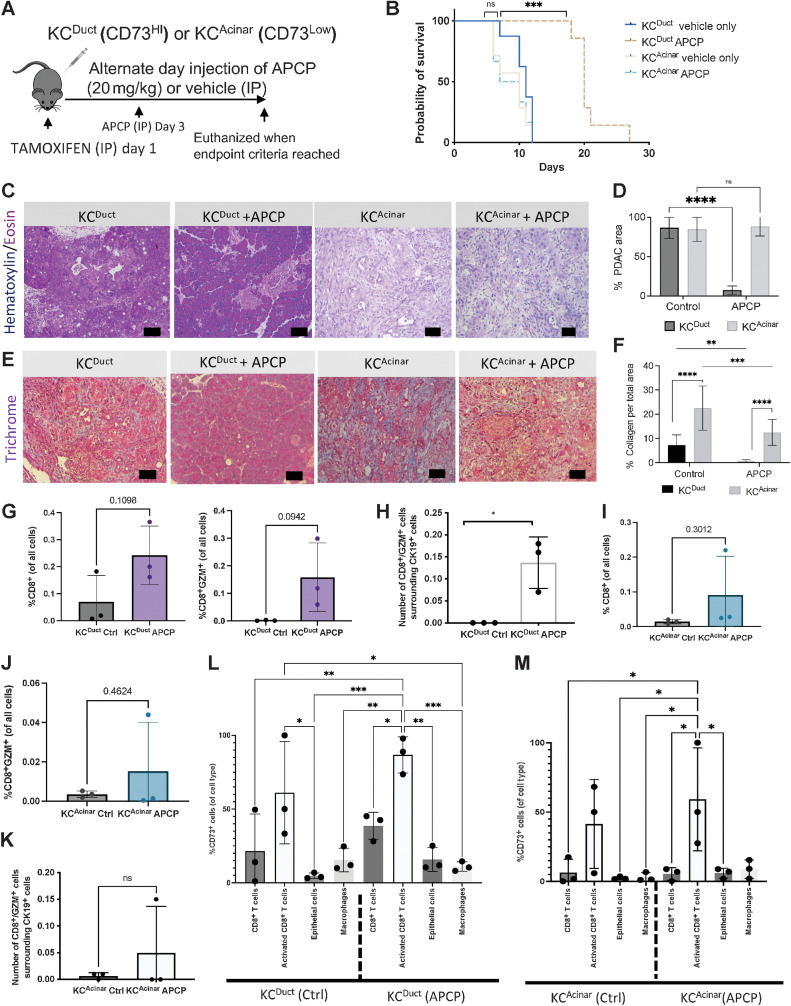
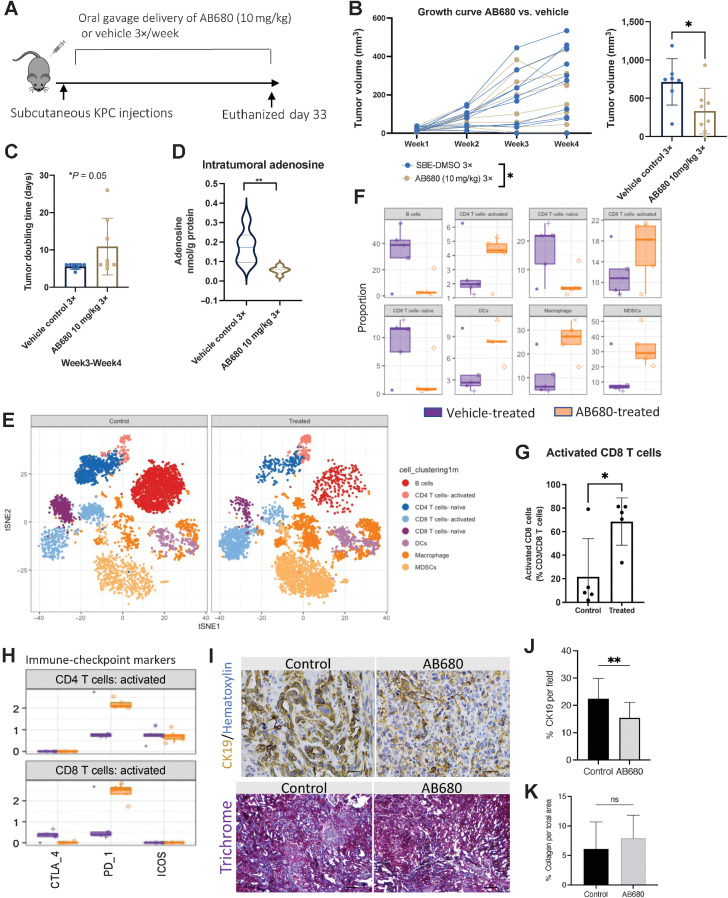
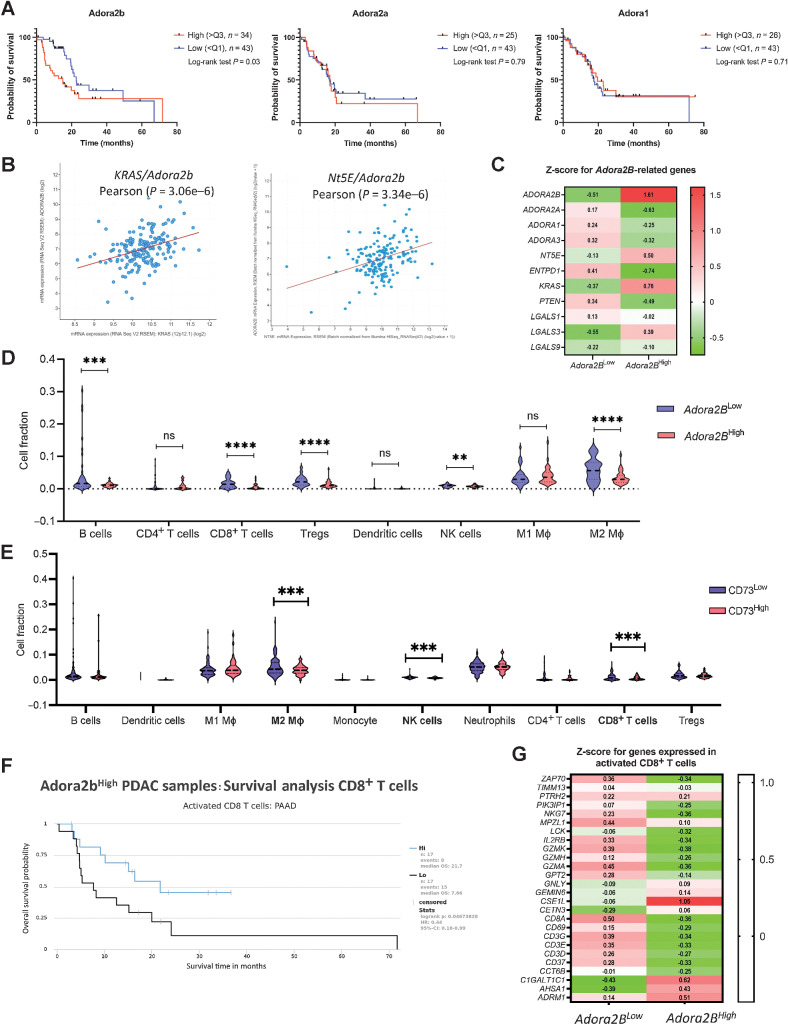
The microenvironment that surrounds pancreatic ductal adenocarcinoma (PDAC) is profoundly desmoplastic and immunosuppressive. Understanding triggers of immunosuppression during the process of pancreatic tumorigenesis would aid in establishing targets for effective prevention and therapy. Here, we interrogated differential molecular mechanisms dependent on cell of origin and subtype that promote immunosuppression during PDAC initiation and in established tumors. Transcriptomic analysis of cell-of-origin-dependent epithelial gene signatures revealed that Nt5e/CD73, a cell-surface enzyme required for extracellular adenosine generation, is one of the top 10% of genes overexpressed in murine tumors arising from the ductal pancreatic epithelium as opposed to those rising from acinar cells. These findings were confirmed by IHC and high-performance liquid chromatography. Analysis in human PDAC subtypes indicated that high Nt5e in murine ductal PDAC models overlaps with high NT5E in human PDAC squamous and basal subtypes, considered to have the highest immunosuppression and worst prognosis. Multiplex immunofluorescent analysis showed that activated CD8+ T cells in the PDAC tumor microenvironment express high levels of CD73, indicating an opportunity for immunotherapeutic targeting. Delivery of CD73 small-molecule inhibitors through various delivery routes reduced tumor development and growth in genetically engineered and syngeneic mouse models. In addition, the adenosine receptor Adora2b was a determinant of adenosine-mediated immunosuppression in PDAC. These findings highlight a molecular trigger of the immunosuppressive PDAC microenvironment elevated in the ductal cell of origin, linking biology with subtype classification, critical components for PDAC immunoprevention and personalized approaches for immunotherapeutic intervention.
Ductal-derived pancreatic tumors have elevated epithelial and CD8+GZM+ T-cell CD73 expression that confers sensitivity to small-molecule inhibition of CD73 or Adora2b to promote CD8+ T-cell-mediated tumor regression. See related commentary by DelGiorno, p. 977.
围绕胰腺导管腺癌(PDAC)的微环境具有明显的促纤维化和免疫抑制作用。了解胰腺肿瘤发生过程中免疫抑制的触发因素将有助于确定有效的预防和治疗靶点。在这里,我们探讨了依赖于起始细胞和亚型的差异分子机制,这些机制在 PDAC 起始和已建立的肿瘤中促进免疫抑制。对起始细胞依赖性上皮基因特征的转录组分析表明,Nt5e/CD73 是一种细胞表面酶,是细胞外腺苷生成所必需的,是源自导管胰腺上皮的小鼠肿瘤中表达上调的前 10%基因之一,而不是源自腺泡细胞的基因。免疫组织化学和高效液相色谱分析证实了这一发现。在人类 PDAC 亚型中的分析表明,在鼠源性导管 PDAC 模型中高 Nt5e 与人类 PDAC 鳞癌和基底亚型中的高 NT5E 重叠,这些亚型被认为具有最高的免疫抑制作用和最差的预后。多重免疫荧光分析表明,PDAC 肿瘤微环境中激活的 CD8+T 细胞表达高水平的 CD73,表明有机会进行免疫治疗靶向。通过各种给药途径递送 CD73 小分子抑制剂可减少基因工程和同种异体小鼠模型中的肿瘤发生和生长。此外,腺苷受体 Adora2b 是 PDAC 中腺苷介导的免疫抑制的决定因素。这些发现强调了在导管起始细胞中升高的免疫抑制性 PDAC 微环境的分子触发因素,将生物学与亚型分类联系起来,这是 PDAC 免疫预防和个性化免疫治疗干预的关键组成部分。
导管衍生的胰腺肿瘤具有升高的上皮和 CD8+GZM+T 细胞 CD73 表达,这使其对 CD73 或 Adora2b 的小分子抑制敏感,从而促进 CD8+T 细胞介导的肿瘤消退。见相关评论 DelGiorno,第 977 页。