Department of Immunology, College of Basic Medicine of Tongji Medical College of Huazhong University of Scince and Technology, Wuhan, Hubei, People's Republic of China.
Department of Hematology, Tongji Hospital of Tongji Medical College of Huazhong University of Science and Technology, Wuhan, China.
J Immunother Cancer. 2023 Jan;11(1). doi: 10.1136/jitc-2021-003837.
Our previous study showed that transmembrane tumor necrosis factor alpha (tmTNF-α) is overexpressed in primary breast cancers including triple-negative breast cancers (TNBCs). Chimeric antigen receptor engineered-T (CAR-T) cells have been successfully used mainly in B-cell malignancies.
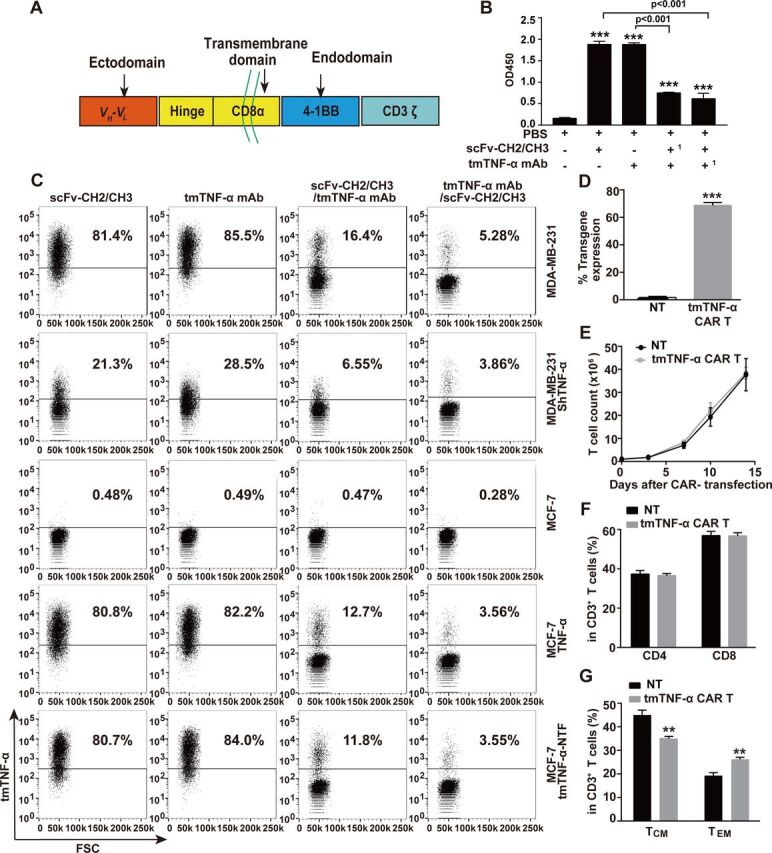
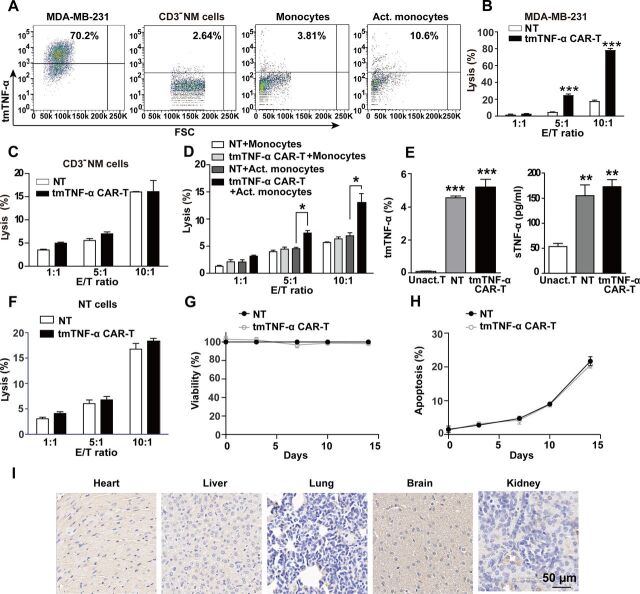
We generated CAR-T cells targeting tmTNF-α but not secreted tumor necrosis factor alpha and assessed the antitumor effect of the CAR-T cells on tmTNF-α-expressing breast cancer cells in vitro and in vivo.
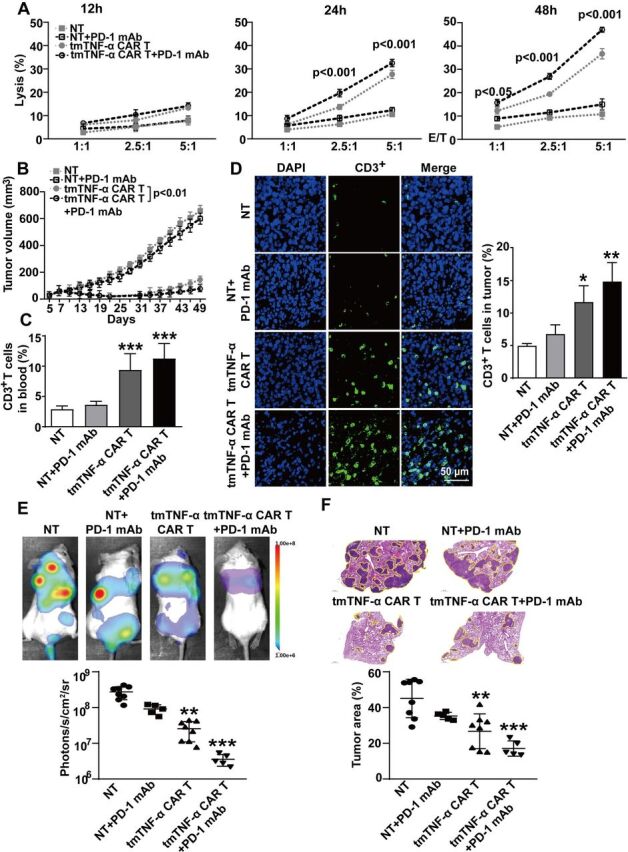
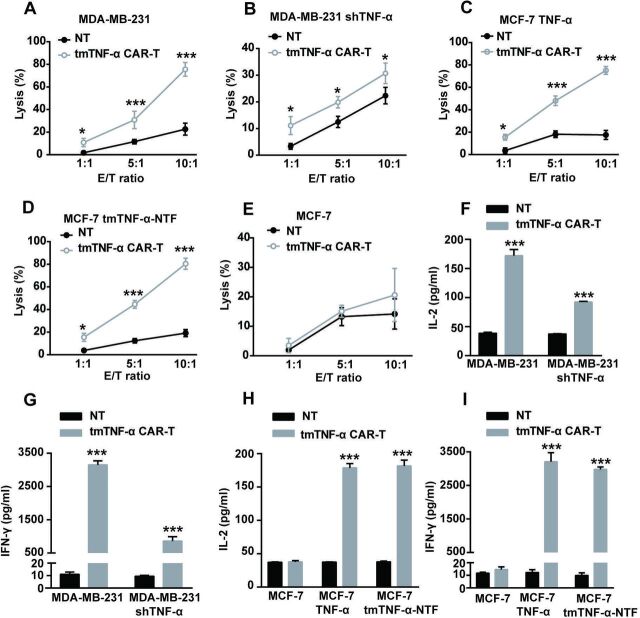
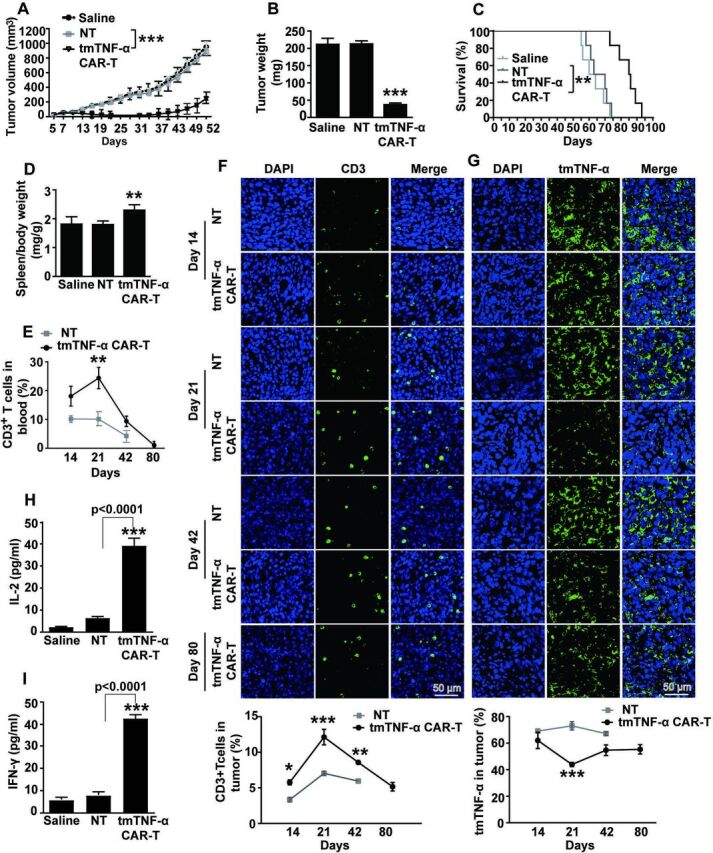
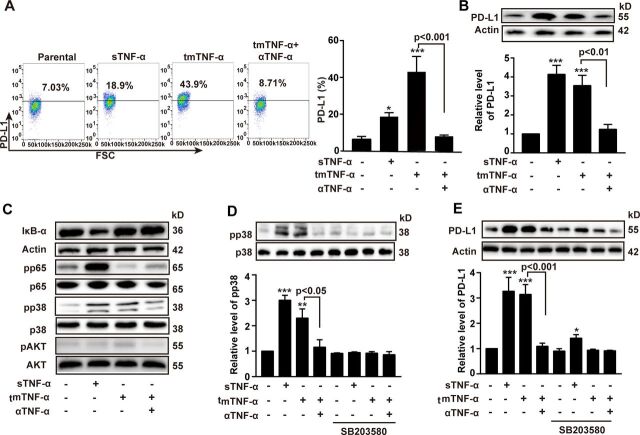
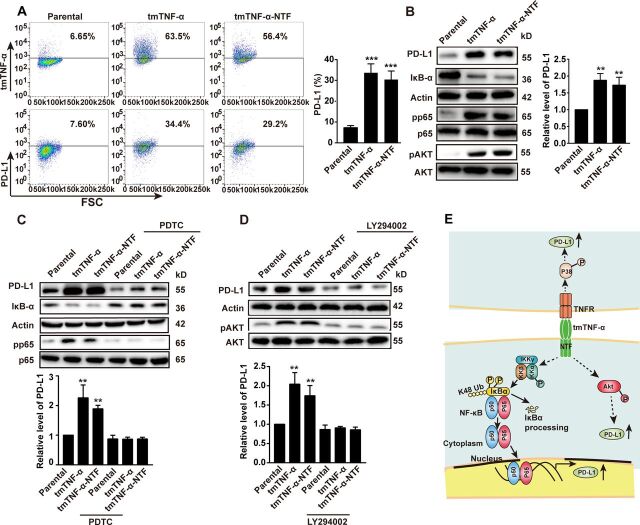
Our tmTNF-α CAR-T cells showed potent cytotoxicity against tmTNF-α-expressing breast cancer cells but not tmTNF-α-negative tumor cells with increased secretion of interferon gamma (IFN-γ) and interleukin (IL)-2 in vitro. In tmTNF-α-overexpressing TNBC-bearing mice, the tmTNF-α CAR-T therapy induced evident tumor regression, prolonged survival and increased serum concentrations of IFN-γ and IL-2. However, we found thattmTNF-α induced programmed death-ligand 1 (PD-L1) expression through the p38 pathway via TNF receptor (TNFR) and through the NF-κB and AKT pathways via outside-to-inside (reverse) signaling, which might limit the efficacy of the CAR-T cell therapy. Blockage of the PD-L1/programmed death-1 (PD-1) pathway by PD-1 monoclonal antibody significantly enhanced the antitumor effect of the tmTNF-α CAR-T cell therapy in vitro and in vivo, and the combination was effective for antiprimary tumors and had a tendency to increase the antimetastasis effect of the CAR-T cell therapy.
Our findings suggest a potent antitumor efficacy of the tmTNF-α CAR-T cells that can be enhanced by anti-PD-L1/PD-1 because high PD-L1 expression in TNBC was induced by the tmTNF-α signaling, indicating a promising individual therapy for tmTNF-α-positive breast cancers including TNBC.
我们之前的研究表明,跨膜肿瘤坏死因子 α(tmTNF-α)在原发性乳腺癌中过度表达,包括三阴性乳腺癌(TNBC)。嵌合抗原受体修饰 T 细胞(CAR-T 细胞)已成功用于主要用于 B 细胞恶性肿瘤。
我们生成了靶向 tmTNF-α但不表达肿瘤坏死因子 α 的 CAR-T 细胞,并评估了 CAR-T 细胞在体外和体内对 tmTNF-α 表达的乳腺癌细胞的抗肿瘤作用。
我们的 tmTNF-α CAR-T 细胞对表达 tmTNF-α 的乳腺癌细胞具有强大的细胞毒性,但对 tmTNF-α 阴性肿瘤细胞则没有,同时体外细胞因子干扰素 γ(IFN-γ)和白细胞介素 2(IL-2)的分泌增加。在 tmTNF-α 过表达的 TNBC 荷瘤小鼠中,tmTNF-α CAR-T 治疗诱导明显的肿瘤消退,延长生存时间,并增加血清 IFN-γ 和 IL-2 浓度。然而,我们发现 tmTNF-α 通过 TNF 受体(TNFR)的 p38 途径和通过外到内(反向)信号传导的 NF-κB 和 AKT 途径诱导程序性死亡配体 1(PD-L1)表达,这可能限制了 CAR-T 细胞治疗的疗效。PD-1 单克隆抗体阻断 PD-L1/PD-1 途径显著增强了 tmTNF-α CAR-T 细胞治疗的体外和体内抗肿瘤作用,联合治疗对原发性肿瘤有效,并具有增加 CAR-T 细胞治疗的抗肿瘤转移作用的趋势。
我们的研究结果表明,tmTNF-α CAR-T 细胞具有强大的抗肿瘤疗效,通过抗 PD-L1/PD-1 可以增强疗效,因为 tmTNF-α 信号诱导 TNBC 中高 PD-L1 表达,表明 tmTNF-α 阳性乳腺癌,包括 TNBC,具有有前途的个体化治疗。