Neonatology and Pediatric Critical Care Medicine, Department of Pediatrics, University Hospital Carl Gustav Carus, Technische Universität Dresden, Dresden, Saxony, Germany.
Saxonian Center for Feto/ Neonatal Health, Medical Faculty Carl Gustav Carus, Technische Universität Dresden, Dresden, Saxony, Germany.
Stem Cells Transl Med. 2023 Mar 3;12(2):97-111. doi: 10.1093/stcltm/szac088.
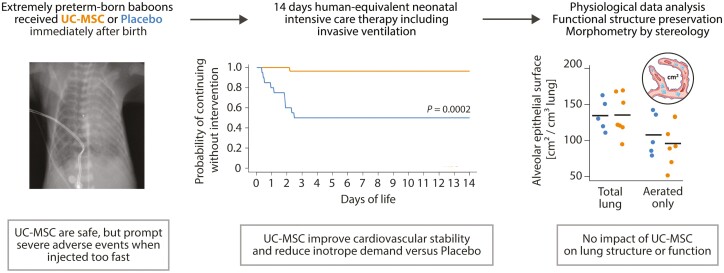
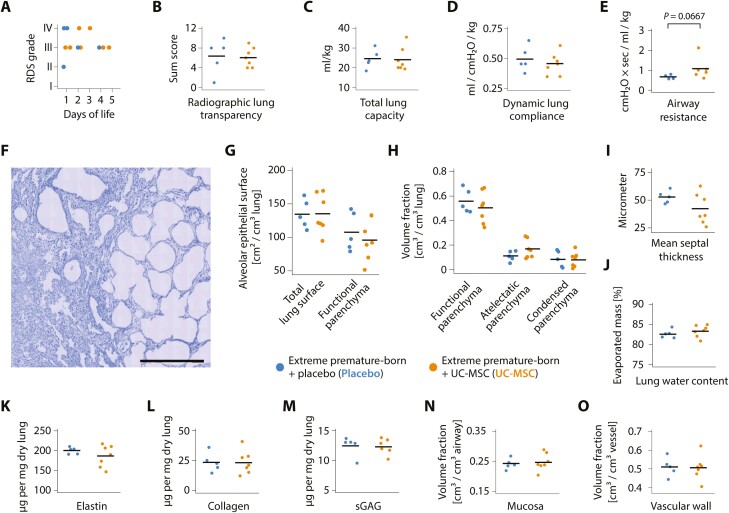
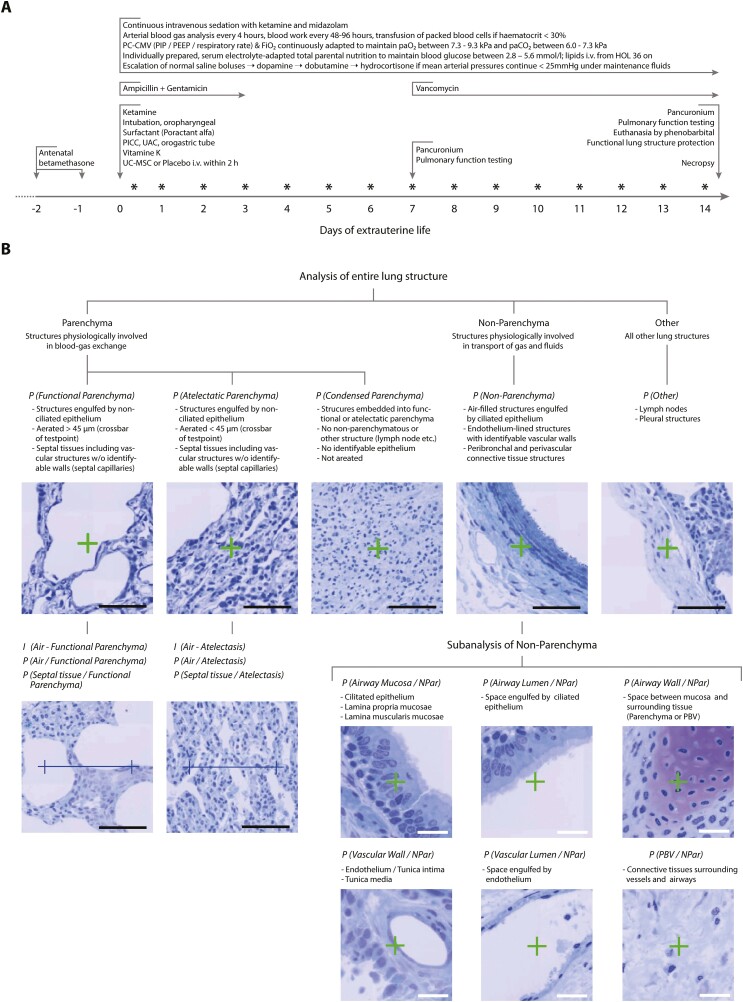
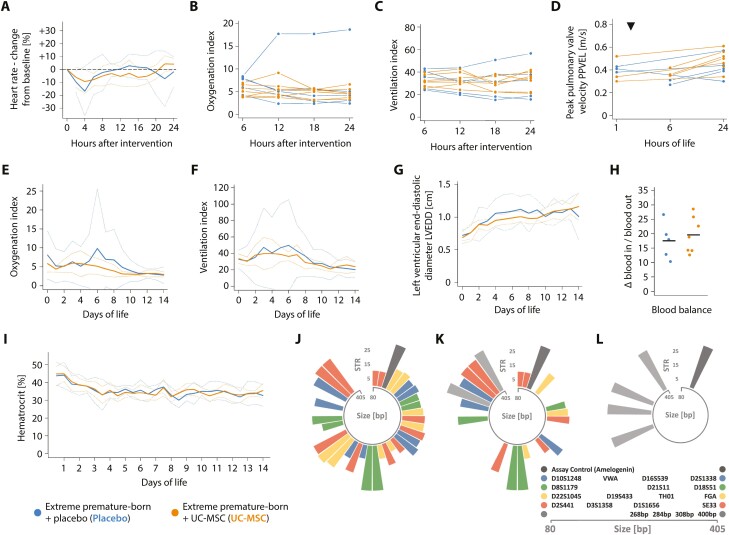
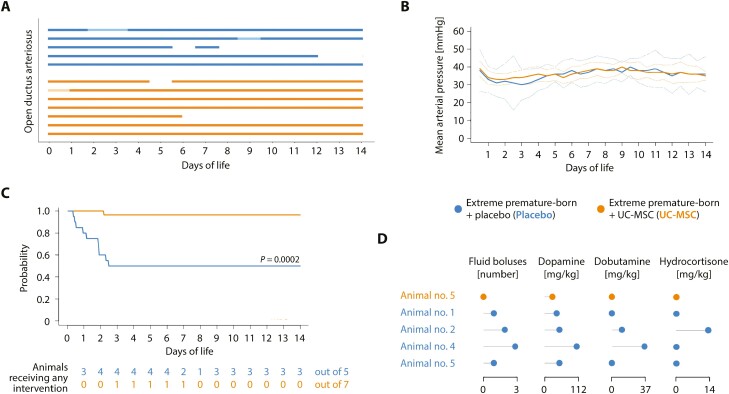
Premature birth is a leading cause of childhood morbidity and mortality and often followed by an arrest of postnatal lung development called bronchopulmonary dysplasia. Therapies using exogenous mesenchymal stromal cells (MSC) have proven highly efficacious in term-born rodent models of this disease, but effects of MSC in actual premature-born lungs are largely unknown. Here, we investigated thirteen non-human primates (baboons; Papio spp.) that were born at the limit of viability and given a single, intravenous dose of ten million human umbilical cord tissue-derived MSC per kilogram or placebo immediately after birth. Following two weeks of human-equivalent neonatal intensive care including mechanical ventilation, lung function testing and echocardiographic studies, lung tissues were analyzed using unbiased stereology. We noted that therapy with MSC was feasible, safe and without signs of engraftment when administered as controlled infusion over 15 minutes, but linked to adverse events when given faster. Administration of cells was associated with improved cardiovascular stability, but neither benefited lung structure, nor lung function after two weeks of extrauterine life. We concluded that a single, intravenous administration of MSC had no short- to mid-term lung-protective effects in extremely premature-born baboons, sharply contrasting data from term-born rodent models of arrested postnatal lung development and urging for investigations on the mechanisms of cell-based therapies for diseases of prematurity in actual premature organisms.
早产是儿童发病率和死亡率的主要原因,常伴有称为支气管肺发育不良的产后肺发育停滞。在这种疾病的足月出生啮齿动物模型中,使用外源性间充质基质细胞 (MSC) 的治疗已被证明非常有效,但 MSC 在实际早产肺中的作用在很大程度上尚不清楚。在这里,我们研究了 13 只非人类灵长类动物(狒狒;Papio spp.),它们在生存极限时出生,并在出生后立即立即给予每公斤 1000 万个人脐带组织衍生的 MSC 或安慰剂的单次静脉内剂量。在接受相当于人类新生儿重症监护两周,包括机械通气、肺功能测试和超声心动图研究后,使用无偏立体学分析肺组织。我们注意到,当以 15 分钟的受控输注方式进行 MSC 治疗时,这种治疗是可行的、安全的,并且没有植入迹象,但当给予更快的速度时,会出现不良事件。细胞给药与心血管稳定性的改善相关,但无论是在两周的宫外生活后,都不会有益于肺结构或肺功能。我们得出结论,在极度早产的狒狒中,单次静脉内给予 MSC 没有短期至中期的肺保护作用,这与在出生后肺发育停滞的足月出生啮齿动物模型中的数据形成鲜明对比,并促使对实际早产儿疾病的基于细胞的治疗机制进行研究。