Department of Paediatrics, Monash University, Melbourne, VIC, Australia.
Monash Newborn, Monash Children's Hospital, Melbourne, VIC, Australia.
Pediatr Res. 2023 Nov;94(5):1631-1638. doi: 10.1038/s41390-023-02707-x. Epub 2023 Jun 28.
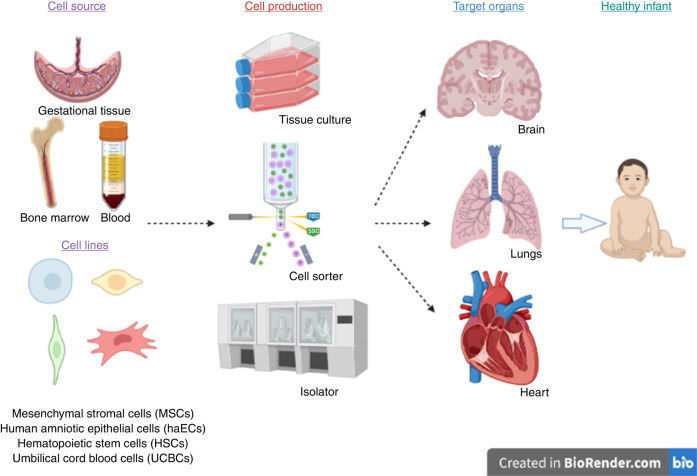
Despite considerable advances, there is a need to improve the outcomes of newborn infants, especially related to prematurity, encephalopathy and other conditions. In principle, cell therapies have the potential to protect, repair, or sometimes regenerate vital tissues; and improve or sustain organ function. In this review, we present highlights from the First Neonatal Cell Therapies Symposium (2022). Cells tested in preclinical and clinical studies include mesenchymal stromal cells from various sources, umbilical cord blood and cord tissue derived cells, and placental tissue and membrane derived cells. Overall, most preclinical studies suggest potential for benefit, but many of the cells tested were not adequately defined, and the optimal cell type, timing, frequency, cell dose or the most effective protocols for the targeted conditions is not known. There is as yet no clinical evidence for benefit, but several early phase clinical trials are now assessing safety in newborn babies. We discuss parental perspectives on their involvement in these trials, and lessons learnt from previous translational work of promising neonatal therapies. Finally, we make a call to the many research groups around the world working in this exciting yet complex field, to work together to make substantial and timely progress to address the knowledge gaps and move the field forward. IMPACT: Survival of preterm and sick newborn infants is improving, but they continue to be at high risk of many systemic and organ-specific complications. Cell therapies show promising results in preclinical models of various neonatal conditions and early phase clinical trials have been completed or underway. Progress on the potential utility of cell therapies for neonatal conditions, parental perspectives and translational aspects are discussed in this paper.
尽管已经取得了相当大的进展,但仍需要提高新生儿的治疗效果,尤其是早产儿、脑病和其他疾病的治疗效果。原则上,细胞疗法具有保护、修复或有时再生重要组织的潜力;并改善或维持器官功能。在这篇综述中,我们呈现了第一届新生儿细胞治疗研讨会(2022 年)的要点。在临床前和临床研究中测试的细胞包括来自不同来源的间充质基质细胞、脐带血和脐带组织衍生细胞,以及胎盘组织和膜衍生细胞。总体而言,大多数临床前研究表明有潜在的益处,但许多测试的细胞没有得到充分定义,也不知道针对特定疾病的最佳细胞类型、时间、频率、细胞剂量或最有效的方案。目前还没有临床获益的证据,但现在有几个早期临床试验正在评估新生儿的安全性。我们讨论了父母对参与这些试验的看法,以及从以前有前途的新生儿治疗的转化工作中吸取的经验教训。最后,我们呼吁全世界许多从事这一令人兴奋但复杂领域的研究小组共同努力,取得实质性和及时的进展,以填补知识空白并推动该领域向前发展。影响:早产儿和患病新生儿的存活率正在提高,但他们仍然面临许多全身和器官特异性并发症的高风险。细胞疗法在各种新生儿疾病的临床前模型中显示出有希望的结果,早期临床试验已经完成或正在进行中。本文讨论了细胞疗法对新生儿疾病的潜在应用、父母的观点和转化方面的进展。