Wang Yanhui, Ren Jian, Yao Zhiqing, Wang Wei, Wang Siyang, Duan Junfang, Li Zhen, Zhang Huizi, Zhang Ruiqin, Wang Xiaoru
College of Pharmacy, Shanxi Medical University, Taiyuan, Shanxi, People's Republic of China.
Department of Pharmacy, Second Hospital of Shanxi Medical University, Taiyuan, Shanxi, People's Republic of China.
Infect Drug Resist. 2023 Jan 26;16:569-579. doi: 10.2147/IDR.S394269. eCollection 2023.
Nosocomial infection (NI) is associated with poor prognosis. The present study assessed the clinical and microbiological characteristics of NI patients in the intensive care unit (ICU) and investigated the clinical impact and risk factors for NI in ICU patients.
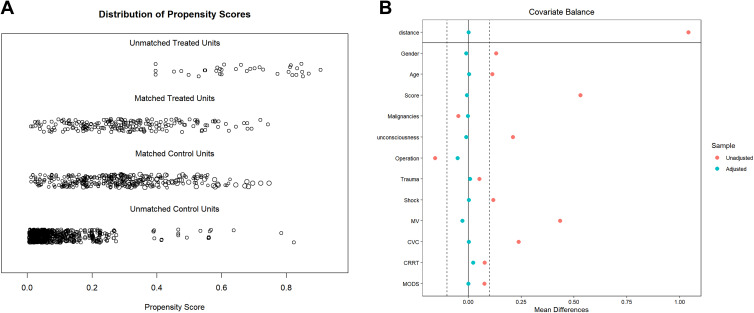
An observational study was conducted in an adult general ICU. The electronic medical records of all patients admitted to the ICU for >2 days from 2018-2020 were analyzed retrospectively. Multivariate regression models were used to analyze the risk factors for NI in ICU patients. Propensity score-matching (PSM) was used to control the confounding factors between the case and control groups, thus analyzing the clinical impact of NIs.
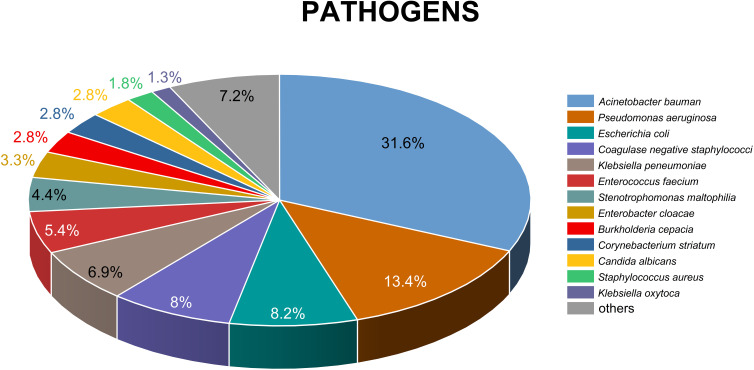
The present study included 2425 patient admissions, of which 231 (9.53%) had NI. (33.0%) was the most common bacteria. Long-term immunosuppressive therapy, disturbance of consciousness, blood transfusion, multiple organ dysfunction syndromes (MODS), treatment with three or more antibiotics, mechanical ventilation (MV), tracheotomy, the urinary catheter (UC), nasogastric catheter, and central venous catheter (CVC) were risk factors for NI in the ICU patients. After PSM, patients with NI had a prolonged length of stay (LOS) in the ICU and hospital, significant hospitalization expenses (all p<0.001), increased mortality (p=0.027), and predicted mortality (p=0.007). The differences in the ICU and hospital LOSs among three pathogens were statistically significant (p<0.001); the results of the infection group were lower than the other two pathogenic groups.
NI was associated with poor outcomes. The risk factors for NI identified in this study provided further insight into preventing NI.
医院感染(NI)与预后不良相关。本研究评估了重症监护病房(ICU)中NI患者的临床和微生物学特征,并调查了ICU患者NI的临床影响和危险因素。
在一家成人综合ICU进行了一项观察性研究。回顾性分析了2018年至2020年入住ICU超过2天的所有患者的电子病历。采用多变量回归模型分析ICU患者NI的危险因素。倾向评分匹配(PSM)用于控制病例组和对照组之间的混杂因素,从而分析NI的临床影响。
本研究纳入了2425例患者入院病例,其中231例(9.53%)发生了NI。(33.0%)是最常见的细菌。长期免疫抑制治疗、意识障碍、输血、多器官功能障碍综合征(MODS)、使用三种或更多种抗生素治疗、机械通气(MV)、气管切开术、导尿管(UC)、鼻胃管和中心静脉导管(CVC)是ICU患者NI的危险因素。PSM后,NI患者在ICU和医院的住院时间延长、住院费用显著增加(均p<0.001)、死亡率升高(p=0.027)以及预测死亡率升高(p=0.007)。三种病原体之间在ICU和医院住院时间上的差异具有统计学意义(p<0.001);感染组的结果低于其他两个病原体组。
NI与不良结局相关。本研究中确定的NI危险因素为预防NI提供了进一步的见解。