Chemistry Department, School of Sciences & Engineering, The American University in Cairo, Cairo, Egypt.
Pharmacognosy Department, College of Pharmacy, Tanta University, Tanta, Egypt.
PeerJ. 2023 Jan 27;11:e14648. doi: 10.7717/peerj.14648. eCollection 2023.
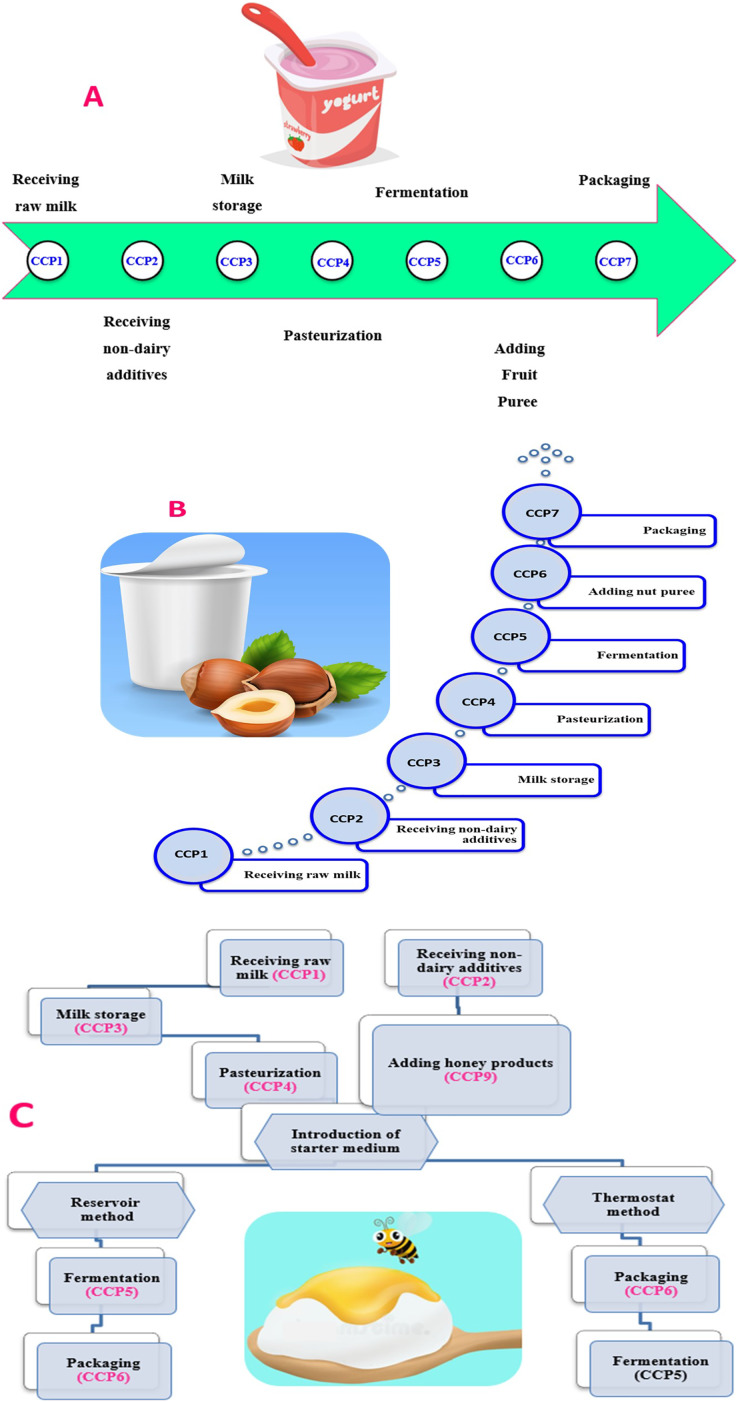
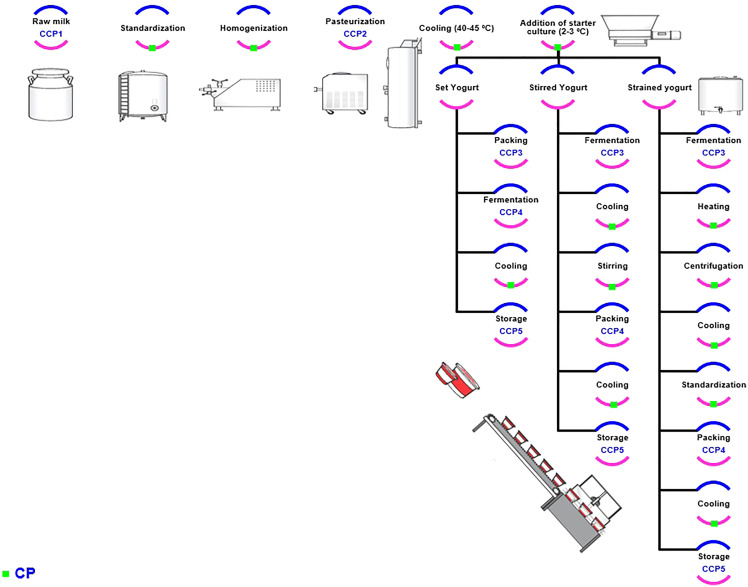
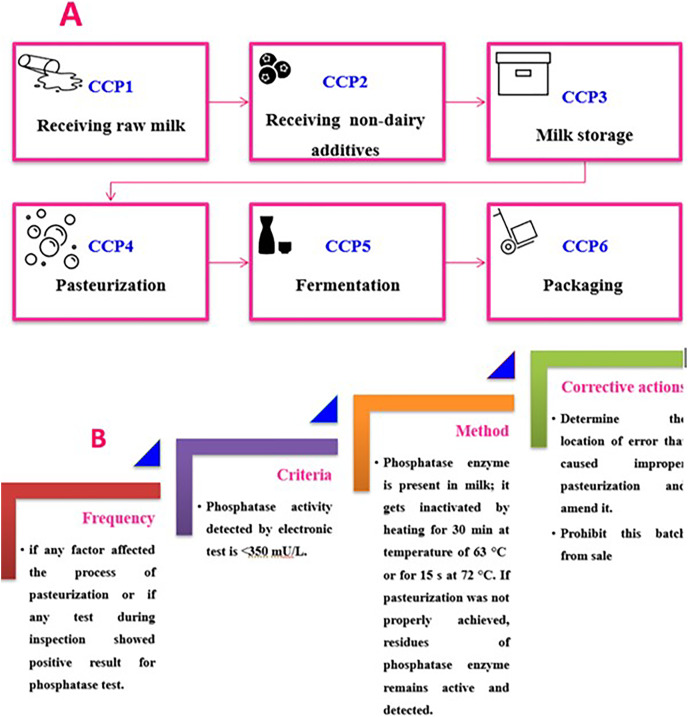
Hazard Analysis Critical Control Point (HACCP) is a risk management protocol developed to ensure food safety through a precautionary approach that is believed to offer assurances in producing safe food for customers. Yogurt is made in a number of phases, commencing with the collection of raw milk and ending with consumer consumption. While this is happening, major economic and health issues might arise from exposing the manufacturing line to biological, chemical, and/or physical contaminations. As a result, the decision tree approach was used to determine the CCPs during the production of yogurt. Additionally, biological dangers are incorporated as a by-product of the system's implementation performance. In particular, the plain set and nut puree-honey-fortified stirred yogurt manufacturing techniques are highlighted for the first time in this study. The potential manufacturing risks are described for the first time, together with information on how HACCP plans may guard against major risks that could result in the production of yogurt that is not in compliance with established standards.
危害分析与关键控制点(HACCP)是一种风险管理协议,旨在通过预防方法确保食品安全,这种方法被认为可以为客户生产安全食品提供保证。酸奶的生产过程包括多个阶段,从收集原料奶开始,到消费者食用结束。在此过程中,如果生产线上的生物、化学和/或物理污染,可能会引发重大的经济和健康问题。因此,在酸奶生产过程中使用决策树方法来确定关键控制点(CCPs)。此外,生物危害是系统实施性能的副产品。特别是,在这项研究中,首次强调了普通酸奶和坚果纯蜂蜜搅拌酸奶的生产技术。首次描述了潜在的生产风险,并介绍了 HACCP 计划如何防范可能导致不符合既定标准的酸奶生产的主要风险的信息。