Faculty of Life and Environmental Sciences, University of Tsukuba, Tsukuba, Ibaraki, Japan.
PLoS One. 2023 Feb 2;18(2):e0281062. doi: 10.1371/journal.pone.0281062. eCollection 2023.
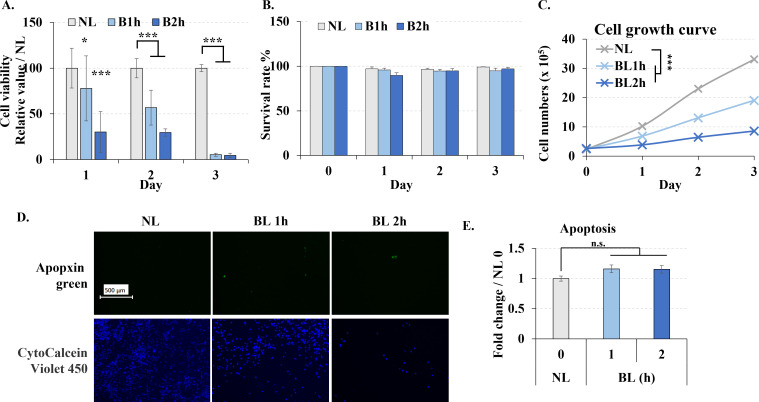
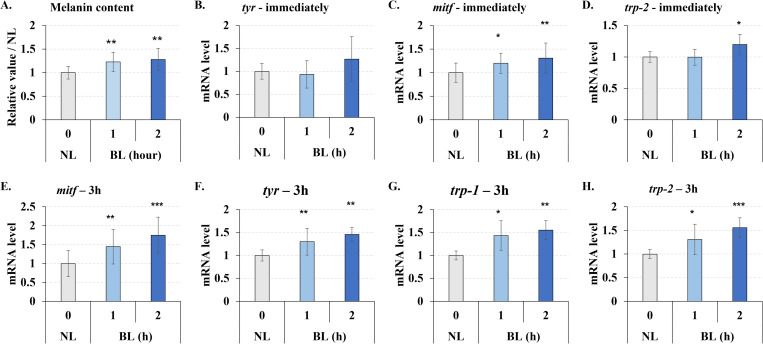
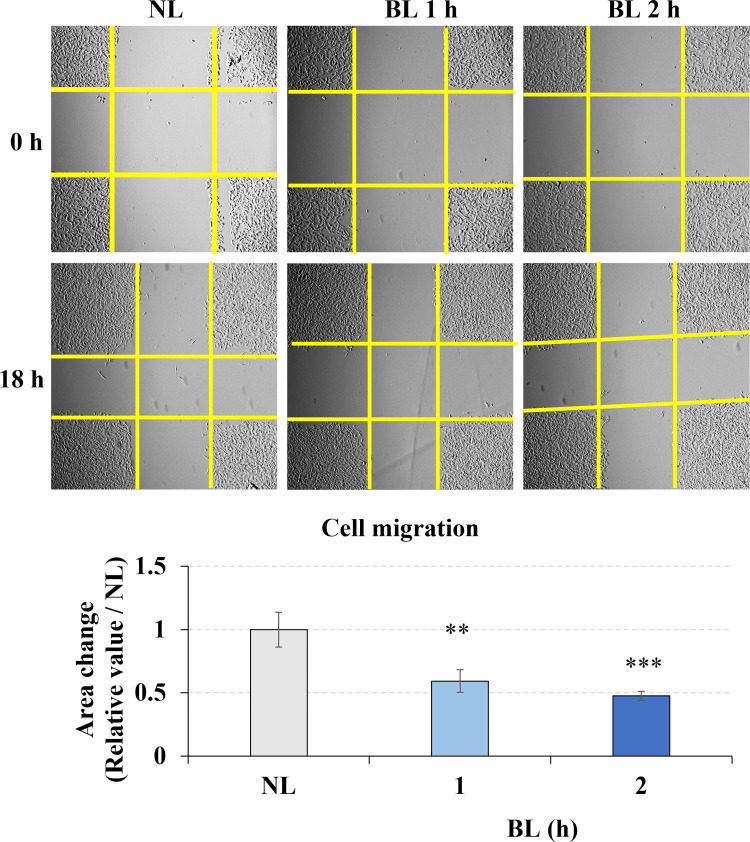
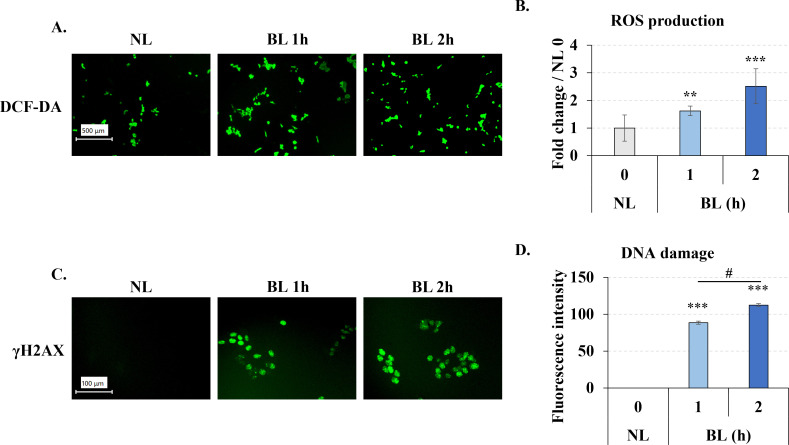
Visible light is present everywhere in our lives. Widespread use of computers and smartphones has increased the daily time spent in front of screens. What effect does this visible light have on us? Recent studies have shown that short-wavelength blue light (400-450nm) irradiation, similar to UV, inhibits the cell proliferation and differentiation, induces the intracellular oxidative stress, promotes the cell apoptosis and causes some other negative effects. However, it's unusual that directly face to such short-wavelength and high-energy blue light in daily life. Therefore, the effects of blue light with longer wavelength (470nm), lower energy (1, 2 J/cm2) and multiple times (simulated daily use) exposure on cells have been studied in this experiment. In our results, low energy density multiple blue light inhibited cell proliferation and metastatic capability with a weak phototoxicity. Blue light also promoted intracellular reactive oxygen species and caused DNA damage. Furthermore, the melanin synthesis was also promoted by low energy density multiple blue light exposure. Together, these results indicate that longer wavelength and low energy density blue light multiple exposure is still harmful to our cells. Furthermore, prolonged exposure to screens likely induces dull skin through induction of melanin synthesis. These results further mentioned us should paid more attention to controlling the daily use of digital device.
可见光存在于我们生活的方方面面。计算机和智能手机的广泛使用增加了我们每天在屏幕前的时间。这种可见光对我们有什么影响呢?最近的研究表明,与紫外线相似的短波长蓝光(400-450nm)照射会抑制细胞增殖和分化,诱导细胞内氧化应激,促进细胞凋亡,并导致其他一些负面效应。然而,在日常生活中,我们很少会直接接触到如此短波长和高能量的蓝光。因此,本实验研究了波长较长(470nm)、能量较低(1、2 J/cm2)、多次(模拟日常使用)暴露于蓝光对细胞的影响。在我们的结果中,低能量密度多次蓝光照射具有较弱的光毒性,抑制了细胞增殖和转移能力。蓝光还促进了细胞内活性氧的产生,并导致 DNA 损伤。此外,低能量密度多次蓝光照射还促进了黑色素的合成。总之,这些结果表明,较长波长和低能量密度的蓝光多次暴露仍然对我们的细胞有害。此外,长时间暴露在屏幕前可能会通过诱导黑色素合成导致皮肤暗沉。这些结果进一步提醒我们,应该更加注意控制日常使用数字设备。