Whistler Center for Carbohydrate Research and Department of Food Science, Purdue University, West Lafayette, IN, USA.
School of Health Science and Engineering, University of Shanghai for Science and Technology, Shanghai, 200093, China.
Sci Rep. 2023 Feb 2;13(1):1884. doi: 10.1038/s41598-023-27907-7.
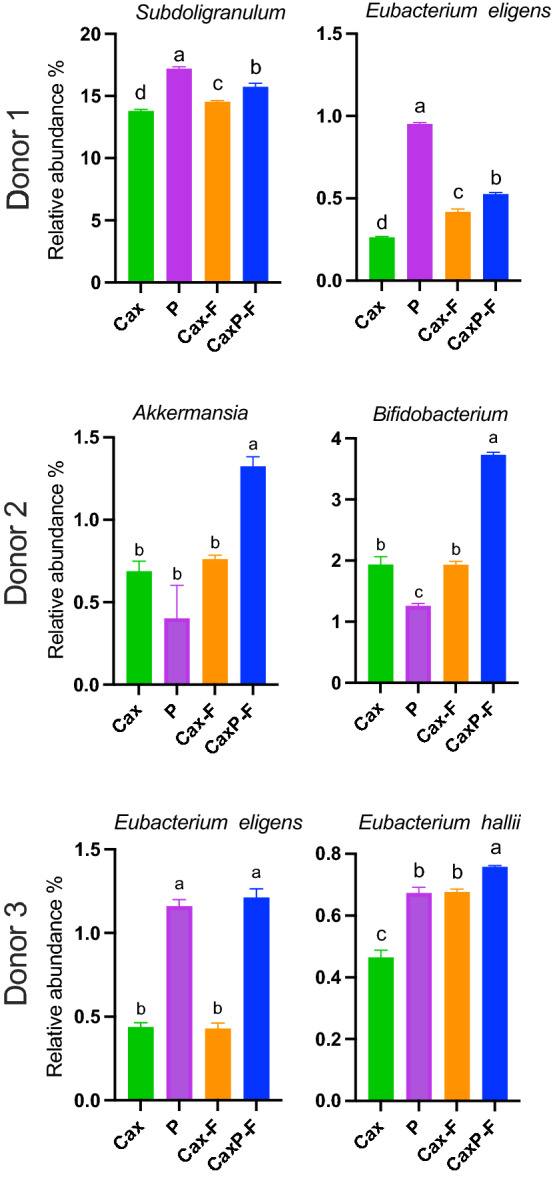
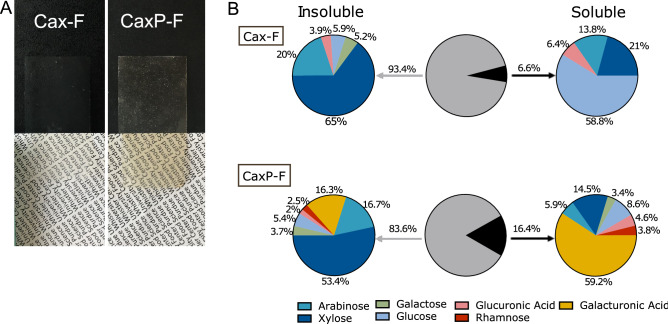
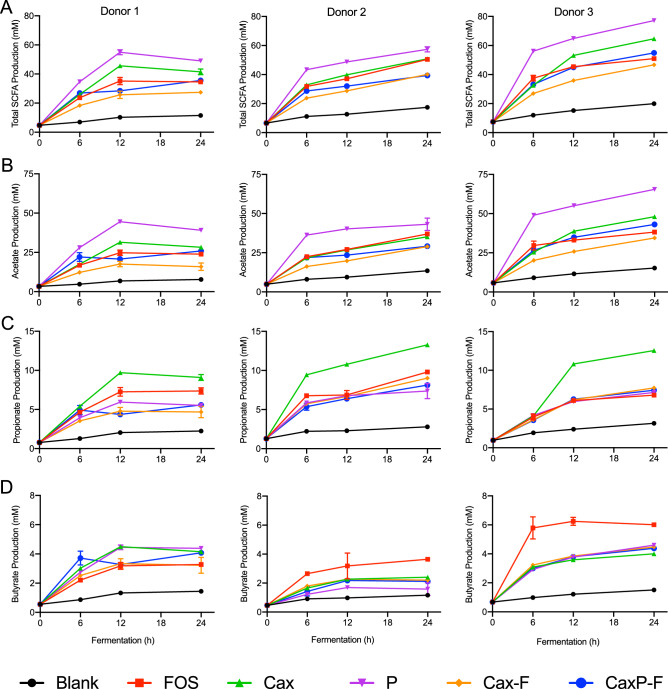
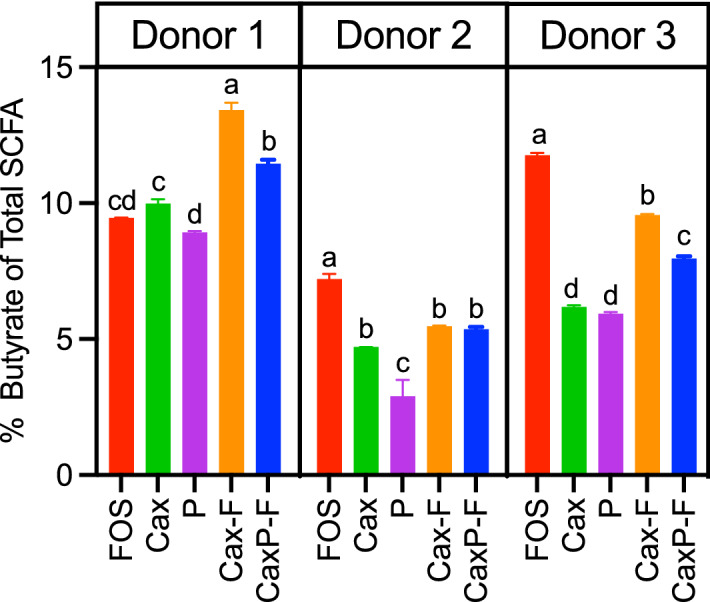
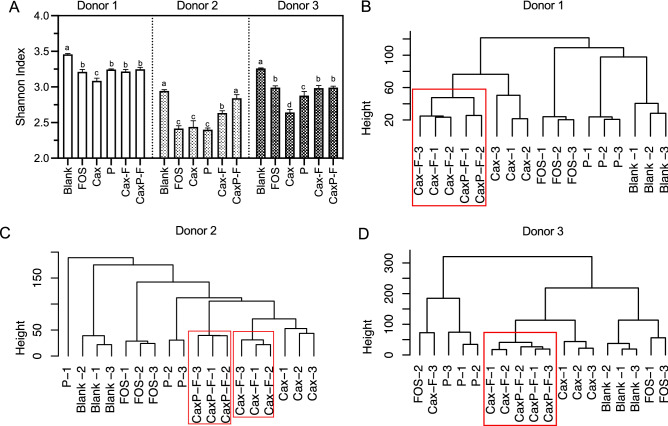
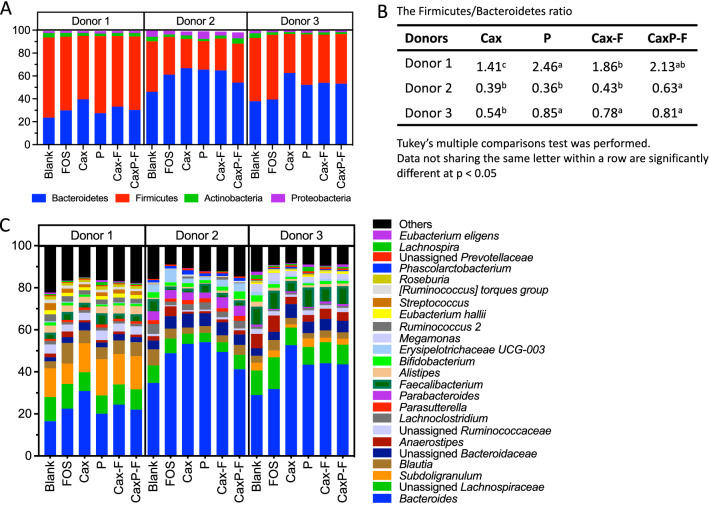
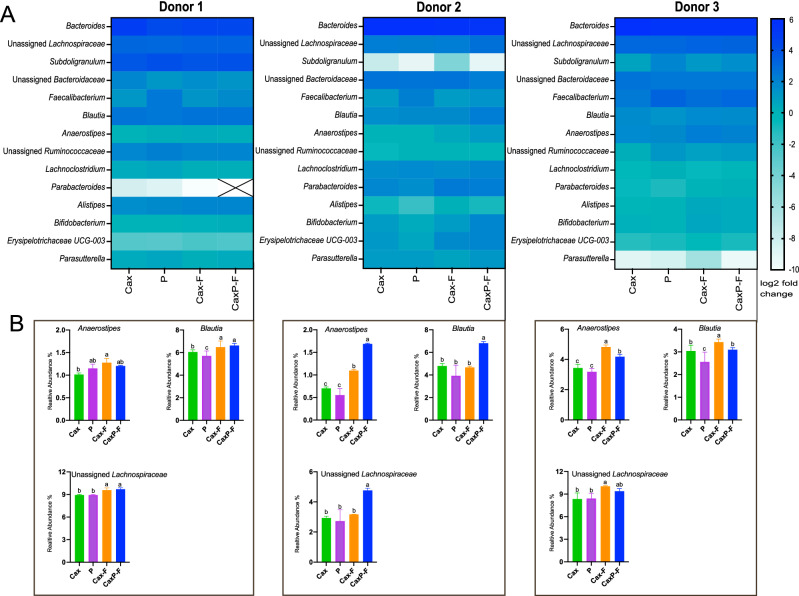
Insoluble plant cell walls are a main source of dietary fiber. Both chemical and physical fiber structures create distinct niches for gut bacterial utilization. Here, we have taken key fermentable solubilized polysaccharides of plant cell walls and fabricated them back into cell wall-like film forms to understand how fiber physical structure directs gut bacterial fermentation outcomes. Solubilized corn bran arabinoxylan (Cax), extracted to retain some ferulate residues, was covalently linked using laccase to form an insoluble cell wall-like film (Cax-F) that was further embedded with pectin (CaxP-F). In vitro fecal fermentation using gut microbiota from three donors was performed on the films and soluble fibers. Depending on the donor, CaxP-F led to higher relative abundance of recognized beneficial bacteria and/or butyrate producers-Akkermansia, Bifidobacterium, Eubacterium halii, unassigned Lachnospiraceae, Blautia, and Anaerostipes-than free pectin and Cax, and Cax-F. Thus, physical form and location of fibers within cell walls form niches for some health-related gut bacteria. This work brings a new understanding of the importance of insoluble cell wall-associated fibers and shows that targeted fiber materials can be fabricated to support important gut microbiota taxa and metabolites of health significance.
不溶性植物细胞壁是膳食纤维的主要来源。化学和物理纤维结构为肠道细菌的利用创造了独特的小生境。在这里,我们选择了植物细胞壁中关键的可发酵可溶性多糖,并将其重新构建成细胞壁样的薄膜形式,以了解纤维的物理结构如何指导肠道细菌的发酵结果。从保留一些阿魏酸残基的玉米皮阿拉伯木聚糖(Cax)中提取出来的可溶性玉米皮阿拉伯木聚糖(Cax),使用漆酶进行共价连接,形成不溶性细胞壁样膜(Cax-F),然后进一步嵌入果胶(CaxP-F)。使用来自三个供体的肠道微生物群在薄膜和可溶性纤维上进行体外粪便发酵。根据供体的不同,CaxP-F 导致被认为有益的细菌和/或丁酸产生菌(阿克曼氏菌、双歧杆菌、埃希氏菌、未分类的毛螺菌科、布劳特氏菌和厌氧螺旋菌)的相对丰度高于游离果胶和 Cax,以及 Cax-F。因此,纤维在细胞壁中的物理形式和位置为一些与健康相关的肠道细菌形成小生境。这项工作使人们对与不溶性细胞壁相关的纤维的重要性有了新的认识,并表明可以制造靶向纤维材料来支持重要的肠道微生物群和具有健康意义的代谢物。