Wang Yi, Zan Yuxin, Huang Yingying, Peng Xiaoyun, Ma Shinan, Ren Ji, Li Xiao, Wei Lin, Wang Xiaoli, Yuan Yahong, Tang Junming, Zhan Zhongqun, Wang Zhixiao, Ding Yan
Hubei Key Laboratory of Embryonic Stem Cell Research, Taihe Hospital, Hubei University of Medicine, 442000, Shiyan, Hubei, China.
Cardiovascular Department, Yiyang People's Hospital, 413000, Yiyang, Hunan, China.
Cell Death Discov. 2023 Feb 4;9(1):43. doi: 10.1038/s41420-022-01294-w.
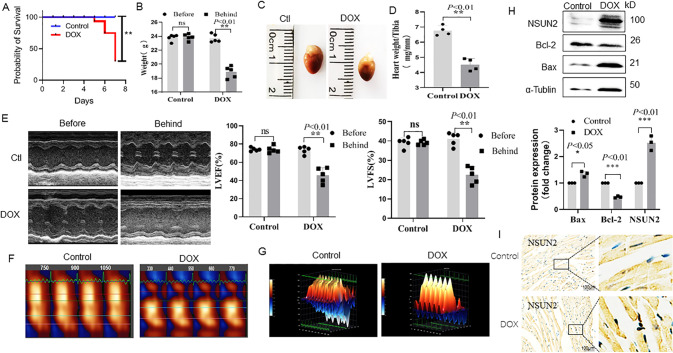
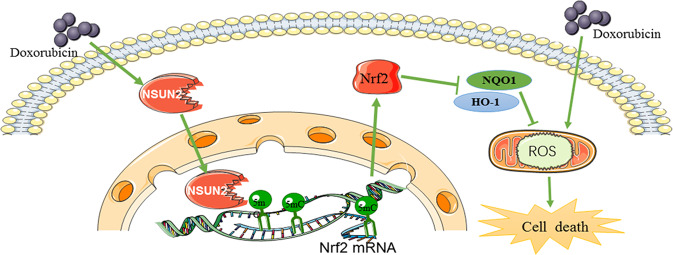
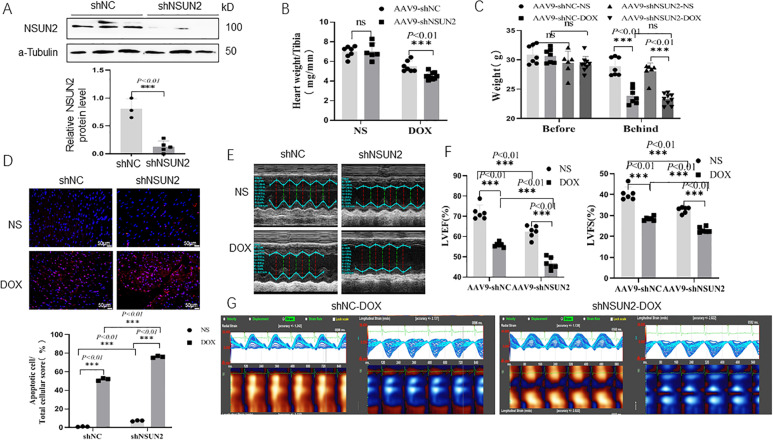
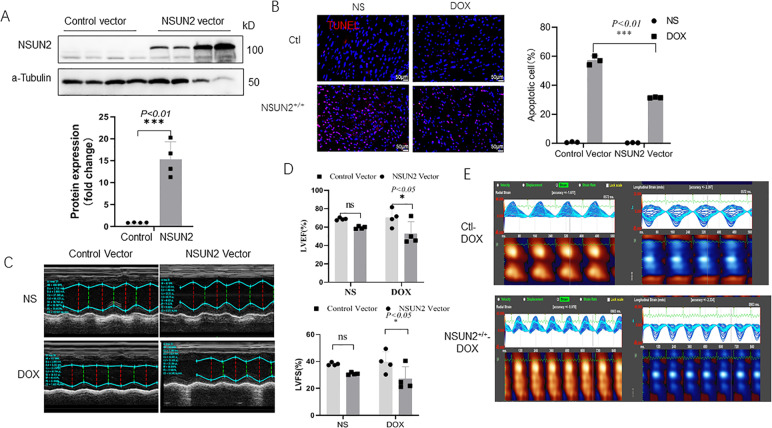
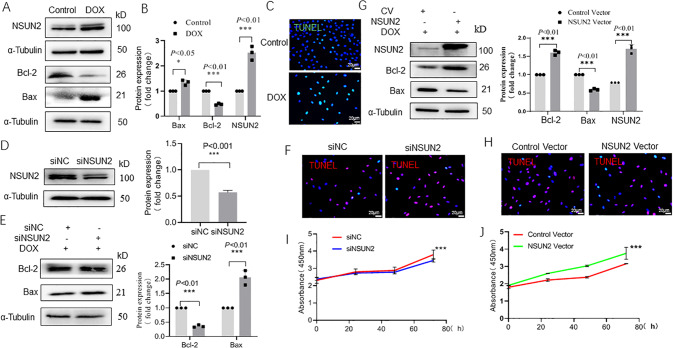
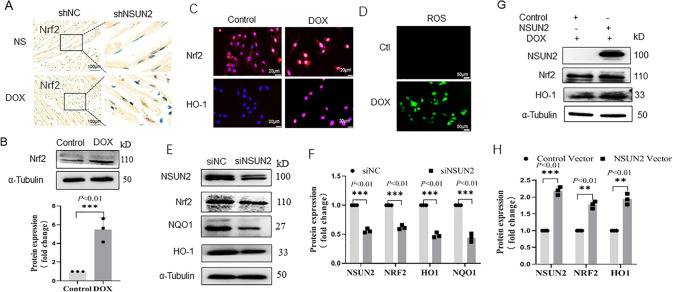
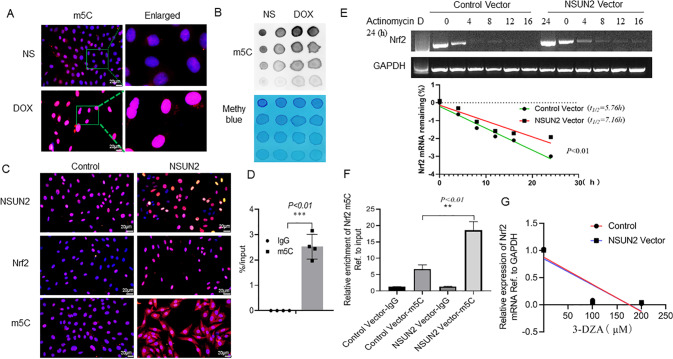
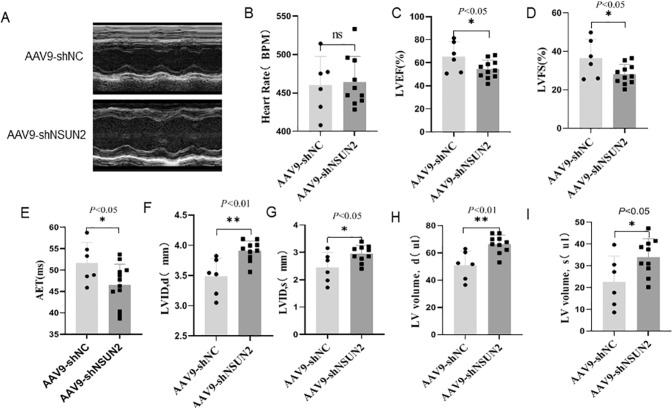
Doxorubicin (DOX) is a commonly used antitumor drug, but its application has been limited because of its strong cardiac damage. This study aims to explore the role of NSUN2 in DOX-induced heart injury. C57BL/6J mice were intraperitoneally injected with 20 mg/Kg DOX to induce heart injury. After 3 days, the cardiac function, cardiac histopathology, myocardial apoptosis, and the expression level of NSUN2 were detected. In vitro, H9C2 cells were transfected with NSUN2 siRNA or overexpressed lentivirus and then treated with 500 ng/ml DOX. After 24 h, the changes in reactive oxygen species (ROS), apoptosis, and NSUN2 expression were detected. After DOX treatment, both in vitro and in vivo experiments showed that the cardiac function decreased, the number of apoptotic cells increased, and the expression level of NSUN2 increased. Interfering the expression of NSUN2 by siRNA promoted DOX-induced heart injury, while overexpression of NSUN2 could inhibit DOX-induced heart injury. Further study showed that NSUN2 promoted antioxidative stress by upregulating the Nrf2 protein level. In addition, NSUN2 overexpression could increase the half-life of Nrf2 mRNA. m5C RNA methylation immunoprecipitation (MeRIP) also showed that the level of Nrf2 m5C mRNA was significantly increased in NSUN2 overexpressed group when compared to the GFP group. NSUN2 enhances the expression of Nrf2 by promoting Nrf2 mRNA m5C modification and enhances its antioxidative stress effect to alleviate DOX-induced myocardial injury.
阿霉素(DOX)是一种常用的抗肿瘤药物,但其应用因具有强烈的心脏损伤作用而受到限制。本研究旨在探讨NSUN2在DOX诱导的心脏损伤中的作用。将C57BL/6J小鼠腹腔注射20mg/Kg DOX以诱导心脏损伤。3天后,检测心脏功能、心脏组织病理学、心肌细胞凋亡以及NSUN2的表达水平。在体外,将H9C2细胞用NSUN2 siRNA转染或过表达慢病毒,然后用500ng/ml DOX处理。24小时后,检测活性氧(ROS)、细胞凋亡及NSUN2表达的变化。DOX处理后,体内外实验均显示心脏功能下降、凋亡细胞数量增加以及NSUN2表达水平升高。用siRNA干扰NSUN2的表达可促进DOX诱导的心脏损伤,而NSUN2过表达则可抑制DOX诱导的心脏损伤。进一步研究表明,NSUN2通过上调Nrf2蛋白水平促进抗氧化应激。此外,NSUN2过表达可增加Nrf2 mRNA的半衰期。m5C RNA甲基化免疫沉淀(MeRIP)也显示,与绿色荧光蛋白(GFP)组相比,NSUN2过表达组中Nrf2 m5C mRNA水平显著升高。NSUN2通过促进Nrf2 mRNA的m5C修饰增强Nrf蛋白的表达,并增强其抗氧化应激作用以减轻DOX诱导的心肌损伤。