H.E.J. Research Institute of Chemistry, International Center for Chemical and Biological Sciences, University of Karachi, Karachi 75270, Pakistan.
Dr. Panjwani Center for Molecular and Drug Research, International Center for Chemical and Biological Sciences, University of Karachi, Karachi 75270, Pakistan.
Int J Biol Macromol. 2023 Apr 15;234:123540. doi: 10.1016/j.ijbiomac.2023.123540. Epub 2023 Feb 3.
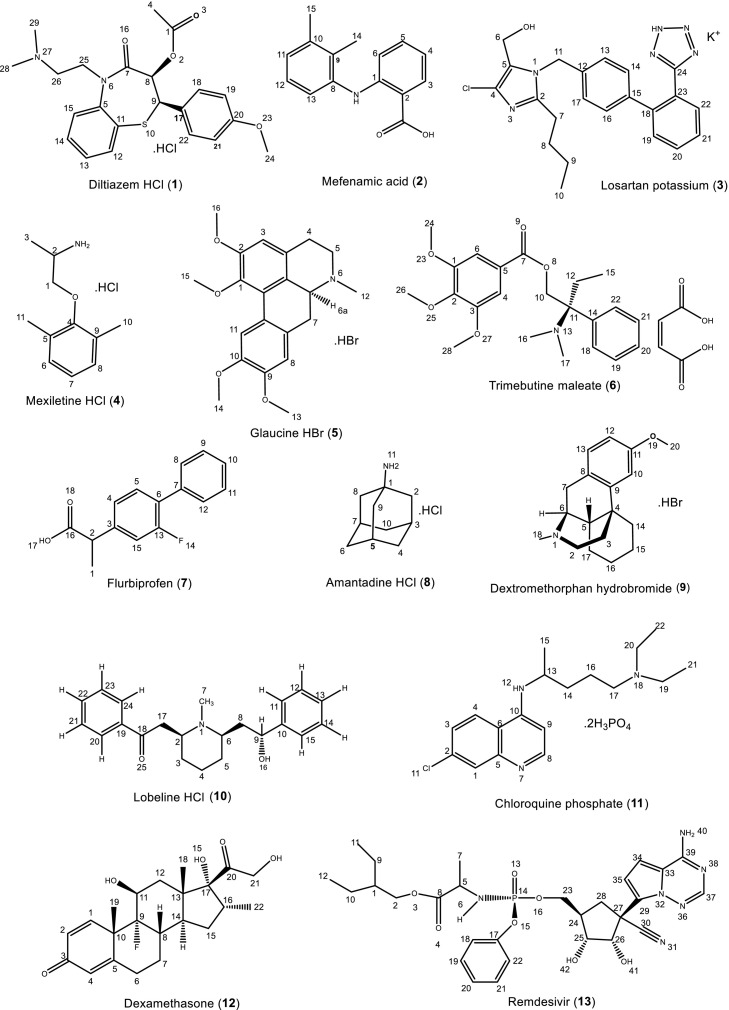
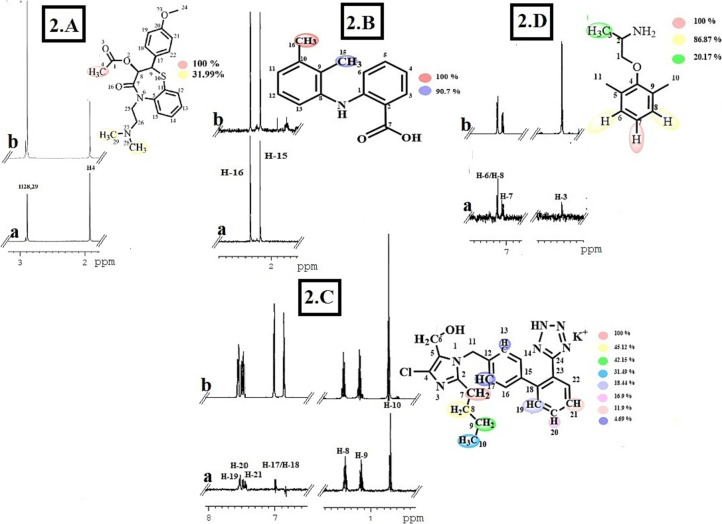
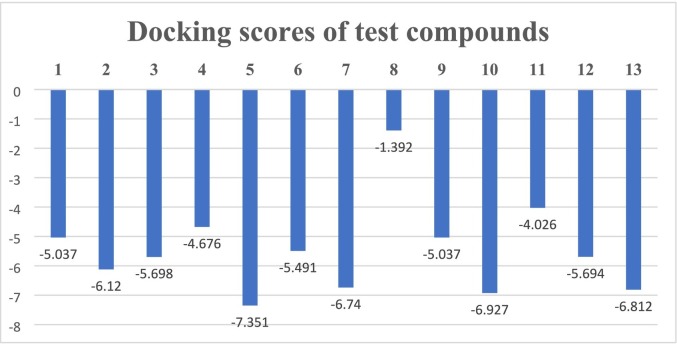
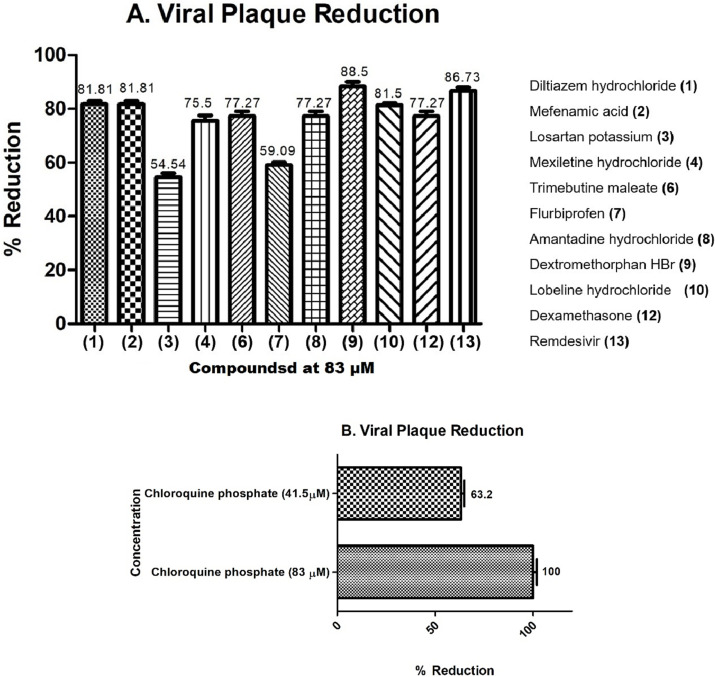
SARS-CoV-2 Main protease (M) is a well-known drug target against SARS-CoV-2 infection. Identification of M inhibitors is vigorously pursued due to its crucial role in viral replication. The present study was aimed to identify M inhibitors via repurposing of US-FDA approved drugs by STD-NMR spectroscopy. In this study, 156 drugs and natural compounds were evaluated against M. Among them, 10 drugs were found to be interacting with M, including diltiazem HCl (1), mefenamic acid (2), losartan potassium (3), mexiletine HCl (4), glaucine HBr (5), trimebutine maleate (6), flurbiprofen (7), amantadine HCl (8), dextromethorphan (9), and lobeline HCl (10) in STD-NMR spectroscopy. Their interactions were compared with three standards (Repurposed anti-viral drugs), dexamethasone, chloroquine phosphate, and remdesivir. Thermal stability of M and dissociation constant (K) of six interacting drugs were also determined using DSF. RMSD plots in MD simulation studies showed the formation of stable protein-ligand complexes. They were further examined for their antiviral activity by plaque reduction assay against SARS-CoV-2, which showed 55-100% reduction in viral plaques. This study demonstrates the importance of drug repurposing against emerging and neglected diseases. This study also exhibits successful application of STD-NMR spectroscopy combined with plaque reduction assay in rapid identification of potential anti-viral agents.
严重急性呼吸综合征冠状病毒 2 主蛋白酶(M)是针对严重急性呼吸综合征冠状病毒 2 感染的著名药物靶点。由于其在病毒复制中的关键作用,因此积极寻找 M 抑制剂。本研究旨在通过 STD-NMR 光谱法重新利用美国食品和药物管理局批准的药物来鉴定 M 抑制剂。在这项研究中,评估了 156 种药物和天然化合物对 M 的作用。其中,有 10 种药物被发现与 M 相互作用,包括盐酸地尔硫卓(1)、甲芬那酸(2)、洛沙坦钾(3)、盐酸美西律(4)、溴化白屈菜碱(5)、马来酸曲美布汀(6)、氟比洛芬(7)、盐酸金刚烷胺(8)、右美沙芬(9)和盐酸洛贝林(10)。在 STD-NMR 光谱中,比较了它们与三种标准药物(重新利用的抗病毒药物)、地塞米松、磷酸氯喹和瑞德西韦的相互作用。使用 DSF 还测定了 M 的热稳定性和解离常数(K)。MD 模拟研究中的 RMSD 图显示了稳定的蛋白质-配体复合物的形成。通过针对 SARS-CoV-2 的蚀斑减少测定法进一步检查了它们的抗病毒活性,结果显示病毒蚀斑减少了 55-100%。这项研究证明了针对新兴和被忽视疾病的药物再利用的重要性。该研究还展示了 STD-NMR 光谱法与蚀斑减少测定法相结合在快速鉴定潜在抗病毒药物方面的成功应用。